REVIEW · BODY WORLDS AMSTERDAM
Body Worlds Amsterdam: The Happiness Project Ticket
Book on GetYourGuide →Operated by Tours & Tickets · Bookable on GetYourGuide
Your mood can show up in your body.
Body Worlds Amsterdam The Happiness Project turns that idea into an up-close exhibition with real human specimens and a clear, floor-by-floor layout. I especially like how it keeps moving with practical explanations, so you don’t feel lost or stuck in one spot.
Two standouts make the ticket feel like more than a typical museum stop. First, you get a free InBody Scan with a body-composition report covering fat percentage, protein, minerals, and water. Second, the exhibition connects emotions and health in a way that’s easy to follow, even if you’re more curious than academic.
One thing to consider before you go: the pregnancy section at the end can be emotional. You can choose to slow down, or if you know this might hit hard, plan your route so you can get through it when you’re ready.
In This Review
- Key points before you book
- Entering Body Worlds on Damrak: timed access, fast orientation
- The free InBody Scan: what you get and how to use it
- The exhibition flow across the floors: from first glance to full story
- What you’ll actually see: 200+ specimens and the plastination effect
- The Happiness Project message: science you can connect to real life
- Signs, audio guide, and languages: plan your preferred way to learn
- How long it takes (and when to go if you dislike crowds)
- The end section and emotional reality: pregnancy specimens at the end
- Is it worth the price? $26 for science, time, and a personal scan
- Who should book (and who might not love it)
- Should you book Body Worlds Amsterdam The Happiness Project?
- FAQ
- FAQ
- How long does Body Worlds Amsterdam The Happiness Project take?
- Where is Body Worlds Amsterdam located?
- Is the audio guide included in the ticket?
- Does the ticket include the InBody Scan?
- Are there time slots, or can I arrive anytime?
- Is Body Worlds wheelchair accessible?
- Are children allowed?
- What languages are available for the exhibition information?
- What is included with the ticket?
Key points before you book
- Skip-the-line timed entry means you enter at your chosen time slot rather than waiting around
- Free InBody Scan gives you fat %, protein, minerals, and water in a full report
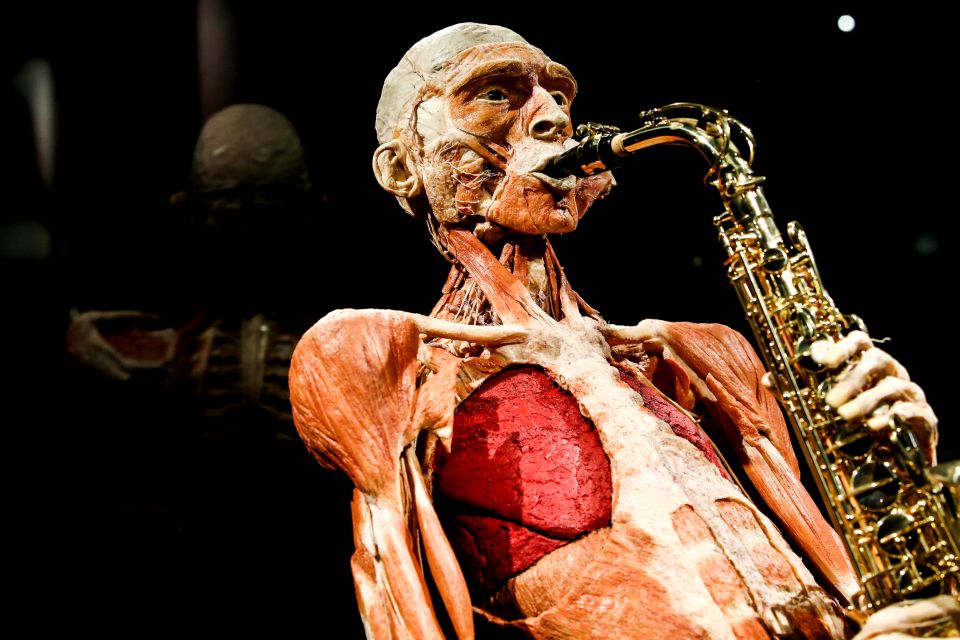
- 200+ authentic anatomical specimens let you compare body structure and function side by side
- Interactive stations can include body analysis tools and even blood pressure-style checks
- Plastinated human exhibits make the science feel tangible rather than textbook-only
- Plan for an emotional ending with donated pregnancy specimens at different stages
Entering Body Worlds on Damrak: timed access, fast orientation

Body Worlds Amsterdam The Happiness Project is right on Damrak, at Damrak 66 (1012 LM). The ticket you’re buying is for one day, with entry tied to a specific time slot, so you can’t treat it like a walk-in museum.
The good news is that the experience is designed for smooth arrival. You go directly to the museum, show your voucher for scanning, and get skip-the-ticket-line access. That matters in Amsterdam, where lines and crowds can eat up your day.
Inside, you’ll find that the exhibition doesn’t require a lot of backtracking. Several visitors highlight that it’s easy to move through at your own pace without feeling like you missed something. I’d still give yourself breathing room: if you read all the labels, you’ll likely want more than a rushed stroll.
The free InBody Scan: what you get and how to use it
One reason this ticket feels like better value is the included InBody Scan. It’s a health check that reports what your body is made out of, including fat percentage, protein, minerals, and water.
This doesn’t turn the exhibition into a medical appointment, but it adds a personal hook. You’re not just looking at anatomy on display—you’re looking at yourself in numbers. If you want to connect the themes of the show (happiness, stress, behavior, health) back to daily life, this scan is a strong starting point.
Practical tip: take the report seriously, but don’t treat it as a diagnosis. Use it like a mirror. If the scan gives you results you don’t like, it’s a prompt to ask better questions about habits you control: sleep, movement, food, and stress patterns.
Also, there’s a small real-world note. At the scan area, one visitor mentioned printer ink issues for the printouts. That’s not a reason to avoid the scan, but it’s a reminder that technology can be finicky even in a well-run museum.
The exhibition flow across the floors: from first glance to full story

Body Worlds is a multi-floor experience, and people often describe it as about six floors long, working your way through the exhibition in a natural downwards sequence. The overall design is themed, so you’re not just seeing one random anatomy display after another.
The Happiness Project exhibition is specifically organized around the science theme: how happiness and well-being can influence the body and, in turn, what the body tells you about your mental and emotional state. That’s why it works for different kinds of visitors. You can come for the anatomy and still leave with health-and-habits takeaways.
Even if you’re not into biology, the structure helps. Signs and explanations support the main message, and the pace encourages you to read without feeling overwhelmed. The best part is choice: you can speed up for key displays or slow down when something clicks.
What you’ll actually see: 200+ specimens and the plastination effect
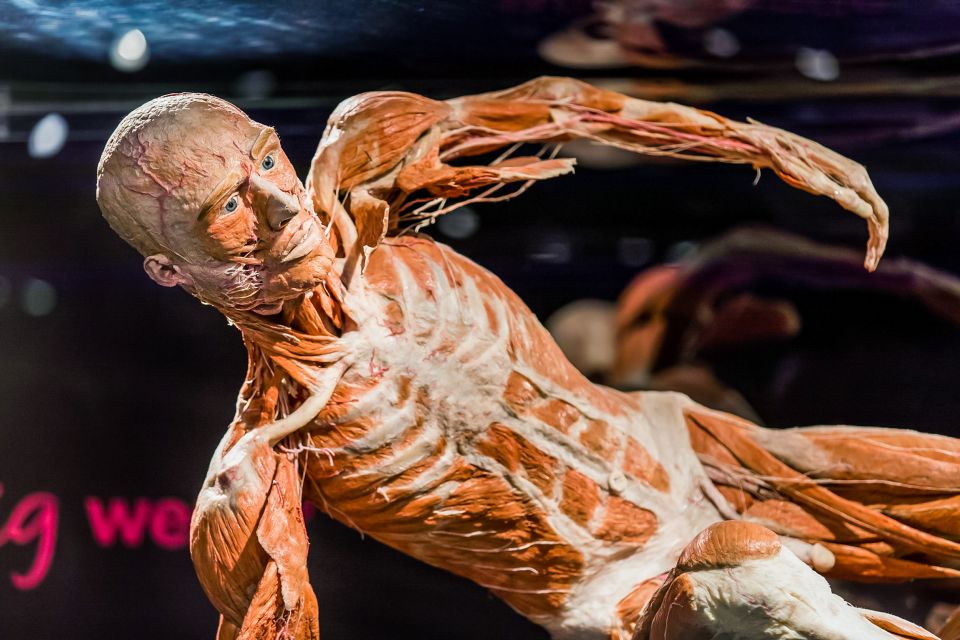
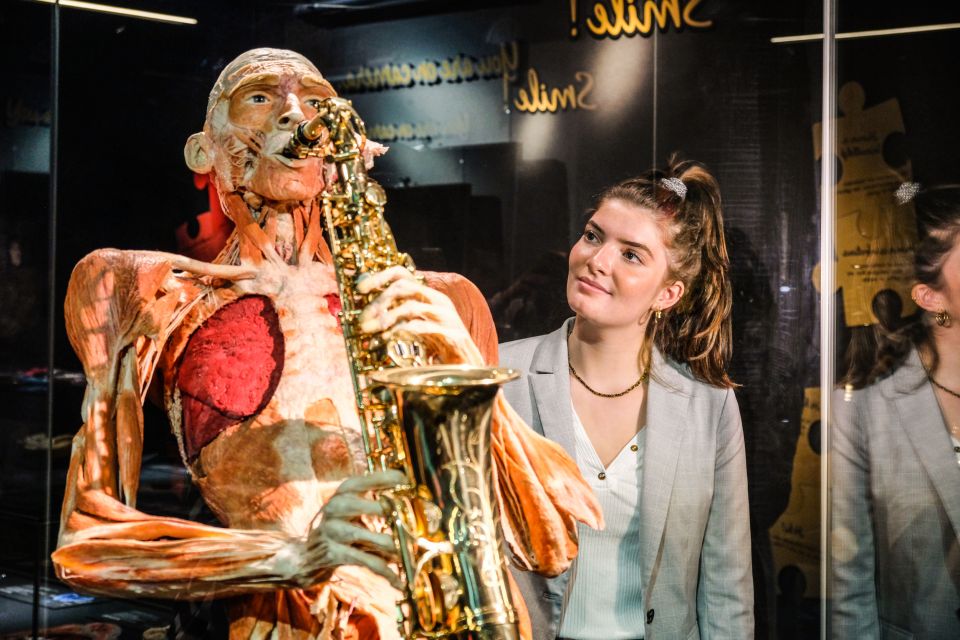
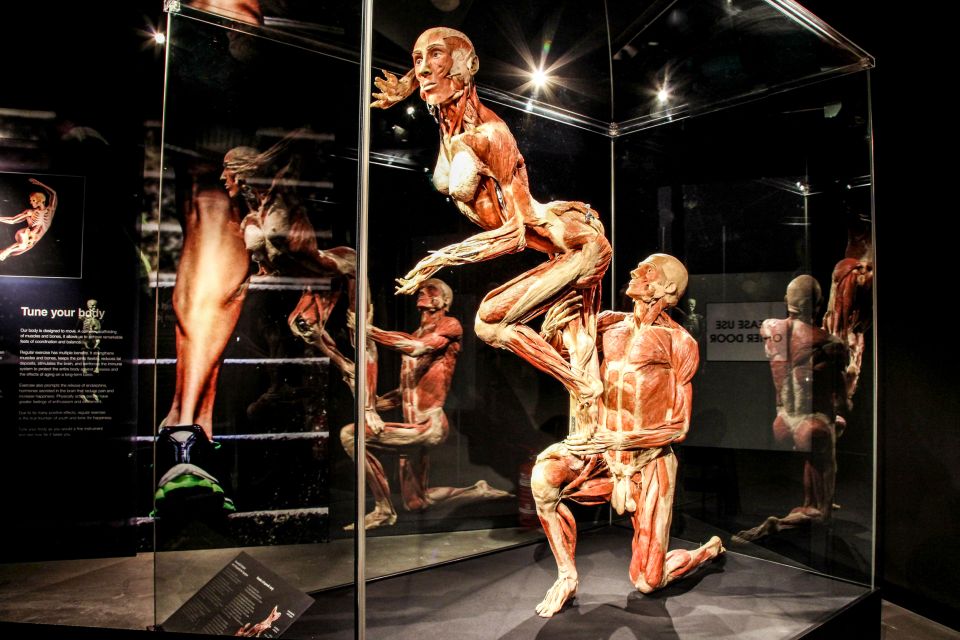
The headline feature is more than 200 authentic anatomical specimens. These are real human bodies preserved through plastination (the same approach associated with Dr. Gunther von Hagens). You’ll encounter the human form in ways that feel unusually clear—body systems are laid out so you can see how parts relate.
What makes plastination different from typical museum displays is scale and stability. The figures feel more like accessible “models of the real thing” rather than fragile teaching props. You can take in detail without the time pressure you sometimes feel in hospitals or labs.
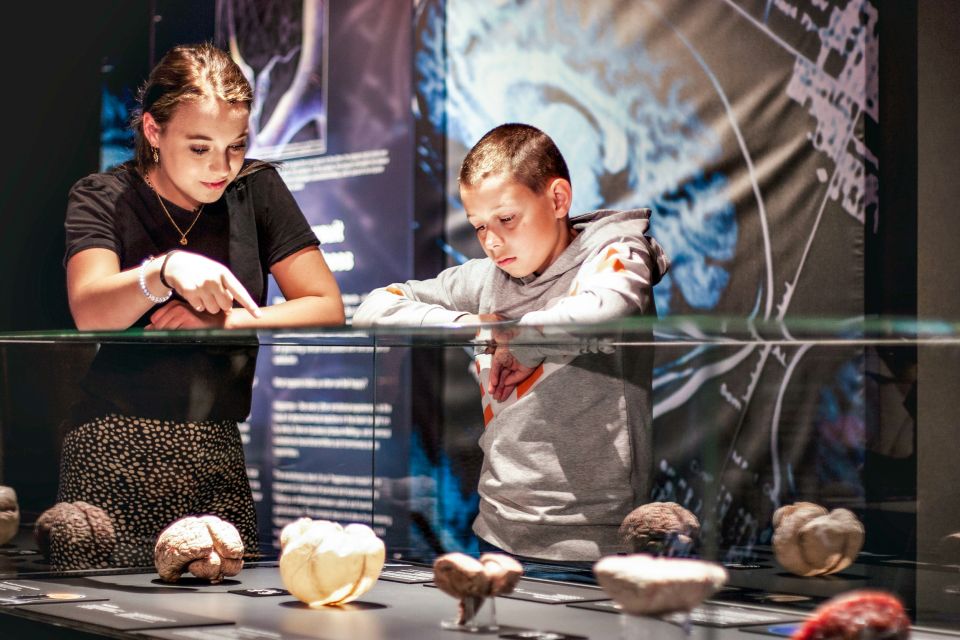
The exhibition also includes interactive moments. While it’s not a hands-on theme park, you may come across stations like virtual anatomy-style content and practical checks such as a blood pressure-style machine. These don’t replace medical testing, but they do help you understand the topic as something physical, not just motivational talk.
A quick note for comfort levels: the show is described as not overly gory for many people. Still, it’s anatomy first. If you’re squeamish, expect that the first encounter with a plastinated body can feel intense until you get used to the setting.
The Happiness Project message: science you can connect to real life
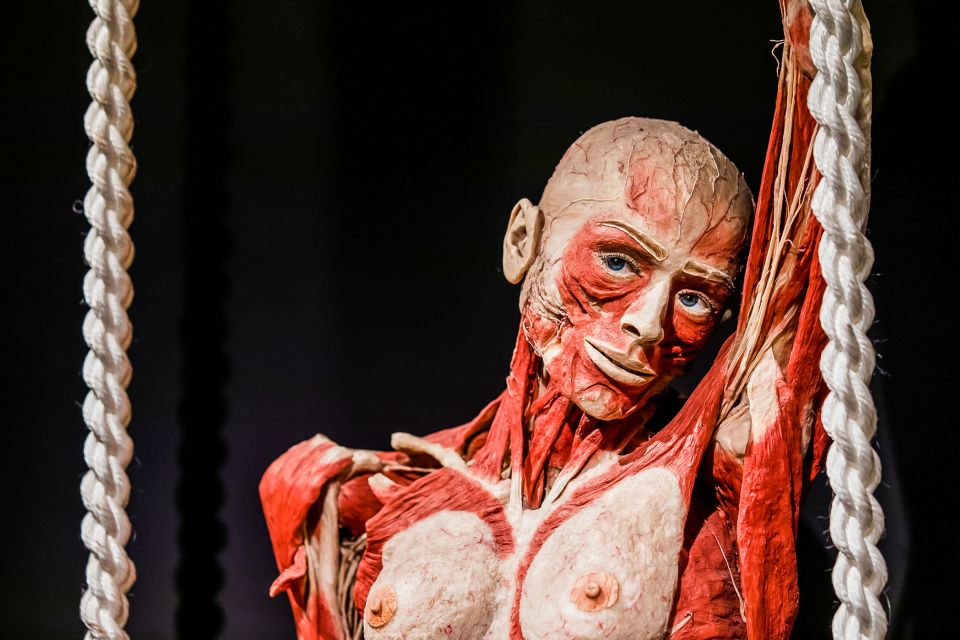
The core promise here is the link between happiness and health. Instead of presenting happiness as a vague feeling, the exhibition frames it as something that can influence the body’s systems—stress response, health habits, and overall resilience.
That theme matters because it’s practical. It doesn’t only ask you to think positively. It pushes you to notice how emotions and lifestyle can affect your well-being. If you’ve ever wondered why stress makes your body act differently, this exhibition uses real anatomy to keep the conversation grounded.
You’ll likely find yourself doing a mental “translation” as you move through exhibits. The labels and visuals connect behavior and emotional states to bodily outcomes. For some people, that leads to immediate reflection—what you do every day (sleep, diet, movement, coping habits) affects the body you’ll live in for years.
Signs, audio guide, and languages: plan your preferred way to learn
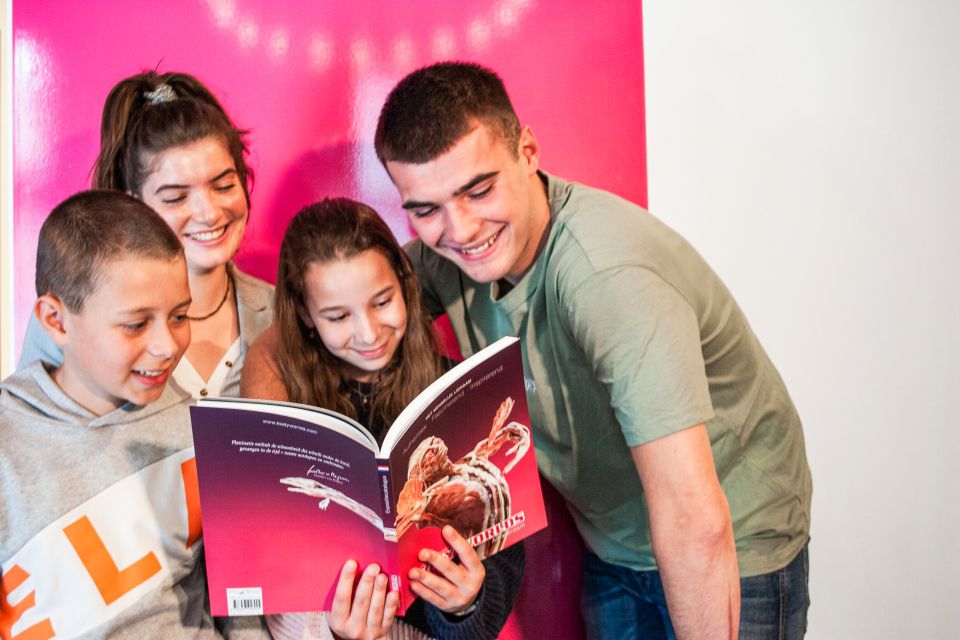
The museum provides information with English and Dutch signage. That alone makes it easier to follow along without needing extra gear.
The audio guide is not included with the basic ticket. But you can rent one, and one visitor noted a price of about 3.50€. That’s often worth it if you want more context or if you’re the type who likes story and explanation instead of just reading wall text.
If you’re traveling with kids, the mix of visuals, labels, and interactive moments can keep attention better than a purely text-heavy museum. Many families find that it’s educational without being boring, and it’s paced so you can adapt to energy levels.
How long it takes (and when to go if you dislike crowds)
Duration is listed as 1 day on the ticket, but your actual time on-site will vary with how much you read. Visitors commonly report around 1.5 to 2 hours.
If you want a smooth visit, use your own reading habits as your guide:
- Fast reader: you can likely do it in about 1.5 hours
- Careful reader: budget closer to 2 hours, maybe a bit more
- Emotional-slowdown type: factor extra time near the end
Timing can also change the atmosphere. One practical tip: avoid peak school-visit windows if you can. The exhibition is educational, but large groups can make the environment feel less calm, and respectful viewing doesn’t always happen when kids are moving in a crowd.
The end section and emotional reality: pregnancy specimens at the end
One of the most important considerations is the last part of the exhibition. The ending includes babies at different stages of pregnancy using donated specimens. Several visitors say this can be upsetting, especially if you’ve experienced miscarriage or stillbirth.
The helpful part is that you control your pace. You can go past sections that feel too intense so you don’t ruin your whole visit by forcing yourself through. If this topic might affect you emotionally, decide in advance how you want to handle it.
This is also where the exhibition’s message becomes bigger than body science. It turns attention toward vulnerability, life stages, and what families carry emotionally, not only physically.
Is it worth the price? $26 for science, time, and a personal scan
At about $26 per person, this is not a “cheap and cheerful” museum ticket in Amsterdam. So the value question is fair.
Here’s what helps justify the cost:
- You get a timed entry plus skip-the-line convenience
- You see 200+ real anatomical specimens
- You get the included free InBody Scan with a full report
- The exhibition uses interactive components rather than only static displays
Some visitors do mention tradeoffs. A few felt the exhibition could feel pricey for the amount of time it takes, and others note certain interactive machines may not always work perfectly. That doesn’t erase the value, but it’s good to keep your expectations realistic.
My practical take: if you want anatomy plus a well-structured science message about happiness and health, the ticket is strong value. If you only want a brief look at bodies with minimal reading, you may feel like you paid more than you needed.
Who should book (and who might not love it)
This is a great fit if you:
- enjoy science and human biology
- want something memorable and different from the typical Amsterdam museum mix
- like structured exhibits where the theme connects all the way through
- want a personal element with the InBody Scan
It may not be the best fit if you:
- are very squeamish about real anatomy
- know you’ll struggle with the pregnancy specimens at the end
- prefer light, airy art experiences over real-life human biology
It’s also a smart pick for mixed-interest groups. One couple dynamic came up in feedback: someone wasn’t sure their partner would like it, and then the partner enjoyed it anyway. That’s often the sweet spot with this kind of museum.
Should you book Body Worlds Amsterdam The Happiness Project?
If your idea of a good Amsterdam day includes real science, thought-provoking displays, and a personal health scan, you’ll likely be happy you booked. The time slot and skip-the-line entry help you spend less time waiting and more time absorbing.
I’d only hesitate if the pregnancy ending could be emotionally difficult for you, or if you’re expecting a short, low-effort museum visit with minimal reading. In that case, plan your pacing carefully or consider skipping the later section.
Overall, the ticket delivers what it promises: a focused exhibition on how happiness connects to the body, backed by 200+ authentic specimens and an extra personal layer via the InBody Scan.
FAQ
FAQ
How long does Body Worlds Amsterdam The Happiness Project take?
Most people spend around 1.5 to 2 hours inside. Your time will depend on how much you read and how slowly you move through the exhibits.
Where is Body Worlds Amsterdam located?
It’s at Damrak 66, 1012 LM Amsterdam, Netherlands.
Is the audio guide included in the ticket?
No. The ticket includes the exhibition entrance, but an audio guide is not included.
Does the ticket include the InBody Scan?
Yes. Your ticket includes a free InBody Scan with a report on fat percentage, protein, minerals, and water.
Are there time slots, or can I arrive anytime?
Access is only possible at your chosen time-slot. You should plan to arrive around that scheduled entry time.
Is Body Worlds wheelchair accessible?
Yes. The attraction is wheelchair accessible.
Are children allowed?
Yes. Children aged 4 years or younger enter free of charge, and child tickets apply for ages 6–17.
What languages are available for the exhibition information?
The displays have English and Dutch information. An audio guide is also available in additional languages.
What is included with the ticket?
The ticket includes entrance to the Body Worlds Amsterdam exhibition The Happiness Project.