REVIEW · AMSTERDAM
Amsterdam Cheese and Wine Canal Cruise
Book on Viator →Operated by Boat Amsterdam · Bookable on Viator
Cheese and wine, afloat in the canal belt. This one-hour cruise mixes Dutch cheese tastings with drinks and live guide commentary while you slide past Amsterdam’s most photogenic canals. You also get classic sights you’d normally have to hop between museums and walks to see in one evening.
Two things I love about it: first, the route is tight and efficient, so you actually cover the canal belt without feeling rushed. Second, the included tasting turns “just sightseeing” into something you can nibble and sip while learning why these streets and buildings look the way they do.
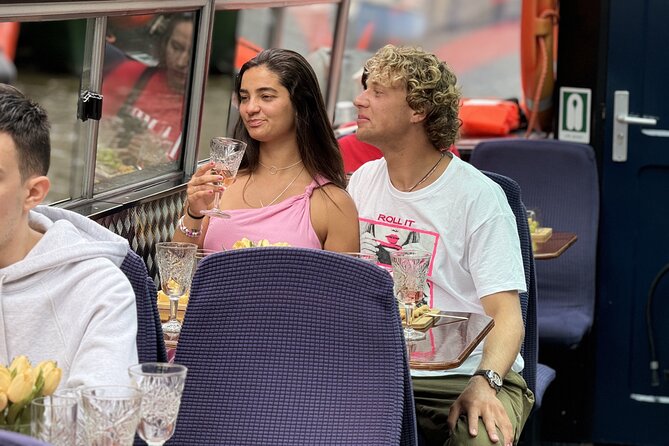
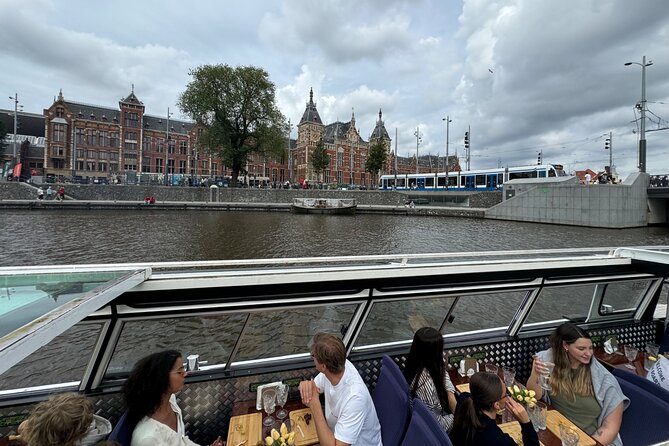
One consideration: the boat setup may be more casual than what you might expect from glossy photos, with open-air conditions and limited seating/table space on some departures. If you’re sensitive to wind or sun, plan layers and consider asking what the onboard setup will be.
In This Review
- Key things to know before you go
- A 1-hour canal cruise that turns snacks into a city lesson
- Meeting at Amstel 51F and planning your time on the water
- Herengracht: where the canal belt shows off
- Reguliersgracht and the 7 bridges view you actually remember
- Jordaan from the water: working-class design you can spot
- Prinsengracht #263 and the Westerkerk: two landmarks with heavy context
- Why Prinsengracht feels more modest (and what that teaches you)
- UNESCO canal belt facts that put the route in perspective
- Amstel Church, the Hermitage, and two bridge names with meaning
- Dutch cheese and drinks: pacing your tasting on a moving boat
- Value check: what $45.01 buys in a short Amsterdam block of time
- Who should book this cruise, and who should think twice
- Final call: should you book the Amsterdam cheese and wine canal cruise?
- FAQ
- How long is the Amsterdam cheese and wine canal cruise?
- What’s included in the cheese and drink experience?
- Is there a live guide, and what language is it in?
- Where do I meet for the tour?
- Does the tour include transportation to the meeting point?
- Is the ticket mobile?
- Can I cancel for a full refund?
- Are service animals allowed, and is the meeting point near public transport?
Key things to know before you go
- UNESCO canal belt route in just about 1 hour, with multiple canal-belt neighborhoods in one go
- The Reguliersgracht 7 Bridges view, one of the few places you can see seven bridges lined up
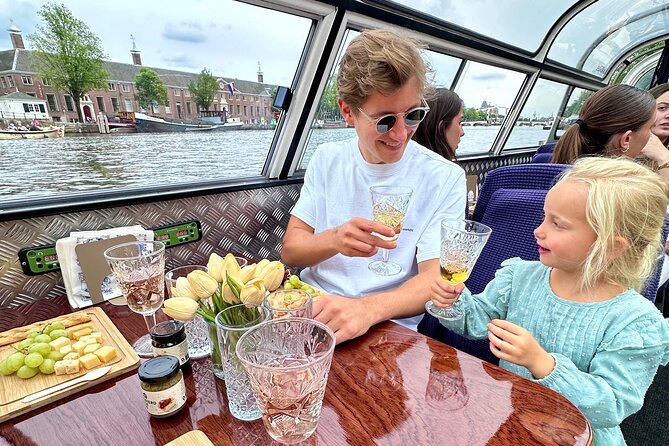
- Included Dutch cheese plus drinks like Heineken, wine, soda, coffee, and tea
- Live in-person English commentary that ties the buildings to real stories
- Small-group feel up to 36 people, and some departures can feel very intimate
A 1-hour canal cruise that turns snacks into a city lesson
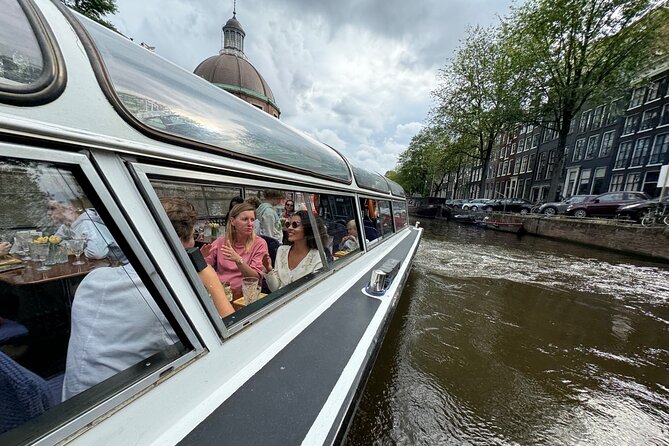
Amsterdam can swallow your time fast. One hour is short, so you don’t overthink it, and you get enough canal scenery to help you orient yourself for the rest of your trip.
What makes this experience click is the pairing of food and drink with a moving classroom. As you glide past Herengracht, the Jordaan, and the Prinsengracht, you’re not just collecting photos. You’re hearing why the canals look the way they do, and how wealth and work life shaped the canal belt.
The guide experience matters here. You’ll hear live commentary in English from an in-person guide, and in some cases you may also hear Dutch, depending on who’s guiding. Guides such as Ronald, Lex, Tom, Berent, and others have been noted for keeping the information flowing in a way that’s easy to follow even when you’re relaxing.
You can also read our reviews of more boat tours in Amsterdam

Meeting at Amstel 51F and planning your time on the water
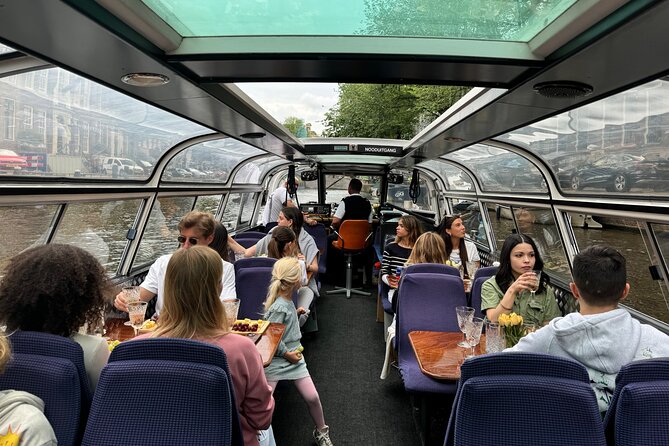
You start at Amstel 51F, 1018 EJ Amsterdam, and the cruise ends back at the meeting point. Since transportation isn’t included, you’ll want to plan your arrival on foot or by public transport.
The cruise runs for about 1 hour, which is perfect for a first-night Amsterdam plan. It also means you don’t have to commit to a half-day canal routine just to get the highlights.
Onboard comfort can vary. Some departures may use an open-air boat, so bring a layer for wind. Also note that at least one past participant reported no onboard toilet, so don’t count on facilities during the sail.
If your goal is a calm evening, the pace generally fits that mood. Several people have described it as relaxed and quiet, helped by the fact that canal cruising here is slow by nature.
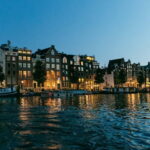
Herengracht: where the canal belt shows off
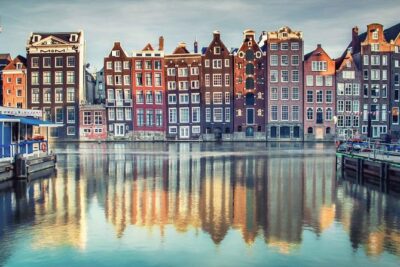
Your cruise begins on Herengracht, one of the grand canal streets of Amsterdam’s canal belt. This stretch is where you feel the “upper class” design influence in the canal belt layout.
From the water, you get a better read on canal-scale architecture. Houses line up along the water, and the perspective makes it easier to notice the differences in frontage width and building style compared with other parts of Amsterdam’s canal system.
A practical tip: keep your camera ready when you’re near the most open sightlines along Herengracht. You won’t stop for long, so the best photo windows are the moments the boat slows slightly as it approaches certain views.
Reguliersgracht and the 7 bridges view you actually remember
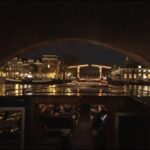
Next comes REGULIERSGRACHT (7 BRIDGES), famous for a rare panorama. This is the only point in Amsterdam canals where you can see seven bridges one after the other in a single view.
This is the kind of sight that’s hard to understand from a map. From the boat, you get the full rhythm of arches and crossings stacked in one direction, and it’s a strong “aha” moment for anyone new to the canal belt.
If you care about photos, stand or lean where you can get a straight angle down the canal. You’ll get more bridge alignment that way than if you’re photographing across a crowd of heads.
Jordaan from the water: working-class design you can spot
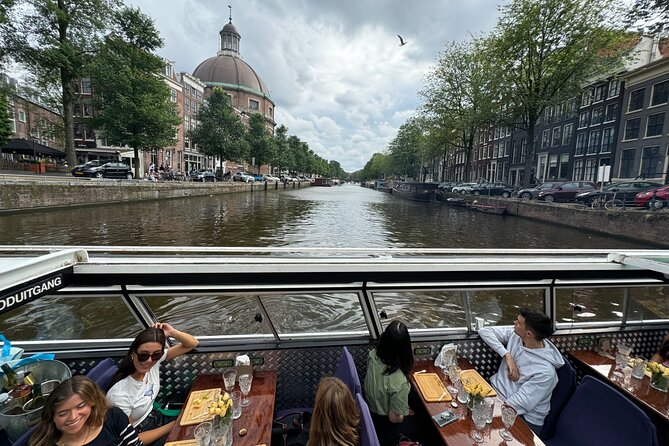
As you head toward the Jordaan area, the route follows Leliegracht. The Jordaan was designed for Amsterdam’s growing working class, and the canal belt planning shows it in the details.
The name Jordaan comes from the French word jardin, meaning garden. That shows up in street naming themes linked to plants and trees, which adds a layer of “why this neighborhood is different” beyond just the buildings.
You’ll also notice the houses are smaller and the street pattern differs from other canal-belt areas. The logic is tied to cost: the streets follow an old ditch pattern already there, which helped keep expenses down.
On the boat, that translates into a neighborhood feel you can sense quickly. You see more irregularity and tighter scale compared with the grander canal stretches, which helps you understand Amsterdam as a patchwork of communities—not one uniform postcard.
You can also read our reviews of more wine tours in Amsterdam

Prinsengracht #263 and the Westerkerk: two landmarks with heavy context
Then you move to Prinsengracht #263, the former home connected to Anne Frank and her diary Het Achterhuis. From the water, you get a respectful look at the place tied to the Frank family’s period of hiding during World War II.
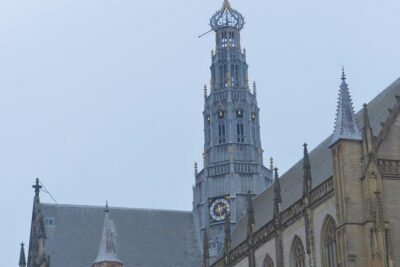
Next is the Westerchurch (Westerkerk), built between 1620 and 1631 in Renaissance style. Its tower reaches 87 meters, making it the highest church tower in Amsterdam, and it’s also famous in Anne Frank’s writing.
The tower details matter here because they reflect how power showed up in symbols. The imperial crown on top dates from 1637 and was a gift from Maximillian I, linked to the city’s right to use the crown in its arms in gratitude for support during wartime.
It’s a lot to process in one hour. The upside is that the guide commentary gives you a thread to hold onto, so these landmarks become understandable parts of a single story—Amsterdam’s geography, architecture, and lived history.
Why Prinsengracht feels more modest (and what that teaches you)
Between these big landmarks, you also get a key interpretive point: Prinsengracht is relatively modest compared to canals like Herengracht.
Herengracht was designed for Amsterdam’s upper class. Prinsengracht, by contrast, functioned as a transitional canal between the wealthier canal belt and the working-class neighborhoods around the Jordaan. You can see this in the houses—less wide and with fewer decorations.
This is one of those lessons that works better on water than on foot. From the canal, you’re close to the building edges, and you can compare “scale and style” without getting distracted by street-level signage or traffic.
Think of it as design sociology. The canal belt didn’t just hold water. It reflected who lived where and what resources shaped the city’s growth.
UNESCO canal belt facts that put the route in perspective
A major reason this cruise feels worth it is how it frames the canal belt as a system, not just a collection of sights.
The canal belt has been on the UNESCO World Heritage List since 2008. There are 165 canals with a total length of 100 km, and the average canal depth is 2.6 meters. You’ll also see how bridge-heavy Amsterdam is, with 1680 bridges, compared with Venice’s 400.
Even if you don’t memorize the numbers, these facts change your view. You stop seeing individual scenes and start recognizing the whole city structure that turns daily life into canal geography.
If you like trivia that actually helps you look harder, this is it. The boat route gives you a way to “feel” the scale instead of treating it like a brochure statistic.
Amstel Church, the Hermitage, and two bridge names with meaning
Later in the cruise, you reach a cluster that blends architecture, art, and engineering.
AMSTEL CHURCH dates from 1668. It was originally a wooden, temporary church built for residents of the newly constructed canal belt. Plans for a permanent stone church weren’t carried out, so the temporary building is still there after almost 350 years, and it hosts cultural events today.
Close by is the Hermitage Museum in the Amstelhof. The building dates from 1681 and served as a nursing home for about 300 years. In 2007, it became a museum, and some rooms were restored and kept.
This Hermitage is an annex of the Hermitage in Saint Petersburg. Together, the two Hermitages share a major collection and are described as having the largest art collection in the world.
Then come the bridges. First, MAGERE BRUG (Skinny Bridge). It’s the oldest still working drawbridge in Amsterdam that’s partly wooden and is a National Monument. The original idea dates to the 17th century when the city council used a cheaper design—wood instead of stone and a narrow, skinny width. The current bridge dates from 1934, and car traffic has not been allowed to cross it since 2003. It’s also famous from film settings, including James Bond.
Finally, BLAUWBRUG (Blue Bridge). It gets its name from its predecessor, another narrow drawbridge like the Skinny Bridge but with blue railings. The current Blauwbrug dates from 1883 and was inspired by the Pont Neuf in Paris. Because of the World Exhibition in Amsterdam in 1883, Amsterdam needed a grander-looking bridge.
The crowns on the Blue Bridge add another layer. They’re imperial crowns connected to the same story as other city landmarks: Maximillian I’s gift and the emperor’s crown linked to Amsterdam’s trading importance.
If you enjoy understanding design choices, this bridge sequence is the payoff. You see cost-saving logic, civic pride, and international influence—all in one moving line of structures.
Dutch cheese and drinks: pacing your tasting on a moving boat
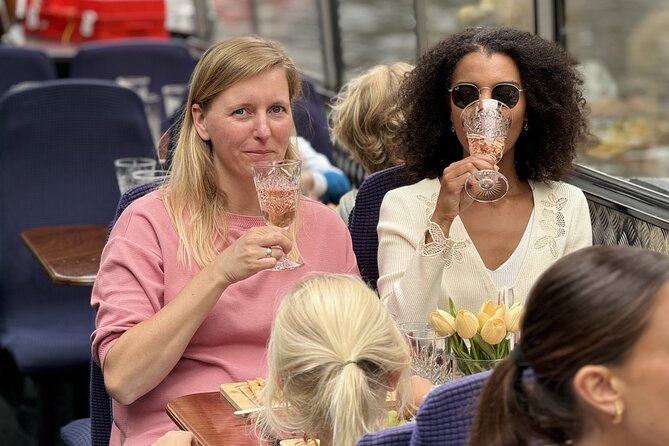
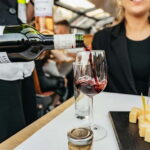
The centerpiece here is the Dutch cheese selection plus drinks. You’re served Heineken beer, wine, soda, coffee, and tea. That matters because you’re not stuck with one drink choice, and you can pace how fast you eat.
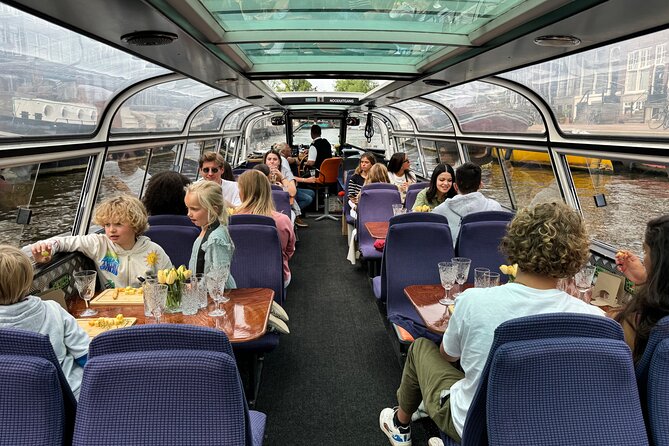
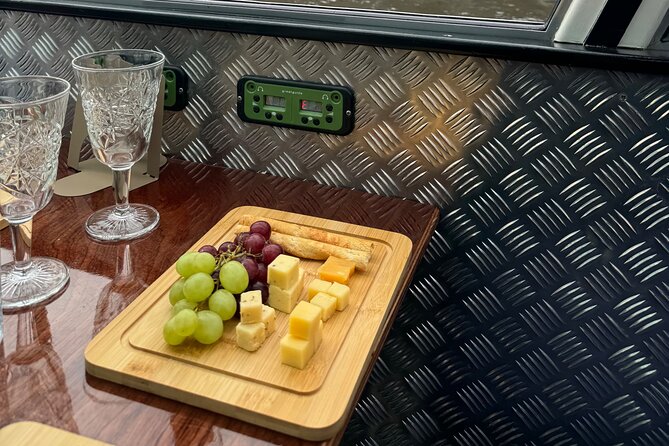
Cheese portions tend to be enough to feel like a real tasting, not just a token bite. People have described the cheese board as generous, sometimes paired with grapes and breadsticks. Even if your exact board varies, you can plan for a proper snack meal without needing a separate dinner immediately afterward.
I’d treat the tasting like a two-round plan. First round: take a slow bite, then enjoy a few minutes of guide commentary while you sip. Second round: save the stronger bites for later when you’re near the bridge segments, where the scenery tends to be more visually dramatic.
Don’t forget the obvious but easy-to-miss detail: you’re on water. If you bring anything besides your appetite—camera strap, phone case, a light jacket—make sure it’s secure before you grab your drink.
Value check: what $45.01 buys in a short Amsterdam block of time
At $45.01 per person for about 1 hour, the value mostly comes from bundling. You’re paying for a guided canal cruise plus included food and drinks.
If you were already going to do a canal cruise, this package is easier to justify. The price becomes less about paying for “time on a boat” and more about getting a guided route with a tasting included.
It also helps that the group size max is 36 travelers. A smaller group makes live commentary feel more like a conversation than a lecture, especially on narrow canal stretches where the boat tends to slow.
Would it still be worth it if you only wanted cheese and wine? Probably yes for most people, because it’s not just a bar. It’s a structured route with real context as you go.
Who should book this cruise, and who should think twice
This cruise is a strong fit for:
- First-time Amsterdam visitors who want canal highlights fast
- Couples and small groups who like relaxed evenings
- People who enjoy local flavors and don’t want to plan a cheese stop and a canal cruise separately
- Anyone who likes the idea of learning why the canal belt was built as it was, not just where to stand for photos
I’d think twice or at least confirm details if you:
- Expect a fully glass-covered, luxury boat. Some setups can be more open-air with less shade.
- Need sun protection for health reasons. If shade is a must, ask about onboard cover before booking.
- Rely on onboard facilities. At least one person reported no toilet, so plan accordingly.
Also keep your expectations aligned with the timeframe. This is a quick cruise. You won’t get deep museum time, and you’re not leaving the boat to explore.
Final call: should you book the Amsterdam cheese and wine canal cruise?
I’d book it if you want an easy win: a one-hour Amsterdam canal cruise that pairs great views with a real Dutch food-and-drink moment. The route hits the kinds of sights you’d otherwise bounce around to see, and the guide commentary helps it feel like more than just floating.
If you’re picky about boat comfort and shade, do a quick pre-check on the onboard setup. After that, this is an excellent “first night” plan, especially if you want to eat, sip, and get your bearings in the canal belt.
FAQ
How long is the Amsterdam cheese and wine canal cruise?
It runs for about 1 hour.
What’s included in the cheese and drink experience?
You’ll get a fine selection of Dutch cheeses plus alcoholic beverages (Heineken beer and wine) and also soda, coffee, and tea.
Is there a live guide, and what language is it in?
Yes. There’s an in-person guide, offered in English (and Dutch as well).
Where do I meet for the tour?
Meet at Amstel 51F, 1018 EJ Amsterdam, Netherlands.
Does the tour include transportation to the meeting point?
No. Transportation is not included.
Is the ticket mobile?
Yes, the tour uses a mobile ticket.
Can I cancel for a full refund?
Yes. Free cancellation is available, and you can cancel up to 24 hours in advance for a full refund.
Are service animals allowed, and is the meeting point near public transport?
Service animals are allowed, and the meeting point is near public transportation.