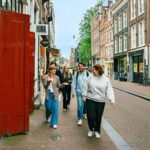
A few streets carry a lot of weight. This private, crowd-free walk through Amsterdam’s Jewish Quarter blends memorial sites with places of faith, resistance, and everyday culture—so the story feels human, not textbook.
I especially like the way the route moves from one landmark to the next with clear context, starting at the Holocaust Namenmonument and building toward the synagogues and memorials you’d normally zip past. I also love the small-group setup (max 4), and the fact that the guide’s communication and timing can be very personal—one name that comes up again and again in real-life experience is Aleks.
One possible drawback: not everything is included by default. Anne Frank House is optional, and several museum entries require separate tickets (and one Holocaust-site complex is under construction until 2024), so you’ll want to go in with your expectations straight.
In This Review
- Key things I’d plan for
- Private, crowd-free walking means you control the pace
- Where the route starts and ends (and why that matters)
- Holocaust Namenmonument: starting with names instead of numbers
- The Auschwitz Monument: broken glass and the weight of remembrance
- Hollandsche Schouwburg under construction: outside viewing, guided context, and photos
- Jewish Historical Museum + Portuguese Synagogue: architecture, faith, and continuity
- Dockworker monument: resistance you can stand next to
- Spinoza connection and the Jewish-European mind
- Deids memorial and Jewish resistance memorial: two kinds of remembrance
- GASSAN: a practical pause that’s still connected to Amsterdam identity
- Rembrandt House Museum and Waterlooplein Market: culture and street-life context
- How the Anne Frank House visit works (and how to avoid ticket stress)
- Value check: what you’re really paying for
- Best fit: who should book and who should think twice
- Should you book this Jewish Amsterdam private walking tour?
- FAQ
- Is Anne Frank House included in this tour?
- How long is the Jewish Amsterdam private walking tour?
- What’s the group size for this private tour?
- Is pickup available?
- Which stops are free?
- Are museum tickets included?
- Can you enter Hollandsche Schouwburg during the tour?
- Where do you meet and where do you end?
- Is it suitable for people with limited mobility?
Key things I’d plan for
- A tight, private route with time to stop, look, and ask questions (no crowd shuffle)
- Start with names at the Holocaust Namenmonument, then move to Auschwitz remembrance
- Synagogues that are still in use, including the Portuguese Synagogue from 1675
- More than tragedy stops, with memorials for Jewish resistance and the deaf Jewish victims
- Construction affects interiors at Hollandsche Schouwburg through 2024, so expect outside viewing and photo-based context
- Anne Frank House tickets are not automatically included, even though your guide can help
Private, crowd-free walking means you control the pace
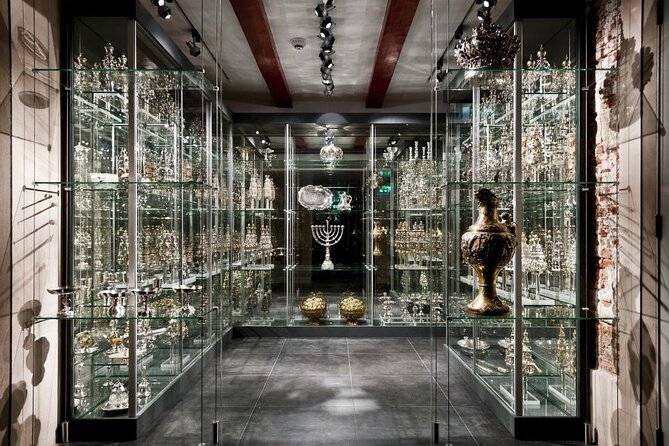
This is a true private setup for up to four people. That changes everything. Instead of weaving with other groups, you can pause when something hits you—at a memorial stone, a plaque, or a doorway with a history most visitors never notice.
The tradeoff is that the day is still a walk, about 3.5 hours. Amsterdam is great for strolling, but if you have limited mobility, plan on slower pacing and more frequent breaks. The operator notes the pace can be adjusted and extra breaks can be added if you agree ahead.
Price-wise, it’s $540.69 per group. If you split it among four, the cost can feel reasonable for a guide who’s with you the whole time and not just for the “big” stops. If you’re only two people, it’s a bigger outlay—but you’re buying time, focus, and a route that doesn’t feel rushed.
Also: pickup is offered, and the meeting point is at Passenger Terminal Amsterdam, Piet Heinkade 27. That helps if you’re arriving from a cruise ship or want an easier start than hunting for a street-corner rendezvous.
You can also read our reviews of more walking tours in Amsterdam

Where the route starts and ends (and why that matters)
You begin at Passenger Terminal Amsterdam, Piet Heinkade 27 (near Prinsengracht/Western Church area, depending on the exact end point instructions). You finish at the Anne Frank House Westermarkt 20 area, by the Western Church.
That ending location is practical. If you plan to visit Anne Frank House after your walk, you’re dropped in the right neighborhood with minimal hassle. Just keep in mind: even though it’s close by, the tour itself does not include entry to Anne Frank House.
If you’re working with museum hours, this matters. The Holocaust memorial stops and synagogues have different access patterns, and construction at one key complex can limit interior viewing. The best strategy is to treat this like a guided orientation to the Jewish quarter and Holocaust sites, then decide museum-by-museum what you want to add.
Holocaust Namenmonument: starting with names instead of numbers
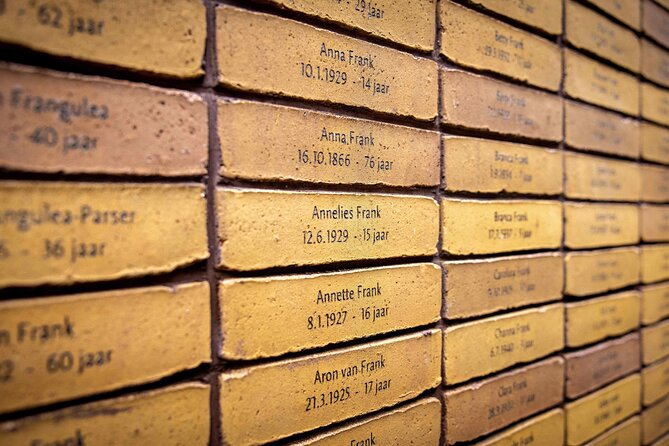
The tour opens at the Holocaust Namenmonument. This memorial bears the names of 102,000 people who died in Nazi camps of death and were not given a proper burial.
This is a strong opening choice. It immediately reframes the history away from abstraction. When you start with names, the later stops about places and systems don’t feel distant—they feel like they connect back to real lives.
You get about 15 minutes here. There’s no ticket cost noted for this stop. I like that the time is long enough to actually read, not just glance.
Possible consideration: this is emotionally heavy ground. If you’re traveling with kids or anyone who needs lighter pacing, you’ll want to communicate that early, so your guide can adjust the rhythm.
The Auschwitz Monument: broken glass and the weight of remembrance
Next is the Auschwitz Monument, marked by broken-glass imagery and honoring approximately a million victims of Auschwitz.
You’ll spend around 10 minutes. This is short, but for memorials, the goal is usually respect and orientation: see the symbol, learn what it’s referencing, then move on.
I also like how this stop is placed early in the day. It signals clearly that this tour isn’t only about Jewish religious life and architecture—it’s about how Nazi persecution unfolded and how remembrance works in public space.
Hollandsche Schouwburg under construction: outside viewing, guided context, and photos
This is the stop that requires the most expectation-setting. Hollandsche Schouwburg (also tied to the Dutch Theater) and its related Holocaust museum buildings are under construction until 2024.
That means you can’t visit the interior museums. The tour still treats these buildings as stop points, and the guide’s job shifts to interpretation. The available information says the guide will share the story and background, including facts illustrated by the guide’s personal photo collection. You should expect an outside-focused explanation rather than a museum walkthrough.
You’ll have about 15 minutes at this stop. Admission isn’t included.
This can still be meaningful. The building is part of the story—places like this often mattered because they were used as points in the system of persecution. Even when you can’t go inside, you can learn what the walls represent and what the public memorials are trying to hold in view.
You can also read our reviews of more private tours in Amsterdam



Jewish Historical Museum + Portuguese Synagogue: architecture, faith, and continuity
After the Holocaust-focused stops, the day turns toward living Jewish Amsterdam.
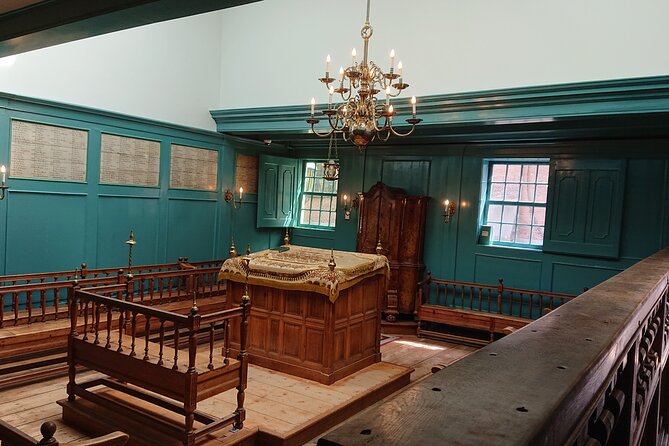
The Jewish Historical Museum and JHM Children’s Museum are housed in a group of four historical Ashkenazi synagogues. In the tour flow, you also stop by the Portuguese Synagogue, known as the Snoge or Esnoga.
Here’s the practical part: the tour notes a combined ticket for the Jewish Historical Museum and the Portuguese Synagogue, and it also says the admission ticket is not included. Your guide can help you figure out timing, but you should plan to pay for these entries yourself.
Why I think this is valuable: these aren’t just historical shells. One of the best ways to understand a community is to see how buildings served it—then and now. With the Portuguese Synagogue (from 1675), you’re looking at Sephardic Jewish heritage in a synagogue that’s still in use.
You’ll spend about:
- 10 minutes at the Jewish Historical Museum area
- 10 minutes at the Portuguese Synagogue exterior/interior access as possible
If you arrive too late for interior viewing, you can still gain a lot from the guide’s explanations. One real-life experience shared with me in the tour’s feedback included a guide using photos to show inside details when timing made full interior visits difficult. So if your schedule is tight, don’t panic—still ask the guide to point out what you’d normally miss inside.
Dockworker monument: resistance you can stand next to
One of the more memorable stops is Dokwerker—the dockworker statue.
It honors dock workers who protested anti-Semitic policies of Nazi occupants and the first deportations of Jews to Mauthausen held on February 24, 1941.
You get about 10 minutes, and admission is free.
What I like here is the shift from memorial as mourning to memorial as action. It reminds you that persecution wasn’t the whole story of what happened—people resisted, argued, protested, and tried to push back, even at great risk.
Spinoza connection and the Jewish-European mind
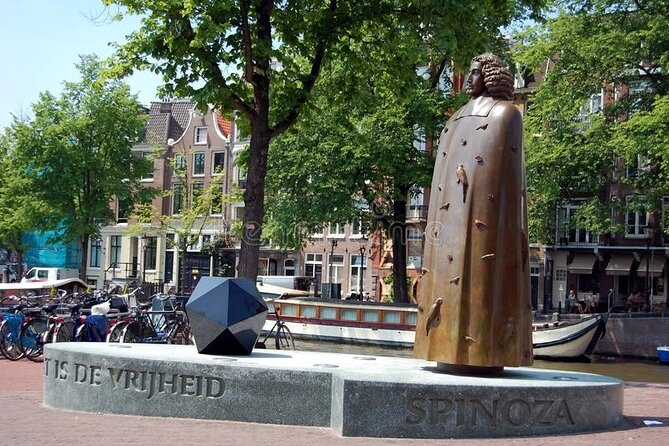
The route includes a Catholic church from the 19th century connected to Jewish philosopher Baruch Spinoza and his family. You’ll also hit a Spinoza Monument.
Amsterdam has a way of layering thinkers into streets and neighborhoods. Spinoza is often less in-your-face than the painter or the canal-view poster, so this is a nice change of pace from the heavier memorial sequence.
You’ll see:
- about 10 minutes at the Spinoza Monument
- a shorter stop for the church linked to Spinoza’s residence
These stops are free and quick, but they add balance. Not everything Jewish Amsterdam is only about what was destroyed; it’s also about how people influenced European thought and culture.
Deids memorial and Jewish resistance memorial: two kinds of remembrance
Two small but important stops come next:
- Deaf Memorial (about 5 minutes): commemorates deaf Jewish victims of the Nazi regime from 1940 to 1945.
- Monument vor Joods verzet (about 10 minutes): honors Jewish resistance fighters who died during World War II.
Both are free.
I appreciate pairing them like this. One memorial points to victims whose persecution wasn’t always widely discussed. The other centers on resistance—people who fought back or resisted in the face of impossible odds. If you’re the type who likes to connect the dots, your guide can usually explain how these memorial choices reflect what later generations wanted to remember.
GASSAN: a practical pause that’s still connected to Amsterdam identity
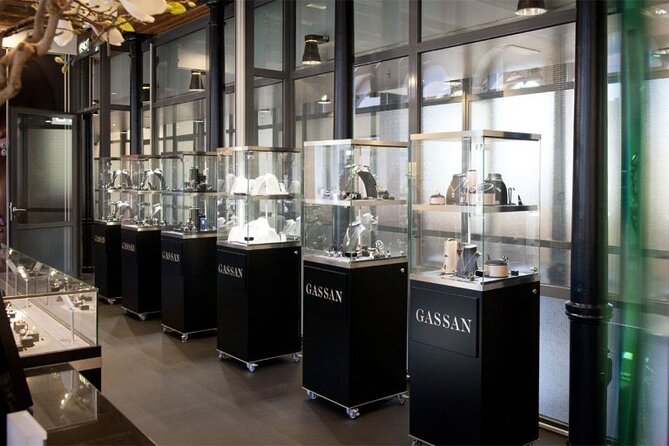
Then there’s GASSAN, a museum/workshop/store connected to a famous diamond family company.
This stop is about 20 minutes, and it’s listed as free. The note says free visiting tours with a local company guide are available.
This part won’t be the center of the Holocaust story, but it fits the day as a reality check. Amsterdam is a living city, not just a museum route. GASSAN is also the kind of place where you might see how trade and craft shaped the economy and everyday life that many Jewish residents were part of.
Go in with a simple expectation: you’re not buying a full workshop experience unless you want to. Use it as a break, then get back to the deeper stops.
Rembrandt House Museum and Waterlooplein Market: culture and street-life context
The tour includes:
- Rembrandt House Museum: about 15 minutes, admission ticket not included. Rembrandt lived there from 1639 to 1658, and his life and work were connected to Amsterdam’s Jewish community in the 17th century.
- Waterlooplein Market: about 15 minutes, free. It’s described as the oldest flea market of Amsterdam (and the Netherlands) until World War II, and a social life center for more than 150 years.
These two stops do something clever: they pull you from commemoration back into culture and city rhythm.
With Rembrandt, you’ll likely need to decide whether to pay for interior time. If your goal is museum depth, you’ll want more than 15 minutes. But even without buying an extra ticket, the guided framing can help you understand the connections between art and community.
With Waterlooplein, it’s less about buying anything and more about imagining how ordinary life flowed before the war. That shift—memorial to market—is a real part of understanding a city.
How the Anne Frank House visit works (and how to avoid ticket stress)
This is critical: the tour ends near Anne Frank House, but the visit to Anne Frank House Museum is not included.
Your guide may assist you regarding ticket availability and fees, but the information also says the guide cannot obtain tickets personally.
So what should you do?
- If you want to go inside, plan on buying tickets separately.
- If your timing is tight, ask the guide for guidance on what’s possible after the walking tour.
- If you’re traveling with a schedule constraint, tell the guide early. One strong theme in feedback is that guides can adjust the timing of the walk to help you fit an Anne Frank House entry window.
Why the fuss matters: Anne Frank House tickets are a common “oops” moment. Some people expect everything to be packaged. Here, it’s explicitly not. The good news is that guides often help with coordination, but you should still treat it as your responsibility to secure entry if you want it.
Value check: what you’re really paying for
At $540.69 per group, you’re paying for:
- a private guide for about 3.5 hours
- a route built around Jewish Quarter context plus Holocaust remembrance
- time efficiency (you’re guided, not searching)
- a small group size (max 4), which supports questions and pacing
You’re also not automatically paying for every museum stop. The tour notes several admissions are not included, including:
- Jewish Historical Museum + Portuguese Synagogue combined ticket
- Rembrandt House Museum
- Anne Frank House (ticket assistance only)
Some memorials are free (Holocaust Namenmonument, Auschwitz Monument, Dokwerker, Uilenburger synagogue, GASSAN, Deaf memorial, Spinoza monument, Jewish resistance monument, Waterlooplein, and more).
My take on value: this tour is most worth it when you want both the heavy context and the architectural/cultural stops, and you want it without crowd friction. If you’re only after one museum visit, you might prefer a cheaper, single-site day. If you want the whole arc—from names and monuments to synagogues and everyday Amsterdam spots—then the private guiding time can be a good deal.
Best fit: who should book and who should think twice
This tour is a strong match if you:
- like private guiding and hate waiting in crowds
- want Holocaust remembrance plus Jewish community context in one connected walk
- appreciate a guide who can explain what you see, including outside viewing when interiors aren’t available
It might be a tougher match if you:
- need fully seated, low-walking mobility (it’s still a long walk, even with adjustable breaks)
- expect that every museum entry is included automatically, especially Anne Frank House
- can’t handle emotionally heavy stops early in the day
Given the construction around Hollandsche Schouwburg, you should also expect that some stops are more “story at the building” than “inside museum time” until access improves.
Should you book this Jewish Amsterdam private walking tour?
Yes, if you want a focused, emotionally intelligent route with real context and room for questions. The best reason to book is the combination: Holocaust memorial sites first, then synagogues and cultural connections that show continuity instead of only rupture.
Before you go, do two things:
- Plan for separate museum tickets where noted, and treat Anne Frank House as optional and not included.
- If you’re sensitive to pace or mobility, tell the guide early so the walk can slow down and pause more often.
If those points fit your style, you’ll likely appreciate why a guide like Aleks often gets praised for coordination and for helping visitors see what they can—even when timing or construction limits interior access.
FAQ
Is Anne Frank House included in this tour?
No. The tour does not include entry to the Anne Frank House Museum. Your guide can assist with availability and fees, but cannot obtain tickets personally.
How long is the Jewish Amsterdam private walking tour?
It’s about 3 hours 30 minutes.
What’s the group size for this private tour?
The maximum is 4 travelers.
Is pickup available?
Yes, pickup is offered.
Which stops are free?
The tour lists free admission for several sites, including the Holocaust Namenmonument, Auschwitz Monument, Dokwerker, GASSAN, Uilenburgersjoel, Huis De Pinto, Waterlooplein Market, Deaf Memorial, Spinoza Monument, and Monument vor Joods verzet.
Are museum tickets included?
Not all of them. The Jewish Historical Museum and the Portuguese Synagogue require a combined ticket that is not included. Rembrandt House Museum ticket is also not included. Anne Frank House tickets are not included.
Can you enter Hollandsche Schouwburg during the tour?
Interiors are not possible because the Hollandsche Schouwburg (and related Holocaust museum buildings) are under construction until 2024. It’s still treated as a stop point with guided explanation outside.
Where do you meet and where do you end?
You start at Passenger Terminal Amsterdam, Piet Heinkade 27, 1019 BR Amsterdam. You end at the Anne Frank House area at Westermarkt 20, 1016 GV Amsterdam, near the Western Church.
Is it suitable for people with limited mobility?
The tour takes at least 3.5 hours of walking. Pace can be adjusted and breaks can be added if agreed, but you should consider mobility limits before booking.