
REVIEW · AMSTERDAM
Amsterdam: Fabrique des Lumières Entry Ticket
Book on GetYourGuide →Operated by Fabrique des Lumières · Bookable on GetYourGuide
Ancient Egypt turns into moving light. At Amsterdam’s Fabrique des Lumières, you’ll step into a huge industrial hall where music and projections tell stories across three big exhibitions, from pyramid-era Egypt to computer-generated alien worlds. I’m drawn to the sheer scale—3,800m² of show space and walls up to 17 meters high—and to how carefully the sound and visuals line up.
One possible drawback: if bright light and sound effects trigger you, this isn’t for you. The attraction is not suitable for people with epilepsy, so it’s worth taking that seriously before you book.
In This Review
- Key Things to Know Before You Go
- Entering Fabrique des Lumières: A Big Industrial Hall Full of Light
- Timed Entry Tickets and How to Plan Your Timing
- The Kingdom of the Pharaohs: Pyramid-Era Art in Moving Light
- French Orientalist Painters: Ingres, Delacroix, and Gérôme
- Foreign Nature: Fractals and the Math-That-Looks-Alive Moment
- Where You Can Actually Stand: Balcony, Mirrors, and Rewatching
- Price and Value: Is $20 Worth It?
- Rules That Affect Your Comfort: Lockers, Food, Bags, and Photos
- Getting There in Amsterdam: Westergas Park Is Your Key Landmark
- Who This Works For (and Who Might Prefer Something Else)
- Should You Book Fabrique des Lumières in Amsterdam?
- FAQ
- How long are the exhibitions at Fabrique des Lumières?
- What is included in the Amsterdam Fabrique des Lumières entry ticket?
- Do I need a guide for this experience?
- Is the ticket valid for more than one day?
- What items are not allowed inside?
- Is Fabrique des Lumières wheelchair accessible, and is it safe for epilepsy?
Key Things to Know Before You Go
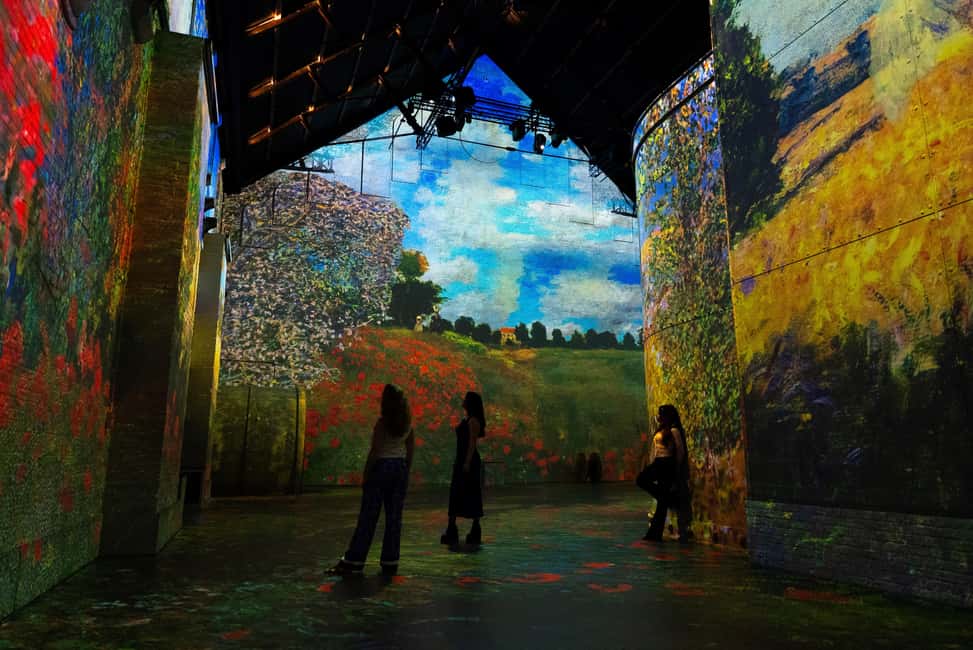
- Westergas Park location: An easy stop in Amsterdam by public transport, tucked into the park area.
- Huge scale: 3,800m² of projected art with walls up to 17 meters high.
- Timed-entry ticket: You pick a slot, skip the ticket line, and then enjoy the shows on-site.
- Three main shows: The Kingdom of the Pharaohs, French Orientalist Painters, and Foreign Nature.
- About 40 minutes per exhibition: Plan on time to watch fully, and you can usually stay longer if you want to see it again.
- Strict rules: No food/drinks, no large bags, no flash photography, and no baby strollers.
Entering Fabrique des Lumières: A Big Industrial Hall Full of Light
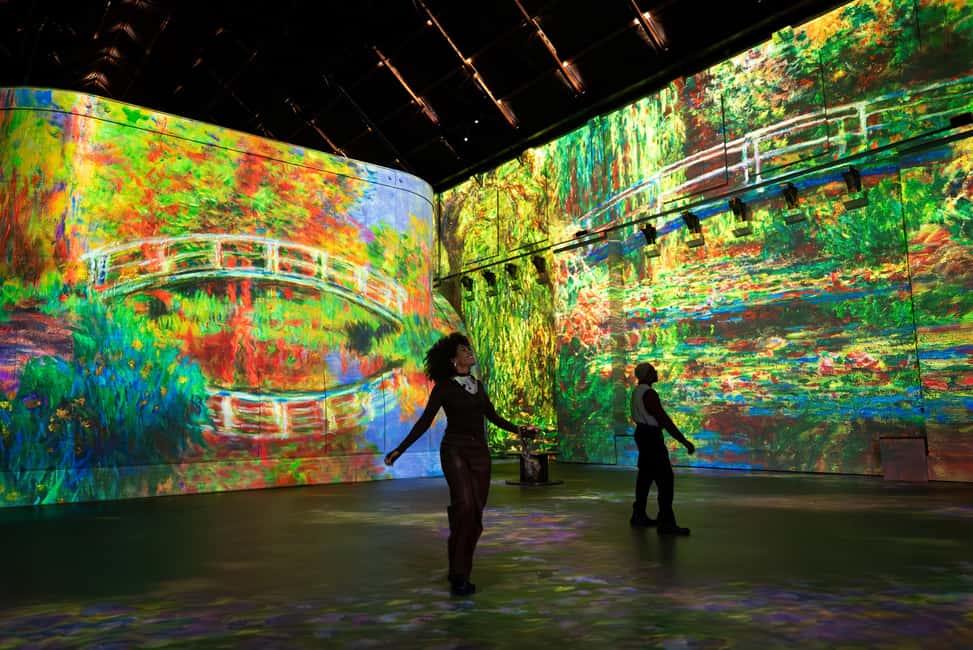
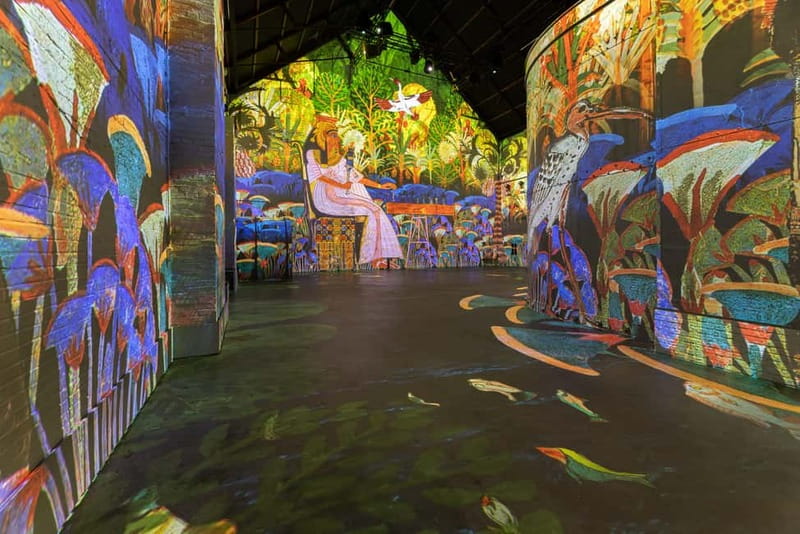
Fabrique des Lumières is not a classic museum building with white walls and hushed silence. It’s a warehouse-like space in Westergas Park, designed for projection. The venue’s scale matters here: you’re surrounded by light, not just looking at it.
Inside, the technology turns art into something you can stand inside. The stories show up across the hall’s huge surfaces, with walls reaching up to 17 meters high. That height is a huge part of the effect. It’s one reason the experience feels physical, like the artwork is taking up real space around you.
You’ll also find that the experience is designed to be easy to follow even if you’re not an art historian. Each exhibition has its own theme and mood, and the production keeps the visuals and audio moving together so the whole thing plays like a guided story—without needing a guide.
You can also read our reviews of more tours and experiences in Amsterdam



Timed Entry Tickets and How to Plan Your Timing
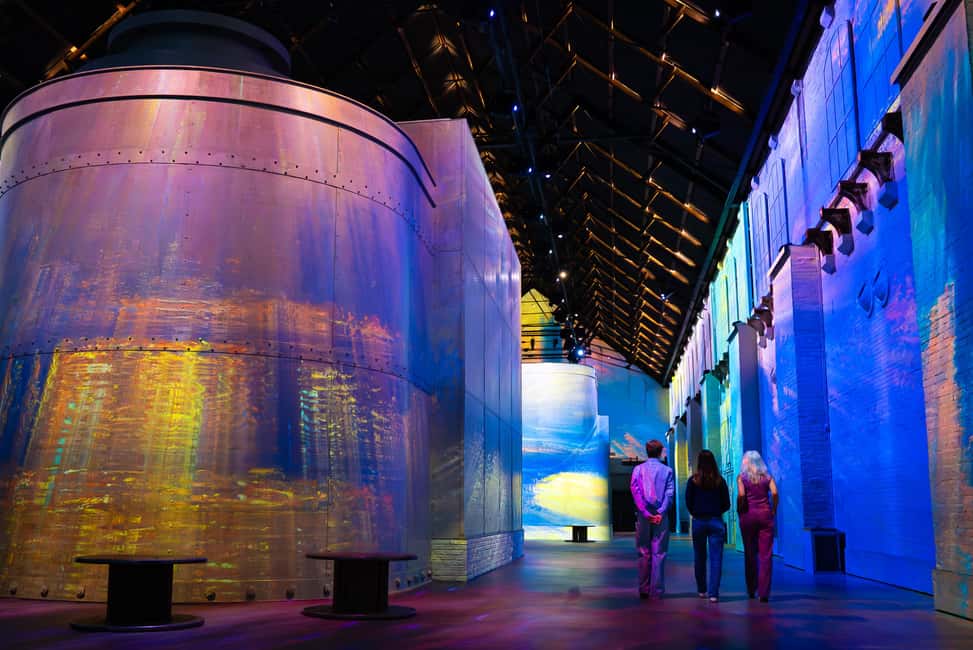
Your ticket is for a specific time slot, and the exhibitions are scheduled to run during the day. Because your entry is timed, you’ll want to arrive with enough buffer to get settled, use the lockers, and find a good viewing spot before the show starts.
Each exhibition lasts about 40 minutes. That’s a helpful length: it’s long enough to feel complete, but short enough that you’re not trapped for hours in one room. And there’s a bonus—according to the experience details, you can stay longer to enjoy the exhibitions again.
A practical tip: if you want the best chance to revisit from a different angle, think about how you move through the hall. Some visitors specifically mention watching from different viewpoints like a balcony and a mirror room. That’s a strong clue that you should give yourself time to reposition, not just park yourself in one spot.
The Kingdom of the Pharaohs: Pyramid-Era Art in Moving Light
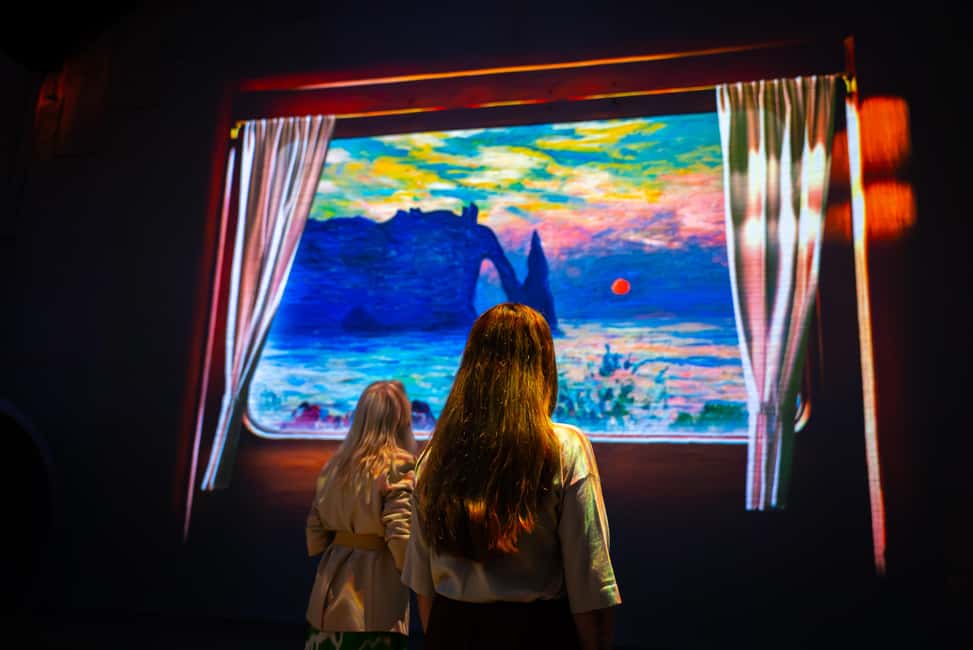
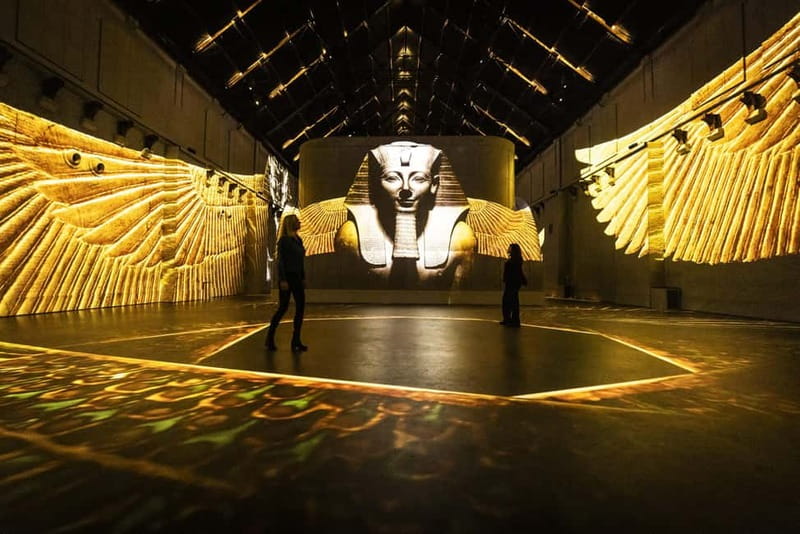
The star attraction here is The Kingdom of the Pharaohs. This exhibition is built around ancient Egypt, centered on the world of pyramid builders, craftspeople, and the religious hopes tied to the afterlife.
What makes it effective is how it treats Egyptian art like a story you can walk through. You see paintings, reliefs, sculptures, jewels, and extraordinary monuments presented in a way that feels designed for scale and atmosphere. In other words, it’s not just visuals on a screen—it’s a full production using the hall’s tall walls and wide surfaces.
The show leans into the subject’s symbolism, from deity-focused belief to monumental craftsmanship. If you like big visual myths or you’re curious about how ancient art worked as meaning (not just decoration), you’ll probably get a lot out of it.
French Orientalist Painters: Ingres, Delacroix, and Gérôme
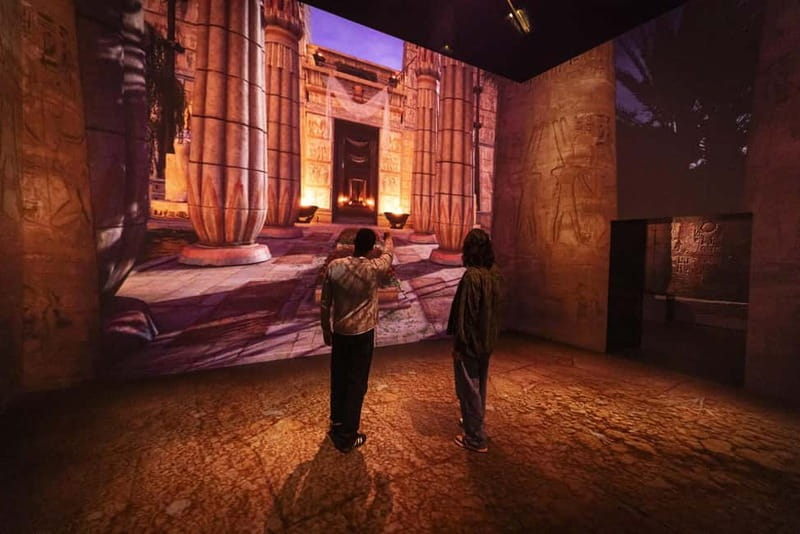
After Egypt, the tone shifts. French Orientalist Painters focuses on a 19th-century art movement where Western artists became fascinated by the so-called Orient. The exhibition connects that fascination to how artists imagined far-off places they couldn’t actually visit.
This part of the experience can feel like a reality check, in a good way. You’ll see how artistic style, subject matter, and storytelling can mix—and how the same theme can be both alluring and simplified. The show’s value isn’t that it teaches everything. It’s that it gives you a clear visual entry point into a specific art idea and time period.
If you’re the type who enjoys art but hates staring at captions, this format helps. The production makes you pay attention to composition, color, and mood without requiring you to decode a wall of text first.
Foreign Nature: Fractals and the Math-That-Looks-Alive Moment
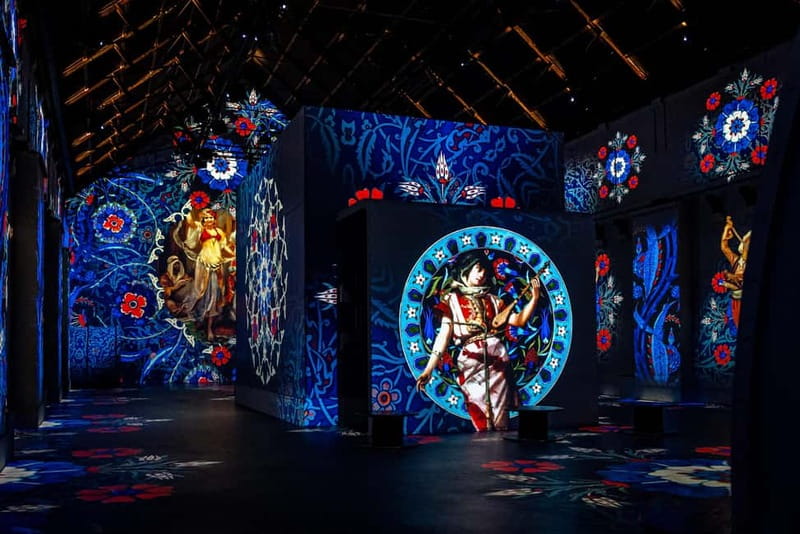
Then there’s Foreign Nature, which is unlike the other two exhibitions. This one uses computer-generated fractals to create a universe where art and mathematics overlap.
Why it works: fractals look like natural systems and cosmic structures at the same time. The visuals often feel hypnotic because they repeat patterns while still evolving. That makes it a nice contrast if you’ve just spent time with ancient monuments or 19th-century painting styles.
It also helps that the experience is multisensory. The hall’s production uses music and light to steer your attention, so the show doesn’t require you to already understand fractal theory to enjoy the visuals. You can just let it play and notice how color and geometry behave together.




Where You Can Actually Stand: Balcony, Mirrors, and Rewatching
One of the most practical things I’d tell you: don’t assume there’s only one best place to watch. Some visitors describe seeing the show multiple times, including from a balcony and from a mirror room. That suggests the production is built for shifting viewpoints.
Also, because each exhibition runs roughly 40 minutes and you’re allowed to stay longer to revisit, you can make your own mini “best-of” plan. If you’re going with friends, it’s easy to split—one person scouts a vantage point while others watch a segment—then swap positions.
A detail that keeps coming up in the feedback: the audio and visuals are tightly synced, and the show plays in a loop. That matters if you’re trying to avoid that awkward moment where you enter halfway through something important. The production is built so you can get oriented without stress.
Price and Value: Is $20 Worth It?
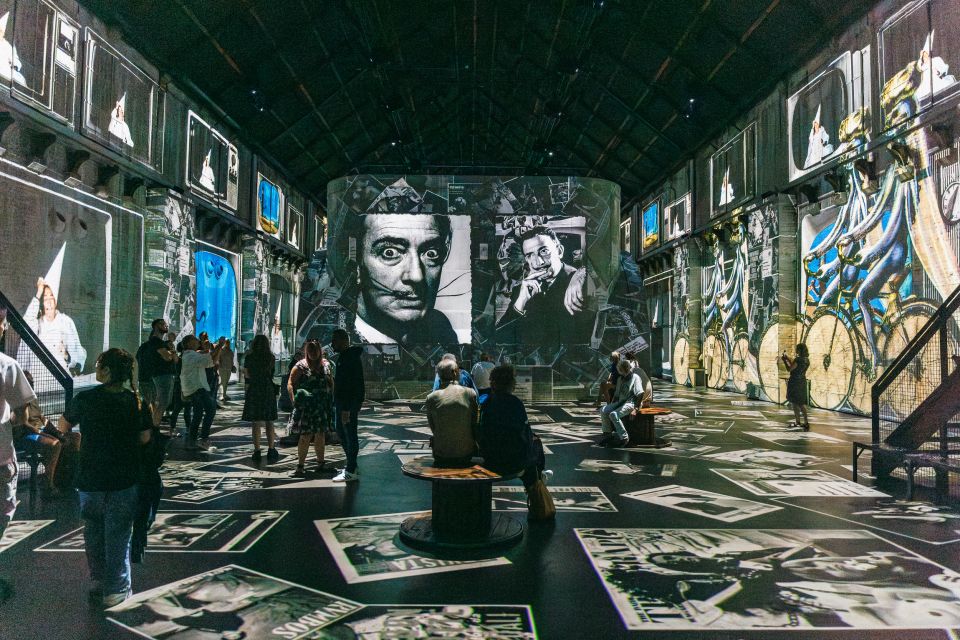
At about $20 per person, you’re paying for a tech-and-art production rather than a collection of framed paintings. The value comes down to what you expect from a museum.
If you like art in a traditional way—quiet looking, long reading, and slow pacing—this might feel different. But if you want a high-impact experience that turns famous art styles and themes into something you can feel, the math works in its favor.
Here’s why it’s good value in real terms:
- You get multiple exhibitions in one stop rather than one isolated show.
- The venue scale (3,800m² and up to 17-meter walls) turns the production into something you can’t recreate on a phone.
- Visitors highlight the strong audio-visual match and the relaxation factor. The overall tone is reflective and stress-free compared to many crowded attractions.
In short: $20 is reasonable for a full sensory experience, especially if you plan to watch at least one exhibition all the way through and give yourself time to rewatch from another spot.
Rules That Affect Your Comfort: Lockers, Food, Bags, and Photos
A few restrictions can shape your experience more than you might think.
- Lockers are included, which is great for coats, small items, and peace of mind.
- No food and drinks inside. If you’re pairing this with other Amsterdam plans, eat before you go.
- No luggage or large bags, so keep your load light.
- Flash photography is not allowed, which keeps the room’s lighting effect intact.
- Baby strollers aren’t allowed, so plan for a stroller-free route if you’re visiting with small kids.
- Pets aren’t allowed, though assistance dogs are permitted.
These rules mostly keep the show immersive in the literal sense: no interruptions, no clutter, no lighting distractions.
Getting There in Amsterdam: Westergas Park Is Your Key Landmark

The venue sits in Westergas Park. That’s useful because you can build the rest of your day around a clear landmark instead of hunting for an address in the city center chaos.
The site is described as easy to reach by public transport. So if you’re already riding trams or metro in Amsterdam, you can treat this as a straightforward stop rather than a complicated detour. Since the ticket is timed, just make sure your transit buffer is realistic.
Who This Works For (and Who Might Prefer Something Else)
This experience is a strong match if:
- You want art that uses technology and sound to create mood fast.
- You’re curious about ancient Egypt, 19th-century French Orientalist painting, or fractals.
- You like the idea of watching from different angles and revisiting parts of the show.
It can be less ideal if:
- You need a lot of quiet, reading-heavy museum time.
- You’re sensitive to bright light and audio effects.
- You’re traveling with items that don’t fit the venue’s restrictions (like large bags).
It’s also worth noting the family factor. The details say it’s not suitable for children under 3. Some feedback specifically mentions a 3-year-old enjoying the experience, which suggests it can work for young kids who handle bright visuals and theater-like audio.
Should You Book Fabrique des Lumières in Amsterdam?
If you’re deciding between another canal walk, a traditional museum, and this light-and-sound show, I think Fabrique des Lumières is an easy yes when your goal is memorable and different. With timed entry, lockers included, and shows that run about 40 minutes each, it’s a good use of a day slot—especially if you like being entertained while learning a bit along the way.
Book it if you want the scale of projections, the strong music-and-visual sync, and the chance to experience the artwork as motion. Skip it if epilepsy is a concern, if you hate shows with heavy light effects, or if you really want a quiet, text-based museum pace.
FAQ
How long are the exhibitions at Fabrique des Lumières?
The exhibitions last approximately 40 minutes each. You can stay longer to enjoy them again.
What is included in the Amsterdam Fabrique des Lumières entry ticket?
Your ticket includes timed entry to The Kingdom of the Pharaohs and access to lockers.
Do I need a guide for this experience?
A guide is not included.
Is the ticket valid for more than one day?
The ticket is valid for 1 day. You should check availability to see starting times.
What items are not allowed inside?
Food and drinks are not allowed, and luggage or large bags are not allowed. Flash photography is also not allowed.
Is Fabrique des Lumières wheelchair accessible, and is it safe for epilepsy?
The venue is wheelchair accessible. It is not suitable for people with epilepsy.