REVIEW · AMSTERDAM
Amsterdam Red Light District: Serene and Other!
Book on Viator →Operated by Herzblut - Amsterdam Stadtführungen mit Herz & Seele! · Bookable on Viator
Red lights can be serious business. This 90-minute walk through Amsterdam’s oldest district mixes history with a frank, cheerful look at the oldest trade in the world.
I like that the tone is both informative and critical, not squeamish and not preachy. I also like the route choices: stops like Schreierstoren and the narrow streets with the famous windows, plus the nearby Chinatown area with Buddhist temples and nightlife. One thing to consider: this is an area that can feel uncomfortable for some people, and the tour runs only in the evenings.
In This Review
- Key Things I’d Watch For
- Amsterdam Red Light District: What You Actually Get in 90 Minutes
- Heiteres and Critical: The Tone That Makes It Work
- Price and Value: $25.45 for a Guided Evening Loop
- Your Evening Schedule: Start Time, Duration, and Pacing
- Meeting at Beursplein 9 and Ending Back There
- Stop 1: A Cheerful Stopover That Sets the Ground Rules
- Stop 2: City History, Not Just Scenery
- Stop 3: History of Prostitution and Homosexuality, Explained Clearly
- Stop 4: Schreierstoren and the District’s Old Bones
- Stop 5: The Chinatown Streets, Buddhist Temples, and the Famous Windows
- Stop 6: Old Libra, a Historical Stop With a Trade Connection Feeling
- Stop 7: Merry and More, Ending With Context (Not a Sales Pitch)
- Who This Tour Is Best For
- Quick Practical Tips Before You Go
- Should You Book This Red Light District Tour?
- FAQ
- How long is the Amsterdam Red Light District tour?
- Where do I meet for the tour?
- What time does the tour run?
- Is this tour ticket mobile?
- How many people are in the group?
- Is free cancellation available?
- Are there age limits for the tour?
Key Things I’d Watch For
- A small group size (max 10) keeps the pace easy for questions and side commentary.
- 90 minutes, mobile ticket means less fuss and more time for the streets.
- Schreierstoren + the windows streets give you two very different angles in one loop.
- Dutch attitudes explained plainly: tolerant, open, and without fear of contact.
- Chinatown area stops add variety with Buddhist temples, bars, and nightlife in the same broader neighborhood.
Amsterdam Red Light District: What You Actually Get in 90 Minutes
This isn’t a long, vague history lecture. It’s a tight, guided walk that treats the Red Light District as part of Amsterdam’s real story, not just a headline. You’ll get the atmosphere too: old streets, heavy history, and that peculiar mix of curiosity and controversy the area is famous for.
The best part is the way the tour handles the subject. The framing is cheerful, but the guide doesn’t try to turn it into a joke. You learn context, you hear the local approach, and you’re nudged to think. That balance matters, because the Red Light District can otherwise feel like either shock tourism or sanitized postcard lore. This tour aims for the middle.
You can also read our reviews of more tours and experiences in Amsterdam.

Heiteres and Critical: The Tone That Makes It Work
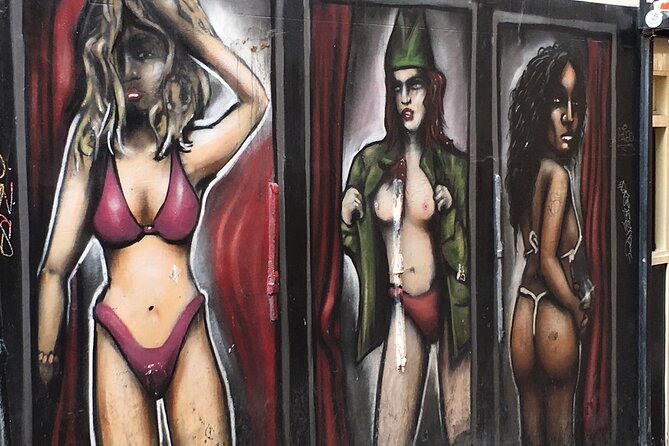
The tour description calls it Heiteres and more, and that’s a good clue. Heiteres means lightness, but not shallow. You’ll be with a guide who keeps things moving and conversational, so you’re not stuck in awkward silence every time the topic turns sensitive.
And it’s not just for laughs. The tour also takes a critical angle on prostitution and the way Amsterdam deals with it in public life. It even covers homosexuality, which helps you see the district as part of broader social history, not only one topic.
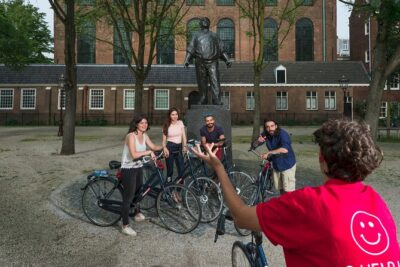
The vibe is summed up by what you can pick up from the guide feedback too. One highlight is guide Anne, described as super nice and funny. That matters. A good guide can steer the conversation away from crude commentary and toward real understanding. When that happens, the walk feels less like gawking and more like getting your bearings in a complicated place.
Price and Value: $25.45 for a Guided Evening Loop
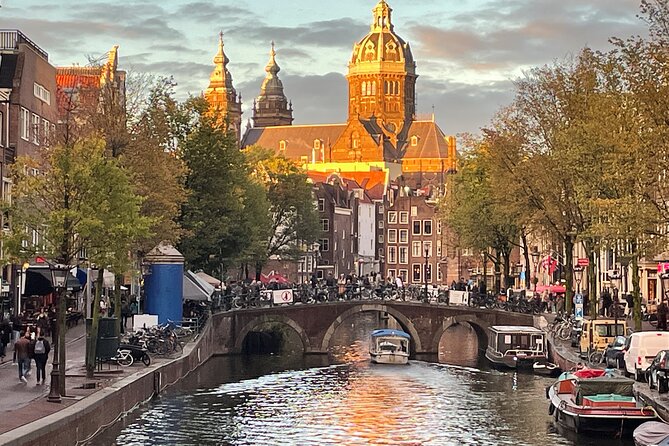
At $25.45 per person for about 90 minutes, you’re paying for structure. You’re not paying for museum entry. You’re not paying for snacks. And you’re not paying for a big public show.
What you are paying for is a guided route through the district’s layers: city history, specific landmark stops, and direct discussion of how Amsterdam handles prostitution and homosexuality. In practice, that often saves you time and embarrassment. You spend less effort figuring out what you’re seeing and more time understanding why the streets got to look like they do.
Also, small group size helps the value. With a maximum of 10 people, you’re more likely to get the kind of explanations that actually stick.
Your Evening Schedule: Start Time, Duration, and Pacing
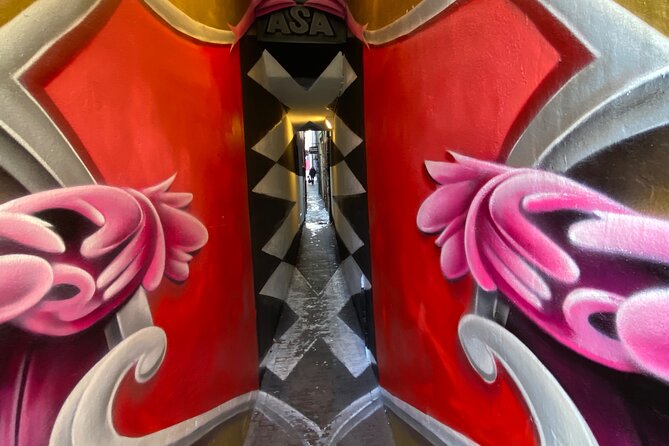
This tour runs in the evenings, every day. The posted time slots are:
- 5:00 PM to 6:30 PM
- 7:00 PM to 8:30 PM
You can expect about 1 hour 30 minutes in the walking rhythm, with time built in for discussion.
If you’re the type who hates rushing, plan around the fact that the tour is designed for nighttime street reading. Starting at Beursplein 9 puts you near a major landmark area, so you won’t be wandering blind before you begin.
Meeting at Beursplein 9 and Ending Back There
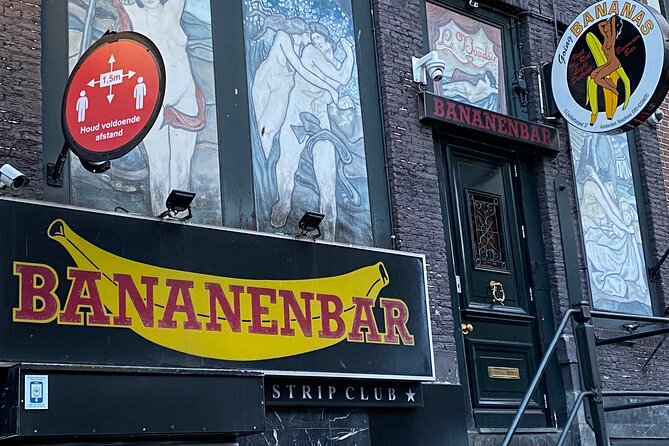
You meet at Beursplein 9, 1012 JW Amsterdam. The tour ends back at the meeting point, which is handy. You won’t have to navigate your way back through the district while you’re still processing what you just learned.
It’s also close to public transportation. That matters in Amsterdam, where walking is great, but transit can save your feet on a busy day.
And because this is a mobile ticket experience, you can keep things simple on your phone instead of hunting for paper.


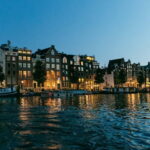
Stop 1: A Cheerful Stopover That Sets the Ground Rules
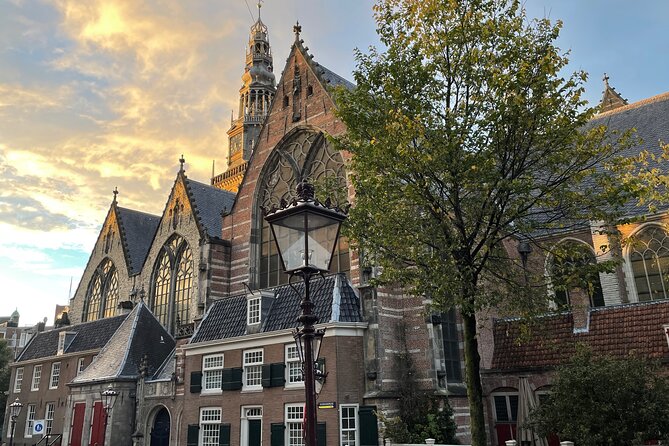
The first named stop is a cheerful stopover. That might sound basic, but it’s actually smart. These kinds of tours work best when the guide sets expectations early: what you’re going to look at, what you might hear, and how the group should behave in a place that’s still real life for people in the area.
You’ll likely get an orientation feel right away. Not a lecture. A way to understand the street scene without turning it into either a moral panic or a circus.
Stop 2: City History, Not Just Scenery
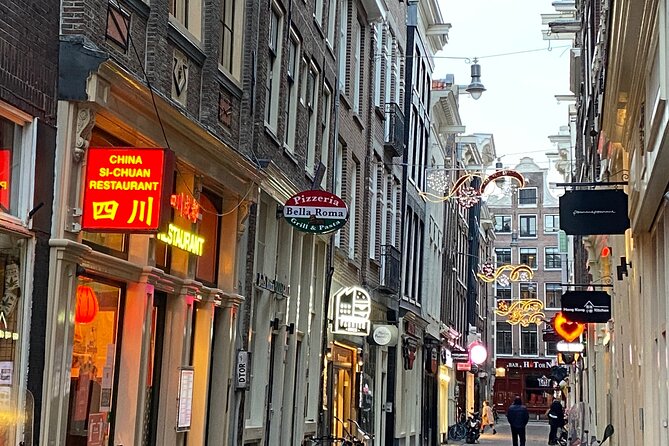
Next comes city history. This is where the district starts to stop being only about what you see in the moment. You’ll get background that makes the neighborhood’s age and reputation feel connected to Amsterdam as a whole.
This matters because the Red Light District is Amsterdam’s oldest district. When you understand that, the street details stop looking random. You see it as a place that has been shaped by commerce, social change, and shifting attitudes over time.
Stop 3: History of Prostitution and Homosexuality, Explained Clearly
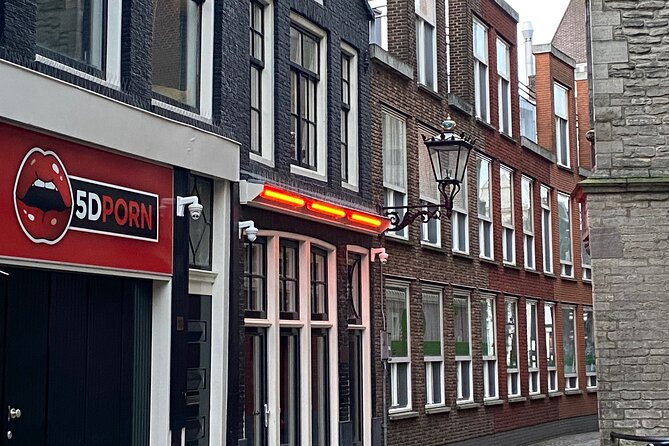
Then the tour moves into history, including how Amsterdam has dealt with prostitution and homosexuality. That combination is useful.
If you only focus on prostitution, you get a narrow view of the district. If you only focus on sexuality, you miss how law, tolerance, and public behavior shaped daily life. The tour tries to connect the dots, and it does it with the Dutch approach in mind: tolerant and open, without fear of contact.
That phrasing is a big deal. It signals that you’re not just being told what’s happening. You’re being told how the city frames interaction and public presence. That helps you interpret what you’re seeing while you’re walking.
Stop 4: Schreierstoren and the District’s Old Bones
Schreierstoren is one of the key landmarks. The guide uses it to anchor the story. Even without you needing a deep technical lesson, a specific tower stop gives your brain something concrete to attach to the history.
This is also a good moment for a reality check. The Red Light District can feel hyper-focused on modern spectacle, but Schreierstoren pulls the focus back toward how old parts of Amsterdam still sit inside the present-day scene.
If you like photography, this is often the kind of stop where you can get a clearer angle on how the district’s architecture and street layout work. Just keep it respectful and follow the guide’s cues.
Stop 5: The Chinatown Streets, Buddhist Temples, and the Famous Windows
The tour then heads into what’s called the Chinatown area. Expect narrow streets, famous windows, and a mix of establishments and nightlife energy. You’ll also see Buddhist temples mentioned as part of this area’s scene.
This stop is a reminder that the Red Light District isn’t isolated. It touches other cultural currents. Bars and nightlife show up in the same broader neighborhood as religious sites and commercial life. That blend can make the district feel more like a neighborhood than a theme park.
Practical advice: go slowly here. Narrow streets amplify everything: sound, crowding, and the feeling that you’re squeezing past people who live and work there. Let the guide set the pace, and avoid trying to read everything at once.
Also, if you’re sensitive to the explicitness of what you may see in this area, this is the part where you’ll notice it most. You can always step back slightly and stay with the group at a comfortable distance while still hearing the explanations.
Stop 6: Old Libra, a Historical Stop With a Trade Connection Feeling
Next is Old Libra, described as a historical site. In a tour like this, historical stops are often less about facts you memorize and more about the way the guide connects past and present.
Think of it like a story hinge: the guide points out how older Amsterdam commercial life and social behavior helped shape what you see now. Even if the stop doesn’t come with a long list of details in your head afterward, you leave understanding that this district didn’t appear from nowhere.
Stop 7: Merry and More, Ending With Context (Not a Sales Pitch)
The last named stop is Merry and more. That signals a wrap-up energy: finish the loop with a final set of insights, then let you carry the context out onto the streets on your own.
I like endings like this because they give you something to do with what you learned. Instead of feeling like you got a one-off shock lesson, you can look at the district afterward and make better sense of it.
For your next hours, that matters. Amsterdam rewards people who slow down and read streets as stories. This tour gives you a starting point.
Who This Tour Is Best For
This is a strong fit if you want:
- context and history, not just photos
- a guide who can handle sensitive topics without crude detail
- a small-group walk through a famous but controversial neighborhood
It’s less ideal if you want a quiet, family-friendly cultural stroll with zero discomfort. The subject matter is real. The district is real. The pace is easy, but the setting isn’t sanitized.
Also, the tour runs in a narrow window of evening hours, so it suits travelers who can plan around night-time walking.
Quick Practical Tips Before You Go
- Wear comfortable shoes. You’re walking in narrow streets and uneven pacing can happen in any city center neighborhood.
- Bring a little mental flexibility. The whole point is a “cheerful but also critical” look.
- If you’re unsure how you’ll handle the explicit side of the district, start by staying close to the guide and letting them frame what you see.
- With a max group size of 10, you can ask questions. If something doesn’t make sense, ask early.
Should You Book This Red Light District Tour?
I’d book it if you’re curious about Amsterdam beyond postcards and you want a guided, balanced way to understand what you see in the Red Light District. The price is reasonable for a focused 90-minute evening walk, and the small group helps the experience feel human instead of chaotic.
Skip it if you want a purely light, no-stakes stroll, or if you’re strongly uncomfortable in areas where the topic is visible and unavoidable. If you’re worried about walking difficulty, the tour notes that you should inform the provider in advance and that a private tour is recommended.
If you match the “curious, respectful, and open to context” vibe, you’ll likely leave with better street-reading skills and a less awkward understanding of a controversial neighborhood.
FAQ
How long is the Amsterdam Red Light District tour?
The tour lasts about 1 hour 30 minutes.
Where do I meet for the tour?
You meet at Beursplein 9, 1012 JW Amsterdam, Netherlands.
What time does the tour run?
It runs Monday through Sunday in the evening time slots of 5:00 PM to 6:30 PM and 7:00 PM to 8:30 PM.
Is this tour ticket mobile?
Yes, it includes a mobile ticket.
How many people are in the group?
This activity has a maximum of 10 travelers.
Is free cancellation available?
Yes. You can cancel up to 24 hours in advance for a full refund.
Are there age limits for the tour?
Young people up to 18 can participate only if accompanied by a legal guardian.