REVIEW · AMSTERDAM
Amsterdam: 1-Hour Canal Cruise in the Evening
Book on Viator →Operated by Voyage Amsterdam · Bookable on Viator
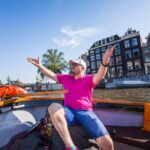
Canals at night hit different. On this one-hour evening canal cruise, you get live storytelling about Amsterdam’s canals and neighborhoods, plus warm blankets when the air turns chilly.
I like that this ride keeps things small-group. You’re not just floating past pretty buildings; you’re hearing how places got their names, why canals matter, and what to look for while you walk afterward. The main drawback to plan for: windows can fog in cold weather, so photos through glass may be a letdown.
In This Review
- Key things I’d watch for before you go
- Why a 1-hour evening cruise works so well in Amsterdam
- Where you board near the Anne Frank House (and why timing matters)
- The live guide and skipper stories: what you should listen for
- The Prinsengracht stretch and the Jordaan: canal names you can spot later
- Amstel and the UNESCO canal ring: why these waters feel central
- Singel, Skinny Bridge (Magere Brug), and the Munttoren stop-by-the-water
- Flower Market to canal museums: what you’re actually seeing as you pass
- Onboard comfort, bar vibes, and the photo-fog reality
- Price and value: is $27.57 for one hour a fair deal?
- Who should book this cruise (and who might want a different plan)
- Should I book this 1-hour Amsterdam evening canal cruise?
- FAQ
- How long is the canal cruise?
- What language is the tour offered in?
- Are drinks included?
- Are warm blankets provided?
- What’s the group size?
- What happens if the weather is bad?
Key things I’d watch for before you go
- Live skipper/guide stories that connect the route to real places and names you’ll recognize later
- Warm blankets for evening comfort, especially in winter
- Small-group feel with a maximum of 48 travelers
- Onboard bar with drinks for purchase, so the “evening vibe” is built in
- A route that hits the canal ring and iconic bridges rather than doing random looping
- Good match for a nighttime plan when you also want to do something nearby, like the Anne Frank House area
Why a 1-hour evening cruise works so well in Amsterdam
Amsterdam can eat your whole day: museums, walking, bikes, crowds, snacks you didn’t plan on. That’s why I’m a fan of a short evening canal cruise. One hour is enough time to see the city “in lights,” but not so long that you end up rushing the rest of your night.
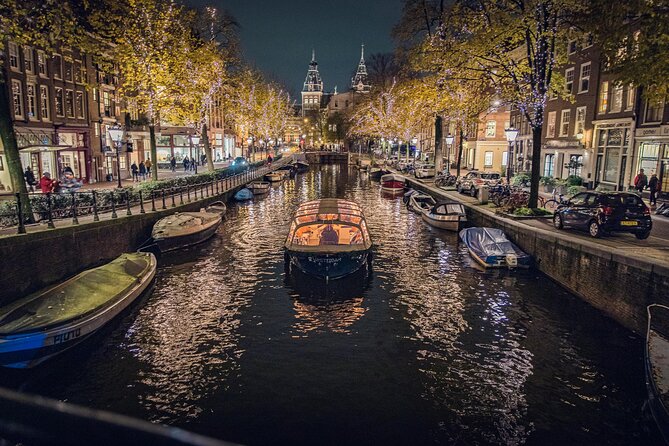
This cruise is built for nighttime viewing. You’re cruising past landmarks like the canal belt and major bridges while the city looks slower and more romantic. Even if you’re not a history nerd, the guide’s job is to point out what matters: why canals shaped the city, why neighborhoods developed where they did, and how bridges and gates connect older Amsterdam to the modern streets you’ll explore afterward.
One more practical upside: an hour gives you a quick orientation. After you disembark, you’ll have a mental map of things like the Prinsengracht/Herengracht belt, the Amstel, and the pocket neighborhoods such as the Jordaan and the nine streets area.
You can also read our reviews of more boat tours in Amsterdam

Where you board near the Anne Frank House (and why timing matters)
The cruise departs from the Anne Frank House area at Prinsengracht 263, and it starts and ends in the Jordaan. That’s a smart location for evening plans because you’re in a lively part of town that’s easy to connect to by tram or on foot.
But here’s the real-world thing to respect: pickup points around Amsterdam’s docks can be confusing, especially with multiple operators sharing the same general area. Some guests reported unclear signage and difficulty matching their ticket organizer to the right dock. So I’d treat this like a “arrive early” situation, not a “sprint at the last minute” situation.
If you’re using a mobile ticket, keep it ready on your phone screen. And when you arrive, don’t just stand around hoping the boat magically appears. Look for the crew/boat name you’re supposed to be on, and give yourself a buffer so you’re not scrambling in the dark.
The live guide and skipper stories: what you should listen for
The cruise’s biggest value isn’t the water view alone. It’s the way the skipper and live guide explain what you’re seeing. One guest even highlighted a guide named Shakira, praising her passion and bubbly energy. Whoever you get, the format is consistent: the narration ties history and place names to the exact canals and buildings outside your windows.
On this route, the guide covers the “why” behind the scenery. For example:
- You’ll hear theories about the Jordaan name, including the idea that street and canal names in that neighborhood connect to gardens and plant life.
- You’ll get the origin story of Amsterdam’s start from the Amstel—including the idea of fishermen building a dam and how the city grew around that water route.
- You’ll hear how the 17th-century canal plan created concentric belts and how that became famous worldwide as a UNESCO World Heritage setting.
Listen for the guide’s quick, place-based clues. They’re the difference between watching buildings drift by and actually learning what those buildings mean in the city’s layout.
The Prinsengracht stretch and the Jordaan: canal names you can spot later
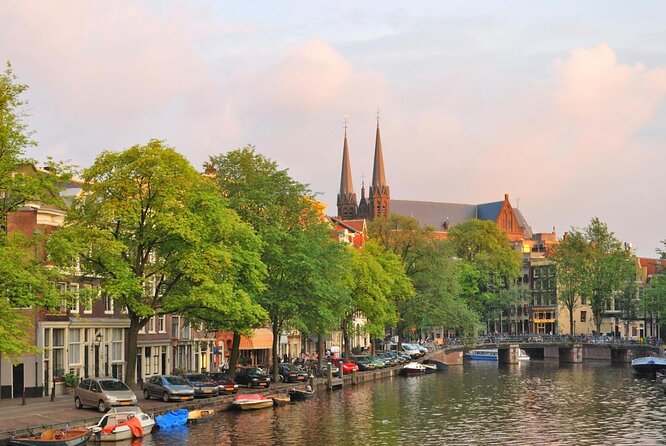
One part of the route is all about the Prinsengracht side of the city and the neighborhood flow around it. The cruise starts/ends in the Jordaan area, and you’ll pass points tied to what locals and visitors both love: architecture along the canal, cozy streets, and those iconic canal-side facades.
As you move along, you’ll cruise with sights tied to the houseboat museum setting and the shopping area known as the negen straatjes (nine streets). Even if you don’t plan to shop that night, this is useful. The canals here help you understand why Amsterdam’s layout feels like a patchwork of small districts instead of one big grid.
The guide’s storytelling about Jordaan origins is especially helpful because it gives you a reason to look up. Instead of seeing it as just pretty streets, you learn how the area’s naming ties back to language and local identity. That makes a later walk through the neighborhood more rewarding.
A small practical note: the canal-sided buildings can be tall and close to the water, which means you get a strong view—just remember to manage your expectations for photos if conditions are cold.
Amstel and the UNESCO canal ring: why these waters feel central
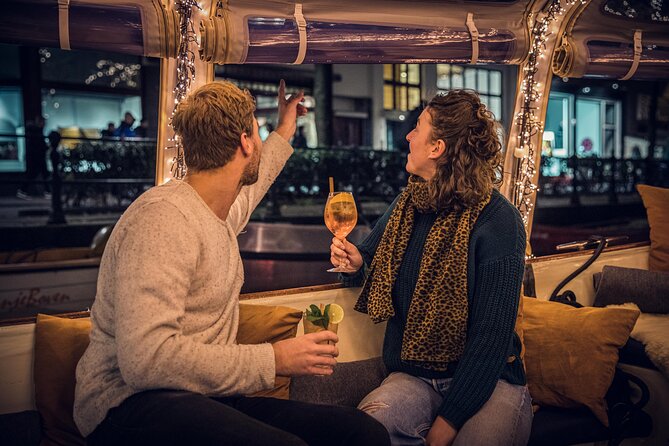
If Amsterdam has a “main character” canal, it’s the Amstel. The cruise describes it as the biggest canal and connects it to Amsterdam’s origins as a settlement. You also pass Blauwbrug (Blue bridge), a historic crossing that links areas around Rembrandtplein toward Waterlooplein, sitting south of the Stopera area.
Then comes the big visual moment: the Grachtengordel, the canal belt formed by the three main canals—Herengracht, Prinsengracht, and Keizersgracht—dug in the 17th century during the Dutch Golden Age. The cruise notes how monumental buildings line these canals, and even mentions the idea of around 1,550 notable buildings along the belt. That context matters. When you look at the buildings, you’re not just seeing “old stuff.” You’re seeing the logic of how the city was designed and financed during a very powerful period.
You’ll also get a UNESCO angle, including the fact that this canal ring area was listed as World Heritage in 2010. Again, you don’t need to memorize the year. The point is: this is the part of Amsterdam the rest of the world talks about, and the cruise gives you a moving view of it without needing museum tickets or a full day schedule.
You can also read our reviews of more evening experiences in Amsterdam



Singel, Skinny Bridge (Magere Brug), and the Munttoren stop-by-the-water
Another canal you’ll hear about is the Singel. It’s described as a canal that used to encircle the city in the Middle Ages, serving as a moat until Amsterdam expanded beyond it. The Singel runs from near Central Station toward Muntplein, and it’s now the innermost canal in the city’s semicircular canal ring. That’s a lot to absorb in one hour, so your best strategy is simple: think of it as Amsterdam’s “older boundary line.”
Then you’ll see Magere Brug, known in English as the Skinny Bridge. It’s described as a wooden drawbridge that was once so narrow it was hard for two pedestrians to pass each other. A wider bridge replaced the narrow original in 1871. Even from the water, that story helps you see why it looks the way it does and why it became such a photo magnet.
The cruise also references the Munttoren (mint tower), tied to a medieval gate area called Regulierspoort, with towers built in the late 1400s. The 17th-century use was minting coins. It’s a small detail, but it turns the skyline into a timeline. You’re not only admiring structures; you’re watching Amsterdam’s power shift across centuries.
Flower Market to canal museums: what you’re actually seeing as you pass
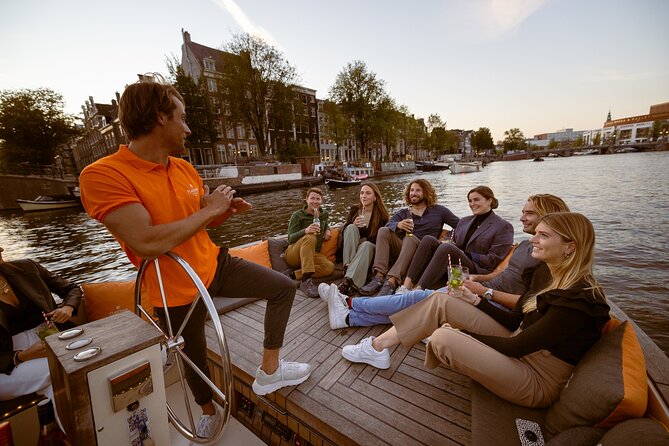
One of the most distinctive Amsterdam features on this route is the Amsterdam Flower Market, described as the only floating flower market in the world. It’s noted as existing since 1862, and the stalls stand on houseboats—an image that makes the market feel like it belongs to the canals, not beside them.
The cruise also references the “canal story” through nearby institutions and museum-focused viewpoints. You may pass by or near:
- Grachtenhuis, a museum on the Herengracht dedicated to 17th-century canal life, with interactive and multimedia exhibition content
- Willet-Holthuysen Museum on Herengracht, a canal house with furnished period rooms managed by the Amsterdam Museum
Important: this kind of cruise is about what you see from the water, not about going inside those buildings during the ride. Still, it can help you decide if you want to add a museum stop after. If a building looks especially interesting, you’ll know what to search for by name.
One more practical benefit: when you pass places like these museums and the flower market area, the guide can connect the canal engineering and daily life. That’s what turns a pretty evening ride into a useful one.
Onboard comfort, bar vibes, and the photo-fog reality
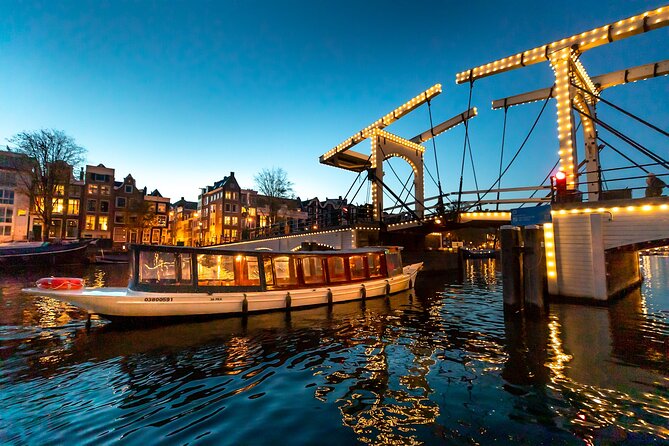
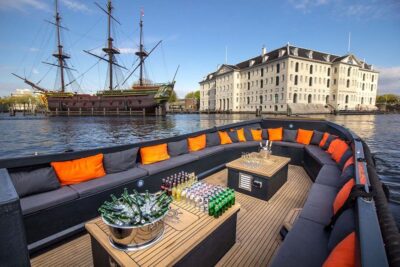
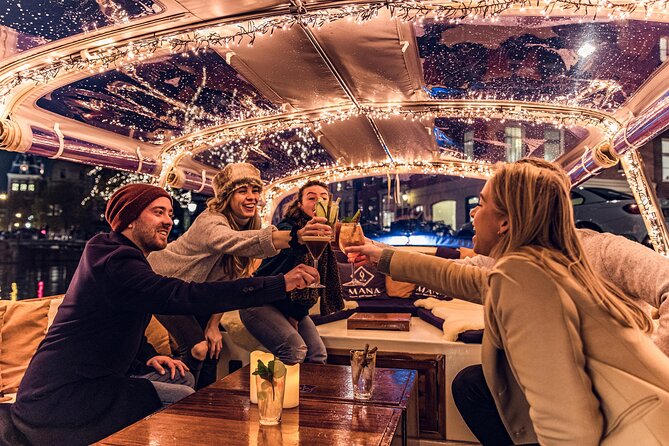
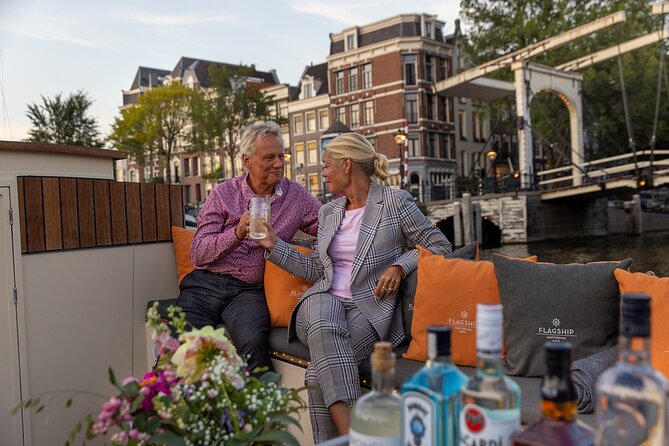
This cruise includes a bar on board, with drinks available for purchase. Some guests also mentioned beer and wine offerings and an evening “float with refreshments” feel. Just know that drinks and snacks aren’t included, so if you want to keep costs predictable, plan ahead.
The cruise also provides warm blankets. In theory, that’s what makes winter-night cruising comfortable. In practice, weather and boat assignment matter. One guest described an open boat at 10pm and called out it being cold and uncomfortable. That doesn’t mean the blankets are useless; it means you should treat the blanket as part of the plan, not as a guarantee you won’t feel cold.
Photo tip: steamed-up windows came up more than once. If you’re visiting in winter or right after rain, expect glass to fog. Your best move is to choose the clearest side seats if possible and accept that some shots will be phone-in-hand, not through-perfect glass.
If you’re the type who gets a little frustrated by “crowd noise,” keep in mind that a couple of guests said other passengers talked loudly at times. In a small group, one or two loud voices can feel bigger.
Price and value: is $27.57 for one hour a fair deal?
At $27.57 per person for about one hour, you’re paying for three things:
1) A guided evening story (not just sightseeing)
2) Access to the canals from the water
3) Comfort items like warm blankets, plus the option to buy drinks onboard
So the value depends on how you like to travel. If you enjoy learning as you move, a narrated cruise is often a good use of money because it replaces the need for extra explanations while you’re walking. If you mostly want a quiet photo cruise with minimal talking, you might not feel as satisfied—especially since one guest felt the experience drifted toward selling liquor.
The “small-group” setup helps with perceived value too. With a maximum of 48 people, you’re not swallowed by a massive crowd, which makes it easier to hear the guide and get oriented.
If you’re trying to stretch your time in Amsterdam, this is also a smart “first night” plan. One guest used it as their first outing after arriving and said it helped them spot things later while walking.
Who should book this cruise (and who might want a different plan)
I think this works best for:
- First-timers who want an easy way to learn Amsterdam’s layout in one evening
- People who enjoy guided narration and don’t mind that the boat ride is a shared experience
- Anyone planning to do other nearby activities, since the departure area is well positioned around major sights
It may be less ideal if:
- You’re mainly chasing crisp window photos and you hate foggy glass
- You’re very sensitive to cold on outdoor or semi-outdoor boats
- You want a strictly quiet atmosphere with no bar vibe
Also, make sure you double-check the exact meeting/dock point before you go. Several unhappy comments weren’t about the actual cruise—they were about not finding the boat in time because signage and organizer names didn’t match what people expected.
Should I book this 1-hour Amsterdam evening canal cruise?
If you want an efficient, guided canal evening, I’d say yes—with one condition: arrive early at the Prinsengracht 263 / Anne Frank House departure area and don’t assume dock signage will read like it does in a textbook.
Choose this if you:
- Want live skipper stories that explain canal names and city development
- Like the idea of staying warm with blankets and adding drinks if you feel like it
- Prefer a one-hour plan that sets you up for a great walk afterward
Skip it or switch plans if you:
- Need guaranteed indoor comfort in freezing weather
- Care most about taking photos through clear windows
- Are the kind of traveler who gets stressed by meeting-point uncertainty
Done right, this is a very pleasant way to see Amsterdam at night: bridges, canal belts, and a guided sense of place—without burning your whole evening.
FAQ
How long is the canal cruise?
The cruise lasts about 1 hour.
What language is the tour offered in?
The onboard guide and narration are offered in English.
Are drinks included?
No. There is a bar on board with drinks available for purchase, but drinks and snacks are not included.
Are warm blankets provided?
Yes. Warm blankets are provided on board.
What’s the group size?
The tour has a maximum of 48 travelers.
What happens if the weather is bad?
This experience requires good weather. If it’s canceled due to poor weather, you’ll be offered a different date or a full refund. You can also cancel for a full refund if you cancel at least 24 hours before the experience starts.