REVIEW · AMSTERDAM
Amsterdam Evening Canal Cruise with Live Guide and Onboard Bar
Book on Viator →Operated by Flagship Amsterdam · Bookable on Viator
The canals feel different at night. This one-hour cruise is a friendly way to get oriented in Amsterdam, with live English commentary and the option of an onboard bar as landmarks slide by the water. I like that you’re not just staring at photos on bridges. You’re getting street-level context as you go, which makes the city easier to understand later.
I also love the pacing: about an hour, evening light on the canals, and a route that hits big-name sights without dragging you through a full day. A possible drawback: boats and conditions can vary, and the trip can feel tight or chilly if you’re on an open-top or if the weather turns.
Key highlights to look for
- Live English host stories tied to what you’re seeing outside the windows
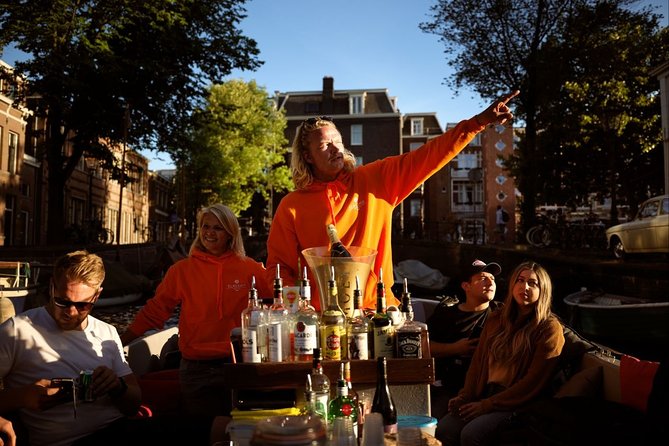
- Onboard beer, soda, and cocktails so the hour feels like a real night out
- Jordaan and canal-ring views that make Amsterdam’s canal layout make sense
- Iconic stops from the water such as Anne Frank House and the Rijksmuseum area
- Small-group feel with a stated max of 45 people
In This Review
- Why an evening electric canal cruise is one of the smartest Amsterdam intro plans
- The onboard bar: how to make the hour feel like a real night out
- Price and duration: where $24.61 actually makes sense
- Departure points and timing: what the one-hour route really means for you
- Jordaan start: why the canal ring and those street names matter
- The Western Church and Canal Belt views you’ll actually remember
- Rijksmuseum from the water: the view without the ticket line problem
- Anne Frank House and the quiet shock of seeing it from the canal
- Carré and opera stops: Amsterdam’s culture you can spot instantly
- The Skinny Bridge (Magere Brug) moment you came for
- Munttoren and the Amstel: how Amsterdam got its name
- How the live guide and captain affect what you learn
- Practical matters: clothing, no toilets, and what to expect if it’s wet
- Boat office help if you can’t find the dock
- So… should you book the Amsterdam Evening Canal Cruise with live guide and bar?
- FAQ
- How long is the canal cruise?
- How much does the Amsterdam Evening Canal Cruise cost?
- Is the tour offered in English?
- Where do I meet the boat?
- Is there a bar on board?
- Are service animals allowed?
- Are there toilets on board?
- What should I wear and what if it rains?
Why an evening electric canal cruise is one of the smartest Amsterdam intro plans

If this is your first time in Amsterdam, the evening canal cruise does a job most other activities can’t. From the water, Amsterdam’s canal system becomes a map you can actually see: narrow streets, big bridges, and the way the neighborhoods wrap around the 17th-century rings.
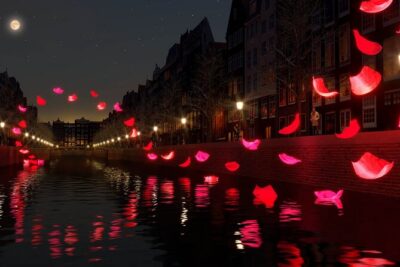
This cruise runs on an electric boat, and you’ll pick from several start times. That matters because Amsterdam evenings aren’t all the same. Early evening can be still light enough for crisp views. Later can look darker and moodier, with buildings glowing and reflections moving across the canal skin.
You’ll also have a guide on board giving commentary as you pass landmarks. That turns the cruise from passive sightseeing into something more useful: you’ll learn what each place is, why it matters, and how it connects to the city’s canals and neighborhoods.
Finally, you’re not stuck with one “thing” for the whole hour. The onboard bar gives you options—beer, sodas, and cocktails—so you can sip while you listen instead of doing the usual tourist shuffle with a drink later.
The onboard bar: how to make the hour feel like a real night out
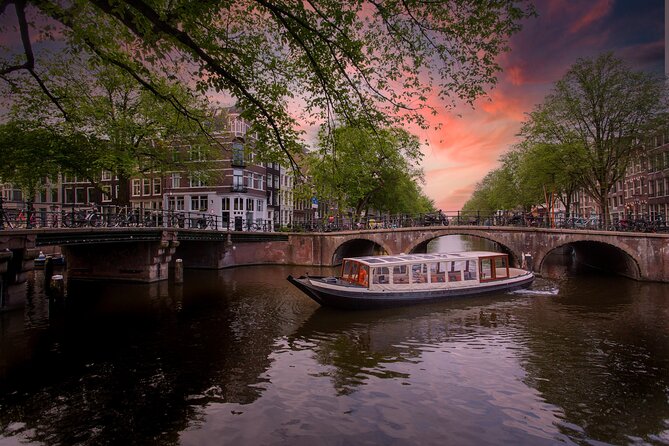
The bar is not just a nice extra. It changes your experience. On a canal cruise, time can disappear fast because you’re watching, listening, and taking it all in. Having an onboard bar means you can settle in right away and treat the cruise like part of your evening, not a quick checkbox.
What you can buy is pretty clear: beer, sodas, and cocktails. I’d plan to grab something early if you know you’ll want it. Then you can focus on the guide’s story instead of repeatedly standing up.
One practical note: the boat experience can get crowded, and if seats are tight, moving around to buy something can add a little chaos. If you’re prone to getting chilled easily, it’s also smart to think about where you’ll sit before you order, because you’ll likely be listening while the canal wind does its thing.
You can also read our reviews of more boat tours in Amsterdam

Price and duration: where $24.61 actually makes sense
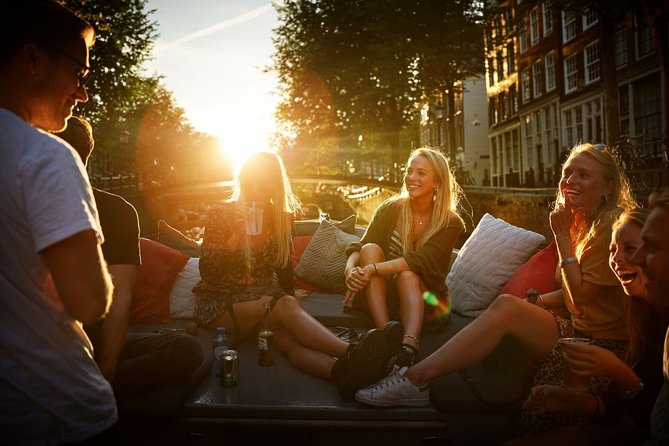
At $24.61 per person for about one hour, you’re paying for three things at once: the boat ride, live English commentary, and onboard drink options. It’s not a bargain beer-and-ride situation, but it’s also not priced like a private charter.
In value terms, this works best if:
- you want a compact Amsterdam highlight session
- you’re traveling with limited time between other plans
- you want a guide to point out the meaning behind what you’re seeing
If you’re already fluent in Amsterdam canal history and want to spend hours on the water, you might prefer a longer cruise. But for most first-timers, one hour hits the sweet spot: enough time to see lighting, bridges, and major sights, without turning the evening into a full production.
Departure points and timing: what the one-hour route really means for you
You’ll make your own way to a departure point, and there are three departure locations with multiple start times. That’s good because it lets you pick a time that fits your dinner plans, hotel area, or museum schedule.
It also means the exact route details can shift slightly depending on where you board. That flexibility is helpful, but it’s worth knowing if you’re chasing a very specific view.
Your cruise starts at the selected departure point and ends there, so you won’t need a plan for getting back to where you started. The whole flow is designed to keep you on rails: board, listen and look, then return.
And yes, it’s an evening cruise on the canals, so weather plays a bigger role than on a walking tour. Even on a calm night, the water air can feel colder than you expect.
Jordaan start: why the canal ring and those street names matter
Many routes are described with a start and finish in the Jordaan, and there’s a reason that area keeps showing up in canal conversations. One theory for the name is tied to a French word meaning garden. Another theory connects Prinsengracht’s nickname Jordaan and how the name spread to the neighborhood beyond.
From the water, you’ll see how the canals structure the neighborhood grid. That’s the first “aha” moment I’d hope you get: Amsterdam’s canal belts aren’t random. They’re a system.
The Jordaan location is also near major central landmarks, so it can feel like a smart place to begin if you want to understand how different districts connect without hopping between neighborhoods on foot.
The Western Church and Canal Belt views you’ll actually remember
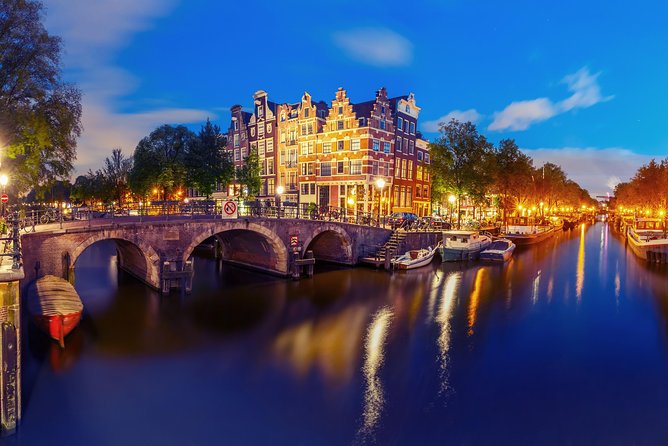
As the boat cruises, you’ll pass the Western Church (Westerkerk). It’s a Reformed church in central Amsterdam, located in the western part of the Grachtengordel area near the Jordaan, between Prinsengracht and Keizersgracht. Hearing that in context helps it land beyond just being a church you walked past on a map.
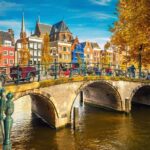
Then comes one of Amsterdam’s biggest visual tricks. The canal ring area—Prinsengracht, Keizersgracht, Herengracht, plus the Jordaan—was listed as a UNESCO World Heritage Site in 2010. That’s not just trivia. It’s a reminder that the canals and the monumental buildings along them are part of what makes Amsterdam feel like Amsterdam.
You’ll also get a rare view that many people don’t notice until they’re on the water: because many canals curve, seeing through multiple bridges at once is unusual. It’s one of those moments where the city suddenly looks designed, not improvised.
You can also read our reviews of more guided tours in Amsterdam




Rijksmuseum from the water: the view without the ticket line problem
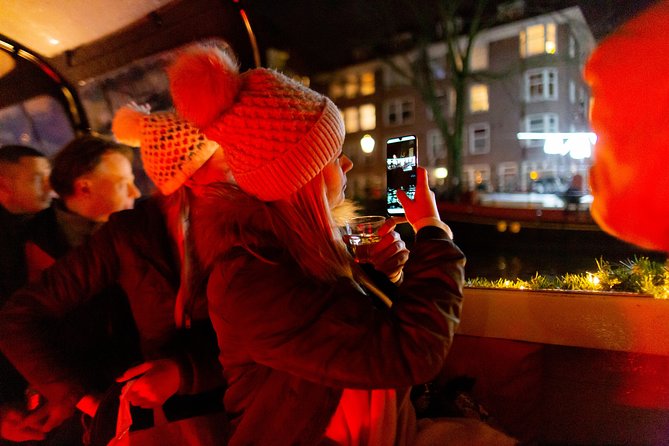
One of the most satisfying parts of an evening canal cruise is the way it frames famous buildings without asking you to stand in a queue. This cruise sails along Prinsengracht, with views toward the Rijksmuseum.
The Rijksmuseum story is big—opened in 1885, later reopened in 2013 after a major renovation—but you don’t need to memorize dates to enjoy what you’re seeing. The point here is the angle. From the canal, you can appreciate the scale and the relationship between the museum zone and the canal network that shaped the city.
And if you care about what’s inside: the Rijksmuseum’s collection covers art and history objects from around 1200–2000, with famous names like Rembrandt, Frans Hals, and Johannes Vermeer among the masterpieces.
The main value for you on this cruise is simpler: it turns the Rijksmuseum into part of your evening route rather than a separate mission.
Anne Frank House and the quiet shock of seeing it from the canal
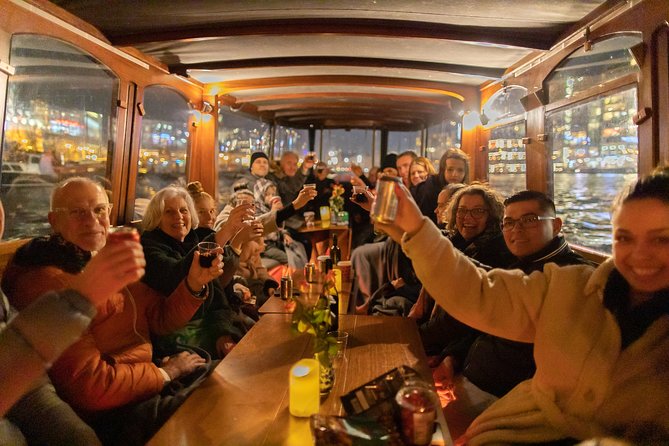
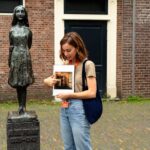
You’ll also pass the Anne Frank House, described as refuge for Anne Frank and her family during World War II. Even if you don’t go inside on this trip, seeing it from the water can change how you remember it—because now it sits inside the living canal city, not just as a museum you planned.
The strongest way to use this moment is to listen closely to the guide’s context as you pass. The cruise is short. The more you pay attention here, the more that stop becomes meaningful instead of just another famous facade.
Carré and opera stops: Amsterdam’s culture you can spot instantly
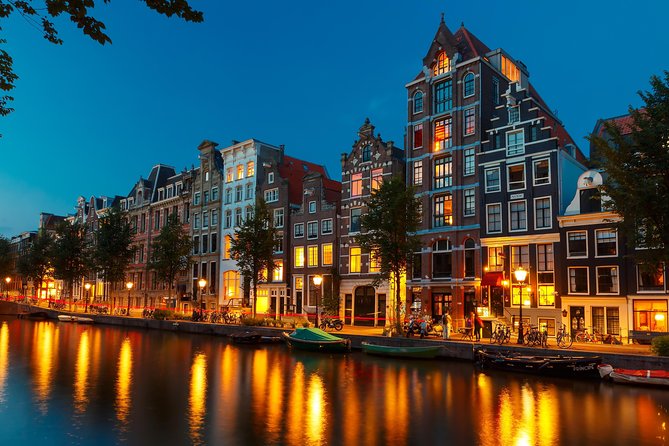
You may also see Royal Theatre Carré (Koninklijk Theater Carré) near the river Amstel. It’s a Neo-Renaissance theatre founded in 1887, originally intended as a permanent circus building. Today it’s used mainly for musicals, cabaret performances, and pop concerts.
Nearby, you can also pass the Dutch National Opera (DNO). Its home base is the Dutch National Opera & Ballet in the Stopera building, a modern structure that opened in 1986.
If you’re curious what kind of city Amsterdam is beyond canals and bikes, these cultural landmarks help. They remind you that Amsterdam’s evening energy isn’t only historical—it’s also performance and modern life.
The Skinny Bridge (Magere Brug) moment you came for
There’s a bridge on Amsterdam’s Amstel called Magere Brug, nicknamed the Skinny Bridge in English. The bridge is known for its narrow wooden drawbridge design, once so narrow it was hard for two pedestrians to pass. A wider replacement bridge came later in 1871.
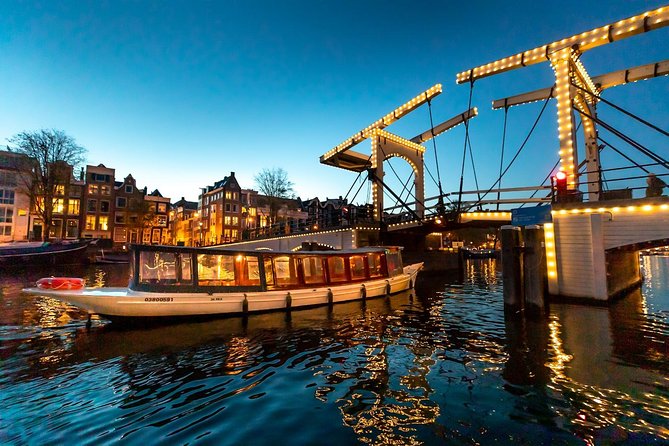
This is the kind of stop that works especially well at night. Drawbridges and canal reflections go together like matching coats and shoes. Even with crowds, this is a moment that tends to feel personal—like you’re seeing a little secret of the city even though it’s famous.
If you like taking photos, aim to be ready when you reach this section. The best shots often come when the boat slows just enough to let you lock onto the shape of the bridge and the lights below it.
Munttoren and the Amstel: how Amsterdam got its name
Late in the route, you may pass Munttoren, the mint tower. It used to be part of a medieval city gate system: Regulierspoort, with a tower on each side. Built between 1480 and 1487 as part of the city wall, it also had a role in minting coins in the 17th century.
Then there’s the Amstel connection. Amsterdam was founded from the Amstel, originally a river. The basic story goes like this: fishermen built a dam there and called it Amsterdam.
These two landmarks give your cruise a sense of cause and effect. You’re not only watching beauty—you’re seeing why the city grew where it did.
How the live guide and captain affect what you learn
This type of tour lives or dies by the people on board. The live guide adds the meaning, and the captain keeps everything moving safely through traffic on the water.
In the feedback for this experience, guides with names like Laia and Ruxi have been praised for being kind and knowledgeable in how they share stories. Captains such as Michael have also been mentioned for piloting and safety, and others like Alexander and Chris show up in accounts as entertaining and professional.
Here’s the practical take for you: listening can be harder if the boat is full or if other passengers are using devices. If your goal is learning, I’d pick a seat where you can hear the guide without needing to lean in.
Also, if weather is rainy or the boat is wet, sound can get affected by the space and conditions. One report noted the need for better speaker system coverage when it was wet. So if you’re traveling in winter months or shoulder season, pack like sound quality won’t be perfect and plan to focus on the highlights the guide shares most clearly.
Practical matters: clothing, no toilets, and what to expect if it’s wet
Amsterdam canal evenings can be cold on the water. The cruise advises warm clothing for exactly that reason, and you should listen. Layers work better than one big coat because you might feel okay at the start and then freeze once the boat is moving.
Two other practical things that can shape your comfort:
- No toilets on board. This is a real factor for a one-hour ride. Don’t wait until you’re on the water.
- Weather matters, and you can cancel if it rains and you’d rather stay inside.
Boarding and comfort can vary by boat style. Some people were surprised if the boat wasn’t what they expected visually, especially when they wanted a fully enclosed feel. If you have strong preferences (closed top vs open), it’s worth asking ahead of time or confirming what you’re assigned to.
Finally, this isn’t a tiny boat experience. There’s a stated maximum of 45 travelers. That can feel lively and fun, but it can also be tight if you want lots of personal space.
Boat office help if you can’t find the dock
If you show up and there’s no boat at the dock, the tour information points you to contact support or visit the office at Leliegracht 50D, described as just around the corner from the Anne Frank House. It’s a good fallback plan.
And on the subject of support: the tour also says service animals are welcome, and the experience is near public transportation—both helpful for planning a smooth evening.
So… should you book the Amsterdam Evening Canal Cruise with live guide and bar?
I’d book this if you want a short, high-reward evening that helps you understand Amsterdam’s layout fast. It’s especially good for first-timers who want to see the main canal ring area, catch viewpoints toward the Rijksmuseum, and experience Anne Frank House from the water without committing to a separate museum visit.
I’d be a little more careful with expectations if:
- you’re very sensitive to cold and plan to travel in rain or windy weather
- you want a specific boat type (enclosed vs open)
- you need easy boarding support (some accounts describe difficulty for older passengers)
But if you come prepared—warm layers, a flexible mindset, and the willingness to listen while the scenery rolls past—this is a fun way to spend one of Amsterdam’s best time windows. The hour goes by quickly, the canals look dramatic at night, and the live guide makes the city feel less random.
FAQ
How long is the canal cruise?
The cruise lasts about 1 hour.
How much does the Amsterdam Evening Canal Cruise cost?
The price is $24.61 per person.
Is the tour offered in English?
Yes, the onboard commentary is offered in English.
Where do I meet the boat?
You’ll make your own way to one of three departure points. The exact route can vary slightly depending on which departure location you choose.
Is there a bar on board?
Yes. You can purchase beer, sodas, and cocktails from the onboard bar.
Are service animals allowed?
Yes, service animals are more than welcome.
Are there toilets on board?
No, there are no toilets available on board.
What should I wear and what if it rains?
Bring warm clothing, since it can be colder on the water. The tour notes you’re welcome to cancel if it rains and you’d rather stay inside.