
REVIEW · AMSTERDAM
Amsterdam: Royal Concertgebouw Orchestra Concert Ticket
Book on GetYourGuide →Operated by The Royal Concertgebouw Orchestra · Bookable on GetYourGuide
A concert in Amsterdam’s sound-box. Seeing the Royal Concertgebouw Orchestra at the Concertgebouw’s Main Hall is a straightforward way to experience world-class classical music in the heart of Museumplein. You also get a drink before the concert and another during intermission, so the night feels less rigid and more like a proper Amsterdam evening out.
What I really like is the focus on the music plus comfort: you’re sitting in the hall built for listening, not just looking. I also like that the included drink options are practical—coffee, tea, soft drinks, beer, or wine—so you can choose what fits your mood and budget without hunting around first.
The one thing to watch is that seating can vary slightly depending on the specific concert. If you’re picky about sightlines, arrive on time for the best chance to settle quickly, and make sure your voucher exchange at the Concertgebouw box office goes smoothly.
In This Review
- Key highlights at a glance
- Tickets and timing: picking up your seat at the Concertgebouw
- Pre-concert drinks: the easy way to start an Amsterdam concert night
- Entering the Main Hall: what makes this venue special to your ears
- The concert program: from Mahler and Strauss to Bruckner (and seasonal traditions)
- What happens during intermission (and why it helps)
- How long this really feels: planning for a calm, focused night
- Value for $61: what you’re really getting
- Who this is best for (and who might want to skip it)
- If things go wrong: voucher exchange and day-of calm
- Should you book this Concertgebouw orchestra concert ticket?
- FAQ
- How long is the concert experience?
- Where do I exchange my voucher for the ticket?
- What drinks are included?
- Is food included?
- What kind of music might be performed?
- Will there be an intermission?
- Is there a welcome talk?
- Are children allowed?
- Is the venue wheelchair accessible?
- Is there free cancellation?
Key highlights at a glance
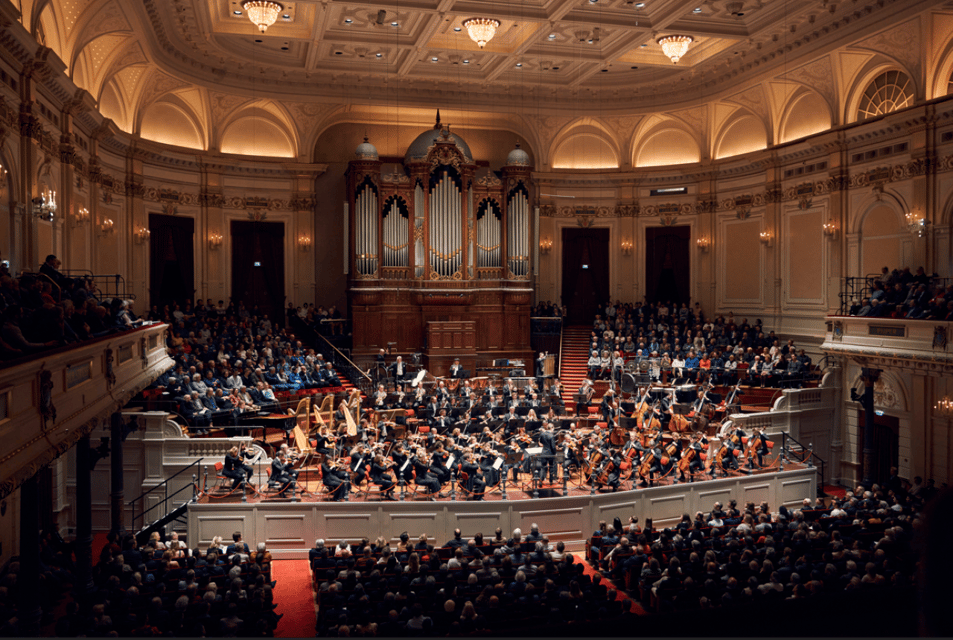
- Main Hall acoustics: exceptional listening conditions in Amsterdam’s famous concert venue
- Royal Concertgebouw Orchestra performance: world-class Dutch symphony orchestra in live action
- Included drinks: a drink before the concert and during intermission (coffee/tea/soft drinks/beer/wine)
- Program variety: you may hear works by Mahler, Richard Strauss, and Anton Bruckner
- Intermission time built in: about 20 minutes to stand up, mingle, and grab your second drink
- Optional welcome talk: if your selected option includes it, you’ll get a short introduction
Tickets and timing: picking up your seat at the Concertgebouw
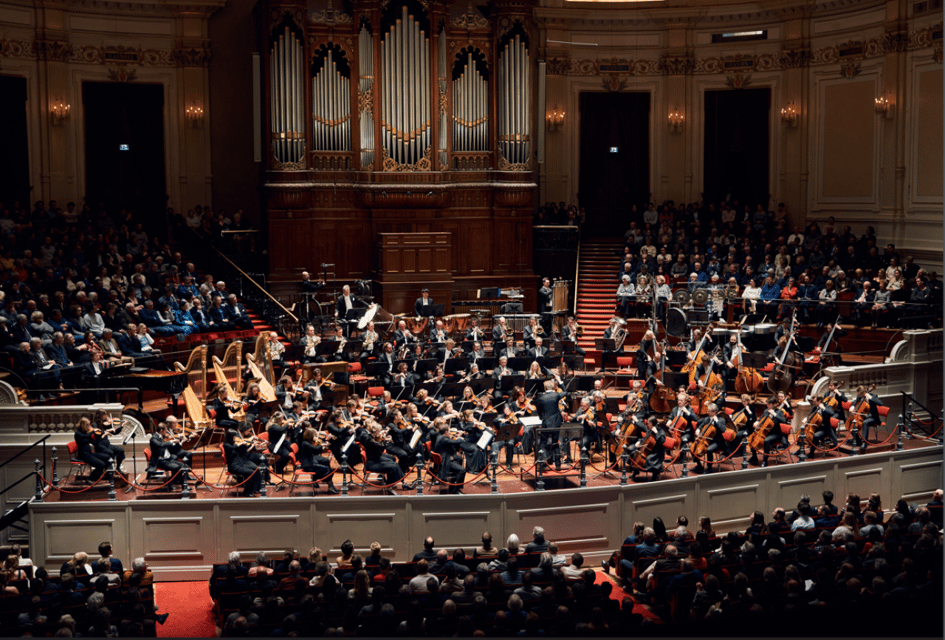
This is a concert ticket experience, not a guided walking tour. You’ll exchange your voucher at the Concertgebouw box office, then take your place for a classical program in the Main Hall.
In terms of timing, plan for about 2 hours total, including a roughly 20-minute intermission. The activity is listed as lasting 1 to 2.5 hours, which usually depends on the specific concert program length that night, but you should treat it as a contained evening—no frantic schedule juggling.
If you’re thinking about fitting it into an Amsterdam day, this is a clean option. You can pair it with a museum visit in the Museumplein area earlier in the day, then come back with time to settle in before the music starts.
One practical note: the seating plan can change a bit from concert to concert. That doesn’t mean you’ll get a bad seat, but it does mean you shouldn’t assume the same layout every night.
You can also read our reviews of more tours and experiences in Amsterdam



Pre-concert drinks: the easy way to start an Amsterdam concert night
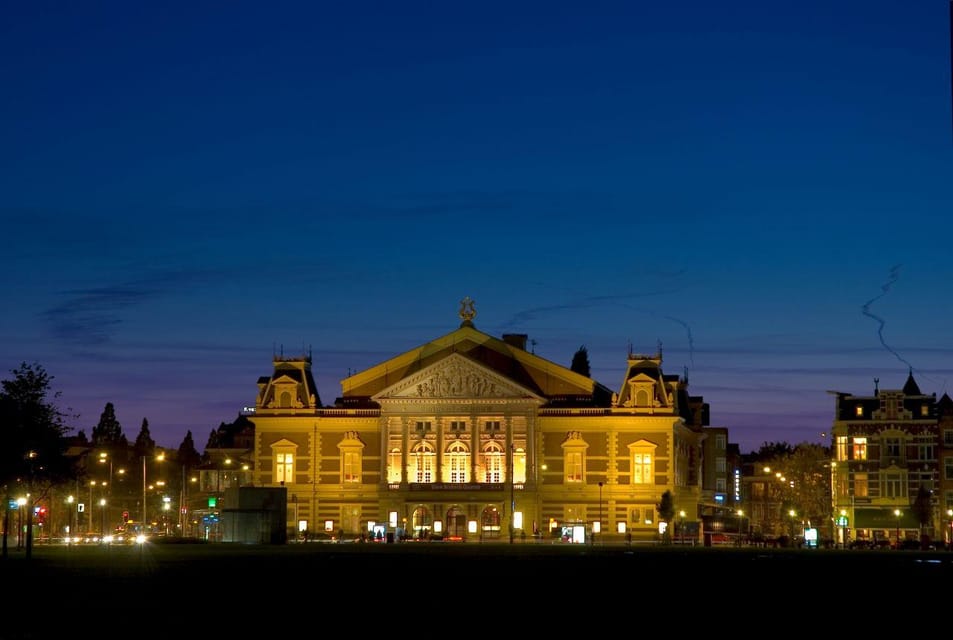
One of the nicer surprises here is how smoothly the drink part is handled. You get a drink before the concert, and you’ll also have a second drink available during intermission.
Your drink choices are clear and flexible: coffee, tea, soft drinks, beer, or wine. That matters because classical concerts can be long enough that having something to sip makes the whole thing feel more relaxed, especially if you arrive a little early to find your seat.
This pre-show window is also your chance to get your bearings in a big venue. You’re not required to rush through anything, and you can take a moment to locate the restrooms and settle into your seat without feeling under pressure.
One small downside: food isn’t included. So if you tend to get hungry during long evenings, you’ll want to eat before you arrive, or plan a snack stop around the concert start time.
Entering the Main Hall: what makes this venue special to your ears
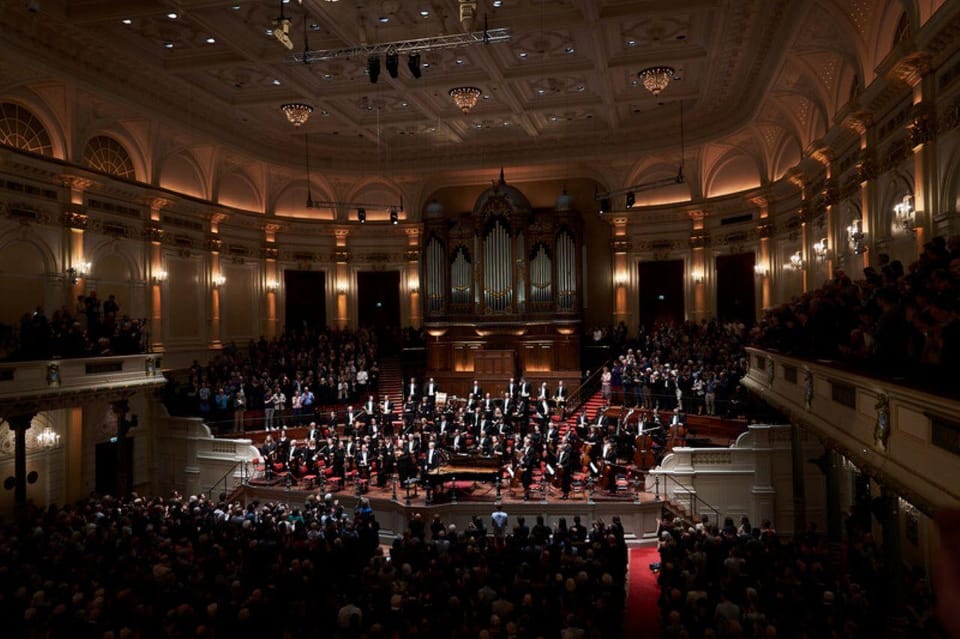
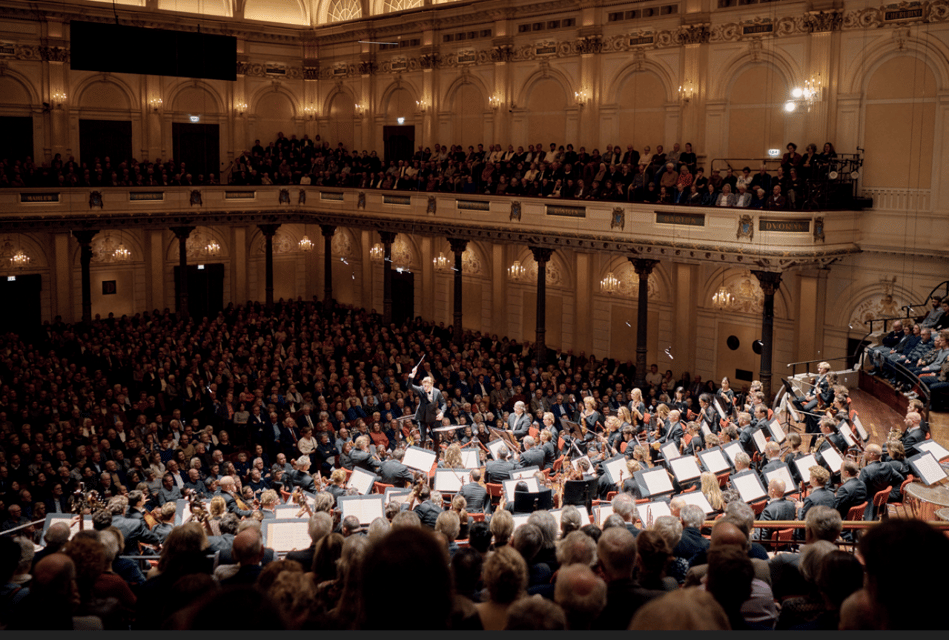
The whole point of this concert experience is the Main Hall at the Concertgebouw, known for exceptional acoustics. Translation: you’re likely to hear details cleanly—strings sounding focused, brass cutting without sounding harsh, and the overall balance staying readable from where you sit.
Acoustics can make or break a classical concert. Even if you’re not a “serious listener,” a hall with great sound helps you follow the lines inside the music—melodies, counter-melodies, and the way the orchestra builds tension and release.
Your seat matters here, but not in the way people sometimes fear. Even with small seating-plan variation, the venue is designed for listening. The best move is simply to arrive with enough time to sit down calmly and avoid crowd chaos.
You’ll also see world-famous conductors and soloists performing live on stage, depending on the program. That’s a key part of the experience—this is not just hearing recorded music. It’s the body language, the cueing, and the real-time coordination you only get live.
The concert program: from Mahler and Strauss to Bruckner (and seasonal traditions)
Each concert has a different program, which is part of the charm and part of the uncertainty. You’re not guaranteed one specific composer, but the experience is set up around major classical works and respected performers.
From the program examples provided, you may hear music by Gustav Mahler, Richard Strauss, and Anton Bruckner. If those names mean anything to you, you’re in good company. If they don’t, that’s fine too—these are famous because they make a big emotional and musical impact, often with dramatic orchestration and strong structural momentum.
There’s also mention of long-standing concert traditions. For example, St Matthew Passion is performed in the week leading up to Easter, and there’s a Christmas Matinee tradition around the holiday season.
That seasonal detail is useful for decision-making. If you’re traveling at a specific time of year, your concert date may influence what kind of repertoire you’ll hear. It’s one reason to check the specific program for your chosen performance time.
A subtle value point: because the program changes every concert, you’re not locking yourself into a single style. One night might feel grand and symphonic, while another could feel more dramatic or lyrical, depending on the selection.
What happens during intermission (and why it helps)

Intermission is about 20 minutes, and during that break you can claim your second included drink. You’ll have time to stand up, stretch, and reset your attention for the second half.
This is one of the practical advantages of a ticket that includes drinks. In many venues, concession lines can eat your break time. Here, you can focus on pacing yourself and not treating your intermission like a logistics problem.
The drink options stay the same—beer, wine, coffee, tea, or soft drinks—so you can choose based on your own comfort. Want something warming? Tea or coffee makes sense. Prefer something celebratory? Beer or wine fits the mood.
Intermission also helps you do a quick “sound check” in your own head. You start noticing what you heard in the first half—how the orchestra handled dynamics, whether you could follow themes, and which sections you liked most. Then you go back in sharper for the second segment.
You can also read our reviews of more tours and experiences in Amsterdam
How long this really feels: planning for a calm, focused night
Even though the ticket duration is listed as 1 to 2.5 hours, the concrete expectation is around 2 hours including intermission. That’s the sweet spot for many first-timers: long enough to feel like you had a proper cultural evening, short enough to still enjoy Amsterdam afterward if you want.
Because food isn’t included, your meal timing matters more than your transport timing. I’d plan dinner either before you go or after, rather than trying to squeeze in a full meal during the concert.
If you’re the type who needs a visual break, you’ll get it during intermission. If you’re more of a keep-your-focus-on-the-music person, you can just use the break to hydrate, then settle back quickly.
Value for $61: what you’re really getting
For about $61 per person, you’re paying for a few things at once:
- A ticket to a major Amsterdam venue’s Main Hall performance
- A live show by a top Dutch symphony orchestra, the Royal Concertgebouw Orchestra
- Two included drinks—one before and one during intermission
- An optional welcome talk if your selected option includes it
When you look at it that way, the price starts making sense, especially in a city where arts tickets can be pricey and often don’t include any comfort extras. The included drinks don’t turn the concert into a bar night, but they remove friction. That’s real value on a travel day.
Also, the time commitment is compact. You’re not paying premium prices for something that turns into half a day. It’s a focused evening with clear boundaries, which helps you build a smarter itinerary.
Where the value might not fit perfectly is if you’re only loosely interested in classical music. In that case, you might want to confirm you’ll actually enjoy the style and pacing of a full orchestral program. Still, the repertoire often includes major works that even casual listeners recognize by sound or theme.
Who this is best for (and who might want to skip it)
This concert ticket is a strong match if you want one of the most classic Amsterdam cultural experiences. It’s also ideal if you’re in town for a short visit and want a high-impact night without complicated planning.
It’s a good option for:
- People who enjoy classical music and want to hear the Royal Concertgebouw Orchestra live
- Couples, solo travelers, and small groups who want a seated experience with a clear start and finish
- Anyone who likes practical perks, like included pre- and intermission drinks
It’s not a fit if:
- You’re traveling with small kids. This experience is not suitable for children under 6
- You’re expecting food to be part of the ticket
And if you’re sensitive to how strict things can be in formal venues, you might appreciate the laid-back drink setup. You can show up, exchange your voucher, get your drink, and focus on the music.
If things go wrong: voucher exchange and day-of calm
This is where I’d be a little cautious, because ticketing errors happen anywhere. The fix here is simple: be prepared to exchange your voucher at the Concertgebouw box office, and keep your confirmation details accessible.
If your reservation depends on reference numbers or a voucher, arrive early enough to handle any mismatch without stress. That tiny buffer can save you from a very bad evening.
Also, remember that the seating plan can vary slightly. If you’re sensitive about where you sit, don’t treat it like a choose-your-own-seat situation—treat it like a venue experience where you take what you get and enjoy it.
Should you book this Concertgebouw orchestra concert ticket?
I think you should book this if you want a straightforward, high-quality classical night in Amsterdam. The Main Hall acoustics plus the Royal Concertgebouw Orchestra are the core reason, and the included drinks before and during intermission are a practical bonus that makes the evening easier on travel days.
Skip it only if you’re sure you won’t enjoy a full orchestral program, or if you’re traveling with children under 6. Otherwise, this is the kind of ticket that turns a trip into a memory you’ll remember for the sound, not for the logistics.
If you can, check what music is listed for your specific performance date. Knowing whether the program leans toward Mahler, Strauss, Bruckner, or seasonal traditions like St Matthew Passion helps you pick the night that matches your taste.
FAQ
How long is the concert experience?
Concerts last about 2 hours including an intermission of 20 minutes. The overall activity is listed as 1 to 2.5 hours depending on the concert.
Where do I exchange my voucher for the ticket?
Go to the Concertgebouw box office to exchange your voucher for a ticket.
What drinks are included?
You get 1 drink before the concert and 1 drink during intermission, with options including coffee, tea, soft drinks, beer, or wine.
Is food included?
No. Food isn’t included with the ticket.
What kind of music might be performed?
The program changes every concert. Music may include works by Mahler, Richard Strauss, and Anton Bruckner, and it can also feature long-standing traditions like St Matthew Passion and the Christmas Matinee.
Will there be an intermission?
Yes. There is an intermission of about 20 minutes.
Is there a welcome talk?
A welcome talk is available if the selected option includes it.
Are children allowed?
This experience is not suitable for children under 6.
Is the venue wheelchair accessible?
Yes, the experience is wheelchair accessible.
Is there free cancellation?
Yes. You can cancel up to 24 hours in advance for a full refund.