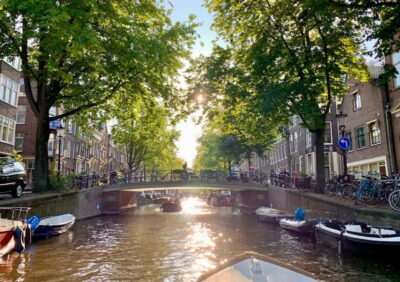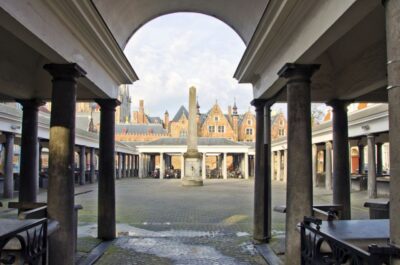
Amsterdam’s secrets start where the walking begins. This 2-hour 750 years story-walk through central Amsterdam is built to make history feel weird, real, and close by, guided by Antonis. It’s the kind of tour where you start noticing the city’s clues instead of just passing them.
I really like two things about it. First, the guide ties major turning points—first dams and dikes, the Golden Age, and World War II—into one steady narrative, so facts don’t bounce around. Second, the small touches matter: you get a handwritten postcard with a Dutch stamp from historic A’DAM, and it becomes part of the story you just heard.
One consideration: video recording isn’t allowed, so if you like filming everything for later, plan to rely on photos and your notes instead. Also, it’s only 2 hours, so it’s intense in a good way, but not for a slow stroll.
In This Review
- Key things I’d focus on before you go
- A two-hour walk through 750 years, starting at the Bull
- The story’s engine: mud, dams, and why Amsterdam had to invent itself
- First dam and dikes: the early blueprint of survival
- Golden Age thinking: trade, wealth, and the city’s big ideas
- Old religions to liberal revolutions: who Amsterdam tried to be
- World War II: how devastating events reshape a city
- You’ll notice the city: leaning houses and those building marks
- The handwritten A’DAM postcard: a small souvenir with a purpose
- Pace, group size, and practical tour tips for comfort
- Price and value: is $28 worth it?
- Who should book this Amsterdam secrets walk
- Should you book Amsterdam’s Hidden Facts: 750 Years of Secrets?
- FAQ
- How long is the Amsterdam’s Hidden Facts tour?
- Where do I meet the guide for the tour?
- What is included in the ticket price?
- How big is the group?
- What languages is the tour offered in?
- Is video recording allowed?
Key things I’d focus on before you go
- 750 years in 2 hours: one continuous storyline, not disconnected stops
- Dams, dikes, and mud: the city’s survival tech explained in plain language
- Look for clues: lean houses and the reasons behind those repeated building marks
- Major eras covered: Golden Age ideas and World War II consequences
- Small group (max 12): easier questions and a more human pace
- Handwritten postcard: a keepsake that ties to the route’s historic vibe
A two-hour walk through 750 years, starting at the Bull
This tour is designed for people who want the story behind what they’re seeing, and who prefer walking over lecture halls. You meet in front of the Bull !! and return to the same spot at the end, so you don’t spend your brainpower tracking where to go next.
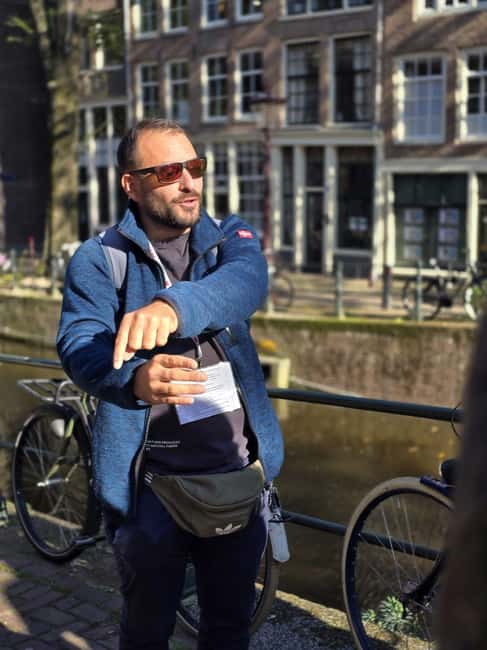
The format is simple: you walk, you listen, and you keep your eyes open. The guide’s style—warm, funny, and a bit obsessed with Amsterdam’s details—matters here. When the city is the subject, tone makes a huge difference. Antonis is presented as more than a reciter of dates. You’ll get explanations that connect things like geography, religion, and politics to the way the city looks and functions.
Duration is 2 hours, with starting times depending on availability. That’s enough time to cover eras like the Golden Age and World War II, but still short enough to fit into a busy Amsterdam day. If your ideal trip is a long museum day, this isn’t that. Think of it as a sharp start (or a smart add-on) that makes the rest of your sightseeing make sense.
You can also read our reviews of more tours and experiences in Amsterdam.



The story’s engine: mud, dams, and why Amsterdam had to invent itself
Amsterdam’s most important “character” is the ground beneath it. The tour leans hard into the practical reality that Amsterdam was built on mud, and survival depended on systems—especially dams and dikes. You’ll hear the kind of explanation that makes you understand why people in this city didn’t just build and hope. They engineered.
This is where the tour gets fun. Instead of treating engineering as boring, it points you toward things you can spot and ask about. Expect the guide to answer questions like why houses lean, and why Amsterdam’s building style carries marks (including those repeated XXX-type elements) tied to how life and property worked.
That practical angle is the difference between a “facts” tour and a “how this city works” tour. Once you grasp the mud-and-water problem, a lot of Amsterdam becomes easier to read: the city layout, the relationship to canals, and why resilience shows up in stories from early settlers to later centuries.
First dam and dikes: the early blueprint of survival
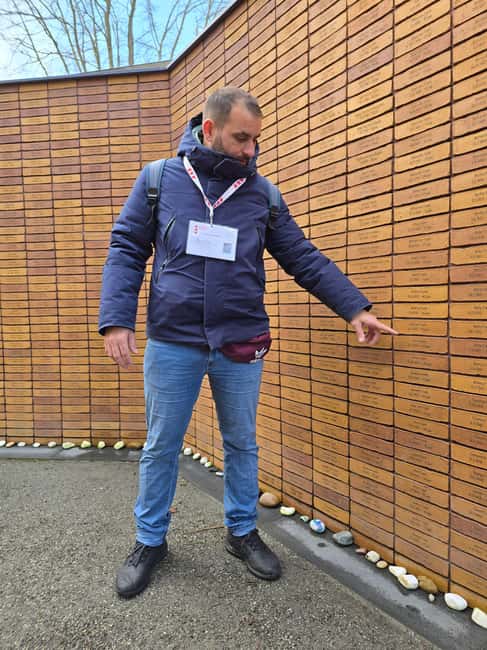
One major thread is the era of the first dam and dikes—when Amsterdam wasn’t yet the postcard-perfect city you know today. You’ll learn how these early defenses changed what was possible. In practical terms, dams and dikes weren’t only protective. They were enabling.
This matters because it frames Amsterdam as a place built on problem-solving and cooperation. When you understand that, you’ll listen differently to the later chapters—trade, wealth, and political change. The tour sets up the long arc: the city grows because it learns how not to get swallowed.
If you’re the kind of traveler who likes to connect the dots between nature and human choices, you’ll enjoy this section. If you came mostly for architectural vibes without caring about water-management systems, you might find yourself wishing for more street-level landmarks. Still, this part explains why the rest of Amsterdam makes sense.
Golden Age thinking: trade, wealth, and the city’s big ideas
The Golden Age shows up as more than a look back at old wealth. You’ll get stories tied to how Amsterdam became a magnet for commerce and ideas, and why that era shaped the city’s self-confidence.
You can feel how the guide builds momentum here. The tour doesn’t treat the Golden Age like a museum display. It’s framed as a time when systems, networks, and money helped Amsterdam grow—then later had to face real-world pressures.
This is also where you start hearing the “strange-but-true” style of facts that make a walk memorable. The guide’s approach suggests you’ll come away able to explain not just what happened, but why it mattered to everyday life and to the city’s reputation.
Old religions to liberal revolutions: who Amsterdam tried to be
Amsterdam’s story isn’t only economic. It also follows changing beliefs and political movements—from older religious communities to later periods of more liberal ideas and revolutions. The tour connects these shifts to the city’s identity, especially the idea of a society built on trust and radical thinking.
You’ll likely leave this section with a different mental map of Amsterdam: not just canals and cycling, but a place where ideas competed and where the rules of belonging could change over time.
This is where the tour’s tone helps. A heavy topic can turn into a slog. Instead, the guide’s warmth and humor keep it moving, so history feels like a set of human decisions rather than a timeline you forgot the moment you stepped away.



World War II: how devastating events reshape a city
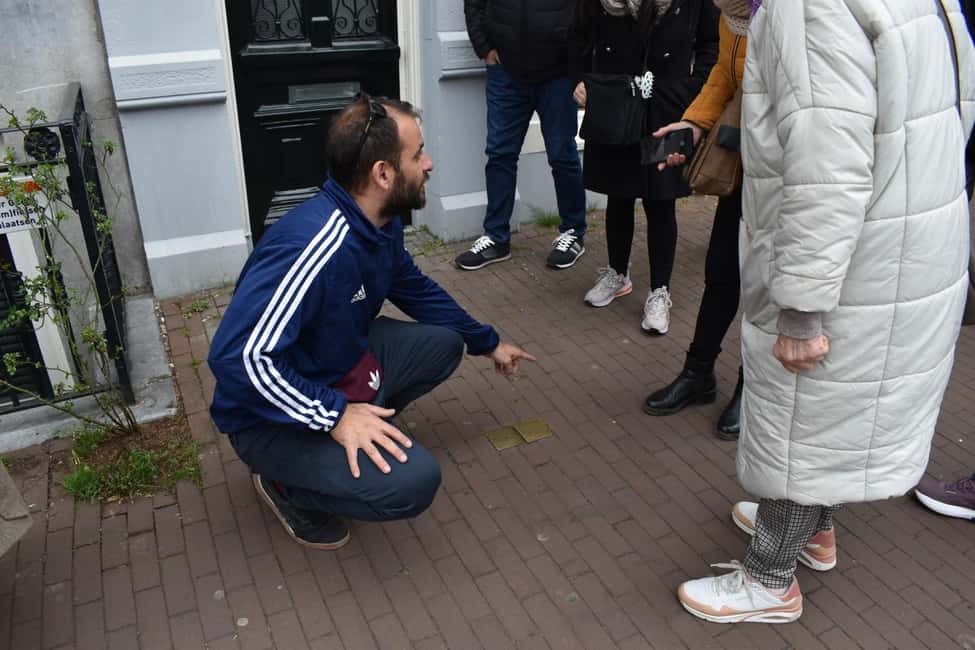
World War II lands as one of the defining moments that the tour frames as a turning point. You’re not just told that it happened—you’re guided toward what changed afterward, and how the city’s story absorbed that trauma.
It’s a sensitive topic, and the tour’s structure matters: it uses context and continuity so this era doesn’t feel like a random detour. By the time you reach it, you’ve already heard about systems, cooperation, and the consequences of survival and governance decisions. That buildup makes the WWII chapter hit harder, in a controlled way.
There’s also a practical side to this. When you understand how Amsterdam’s institutions and communities got tested, you’ll interpret the city differently during the rest of your trip. Instead of treating buildings and monuments as scenery, you’ll see them as reminders of choices.
You’ll notice the city: leaning houses and those building marks
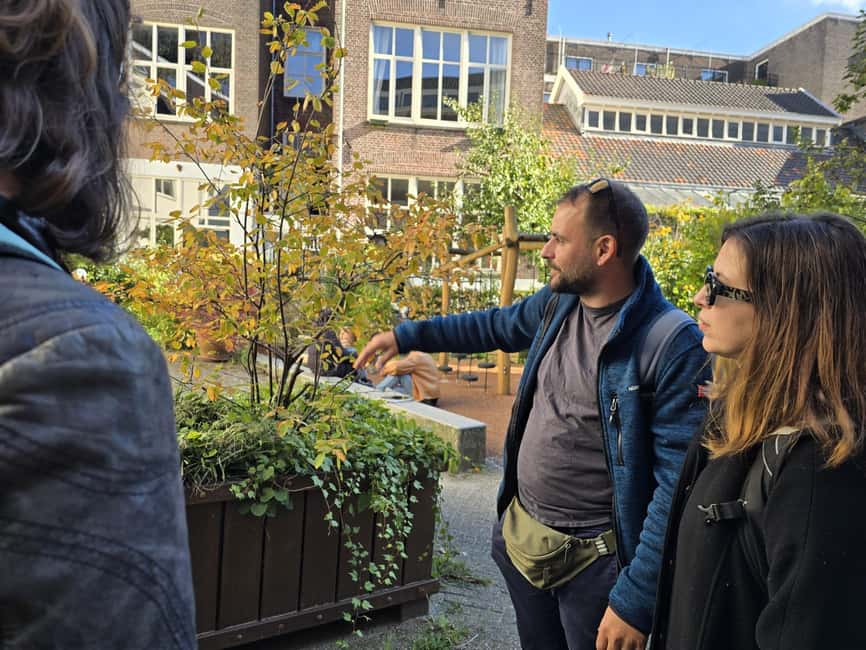
One of the tour’s strongest hooks is that it gives you questions to carry while you walk. Why do houses lean? What’s with the repeated XXX elements you might see on building fronts? And why does the city keep pointing back to mud and water-management?
Even without a printed stop-by-stop schedule, you’re set up to read Amsterdam as a physical document. You won’t just hear history. You’ll be nudged to look at how history leaves traces—on facades, in construction quirks, and in the way the built environment reflects older needs.
This is also a good reason to bring a camera. You can snap photos of what the guide points out, then connect the dots while the story is still fresh.
The handwritten A’DAM postcard: a small souvenir with a purpose
At the end of the tour, you receive a handwritten postcard with a Dutch stamp from historic A’DAM. It’s not just a souvenir. It’s designed like part of the experience: archive-inspired, story-linked, and something you can send or keep.
That’s a rare type of travel gift—one that encourages you to slow down for a moment. If you like sending postcards, you’ll probably find this satisfying. If you don’t, it still works as a tangible memory that matches the tour’s theme of hidden facts and overlooked details.
It also reinforces what this tour values: a personal connection to place, not just consumption.
Pace, group size, and practical tour tips for comfort
The tour runs as a small group, with a maximum of 12 guests. That size is big enough to feel lively but small enough that you’re not swallowed by the crowd. The result: questions are easier, and the guide can actually connect with people who want to learn.
The tour is described as having no umbrellas and no mass crowd energy. That matters in Amsterdam, where weather can shift fast. You’ll want to dress for conditions, but the setup keeps the group experience focused on walking and listening.
Bring comfortable shoes. Two hours on city sidewalks adds up. Bring water because you’ll be walking and thinking. Bring a camera, and use weather-appropriate clothing. And remember: video recording isn’t allowed, so don’t rely on a phone recording to capture everything.
If you’re traveling solo, the tone here is another plus. The guide is presented as attentive even when someone is alone, and that kind of care makes a big difference on a fact-heavy walk.
Price and value: is $28 worth it?
At $28 per person for a 2-hour guided walking tour, this is priced like a solid “experience layer” on top of standard sightseeing. You’re not paying museum-level rates for a collection. You’re paying for a person to translate the city’s systems, myths, and turning points into something you can remember.
Two things strengthen the value. First, you get the guide plus the handwritten postcard with a Dutch stamp—a built-in keepsake. Second, the small group size (max 12) supports a better learning environment than large tours where questions get ignored.
Is it a bargain? It’s competitive for a specialized, story-first tour with a live guide. Whether it’s worth it for you depends on one question: do you enjoy learning as you walk? If yes, $28 is an easy yes. If you prefer self-guided wandering, you might feel the time is tighter than you like.
Who should book this Amsterdam secrets walk
This tour fits best if you want:
- a story-driven way to understand why Amsterdam works (not just how it looks)
- major-era coverage (Golden Age and WWII included) in a single outing
- a guide who mixes facts with humor and human connection
- a small-group pace that feels friendly, not rushed
It’s especially good for solo travelers, couples, and friends who like asking questions and then immediately noticing answers in the street. It also works well when you want a first-day orientation without doing a “big bus” style overview.
If you’re the type who wants only iconic landmarks and photos, you may still enjoy it—but you’ll probably get more out of it if you’re curious about why the city is the way it is.
Should you book Amsterdam’s Hidden Facts: 750 Years of Secrets?
Yes, you should book it if you want Amsterdam to make sense fast. The tour’s strongest pitch is that it connects dams, mud, political change, and WWII into one continuous narrative, and it trains your eyes along the way. Add in the small group cap and Antonis’s warm, funny energy, and you get a walk that feels like a conversation with the city.
Skip it only if you dislike guided storytelling, don’t want to think about history and systems, or you’re hoping for a mostly photo-stop route. Also, if video recording is important to you, note the restriction up front.
FAQ
How long is the Amsterdam’s Hidden Facts tour?
It lasts 2 hours.
Where do I meet the guide for the tour?
You start in front of the Bull !! and the tour ends back at the same meeting point.
What is included in the ticket price?
You get a professional local guide and a handwritten postcard with a Dutch stamp.
How big is the group?
It’s a small group, with a maximum of 12 guests.
What languages is the tour offered in?
The tour is offered in English and Greek.
Is video recording allowed?
No, video recording isn’t allowed.