A canal cruise sounds like a cliché—until you’re doing it privately on a small historic boat with a real local art historian guiding the story. I love how you get a calm, on-the-water view of Amsterdam’s canals while learning what you’re actually looking at, not just passing landmarks. I also like the pace: about 1.5 to 2 hours of route time with a guide who can answer questions in English. One possible drawback: this experience leans on good weather, so a rainy day can mean rescheduling.
The route is built for variety—starting on the Spiegelgracht and Prinsengracht, moving toward the river Amstel, then cutting into the Herengracht/Keizersgracht canal system and winding down near the Jordaan. You’ll get complimentary coffee or tea, plus alcoholic beverages, which makes the whole thing feel like a small “time-out” from Amsterdam’s street noise.
Finally, because it’s a small-group private format (up to 10 people), you’ll want to be sure the schedule works for your day in the city. If you’re hoping for constant stops to hop out and explore on foot, this one is more about viewing and learning from the water.
In This Review
- Key highlights you’ll feel right away
- A private Amsterdam canal cruise on a small historic boat
- Why an art historian guide changes the canal-view experience
- Prinsengracht and Amstelveld: the start that sets the story
- Skinny Bridge and Amstel locks: where Amsterdam engineering becomes visible
- Rembrandt corner and the Dancing Houses: art and everyday architecture
- Herengracht and Keizersgracht: learning what “wealth along the canal” really means
- Seven bridges in Reguliersgracht and the Jordaan glide
- Anne Frank House area and what you should expect from the canal view
- Price and value for a group of up to 10
- Practical tips for enjoying the 1.5–2 hour canal ride
- Who this private Amsterdam canal cruise is best for
- Should you book this private canal cruise?
- FAQ
- How long is the private canal cruise?
- Where do we meet, and where does the tour end?
- Is this tour private, and how many people are in the group?
- What language is the guide?
- What’s included during the cruise?
- What happens if the weather is bad?
Key highlights you’ll feel right away
- Small-group privacy on a historic boat (only your group aboard)
- Art historian guide who turns canal scenes into context you can remember
- Route variety: Prinsengracht, Amstel river, Herengracht, Keizersgracht, Jordaan
- Iconic sights on the water: the Skinny Bridge and the Amstel locks
- Relaxing extras: coffee/tea and bottled water, plus alcoholic beverages
- Comfort-friendly timing: roughly 1 hour 30 minutes to 2 hours
A private Amsterdam canal cruise on a small historic boat
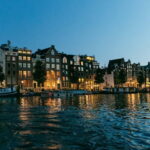
Amsterdam’s canals are photogenic from anywhere, but the water gives you something streets can’t: perspective. From a boat, you see the canal edges, the architecture lines, and the way bridges and waterways stitch the city together. This cruise keeps that experience intimate by staying on a small historic boat rather than a big crowd platform.
The practical win is that you’re not stuck with the usual “everybody watch the guide, everybody else talk over them” dynamic. Your group stays together, and the guide can keep the conversation moving as you pass major areas like the Prinsengracht and the Jordaan. You also get an English-speaking guide and complimentary drinks, which help you settle into the pace instead of treating it like a sprint from stop to stop.
There’s also a nice balance between “major Amsterdam icons” and neighborhood texture. You get the headline sights—like the Skinny Bridge and the canal bridges people photograph constantly—while also traveling through residential and trading-canal zones that explain why Amsterdam looks the way it does.
You can also read our reviews of more boat tours in Amsterdam

Why an art historian guide changes the canal-view experience
What makes this tour worth your money isn’t just that you’re on a boat. It’s that your guide is an art historian, so you’re hearing interpretations of buildings and places, not just dates and trivia.
For example, the route is organized around themes that match how Amsterdam developed: canal life, trade wealth, and the shaping of streets and waterways over time. When you’re shown the “rich traders” canal stretch on Herengracht, you’re not just hearing a label—you’re getting the sense of why these grand homes lined the water and what that meant for daily life in the 17th century.
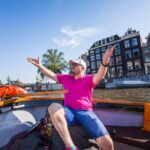
This is also the kind of guide you’ll appreciate if you like asking questions. One past group described the guide as entertaining with humor and candor, and that matters on a short tour. In 90 minutes to 2 hours, you don’t want a lecture; you want a lively conversation where the route stays understandable.
Prinsengracht and Amstelveld: the start that sets the story
The cruise begins by moving into Spiegelgracht and Prinsengracht, which is a great way to ease into the city rather than jumping straight to the most famous bridge photos. From there, you head toward the Amstel area, passing the Amstelveld and the houseboat zones.
This part of the route works well because it teaches you to “read” canals. On Prinsengracht you start noticing how the canal system functions like a network—waterways connecting neighborhoods, not just scenery. Then the Amstelveld and houseboat area add a living feel. It’s one thing to see canal houses in pictures; it’s another to watch everyday life flow beside you.
If you’re the type who likes architecture details, this early stretch gives you time to get your bearings. You’re not rushed, and you’re already learning what to look for before the cruise hits the more dramatic landmarks.
Skinny Bridge and Amstel locks: where Amsterdam engineering becomes visible
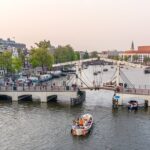
After you turn down toward the river Amstel, the cruise passes some of Amsterdam’s most recognizable “water engineering” moments. You’ll go by the Skinny Bridge, then see the Amstel locks.
Why this matters: locks and bridge design are the city’s practical brain. Amsterdam didn’t become a canal city by accident—it required constant management of water levels and waterways. When you’re looking at these features from the correct angle (from the water itself), they stop being abstract. You can see how the canal meets the river and how the city keeps the system moving.
This is also a strong photography segment. The Skinny Bridge is narrow and visually striking, and from the boat you can get the full sense of its proportions without standing in a busy crowd.
And yes, it’s also a fun “wow, that’s exactly what I’ve seen in photos” moment—just with more explanation than a quick selfie stop.
Rembrandt corner and the Dancing Houses: art and everyday architecture
As the cruise continues, you’ll reach areas tied to cultural identity. The route includes the Rembrandt corner, where the painter spent his early years in Amsterdam. Even if you’re not a deep Rembrandt fan, it gives you a helpful anchor point: you’re watching the city not only as a layout, but as a lived-in place shaped by real people.
Then comes the area known for the dancing houses. This is one of those sights where the visible oddness is the point—buildings that look like they’re leaning or twisting in a way that feels impossible until you see it from the right viewpoint. The boat makes that effect easier to grasp because you’re not limited to one street-level perspective.
One consideration here: because the boat is moving, you’ll want to keep your phone ready for quick moments, not extended framing. If you’re a slow, deliberate photographer, it helps to plan to pause your “perfect shot” instinct and focus on the bigger compositions between landmarks.
You can also read our reviews of more private tours in Amsterdam




Herengracht and Keizersgracht: learning what “wealth along the canal” really means
When you move into Herengracht—described as the canal of the Lords—you’re seeing the Amsterdam story with the wealthier side of the ledger. The guide’s art-historian lens is what makes this segment more than a scenic drive. You’re learning how these canal houses represented prosperity and how trade wealth shaped the built environment.
From there, the cruise turns toward Keizersgracht. This part of the route supports a key travel lesson: Amsterdam’s canal belt isn’t one uniform neighborhood. It’s a system that reflects different social and economic layers.
If you’re traveling with someone who loves history but gets impatient with long explanations, this is a good compromise. The surroundings are visually interesting, and the guide can connect what you see to the wider story as you pass.
Seven bridges in Reguliersgracht and the Jordaan glide
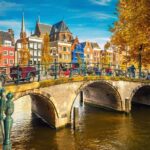
The cruise includes the famous seven bridges in the Reguliersgracht, and it’s one of the best segments for understanding how Amsterdam channels connect neighborhoods. From the water, the bridges feel like control points: small crossings that still dramatically shape movement and views.
After that, the route flows toward the Jordaan, a neighborhood that feels more intimate and residential than the grand canal belts. You’ll see the canal character shift again as the cruise heads back toward the starting area.
This section is a smart way to close the loop. Instead of ending right when the big sights finish, you slide into a different mood—more local, more everyday—so you leave with a fuller sense of what Amsterdam feels like beyond its postcard points.
Anne Frank House area and what you should expect from the canal view
The itinerary includes a stop that points toward the Anne Frank House area. On a canal cruise like this, you should treat it as a viewing moment from the water rather than an entry or museum visit.
So what’s the value? It helps you connect Amsterdam’s modern historical storytelling with the canal layout around it. Even if you’ve seen photos before, the canal perspective adds context: you understand the neighborhood geography and why this area sits where it does within the canal network.
If you’re planning to visit the Anne Frank House later, this cruise can help you get your bearings first. It’s a “see the surroundings” stage, and it pairs well with follow-up time on foot if your schedule allows.
Price and value for a group of up to 10
This private cruise costs $599.50 per group (up to 10 people) for about 1 hour 30 minutes to 2 hours. That pricing structure usually makes one thing clear: you’re paying for privacy and a guide, not per-seat entertainment.
Here’s the value math you can use:
- If you fill the boat with the full group size, you’re effectively paying about $60 per person.
- If you go with a smaller group, the per-person cost rises quickly, since the price is group-based.
So this is best when you have a group of friends, two couples, or a small family where everyone can share the cost. Reviews also back up the satisfaction level, with a 4.7/5 rating and 93% recommendation. One of the standout themes from past experiences is the guide style—fun, candid, and strong on explaining what matters—plus the overall comfort of the boat.
In other words: it’s not the cheapest way to “do Amsterdam canals,” but it’s one of the more efficient ways to do them with meaning.
Practical tips for enjoying the 1.5–2 hour canal ride
The experience runs in English, so it’s straightforward to follow even if you’re not fluent in Dutch. You’ll also have bottled water and coffee/tea, plus alcoholic beverages, which is a real comfort factor on a short tour.
A key practical note: the cruise requires good weather. That’s not just legal fine print; it affects whether the tour runs as planned. If your schedule is tight, it’s worth building this into a day where you can be flexible by a few hours or be ready for a different date.
Also, no baby stroller is allowed. If you’re traveling with kids, plan for how you’ll manage without a stroller.
Finally, remember this is a boat experience. Keep your expectations set for moving views rather than long stops on land. You’ll get a lot of route highlights, but the fun is in watching the city roll by while the guide gives you the story.
Who this private Amsterdam canal cruise is best for
This tour is ideal if you want the “Amsterdam canals” moment but with less chaos. It’s a great match for:
- Couples or small groups who want privacy and better conversation time
- People who like history but want it explained through real scenes and architecture
- Travelers who enjoy photography but prefer it paced, not rushed
It’s also a strong choice if you’re tired after walking all morning and want a low-effort, high-reward way to see multiple areas. The combination of guided storytelling and complimentary drinks keeps it from feeling like just transportation.
If you’re traveling solo and hoping to meet lots of strangers, this private format may feel quieter than a large public cruise. In return, you’ll get more personal attention.
Should you book this private canal cruise?
I’d book it if you value three things: privacy, context, and a calm pace. This cruise is set up to help you understand Amsterdam’s canals as a system—trade wealth on Herengracht, river engineering on the Amstel, and neighborhood character in the Jordaan—while you relax on the water with coffee and a friendly guide.
Skip it if you’re chasing low cost above all, or if you already know the basics and plan to spend most of your time on foot elsewhere. For many travelers, the price makes sense when you share it and treat the guide as part of the experience, not extra.
If you want an efficient, meaningful canal tour with a strong satisfaction score, this is one of the better “private boat” choices in Amsterdam.
FAQ
How long is the private canal cruise?
It lasts about 1 hour 30 minutes to 2 hours.
Where do we meet, and where does the tour end?
You meet at H’ART Museum (Hermitage Amsterdam), Amstel 51, 1018 EJ Amsterdam. The tour ends back at the meeting point.
Is this tour private, and how many people are in the group?
Yes, it’s private. Only your group participates, with a maximum of up to 10 people.
What language is the guide?
The tour is offered in English.
What’s included during the cruise?
The tour includes a professional art historian guide, bottled water, coffee and/or tea, and alcoholic beverages.
What happens if the weather is bad?
The cruise requires good weather. If it’s canceled due to poor weather, you’ll be offered a different date or a full refund. You can also cancel for a full refund up to 24 hours in advance.