REVIEW · AMSTERDAM
Private Amsterdam Red Light District and Coffee Shop Tour
Book on Viator →Operated by Trigger Tours · Bookable on Viator
This Amsterdam walk teaches you how it works. If you want the real story behind the Red Light District and coffee shop culture, this tour turns headlines into street-level facts and puts local law in plain English.
I especially like how the guide ties tolerance to history, explaining how prostitution can be legal and how marijuana is treated under Dutch rules.
I also love the relaxed feel of a private group, where guides like Saskia, Luis, Robin, and Ben keep the pace comfortable and the tone respectful. One drawback to consider: this is a focused neighborhood experience, so you’ll get a smart overview rather than an unlimited wandering tour of every side street.
In This Review
- Key Points at a Glance
- Why This Red Light District and Coffee Tour Feels Different
- Damrak Start and the 2-Hour Timing Reality
- The Red Light District Walk: Laws, Tolerance, and What You’re Actually Looking At
- Dam: Amsterdam’s Wooden Foundations and the City Built on Trees
- Old Town Clues: Why This Part of Amsterdam Feels So Historical
- The Ape Pub (Int Aepjen): Timber-Era Amsterdam After the 1452 Fire
- The Waag: From City Gate to Guild Space
- The Smallest House: VOC Storage to Long-Term Living
- Condomerie Stop: A Modern Stop on Tolerance and Commerce
- Upgrade Options: Erotic Museum or Coffeeshop With Your Guide
- Price and Value: What You’re Really Paying For at $41.60
- What I’d Expect You to See and Feel at Each Stage
- Who This Tour Fits Best (and Who Should Consider Another Day)
- Should You Book This Private Red Light District and Coffee Tour?
- FAQ
- How long is the Red Light District and coffee shop tour?
- Where do I meet the guide?
- What’s included in the tour price?
- Is it a private tour?
- Can I upgrade to the Erotic Museum or a coffeeshop visit?
- Can I cancel for a full refund?
Key Points at a Glance
- Private-group pacing that feels calm, not rushed, even when the subject matter is sensitive
- Dutch law explained in context, including why the city’s approach is so different from what many visitors expect
- History stops beyond the obvious, from Damrak-area landmarks to timber-era Amsterdam
- Optional upgrade choices, including the Erotic Museum or a coffeeshop visit with your guide
- Respectful handling of an adult neighborhood, with families and mixed groups reportedly feeling comfortable
- Easy start/end at Damrak, right by major transit links
Why This Red Light District and Coffee Tour Feels Different
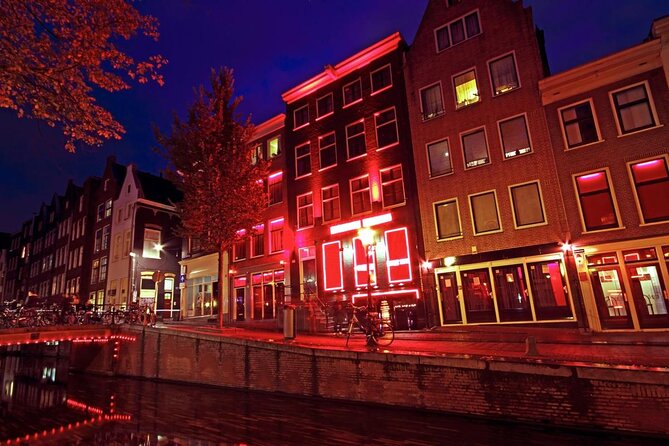
The Red Light District can look like one big blur from the sidewalk. This tour gives you structure. You don’t just see the signs and shop fronts; you learn what shaped the rules, the buildings, and the neighborhood’s role in Amsterdam.
I like that the tour doesn’t treat the area like a dare. Instead, it frames what you’re seeing as part of a legal and cultural system that’s been going on for decades. That makes the whole place easier to understand, and less awkward to process.
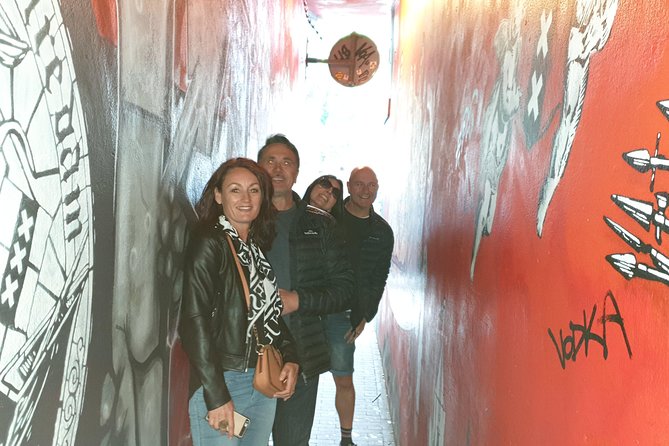
And the private format matters. When it’s only your group, you can ask questions without feeling like you’re holding up 20 other people. In the guides I saw highlighted in past tours—Saskia, Guido, Luis, Robin, Ben, Esther, Catherine, Fia, and Aare—the common thread is clear storytelling with an effort to keep it normal, not scandalous.
The practical catch: you should go in expecting an adult-themed neighborhood. Even with a respectful tone, it’s still an area many people find intense. If you’re very sensitive to sexual content or want a purely sightseeing day, you might prefer a more general historic walk.
You can also read our reviews of more private tours in Amsterdam


Damrak Start and the 2-Hour Timing Reality
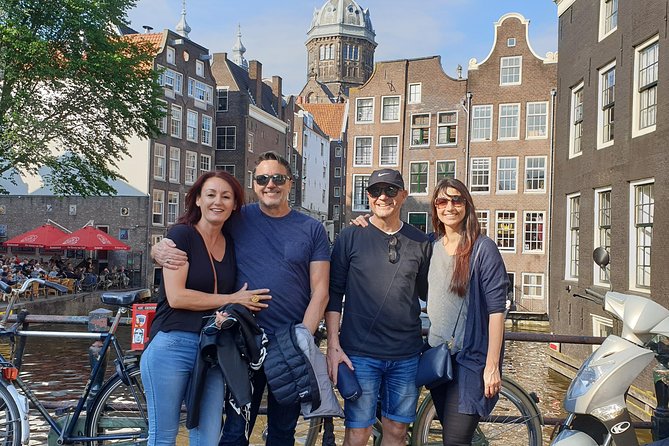
The tour starts and ends at Damrak, 1012 Amsterdam. That’s useful because it’s central and easy to reach. You’re also close to public transportation, so you’re not stuck figuring out a complicated meeting point.
Time-wise, you’re looking at about 2 hours (the experience is often described around the 2-hour mark, with some schedules running closer to a 2.5-hour walking pace depending on questions). That’s long enough to cover history and explain the current coffee shop culture, but short enough that you won’t feel trapped for a whole afternoon.
Bring sensible walking shoes. This is a walking tour through older streets and squares, including stops around Dam and the Old Town area.
The Red Light District Walk: Laws, Tolerance, and What You’re Actually Looking At
This is the core of the experience. You spend time in the Red Light District and learn its history, but with the big goal of helping you understand why Amsterdam handles prostitution and drugs differently than many visitors expect.
Here’s what I think is valuable for you: the guide links what you see today to the legal and social logic behind it. Instead of relying on rumor or moral panic, you get a first-hand explanation of Dutch law and the idea of tolerance in the city’s approach.
The tour also connects this neighborhood with coffee shop culture. You’ll hear how marijuana is tolerated and why coffeeshops operate within a framework that’s distinct from the rest of Europe and the US. If you’re curious about how the coffee shops fit into daily life (and why it’s not treated the same way as you might assume), this is the part that will click.
Expect a respectful tone. Guides on past tours, like Robin and Ben, were specifically noted for explaining the area without making it awkward. In one experience described, even a family with teenagers felt comfortable because the explanations stayed professional and human.
Dam: Amsterdam’s Wooden Foundations and the City Built on Trees
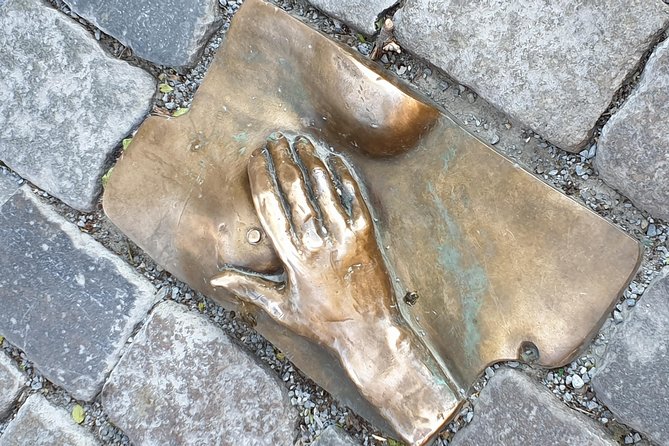
One of the smartest parts of the itinerary is that it doesn’t stop at adult subject matter. It gives you a city history foundation—literally.
You start with the Dam area and learn why Amsterdam is often described as the City built on trees. Amsterdam’s ground has a thick layer of fen and clay. To build safely, older houses and buildings used wooden poles driven down until they reached a layer of solid sand. The number that sticks with you is about 11 meters deep to reach that firmer ground.
Why this matters for you on this tour: it changes how you look at the city. It’s easy to think Amsterdam’s charm is just canals and bikes. Here you see the engineering reality underneath. The guide basically gives you a quick lesson in why this city looks the way it does and why it had to develop clever building methods early on.
Old Town Clues: Why This Part of Amsterdam Feels So Historical
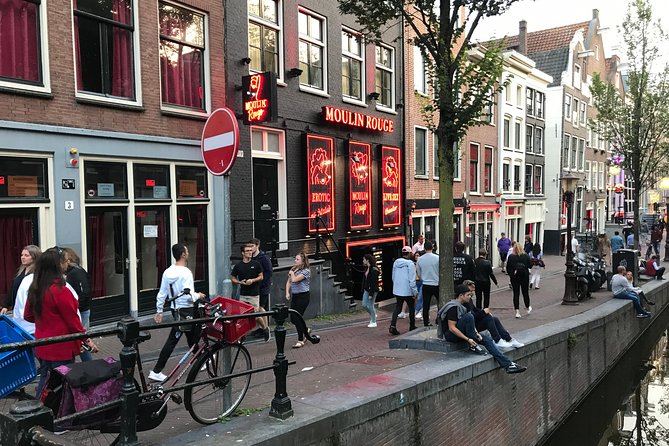
The tour then moves through the Old Town feel—an area that’s described as some of the oldest parts of the city. That’s important because the Red Light District sits inside a neighborhood that has older layers than many people realize.
This stop is a reminder that what you’re seeing isn’t only a modern entertainment zone. The neighborhood overlaps with older Amsterdam streets and structures, which means the guide can point out how history and the present day are tangled together.
If you tend to love cities that have layers—old buildings, old squares, old trade areas—this portion gives you a reason to slow down and actually watch the street fabric.
You can also read our reviews of more tours and experiences in Amsterdam



The Ape Pub (Int Aepjen): Timber-Era Amsterdam After the 1452 Fire
Next is a stop tied to a surviving timber-era building: Pub The Ape, also known as Int Aepjen. The tour notes it was built around 1540, and it’s one of only two remaining wooden buildings in Amsterdam.
The big backstory is the 1452 fire. After that disaster, the government decided buildings should have brick facades, which is why so many older wooden structures didn’t survive. Seeing this kind of place (even from the outside, depending on where your group pauses) helps you picture what Amsterdam tried to do after catastrophe—and why the city’s architectural look shifted.
Practical tip for you: in older historic cores, buildings can be close and street lanes can get narrow. Your guide can help you orient quickly so you’re not just craning your neck at random signage.
The Waag: From City Gate to Guild Space
Then you get the Waag, which used to be one of Amsterdam’s city gates. It’s built around the 1400s and is described as the second oldest building of Amsterdam.
Over time, the Waag didn’t stay strictly defensive. The tour explains how it later became a place for guilds and craftsman’s organizations, with guild activity inside the Waag and around the square.
Why I like this kind of stop: it shows you how the city’s economy and governance worked in real space. Gates weren’t only about stopping trouble. They were about controlling movement and trade. When you connect that to Amsterdam’s long history of commerce, the Waag makes more sense than just being another old building.
The Smallest House: VOC Storage to Long-Term Living
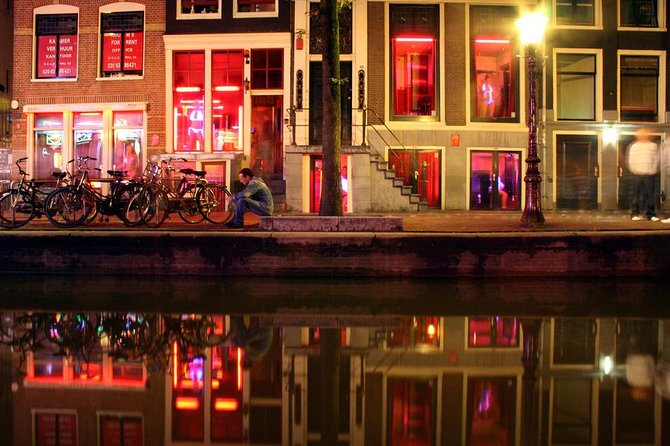
Another standout is the smallest house of Amsterdam, built around the 1700s. The tour describes its early use as storage for the VOC trading company and then later as a place where people lived for a very long time.
This stop is brief, but it’s memorable because it underlines a theme. Amsterdam wasn’t just building grand landmarks. It adapted space for trade needs, then repurposed it for life.
If you like small details, this is the kind of story that makes the streets feel lived-in rather than staged.
Condomerie Stop: A Modern Stop on Tolerance and Commerce
Yes, you’ll stop at the Condomerie, described as the world’s first condom shop special for condoms, located here since 1987. The guide notes you can even get customized sizes and special condoms.
This is a very Amsterdam kind of contrast. While you’re standing in or near a neighborhood many visitors associate with scandal, you’re also seeing a commercial, practical outlet that’s built around a health and education angle.
I don’t see this stop as a gimmick. I see it as a way to show how the city talks about sex and bodies more directly than visitors might be used to. It also ties back to the tour’s core promise: tolerance isn’t only about what’s allowed, it’s about how the city normalizes it into daily life.
Upgrade Options: Erotic Museum or Coffeeshop With Your Guide
The experience includes an educational walking tour as the base. But you can also upgrade depending on your booking.
The features highlight two upgrade paths:
- visit the Erotic Museum
- visit a coffeeshop with your guide
In practice, this is where your personal comfort level and interests come in. If you want broader cultural context about erotic art and history, the Erotic Museum option may feel like a natural extension. If you’re more curious about coffeeshop culture itself, then choosing a coffeeshop visit with your guide will likely make the whole lesson feel more concrete.
Important practical note: upgrades are exactly that—upgrades. Your base tour includes the guide and guided walking tour, but the upgrades are tied to additional admissions or entry choices you’ll want to confirm at booking.
Price and Value: What You’re Really Paying For at $41.60
At $41.60 per person, the price doesn’t just buy time—it buys interpretation. You’re paying for someone who can connect the neighborhood’s present look to history and legal context, plus keep it respectful and readable for your group.
This is also a private tour/activity, meaning you get the benefits of going at your pace rather than being swept along in a big mass. That matters more than it sounds. A Red Light District walk is the kind of place where questions pop up fast, and clarity beats silence.
Also note the tour is built as a walking experience with no listed admission ticket included in the core tour time. That helps you feel less nickel-and-dimed while you decide whether you want the optional Erotic Museum or coffeeshop addition.
If you’re traveling with family, or you just want a calmer style of learning, private value goes up fast.
One more detail: the experience is commonly booked about 46 days in advance on average. If your dates are fixed, you’ll save yourself stress by booking early and choosing your time slot.
What I’d Expect You to See and Feel at Each Stage
Here’s the rhythm you can expect as you move through the tour:
- You begin at Damrak and get oriented fast.
- You head into the Red Light District for the main story: history, laws, and the coffee shop culture angle.
- Then you step out into historic Amsterdam points—Dam and the wooden foundation explanation, the Old Town feel, and older landmarks like The Ape (Int Aepjen) and the Waag.
- You finish with smaller, pointed stories like the smallest house and the quirky-but-legit Condomerie stop.
The emotional arc is useful. You start with modern realities, then you widen into history and city logic. By the end, the Red Light District feels less like a shock and more like a part of Amsterdam’s long, complicated self-management.
Who This Tour Fits Best (and Who Should Consider Another Day)
This tour is a strong match if you want:
- context over curiosity-by-stumbling
- respectful explanations in English
- a private-group pace
- history stops that aren’t all about architecture photos
It’s also a good fit if you’re the type who likes to understand how a place works. The tour’s repeated emphasis on laws and tolerance makes it more of a lesson than a spectacle.
It may be less ideal if:
- you want a purely family-friendly, zero-adult-content day
- you’d rather focus only on classic museum attractions and canals
- you’re extremely uncomfortable with the visible adult nature of the Red Light District area
But if you can handle it with an open mind and a bit of curiosity, this is exactly the kind of tour that makes Amsterdam make more sense.
Should You Book This Private Red Light District and Coffee Tour?
I’d book it if your goal is to leave Amsterdam with a clearer understanding of why this neighborhood looks the way it does and how Dutch law and tolerance shape what’s allowed and how it’s managed.
The case for booking is strong:
- private-group feel with a calm pace
- respectful handling praised by guides including Saskia, Guido, Luis, Robin, Ben, Esther, Catherine, Fia, and Aare
- history stops that give you real Amsterdam context, not just one-zone sightseeing
- optional upgrades if you want to turn education into a more hands-on visit (Erotic Museum or a coffeeshop with your guide)
If you’re on the fence because you’re worried about awkwardness, you can take comfort from the tour’s tone. The best advice I can give: show up ready to learn, dress for walking, and treat it as a cultural and legal primer, not a shock challenge.
FAQ
How long is the Red Light District and coffee shop tour?
It’s listed as about 2 hours, with the walking tour described around 2.5 hours depending on the flow of stops and questions.
Where do I meet the guide?
The meeting point is Damrak, 1012 Amsterdam, Netherlands, and the tour ends at the same location.
What’s included in the tour price?
The included items are a local guide and the guided walking tour.
Is it a private tour?
Yes. It’s a private tour/activity, so only your group participates.
Can I upgrade to the Erotic Museum or a coffeeshop visit?
The tour features mention upgrades to visit the Erotic Museum or visit a coffeeshop with your guide, depending on what you choose when booking.
Can I cancel for a full refund?
You can cancel for a full refund if you cancel at least 24 hours before the experience starts. Free cancellation is offered up to 24 hours in advance.