
REVIEW · AMSTERDAM
Van Gogh and Rembrandt Immersive Experience Entry Amsterdam
Book on Viator →Operated by Tours & Tickets · Bookable on Viator
A church becomes Van Gogh’s big screen. This show uses Amsterdam’s Noorderkerk as a full 360° stage, turning projected art and narration into a moving story. I especially loved the way Van Gogh’s letters frame the connection to Rembrandt, and how you’re close enough to feel surrounded by the images. One caution: sightlines and comfort vary a lot depending on where you choose to sit or lie down.
This is the kind of ticket that feels different from a standard museum visit. You can park yourself on beanbags, sit in provided seating, or even walk around while the show runs, which helps if you get antsy in one place. The production is about a one-hour slot, though some people report closer to 45 minutes, so it’s short enough to fit easily into a day of galleries and canals.
If you’re expecting original paintings from either master, adjust your expectations: this is not the official Van Gogh Museum. Think sound, light, and storytelling inside a national monument, with the art world’s big names used like characters in the narrative.
In This Review
- Key things to know before you go
- Noorderkerk: the church that makes the art feel bigger
- The Van Gogh–Rembrandt story: letters, influence, and a real artistic connection
- Beanbags, seating, and lighting: how to get the best view
- Timing and what a 1-hour slot really means
- Price and value: what you get for about $19.74
- Who should book, and who might prefer something else
- Should you book this Van Gogh and Rembrandt show in Amsterdam?
- FAQ
- How long is the Van Gogh and Rembrandt immersive experience?
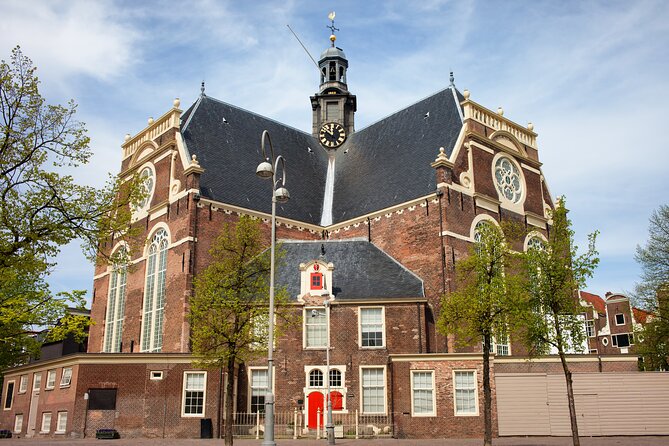
- Where does the show take place?
- Is this the official Van Gogh Museum?
- Do I need to print a ticket?
- What’s included with my admission price?
- Can I cancel and get a refund?
Key things to know before you go
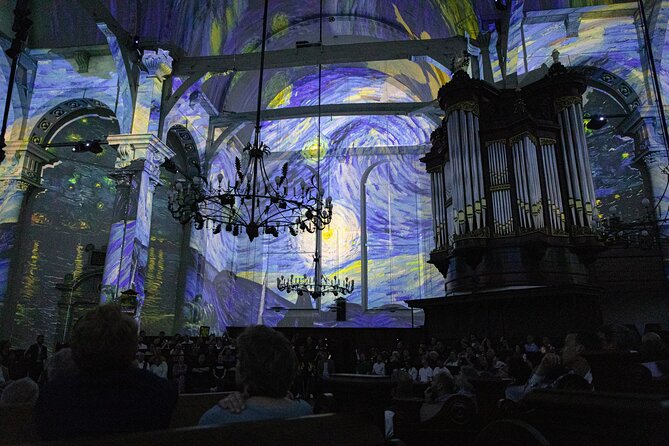
- Noorderkerk turns into a 360° canvas with projections covering the full interior
- The story is built from Van Gogh’s letters plus artwork associated with both painters
- You can choose your comfort level by sitting, using seats, or lying on beanbags
- Visibility depends on your spot since lighting can block parts of the view
- Expect a show length around 45–60 minutes even though it’s sold as about 1 hour
- It’s not the official Van Gogh Museum (so it’s about the production, not galleries of originals)
Noorderkerk: the church that makes the art feel bigger
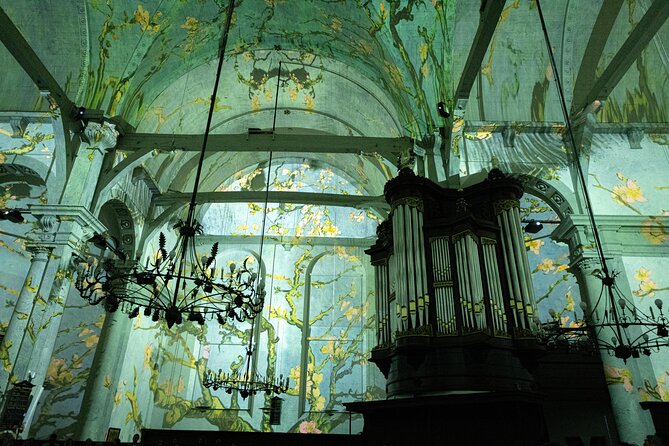
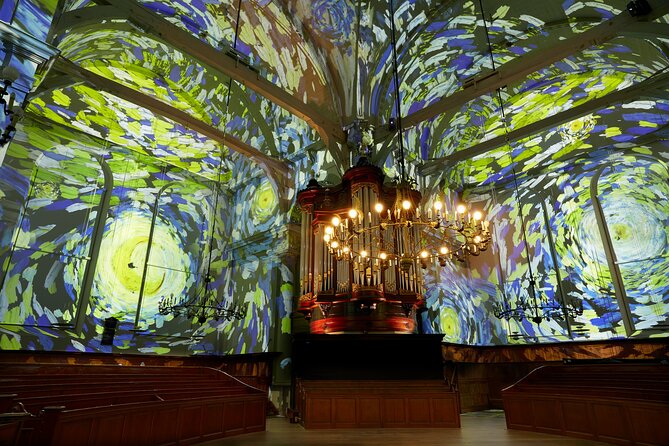
The Noorderkerk isn’t just a backdrop. The whole interior becomes the screen. From the walls up to the upper areas of the church, the show uses the space so you feel wrapped by the visuals instead of just watching from a distance. That’s the real hook here: it turns a familiar building into a kind of moving artwork.
The production is described as a son-et-lumière type of show shown on a large scale inside a national monument. In plain terms, that means sound and light are doing most of the heavy lifting, and the church architecture helps them. If you like when a location changes your perspective, this is a strong match.
A practical note: since you’re inside a large church, your body is part of the experience. You’re not standing in a tight line with a perfect view funneling everyone into one direction. You have choices, but those choices affect what you see. I’d treat the first few minutes as your chance to get your bearings fast—pick a spot that lets you see the main action without fighting glare.
Also, the venue is near public transportation and uses a mobile ticket. That’s useful in Amsterdam, where “getting there” can be half the battle.
You can also read our reviews of more tours and experiences in Amsterdam.



The Van Gogh–Rembrandt story: letters, influence, and a real artistic connection
The heart of the show is the link between Vincent van Gogh and Rembrandt van Rijn. It explains how Van Gogh became fascinated with Rembrandt and even how Rembrandt’s work influenced him. The plot is told through Van Gogh’s letters to his brother, then anchored by artwork connected to both painters.
I like that approach because it turns art history from a list into a relationship. Letters add emotion and voice. Instead of learning facts in isolation, you get a sense of Van Gogh thinking out loud—trying to understand what made Rembrandt’s art work, then experimenting with that energy in his own way.
The show also frames Rembrandt as an early influencer, using the idea that one artist’s choices can travel forward in time and reshape someone else’s style. Whether you’re a hardcore art fan or more of a curious weekend visitor, that theme is easy to follow: talent meets inspiration.
That said, the tone is more storytelling and atmosphere than museum-level interpretation. Some people walk out thinking the story is interesting and beautiful, but not mind-blowing or life-altering. If you want a deep, fact-heavy breakdown of brushwork and specific paintings, you might still want a museum stop after this show. This experience works best when you enjoy narrative plus visuals more than detailed art lectures.
Beanbags, seating, and lighting: how to get the best view
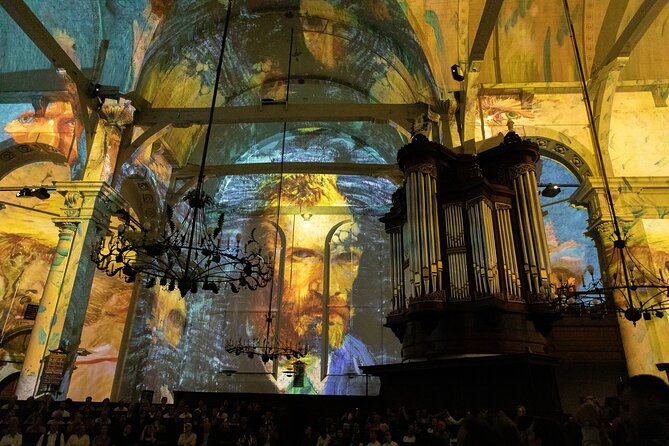
This is where your experience can swing from great to just okay. The venue offers a way to settle in—comfortable beanbags and also regular seating. Lying down in the middle of a church while visuals run across walls and ceilings can be a fun, relaxing way to watch.
But comfort isn’t universal. Some people find certain seating less ideal, and a few mention that lighting fixtures can obscure parts of the view. Translation: the show is designed to be seen broadly, but your personal angle matters.
My advice is simple: arrive with enough time to choose. Don’t assume the first spot is the best spot. Look around before the lights shift. If you wear glasses, consider how reflections might behave under stage lighting. If you’re sensitive to glare, pick a position that feels calmer for your eyes.
If you’d rather not lie down, use the seating and keep a bit of flexibility. The show environment is designed for both sitting and moving, so you can shift slightly if you notice that your original spot blocks the action.
And if you know you’re picky about comfort—this is a short show, but you’re still spending that time in your chosen posture. Packing a travel mindset helps: treat it like a theater seat, not like a casual bench break.
Timing and what a 1-hour slot really means
The ticket is sold for about 1 hour. In practice, some people report the show lasting closer to 45 minutes. So plan for the range and don’t cram dinner right at the end.
One more timing issue matters: the show has time slots, and the opening and closing times can differ from what you see when booking through third-party platforms. The safe move is to verify your exact time against the venue’s actual operating hours included with your confirmation. Don’t rely only on the time shown at checkout.
Amsterdam days often run on walking momentum. This show can be a nice reset because you sit or lie down and let the sound carry you. I like it as an evening activity too, but you should still time it so you’re not stressed about being rushed in or out.
A small strategy: if you want the best comfort and viewing odds, don’t arrive at the last possible second. Give yourself enough time to find your spot and settle in before the main visuals begin.
Price and value: what you get for about $19.74
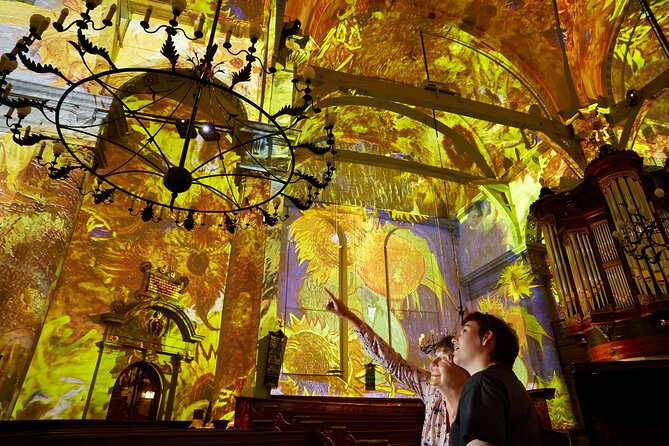
At about $19.74 per person, you’re buying an hour-scale production inside a landmark church. That’s the value equation: you’re paying for sound-and-light storytelling plus a unique setting, not for access to galleries of originals.
So if your goal is to see Van Gogh’s or Rembrandt’s paintings in person, you’ll need a separate museum visit. This experience isn’t the official Van Gogh Museum, and it’s not presented that way. Instead, it’s a creative way to connect the artists’ ideas using letters and projections.
In terms of value, I’d say this is a good deal if you enjoy:
- narrative art history (letters and influence)
- theatrical staging
- experiencing art through space and sound
It may feel less worth it if you only want traditional, detailed explanations or if you’re very picky about lighting and sightlines. Because the show relies so much on projection, your viewpoint is part of the package.
On a practical level, the mobile ticket is convenient, and the show is short enough to add without ruining your schedule. For many people, that combination makes it a smart add-on to an Amsterdam art day.



Who should book, and who might prefer something else
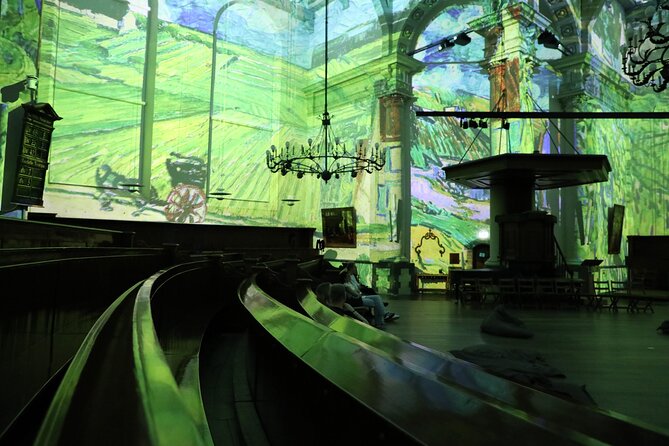
This experience is a strong fit if you like art but you also like atmosphere. The Noorderkerk setting is a big part of the point, and the ability to sit, lie down, or move around makes it feel less rigid than a standard guided talk.
It’s also suitable for many travelers because service animals are allowed and participation is described as possible for most people. If you use a mobility aid or have specific seating needs, you should still think ahead. Since the experience includes beanbags and walking around options, your comfort preferences matter.
I’d be cautious if you:
- hate any chance of reduced visibility
- need a fully traditional museum format with object-by-object viewing
- expect original paintings from Van Gogh or Rembrandt
In other words: this show is about the connection and the experience, not about a collection.
Should you book this Van Gogh and Rembrandt show in Amsterdam?
Book it if you want a memorable, creative way to understand how Van Gogh looked at Rembrandt. The show’s biggest strength is the setting: the church becomes part of the artwork, and the story is tied together with Van Gogh’s letters.
Skip it if you’re chasing museum-level access to originals or if you know you struggle with lighting and seating comfort. Since some people report blocked views or uncomfortable seating spots, your success here depends on your willingness to arrive early and claim a good angle.
If you’re the type who enjoys a short artistic “chapter” between museums, this is a very reasonable ticket.
FAQ
How long is the Van Gogh and Rembrandt immersive experience?
The experience is listed at about 1 hour. Some people report it lasting around 45 minutes, so plan for roughly 45–60 minutes total.
Where does the show take place?
The show takes place inside the Noorderkerk in Amsterdam, using the full interior of the church as the setting.
Is this the official Van Gogh Museum?
No. It’s not the official Van Gogh Museum. It’s a separate sound-and-light experience using storytelling and artwork projections.
Do I need to print a ticket?
No. You use a mobile ticket.
What’s included with my admission price?
Your ticket includes admission to the immersive experience.
Can I cancel and get a refund?
Yes. Cancellation is free up to 24 hours in advance of the experience start time for a full refund. If you cancel less than 24 hours before, it is not refunded.