REVIEW · AMSTERDAM
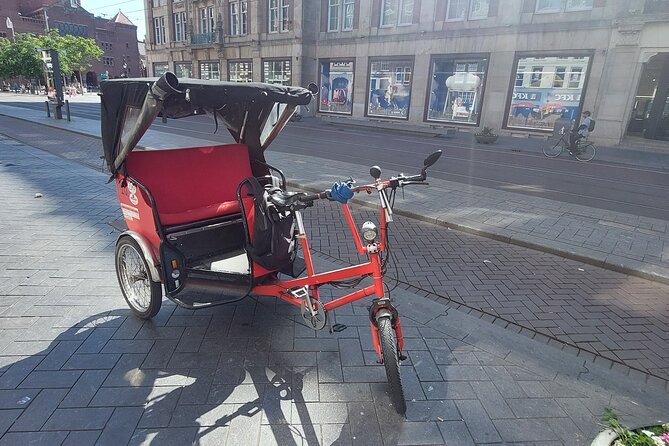
1 Hour Private Amsterdam Rickshaw Tour
Book on Viator →Operated by BlackfoXXX Amsterdam explorer · Bookable on Viator
Amsterdam in one hour is possible.
This private rickshaw tour is interesting because you get a high-impact orientation of the center with zero transit stress, plus the ride can be shaped to your pace. I like that pickup and drop-off are handled for you, so you don’t waste time figuring out meeting points. I also like the focus on fast, meaningful stops—squares, bridges, and the areas you’ll actually want to return to on foot. One watch-out: a rickshaw hour moves quickly, so if you want deep, ticket-based sightseeing, you’ll still need a longer plan.
Think of this as your city intro, not a checklist marathon.
You’ll pass and pause briefly at the big sights, and weather matters—so if conditions are bad, the tour may be rescheduled or refunded. Also, the rickshaw is not wheelchair accessible, and it’s not recommended for travelers who are pregnant or dealing with serious heart or medical conditions.
In This Review
- Key things to know before you go
- Why a 1-hour private rickshaw tour works in Amsterdam
- Price and what $120.41 really means for two people
- Pickup that avoids the biggest hassle: finding each other
- Dam Square and the first orientation lesson
- De Wallen (Red Light District): seeing it in daylight with context
- Nieuwmarkt and Waag: historic stonework, calmer streets
- Rembrandtplein: a central square that feels like Amsterdam’s pulse
- Magere Brug: the canal bridge photo that actually delivers
- Museumplein: big institutions on the edge of your attention
- Where the Anne Frank House area fits into a tight route
- Flexibility: the private part of private means you can set the pace
- Weather and ride comfort: simple reality checks
- Who should book this 1-hour rickshaw tour?
- Should you book this 1-hour rickshaw tour?
- FAQ
- How long is the Amsterdam rickshaw tour?
- What is the price for this private tour?
- Is hotel pickup included?
- What areas of Amsterdam will we see?
- What language is the tour in?
- Is it wheelchair accessible or suitable during pregnancy?
Key things to know before you go
- Private and small (up to 2 adults): you get a calmer ride and can steer the route to your interests.
- Hotel pickup in central Amsterdam and cruise ports: less confusion, fewer “where do we meet?” moments.
- WiFi on board + mobile ticket: small comfort perks that make the hour feel easier.
- A tight route that covers two different Amsterdam moods: official sights and the more adult side of De Wallen, handled with daytime realism.
- Bridge-and-canal photo moments: Magere Brug is the kind of spot you’ll remember.
- Comfort limits are real: max weight is 500 lb (230 kg), and the ride isn’t for everyone medically.
Why a 1-hour private rickshaw tour works in Amsterdam
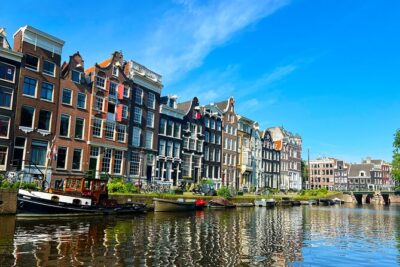
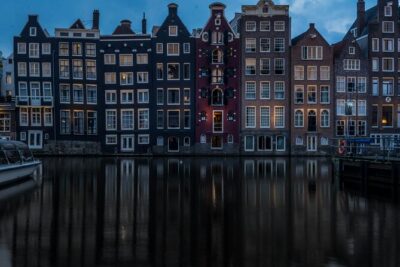
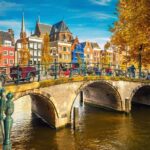
Amsterdam is compact, but it’s also slow in practice. Narrow streets, canal crossings, bikes everywhere, and constant little turns can make even “just a quick walk” take longer than you expect.
This is why a private 1-hour rickshaw makes sense. You get movement with context. In one loop, you’ll see the kind of places that help you understand where you are, what’s nearby, and what you’ll want to revisit later.
And because it’s private, the ride isn’t stuck to a rigid script. If you care more about architecture, canals, or street life, you can usually adjust the emphasis within the hour.
You can also read our reviews of more private tours in Amsterdam


Price and what $120.41 really means for two people
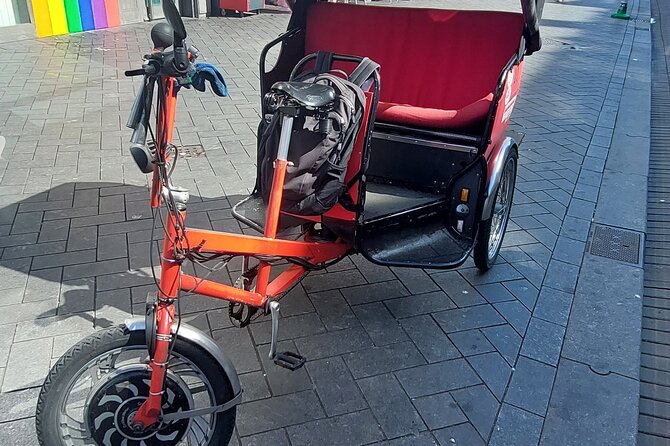
The price is $120.41 per group (up to 2) for about an hour. For two people, that can land around $60 each—often competitive with the cost of adding a taxi for short distances in the center.
But the better way to judge value is what you’re buying: time saved plus a local perspective. In Amsterdam, time is the scarce resource. You’re not just getting transportation; you’re buying an organized route that helps you choose where to go next.
If you’re traveling solo, the “per group” pricing can feel steep. If you’re two adults, it’s a strong fit—especially on a first day when you’re still mapping the city in your head.
Pickup that avoids the biggest hassle: finding each other
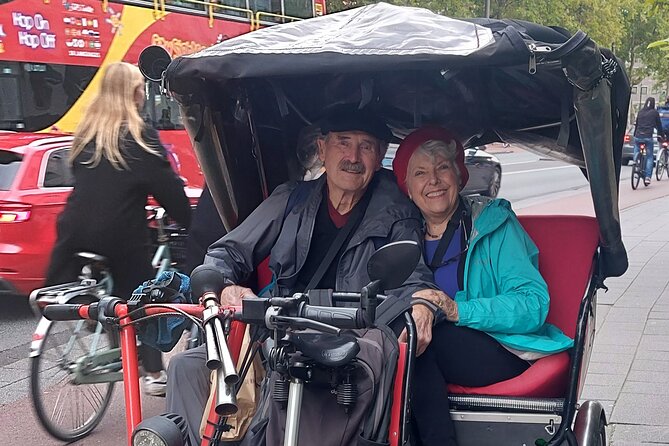
One thing I really like about this setup is the hotel pickup option. If you stay in central Amsterdam, you indicate your hotel, and the driver/guide picks you up from your location. That’s a practical win because it reduces the risk of running late or missing each other in a crowded area.
There’s also pickup at common cruise docking locations:
- Passenger Terminal Amsterdam (PTA) for most sea cruises
- De Ruyterkade Oost for many river cruise ships (like Viking)
- De Ruyterkade West for some river ships
You’ll still want to be ready at the pickup time with enough buffer for disembarking. That’s not unique to this tour—Amsterdam logistics always have friction—but pickup handled by the operator usually cuts down on the stress.
Dam Square and the first orientation lesson
The tour typically starts with Dam Square, the historic center of gravity for the city. Even if you don’t stop long, it’s a useful anchor point. Your guide will explain how the square grew after a dam was built around the Amstel to help protect the city, and how the area evolved over time.
Expect a modern, lively feel too. Dam Square is packed with street entertainment and, depending on season, you might see events like spring carnival-style activity or colorful ferris wheel options. Even the pigeons feel like part of the show there.
What makes this stop valuable is the way it teaches you to read Amsterdam quickly. You’ll learn what this square meant historically, and you’ll understand why it still functions like a public living room today.
Quick practical thought: this is one of those places where you’ll want to keep your phone secure because it’s busy. The rickshaw helps because you’re not constantly weaving through crowds on foot.
De Wallen (Red Light District): seeing it in daylight with context
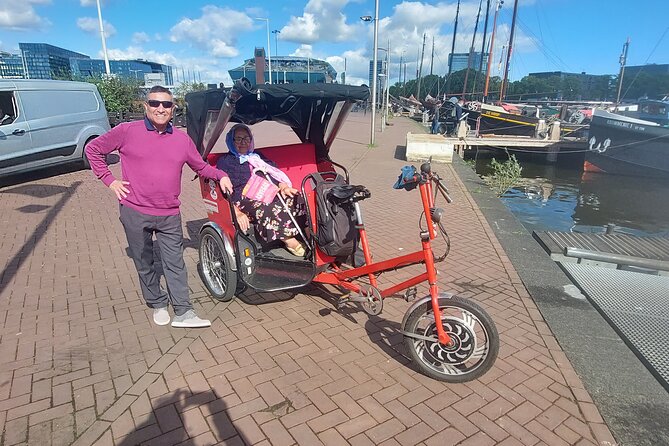
Next comes the De Wallen area, Amsterdam’s famous red-light neighborhood. You’ll pass through and get straightforward context: prostitution behind windows, adult shows, sex shops, brothels, and strip clubs.
You should also know how the guide frames safety. The vibe can be different at night, but in general the area is described as fairly safe during daytime visits, with the usual awareness for pickpockets. The tour is also careful with age guidance—adult shops and adult entertainment don’t allow minors, while there’s no age restriction just to walk through the area.
One specific landmark that might come up is Casa Rosso, described as the oldest erotic theatre in the area, and something that’s available for 18+ visits.
The bigger value here isn’t shock factor. It’s context. Amsterdam has layers: this neighborhood is one of the most talked-about, misunderstood places in the city, and seeing it during the day helps you form a realistic impression.
You can also read our reviews of more tours and experiences in Amsterdam





Nieuwmarkt and Waag: historic stonework, calmer streets
After the intensity of De Wallen, you move toward Nieuwmarkt, where the streets can feel more grounded and less chaotic. This part of the ride is a nice pacing change.
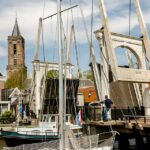
Nieuwmarkt is known for historic architectural highlights, and in the middle of it you’ll get a stop for explanation at Waag, described as a former 15th-century eastern gateway to the city. That kind of detail matters because it turns “old buildings” into actual city structure—what used to gate the city, what used to control movement, and how Amsterdam became what it is.
The drawback here is the same one that applies to any short ride: you won’t have time to wander deep. If you fall in love with the streets near Waag, you’ll probably want a longer walk later. But you’ll know where to go next.
Rembrandtplein: a central square that feels like Amsterdam’s pulse
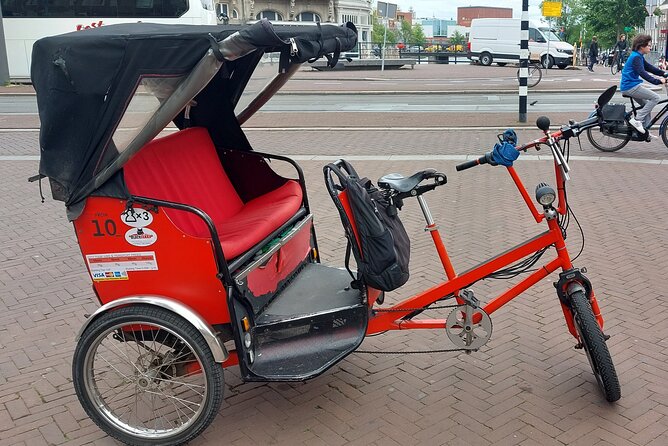
You’ll also pass by Rembrandtplein, a central square with a statue of Rembrandt and a surrounding mix of restaurants, night clubs, and bars.
This stop is about mood-setting. It tells you where the social energy is concentrated. In a city with so many canals and micro-neighborhoods, squares like this help you understand how people actually gather and move.
In practical terms, Rembrandtplein is also a good landmark for navigation. After you see it from the rickshaw, you’ll recognize it later from across the street, which is a big help when you’re walking at night or after dinner.
Magere Brug: the canal bridge photo that actually delivers
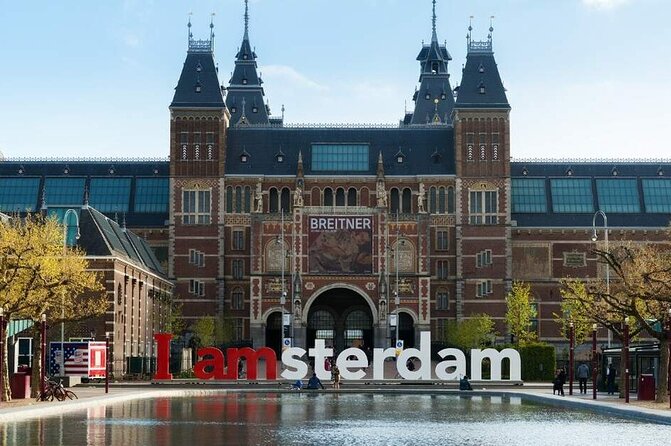
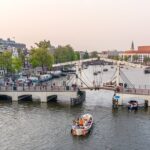
Then comes one of the most memorable moments of the hour: Magere Brug, a draw bridge over the Amstel.
The ride gives you a short look, but the point is clear—this area of the Amstel has some of the best views in Amsterdam. If you’re the type who wants a few “wow” photos without spending an hour hunting angles, this is a smart use of time.
Why it works well in a one-hour tour is timing. The guide can position the rickshaw so you get the framing before you’re distracted by the rest of the route.
Also, a draw bridge is one of those city details that makes Amsterdam feel distinct. Most European cities are famous for cathedrals or castles. Amsterdam is famous for water—and this bridge is water done in style.
Museumplein: big institutions on the edge of your attention
Next is Museumplein, an impressive square surrounded by some of Amsterdam’s top museums.
Even if you don’t plan to enter any museum during the hour, this stop does two helpful things:
1) It shows you where the museum district energy starts.
2) It gives you a reference point for planning a longer visit later.
The hour can’t be everything. So seeing Museumplein from the rickshaw is a smart compromise if you want to reserve your money and time for one or two museum stops that you actually care about.
If you’re a first-timer and unsure which museums fit your interests, this stop is a way to get oriented before committing.
Where the Anne Frank House area fits into a tight route
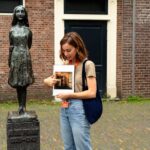
The tour includes time for an explanation around the Anne Frank House (Anne Frank Huis) area. You’ll learn that it’s a writer’s house and biographical museum dedicated to Anne Frank, located on a canal called the Prinsengracht near the Westerkerk.
What your guide focuses on is the core story: during World War II, Anne Frank hid from Nazi persecution in hidden rooms in the rear part of the canal house, known as the Secret Annex (Achterhuis). While she didn’t survive, her diary was published in 1947. The Anne Frank Foundation later formed to protect the property from developers.
The museum opened in 1960, and it has a permanent exhibition about her life and times, plus an exhibition space addressing forms of persecution and discrimination.
This isn’t a ticketed museum visit as part of the tour. You’re getting context and location awareness. That’s still valuable. If you decide to visit the museum later, you’ll already understand what you’re looking at and why the building matters.
One consideration: because this is emotionally heavy, you might want to pace yourself. If your goal is a lighter day, keep in mind this is the kind of stop that can slow your mood.
Flexibility: the private part of private means you can set the pace
A private rickshaw doesn’t just mean fewer people. It means you can tailor the route within reason. People often like the flexibility to adjust pickup and drop-off locations day-of, and the route can flex based on your interests.
If you’re traveling with anyone who gets tired easily—short walking breaks matter. If you’re the type who wants one big photo moment at each stop, you can usually ask for that emphasis.
That said, the hour stays an hour. So think of it like a guided highlights reel. If you want a slower version, you’ll likely need a longer tour length from the operator or a separate walking plan after.
Weather and ride comfort: simple reality checks
This experience requires good weather. Amsterdam can change fast, and with a rickshaw ride, you don’t want the tour to be miserable.
You’ll also want to check health and comfort fit:
- Not wheelchair accessible
- Not recommended for pregnant travelers
- Not for people with heart problems or serious medical conditions
- Max group size per rickshaw: 2 adults or 2 adults and 2 small children up to 9 years old, with total weight max 500 lb (230 kg)
Service animals are allowed, and it’s near public transportation—which can matter if you want an easy backup plan.
Who should book this 1-hour rickshaw tour?
This tour is a strong match if you:
- Want a first-day orientation in central Amsterdam
- Prefer comfort over long walks
- Like learning context while you see the city’s layout
- Are traveling as two adults (best value per person)
- Want to sample different Amsterdam neighborhoods in one compact route
It’s probably not the right choice if:
- You need full mobility support
- You’re looking for a deep, ticket-heavy sightseeing day
- You plan to spend long stretches inside museums during the hour
Should you book this 1-hour rickshaw tour?
Yes, you should book it if you want to understand Amsterdam quickly, not just pass through it. The combination of private pacing, hotel/port pickup, and a route that hits Dam Square, De Wallen, key central squares, a signature Amstel bridge, and the Anne Frank House area makes the hour feel efficient.
I’d especially recommend it for a first visit, or for a day when your legs would rather be resting than crossing canals all afternoon. If you’re the kind of traveler who plans a “real Amsterdam” trip with later walks and museum choices, this is a smart way to set that plan up.
If you already know exactly what you want and you’re in walking mode, you might skip it. But for most people—especially couples—the $120.41 per group price can be a worthwhile shortcut to clarity.
FAQ
How long is the Amsterdam rickshaw tour?
It runs for about 1 hour.
What is the price for this private tour?
The price is $120.41 per group, up to 2 people.
Is hotel pickup included?
Yes. Hotel pickup is offered, and you can also be picked up at common cruise docking locations.
What areas of Amsterdam will we see?
You’ll get stops and explanations around Dam Square, De Wallen (Red Light District area), Nieuwmarkt (including Waag), Rembrandtplein, Magere Brug, Museumplein, and the Anne Frank House area.
What language is the tour in?
The tour is offered in English.
Is it wheelchair accessible or suitable during pregnancy?
It is not wheelchair accessible, and it is not recommended for pregnant travelers. It’s also not recommended for travelers with heart problems or other serious medical conditions.