REVIEW · AMSTERDAM
Aloha Amsterdam: Laser Tag Experience
Book on GetYourGuide →Operated by Aloha Amsterdam · Bookable on GetYourGuide
Want a game night in Amsterdam? That’s exactly what Aloha Amsterdam delivers: high-energy laser tag in an underground, UV-lit setting under a bridge. I like that the arena is a full 450 sqm space for real movement, and I also like the tight 15-minute format that keeps the action moving. One thing to consider: some sessions can run late, so it’s smart to build in a little extra time around your slot.
You’ll get a proper game flow, not just a quick gimmick. Before you fire up, you go through an instruction room with a jungle-bunker theme, get play and safety guidance, then slide into the arena as the battle starts. With up to 20 players, scoring is front and center, and the room is dark enough that team tactics matter fast. The overall rating lands at 4.8 out of 5 from 27 ratings, which lines up with what most people want from laser tag: fun, adrenaline, and a fair shot at winning.
In This Review
- Key things to know before you go
- Laser Tag Under a Bridge: The Amsterdam Setting
- Getting In: Instruction Room to UV Jungle-Bunker Battle
- Inside the 450 sqm Arena With Up to 20 Players
- The 15-Minute Flow: Teams, Hits, and Instant Scores
- Price and Value: Is $12 Worth 15 Minutes?
- Who This Fits Best (and Who Should Skip It)
- My Practical Tips for a Smooth Round
- Should You Book Aloha Amsterdam Laser Tag?
Key things to know before you go
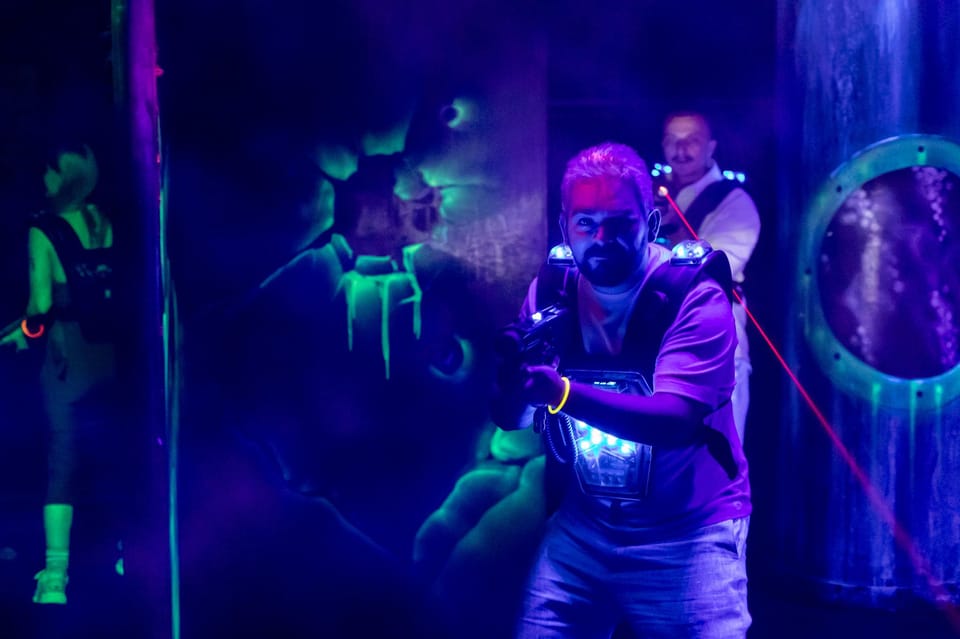
- Under a bridge in North Holland: the location creates a real underground vibe.
- 450 sqm arena: enough room to feel like you’re moving, not just hiding.
- Up to 20 players: great for groups that want a real match.
- UV jungle-bunker instruction room: you’ll get oriented before the first blast.
- Wear dark, avoid white: white can reflect hard under UV lights.
- Short round, quick scoring: you’ll get points shown right after.
Laser Tag Under a Bridge: The Amsterdam Setting
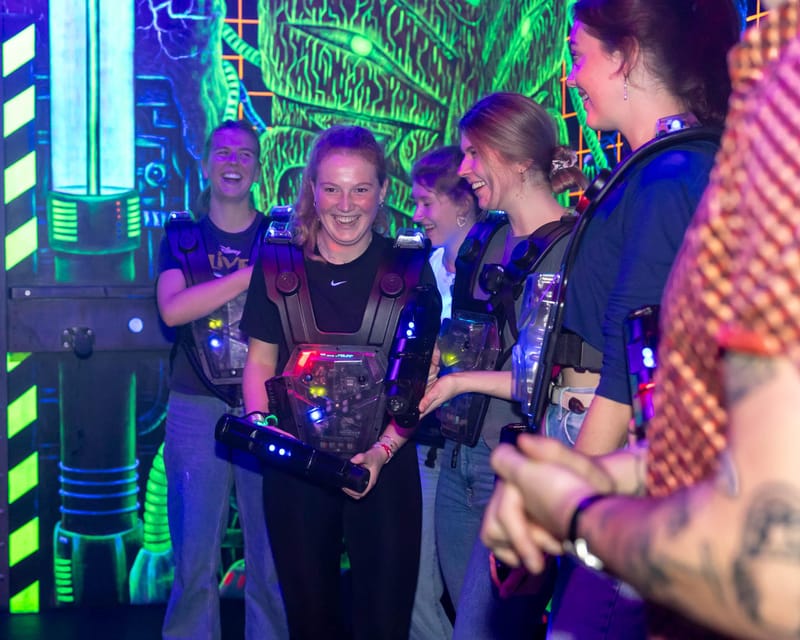
Aloha Amsterdam is set up in a way that instantly changes the feel of your afternoon. The arena is located under a bridge, which helps create that underground atmosphere people chase when they want something different from the usual Amsterdam sights. Instead of wandering streets, you’re inside a controlled game world where sounds, lights, and movement are part of the experience.
This kind of setting matters for your enjoyment. Laser tag works best when the environment helps with tension. Here, the UV lighting and the themed layout push you to move with purpose, because your visibility isn’t like daytime outside. It’s also a nice option if your group has mixed interests. One person can still say yes to Amsterdam while another gets the adrenaline fix.
It’s also a very practical setup for short stays. The total time is 15 minutes, which makes it easy to slot into a day of museums, canals, or just wandering. If you like hands-on activities, this is one of the easier ones to justify because it’s quick and straightforward.
You can also read our reviews of more tours and experiences in Amsterdam.



Getting In: Instruction Room to UV Jungle-Bunker Battle
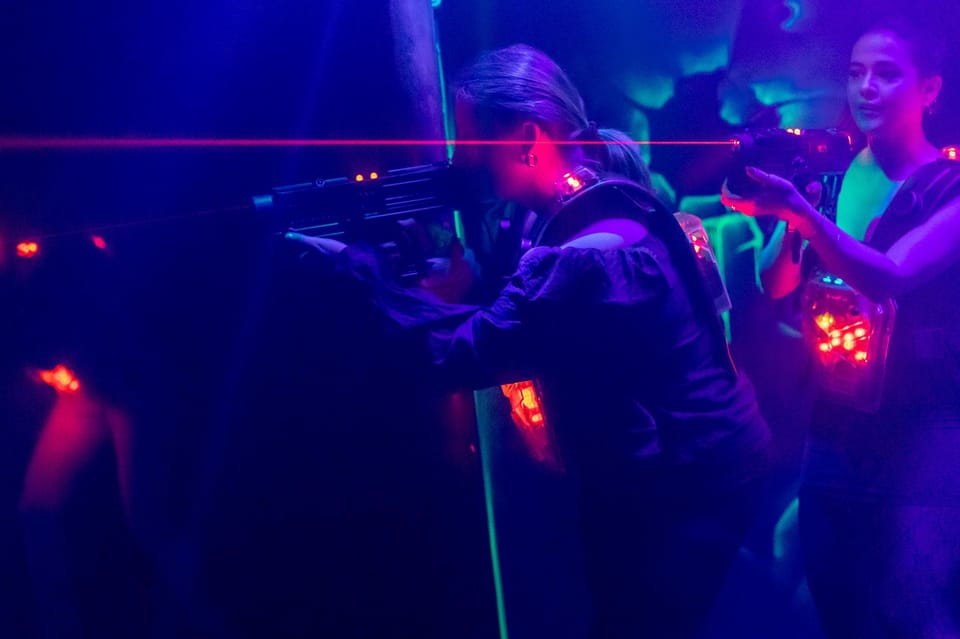
Your session starts before the arena part, and that’s where Aloha Amsterdam does a good job. You’ll enter an instruction room through a sliding door and step into a UV-lit space with a jungle-bunker theme. You’ll receive play and safety instructions there, and it’s designed to get you ready fast.
The value of that instruction moment is simple: you want your first game to feel fair. Laser tag has its own rules, like how hits are counted and how to play safely while moving in the dark. Getting briefed first means you can focus on strategy rather than guessing how the game works.
When instructions are done, an electric sliding door opens and the battle begins. That transition is part of the fun. You’re in a lit, themed waiting space, then the door moves, the lights and action shift, and the game becomes real immediately.
Language support is also straightforward. A host or greeter is available in English and Dutch, which helps if your group has different comfort levels with English.
Inside the 450 sqm Arena With Up to 20 Players

The main event is the 450 sqm arena, and that size helps more than you might think. Small laser arenas can feel like you spend most of the round running from one end to the other. With this much space, you can actually choose paths, flank, and regroup without the whole game collapsing into one cluster.
The arena is designed for group play, with capacity for up to 20 players. That’s perfect for friend groups, families with older kids, or anyone traveling with a mixed crowd who wants a shared competitive moment. More players also adds variety in how the match plays out. One round might turn into a push toward cover, while another might become a sneak-and-strike game depending on where people end up.
You’ll also notice how the “underground” theme shapes your movement. Under UV light, contrast is different, and surfaces can look more dramatic than they do in normal lighting. The result is you’ll naturally slow down in some areas to find targets, then speed up when you spot an opening. It’s not just about running; it’s about timing.
One small but important note for your photos and your clothing: avoid white. Under UV light, white clothes can stand out too much, almost like you’re turning yourself into a target. Darker colors tend to blend better with the lighting.
The 15-Minute Flow: Teams, Hits, and Instant Scores
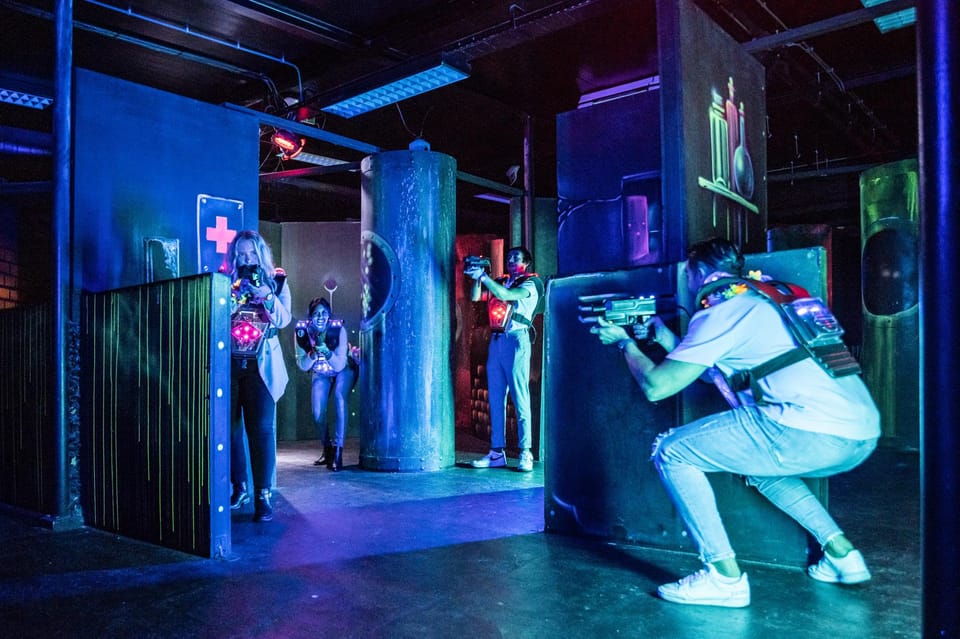
This is a short session, and that’s a feature, not a bug. With only 15 minutes, the game stays intense. There’s no long warm-up, no waiting around for a “real start,” and no dragging through downtime. You get in, get instructions, play, then get out.
During the match, your goal is straightforward: rack up points and avoid ending up on the losing side. You’ll receive scores at the end and see how many points you and your fellow players earned. That scoring detail is what keeps laser tag from becoming just chaos. Even if you’re not “competitive” in daily life, the match gives you a clear way to measure what you did well.
Because the session is short, you should think in bursts. If you wait too long to act, you lose momentum and your points trail behind. If you move too recklessly, you get eliminated early and spend the rest of the round playing catch-up. The best approach is usually a middle one: move with purpose, use cover, and take shots when you have a quick advantage.
Also, consider that the room can feel busy with up to 20 players. If you love quick action, great. If you prefer quieter, more controlled games, you might still enjoy it, but go in with the right expectation: it’s a busy multiplayer arena.
Price and Value: Is $12 Worth 15 Minutes?
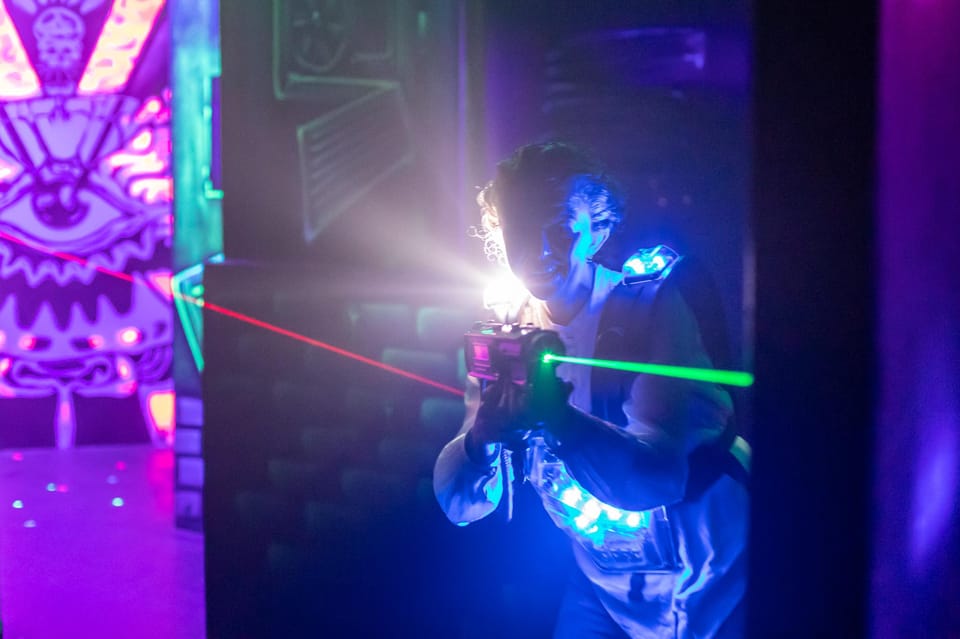
At $12 per person, the big question is value: are you paying for a real activity, or just paying to “try something”? In this case, you’re paying for an actual game setup in a full 450 sqm arena with a guided start and end scoring. That makes the price feel more reasonable than cheaper, smaller setups.
The short duration also changes the math. Fifteen minutes isn’t long, but it’s enough time to feel like you played a complete match, not a demo. For groups visiting Amsterdam, time is often the most expensive thing you have. A quick, high-energy activity like this can be easier to plan around than a longer tour, especially if you’re juggling multiple stops.
Another value angle: it works well for groups. If you’re splitting with friends, you’re not locked into a solo experience. With minimum 2 players and up to 20, you can often organize the match in a way that fits your day.
My only hesitation on value is operational timing. Since some people have experienced late starts of around half an hour, you should assume your slot might not feel exactly “on the clock.” If you’re strict about schedules, plan a buffer. If you’re traveling relaxed, the price and the fun factor usually make up for it.



Who This Fits Best (and Who Should Skip It)
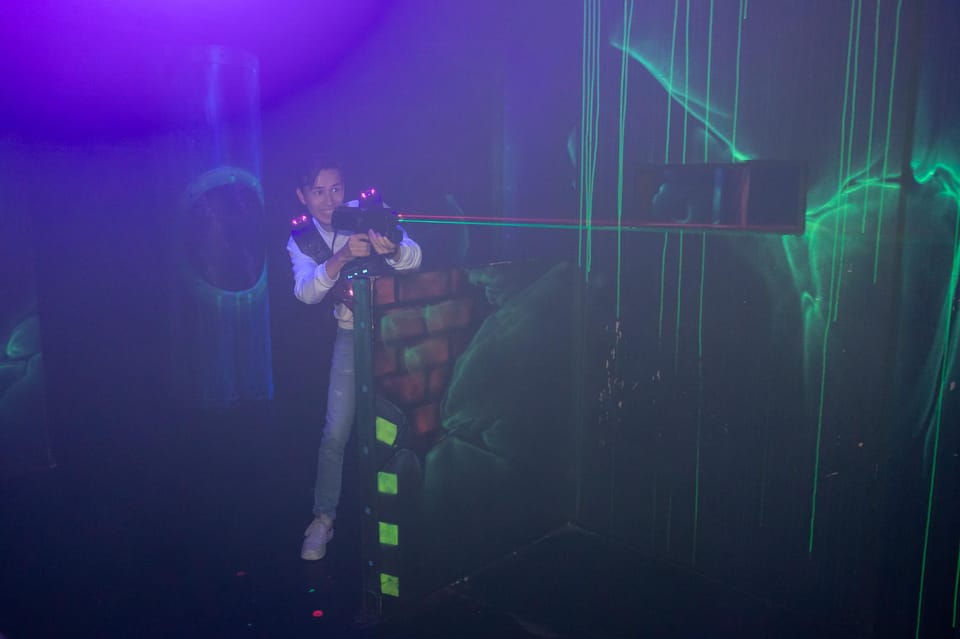
Laser tag is for people who like movement, games with rules, and a little friendly competition. This one is best for groups who want something that’s easy to understand and hard to forget.
It also makes sense if you’re visiting with kids, as long as they meet the height requirement. The activity is not suitable for people under 4 ft 6 in (140 cm). That means many middle-school kids and taller teens can likely play, but smaller children are out.
There are also clear health and safety limits. It’s not suitable for pregnant women and people with heart problems. The data doesn’t explain the medical reason, but the cutoff is firm, so don’t try to “test it” on the day.
If you’re someone who hates being in the dark or feels uncomfortable with UV lighting, factor that in too. The arena is UV-lit and designed for night-game visibility, so it’s not a bright, casual walk-through.
On the flip side, if your group is trying to balance “culture time” with “fun time,” this is a strong option. You can do it even if nobody wants another museum stop.
My Practical Tips for a Smooth Round
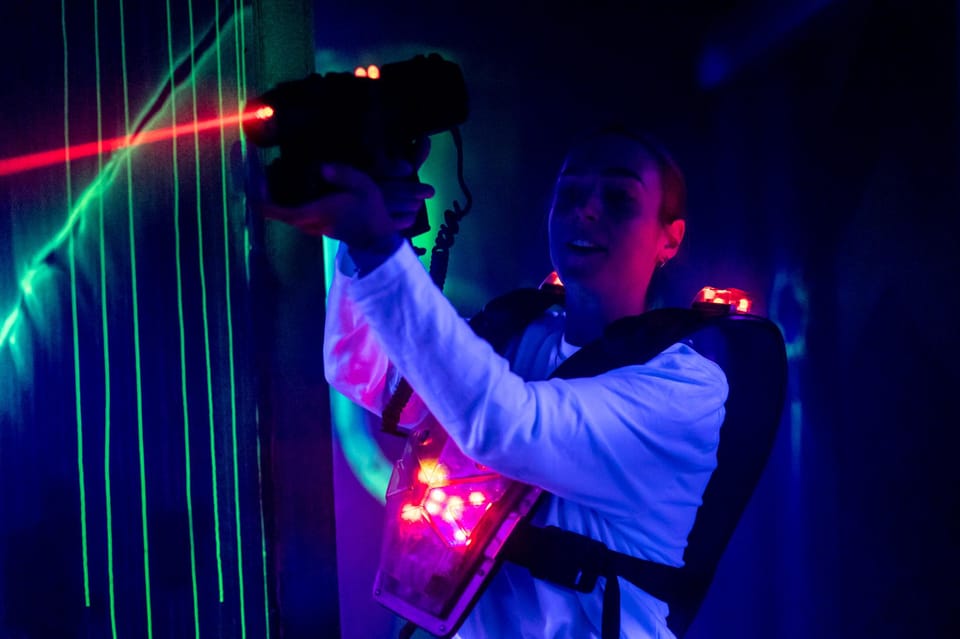
Here’s how I’d set you up for the best chance at an enjoyable match.
First, wear the right clothes. Skip white and go for darker colors. It’s not about style; it’s about how the UV lighting works and how visible you’ll be.
Second, think in terms of team behavior, even if your competitive instincts are loud. With up to 20 people, you can’t play solo the whole time. Use quick teamwork moments like flanking angles or holding a cover position while your teammates move.
Third, arrive a bit early to protect your schedule. If your session time matters because of dinner or another reservation, give yourself breathing room. Some sessions have started later than expected for certain people, and waiting around in a short-window activity gets annoying fast.
Fourth, treat the instruction room as part of the experience. The sliding-door, UV-lit jungle-bunker start isn’t just waiting. It’s where you get the rules and safety basics so your first minutes in the arena don’t turn into confusion.
Finally, if you’re planning this for a specific occasion, you’ll like the flexibility. The experience can be customized to suit your occasion, which is useful if you’re celebrating something with a group or trying to make sure everyone has an equally fun role in the match.
Should You Book Aloha Amsterdam Laser Tag?
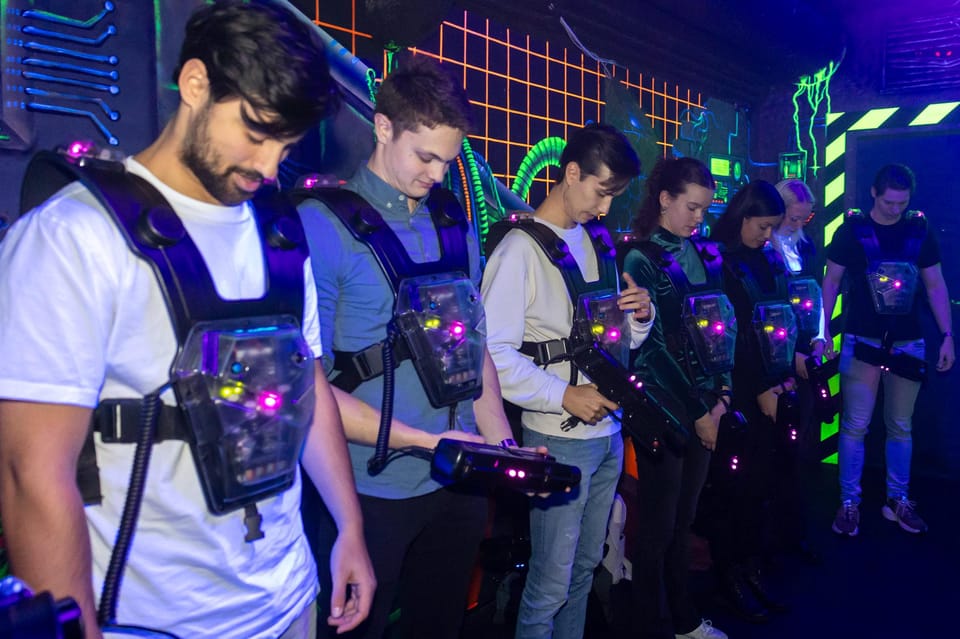
Book it if you want a fast, high-energy group activity in Amsterdam that doesn’t require planning a whole day around it. The 450 sqm underground arena, up to 20 players, and guided start make it feel like a real game, not a gimmick. At $12 for 15 minutes, it’s also one of the easier add-ons to justify when you’re spending time in the city.
Skip it if you or someone in your group can’t meet the requirements, especially the height cutoff (under 140 cm) or the health limitations (pregnancy and heart problems). Also skip if you’re extremely tight on timing and can’t handle the possibility of a late start.
If you’re flexible and your group is ready to move, this is one of those Amsterdam plans that feels different the moment you walk in.