REVIEW · AMSTERDAM
Small Group Walking Tour – Hello Amsterdam
Book on Viator →Operated by Who Is Amsterdam Tours · Bookable on Viator
Amsterdam teaches itself on foot.
I like this 2-hour small-group walking tour because it gives you a quick mental map of central Amsterdam while you’re moving, not stuck in a museum line. You’ll start at Dam Square, then work through classic neighborhoods and canals with short stops and facts you can actually remember.
What I especially like is the mix of city landmarks and everyday culture. You’ll see big-name sights like the Royal Palace area and canal highlights, and you’ll also get practical guidance on eating and shopping—stuff that helps on day one.
One possible drawback: it’s a walking tour, so if you’re hoping for lots of indoor time or slow pacing, this may feel a bit fast. It also relies on good weather, so plan for a backup if the sky is heavy.
In This Review
- Key Highlights You’ll Notice Fast
- A Two-Hour Walk That Helps You Navigate Your First Day
- Starting at Dam Square: Your Amsterdam Compass Point
- Dam Square to Beurs van Berlage: Money, Power, and Architecture
- Damrak True-or-False Games: Learning Amsterdam’s Social Side
- Haarlemmersluis: The Bike Culture Moment
- Singel: Dancing Houses by the Water
- Torensluis and the Canal-Belt UNESCO Angle (Including a Harder Topic)
- Keizersgracht: Family Life, Identity, and “What Makes People Tick”
- Westerkerk and the Homomonument Finish: Diversity as a City Trait
- Price and Value: What $35.07 Buys You in Real Terms
- Who Should Book This Walk (and Who Should Skip It)
- Should You Book Hello Amsterdam?
- FAQ
- How long is the small group walking tour?
- Where does the tour start and end?
- What time does it begin?
- Is the tour in English?
- How large is the group?
- Do I need to buy tickets for the stops?
- What kind of walking should I expect?
- Is good weather required?
- Is there free cancellation?
- Is there any option for service animals?
Key Highlights You’ll Notice Fast
- Dam Square to the canals: a tight route through Amsterdam’s most central sights
- Small group (max 15): easier questions, less lost time, and a friendlier vibe
- Game-style learning at Damrak: quick true-or-false facts about Dutch life
- Canal-belt viewpoints: dancing houses along Singel and Torensluis
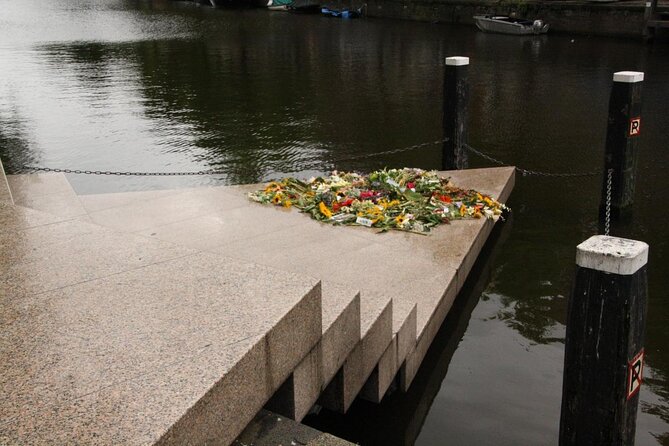
- A thoughtful stop on slavery history at Torensluis, handled in a respectful way
- A strong diversity-focused finish at Westerkerk, near the Homomonument
A Two-Hour Walk That Helps You Navigate Your First Day
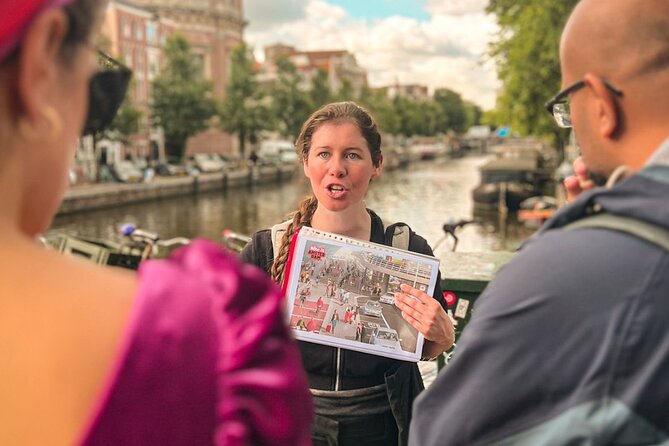
If you’re visiting Amsterdam for the first time, the city can feel like a puzzle: canals crisscross, streets loop back, and trams vanish into the maze. This tour is built for that moment. You’ll move through key central areas in about 2 hours, starting at 10:00 am and ending near the Anne Frank House / Westerkerk area. By the time you’re done, you’re less likely to spend the rest of the trip “searching” and more likely to explore on purpose.
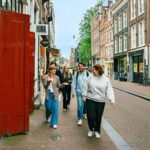
The group size matters here. With a cap of 15 people, you don’t feel swallowed by the crowd. You can ask questions, and the guide can keep the energy up without waiting for a line of followers to regroup every few minutes.
Also, the tour uses a mobile ticket. That’s a real time-saver in Amsterdam, where paper tickets can feel like extra baggage.
You can also read our reviews of more walking tours in Amsterdam


Starting at Dam Square: Your Amsterdam Compass Point
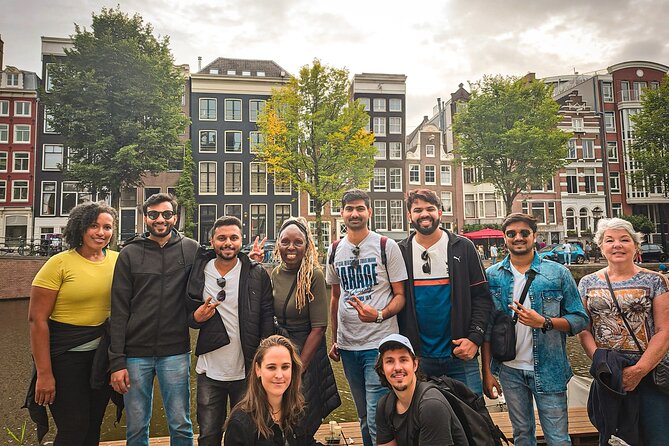
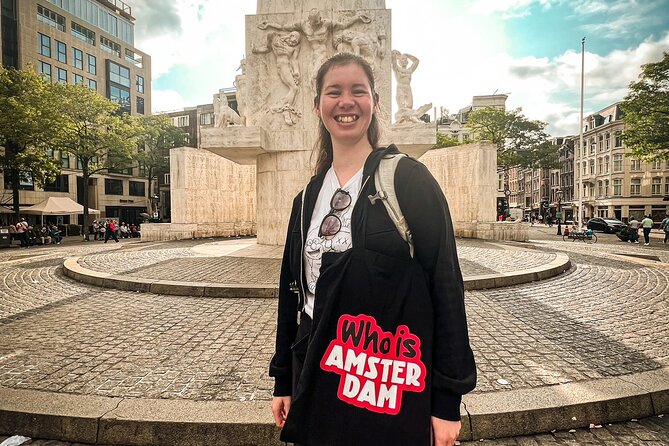
You meet at the National Monument on Dam Square (Dam, 1012 JS Amsterdam), right where major streets and sightseeing traffic collide. This is a smart place to begin because Dam Square acts like a hub. From here, everything in central Amsterdam feels reachable—even if, at first, you’re not sure exactly how.
Dam Square also brings you face-to-face with several landmark backdrops in a short window. You’ll be oriented toward major sights around the square, including the Royal Palace area, the National Monument, and the New Church. The effect is practical: you get a sense of where the ceremonial and political parts of the city sit relative to the canal neighborhoods you’ll reach later.
The guide’s tone is part of why this opening works. In past tours by guides such as Dani, Jonas, and Adam, the storytelling leans energetic and playful, not academic homework. And yes, there are games—so even if you’re tired from travel, the first 10 minutes don’t drag.
Dam Square to Beurs van Berlage: Money, Power, and Architecture
From Dam Square, you head toward the Beurs van Berlage, a building tied to Amsterdam’s old-world financial muscle. This stop is quick, but it’s not random. You’ll be talking about how Amsterdam’s trading and business role grew big over the centuries—and how that ambition showed up in architecture you can still see today.
Even if you’re not a “finance person,” this works because the guide connects the building to the city’s identity: Amsterdam became a place where trade, information, and international connections mattered. Walking here helps you connect dots between what you see on postcards and what actually drove the growth.
One consideration: this stop is about context, not a museum visit. So if you want a deep indoor experience, treat this as the orientation primer, then plan a longer museum stop elsewhere on your own schedule.
Damrak True-or-False Games: Learning Amsterdam’s Social Side
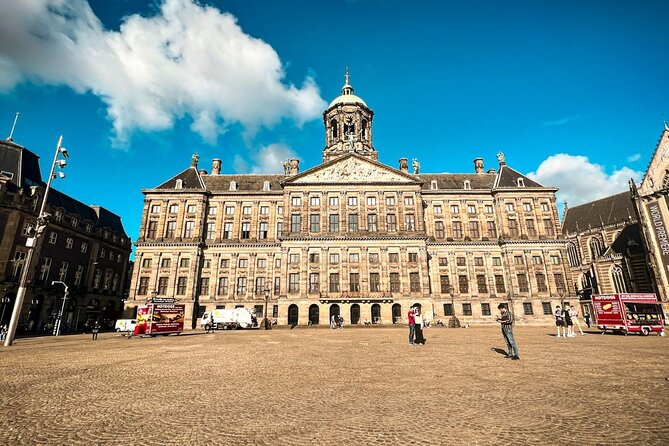
Next comes Damrak, close to the Red Light District. The area is often busy and a little chaotic visually, so anchoring it with a playful activity is a good move. Here, you’ll do a fast true-or-false game that tests knowledge about Dutch culture—things like tolerance and coffeeshop culture. The tour is designed so you don’t need prior background. You just need to pay attention and have a sense of humor.
I like this approach because it turns “hot topics” into an easy way to learn how people talk and think in the Netherlands. Instead of you reading random blog posts afterward, you get guided explanations at street level, with real context.
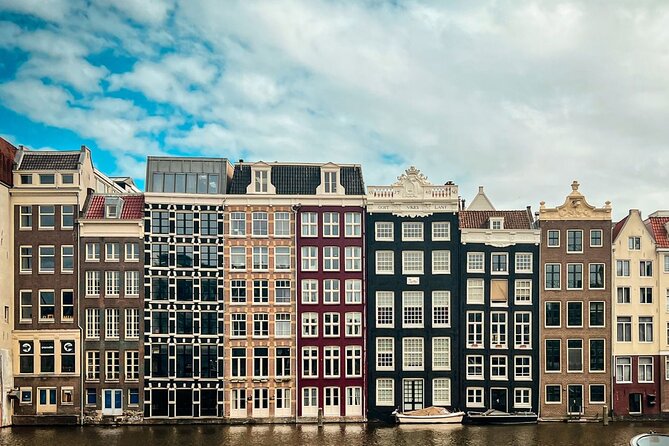
You’ll also notice the dancing houses along this stretch—those characterful facades that make you stop walking and look up. It’s a small moment, but it’s one of the best in the tour for getting that classic Amsterdam photo angle without wandering off-route.
Haarlemmersluis: The Bike Culture Moment
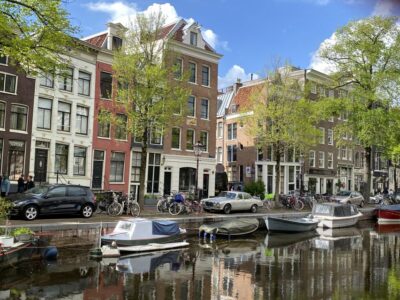
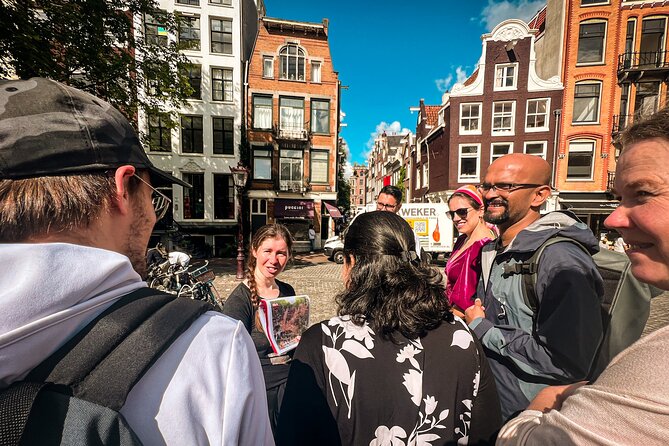
At Haarlemmersluis, the tour shifts from buildings and history to how Amsterdam functions day to day—especially by bike. You’ll take in a view that sets up the city’s canal-belt gateway feeling, then you’ll talk about cycling culture: more bikes than people is the headline idea, and the guide connects it to daily life.
I love when a tour gives you “how it really works” instead of only “what it used to be.” Amsterdam’s bike system isn’t just transportation here—it’s part of the city’s rhythm. Even if you never rent a bike, it helps you understand why streets feel the way they do and why pedestrians move differently around intersections.
If you’re afraid of bikes (or you hate crowds), don’t worry: you’re not riding. This is more about recognizing the logic of the city’s behavior.






Singel: Dancing Houses by the Water
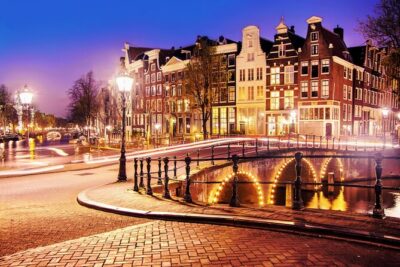
Then you hit Singel, a canal lined with postcard-worthy views. This is where the tour leans hard into architecture and atmosphere. You’ll see the Dancing Houses again from a canal-side angle, and you’ll hear the story behind those tilted facades.
What you gain here is a feeling for how Amsterdam’s elegance isn’t just flat and formal. The city can be whimsical and still historic. Watching the canal water and the building angles together helps you understand why these houses are so iconic—your brain starts sorting Amsterdam into “structure + personality” rather than “random buildings on a canal.”
A practical note: canalsides can be windy, and it’s a great spot for photos. Wear layers so you don’t get cold while you’re waiting for the group to finish snapping pictures.
Torensluis and the Canal-Belt UNESCO Angle (Including a Harder Topic)
At Torensluis, you get the UNESCO canal-belt story—how the canals shaped development and why these waterways matter. The tour connects the physical layout to how Amsterdam grew and functioned.
And then comes the part of the route that needs a little emotional care. The guide brings up Amsterdam’s shadowed past of slavery, and you’ll spend time acknowledging that history alongside the beauty of the canal streets. I appreciate this inclusion because it avoids the “only pretty photos” version of Amsterdam. The city has achievements, but it also has consequences—owning both is the adult way to travel.
If you’re traveling with kids, keep in mind this stop may feel heavy compared with the earlier playful moments. That said, it’s brief and meant to be respectful rather than graphic.
Keizersgracht: Family Life, Identity, and “What Makes People Tick”
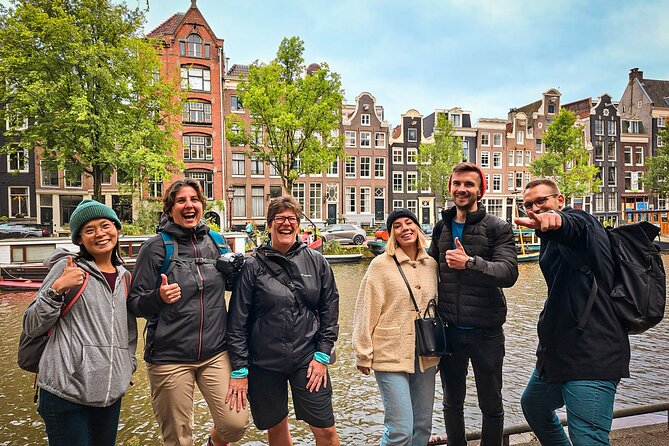
Next is Keizersgracht (the Emperor’s Canal), and this stop turns toward everyday culture—especially family dynamics. You’ll learn about a Dutch identity angle, including the idea that Dutch kids were named among the happiest in the world by UNICEF in 2017, and the guide ties that to what shapes family life and community.
This is one of those “small” tour moments that pays off later in conversation. Once you understand how the guide frames Dutch social norms, you’ll notice them more during the rest of your trip—at cafes, in how neighborhoods feel, and in how people talk to strangers.
I also like that the tour makes it practical. The guide essentially gives you a sense of how to fit into the flow of daily life—less “tourist mode,” more “visitor who understands the vibe.”
Westerkerk and the Homomonument Finish: Diversity as a City Trait
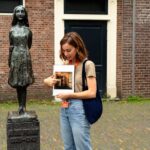
The tour ends at Homomonument (1016 DW Amsterdam), near the Westerkerk and also very close to the Anne Frank House. The finish isn’t just geography; it’s a message.
At Westerkerk, the tour discusses diversity and the idea behind the city’s attitude of live and let live, connecting it to the Gay Monument and the broader theme of tolerance. The guide language is centered on a mentality that values differences, and the tour ends in a reflective way rather than a mad rush to the next attraction.
This is a strong ending for a walking tour because it helps you transition from “seeing sights” to “understanding the place.” Plus, landing near Westerkerk means you can keep exploring right away without backtracking.
Price and Value: What $35.07 Buys You in Real Terms
At $35.07 per person, this isn’t a bargain tour, and it’s not a premium private guide either. What makes it good value is the combination of:
- A small group (max 15), which improves the experience quickly in a city like Amsterdam
- English narration with mobile ticket convenience
- A route that covers a lot of core central ground in about 2 hours
- Practical local recommendations for places to eat and shop—this is the kind of value you only notice later when your meal or shopping stop turns out great
Also, there’s no indication you need to pay for admissions during the stops. The tour is set up as a walk-and-learn route rather than a ticket-hopping day. That keeps costs predictable.
One small planning hint: the tour is commonly booked about 56 days in advance, so if you’re traveling in a busy season, book early rather than waiting for last-minute flexibility.
Who Should Book This Walk (and Who Should Skip It)
This tour is ideal if you want your Amsterdam days to feel smoother.
You’ll probably love it if you:
- are visiting Amsterdam for the first time and want your bearings fast
- like learning through street-level context, not just plaques
- want a small-group guide who can recommend food and shopping nearby
- enjoy playful formats, like the true-or-false game at Damrak
You might want to choose something else if you:
- hate walking and want lots of indoor time
- want a long, museum-style education day
- need very quiet stops and zero emotional content (Torensluis includes the slavery history topic)
Overall, think of it as an excellent starter course. It won’t replace deeper museum time later, but it will make later time make more sense.
Should You Book Hello Amsterdam?
Yes, I’d book it—especially if you’re the kind of traveler who likes a plan, but not a rigid schedule. The small group, the quick-hit route, and the mix of landmarks plus culture tips make it feel efficient without feeling rushed. You’ll also end near two major areas, so it naturally connects to the rest of your day.
If you have limited time, this is one of the best ways to get value early. If you have plenty of time, it still helps. Knowing where the main streets and canal-belt areas sit makes everything else easier for the rest of the trip.
FAQ
How long is the small group walking tour?
It runs for about 2 hours.
Where does the tour start and end?
It starts at the National Monument Dam (1012 JS Amsterdam) and ends at Homomonument, Westermarkt (1016 DW Amsterdam), near Westerkerk and about a short walk from the Anne Frank House.
What time does it begin?
The start time is 10:00 am.
Is the tour in English?
Yes, it’s offered in English.
How large is the group?
The tour has a maximum of 15 travelers.
Do I need to buy tickets for the stops?
The stops listed for this experience show Admission Ticket Free, so you’re not paying for admission as part of the stops.
What kind of walking should I expect?
It’s described as covering the key central areas with a moderate amount of walking.
Is good weather required?
Yes. The experience requires good weather. If it’s canceled due to poor weather, you’ll be offered a different date or a full refund.
Is there free cancellation?
Yes. You can cancel up to 24 hours in advance for a full refund.
Is there any option for service animals?
Service animals are allowed.
If you want, tell me your travel dates and whether you’re starting your sightseeing on a weekend or weekday—I can suggest the best kind of day to schedule this so you don’t fight the biggest crowds.