REVIEW · AMSTERDAM
Amsterdam in World War II Tour
Book on Viator →Operated by Slagveldreizen.nl · Bookable on Viator
WWII history is written on Amsterdam’s corners. This walk connects the city you know with the city that lived under German occupation, led by retired historians who bring the streets to life with stories, photos, and period context. You start with key Nazi-era sites and move through the Jewish quarter area, finishing near a Holocaust memorial that gives the whole route emotional weight.
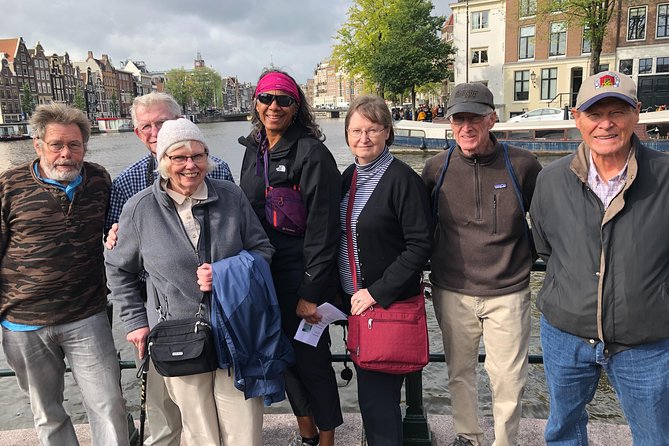
I especially like the small group (max 8). That keeps the pace calm, helps you stay oriented as you move through canals and back streets, and means you can actually hear what matters. I also love the stop-and-explain approach: the tour doesn’t just point out landmarks, it explains why each one mattered during 1940–45.
One thing to consider: you’ll see Anne Frank’s House from the outside only. The museum isn’t part of this experience, and that short exterior stop may feel too brief if you were hoping for more time inside the Anne Frank House area.
In This Review
- Key things I’d plan around
- Amsterdam WWII Tour: The 9:30 Start That Sets the Tone
- Who Guides This Walk (and Why It Matters): Peter and Ben-Style Storytelling
- The Route Itself: Occupation-Era Amsterdam First, Then the Jewish Quarter Sites
- Outside Anne Frank House: The Story Comes First
- Statue of Multatuli and the Bridge Over the Singel: How Amsterdam Changed
- Magna Plaza as a WWII Post Office: A Location With a Bitter Detail
- Nieuwe Kerk and the Mozes en Aäronstraat Story: Street-Level History
- Dam Square: Heart of the City and Stage for Key WWII Moments
- Sofitel Legend The Grand Amsterdam (Former City Hall): May 15, 1940 and German Troop Arrival
- Price and Value: What $46.44 Buys You for a 3 to 3.5 Hour Walk
- Timing and Weather: How to Plan Your Day Around a WWII Walk
- Who This Tour Is Best For (and Who Might Want Something Else)
- Should You Book Amsterdam in World War II?
- FAQ
- Is this tour a small-group experience?
- How long is the Amsterdam in World War II tour?
- Where does the tour start and end?
- Do you visit Anne Frank House inside the museum?
- What’s included in the price?
- Are there admission fees at other stops?
- Is private transportation included?
- What if the weather is bad?
- Can I cancel for a refund?
- Are service animals allowed?
Key things I’d plan around
- A max-8 group with slow walking keeps it easy to follow the stories without rushing.
- Retired historians lead the route, with period photos and maps brought into the telling.
- Anne Frank’s House is exterior-only and the museum admission isn’t included.
- Dam Square anchors major WWII moments, including events tied to May 7, 1945 and May 4 remembrance.
- Many stops are free to enter, but ticket expectations still matter for the Anne Frank House.
Amsterdam WWII Tour: The 9:30 Start That Sets the Tone
You meet at Prinsengracht 263 (1016 GV) at 9:30am, in an area that instantly feels like real Amsterdam—not a staged tourist strip. From there, the tour focuses on Amsterdam’s WWII role and how the occupation shaped daily life, Jewish communities, and the city’s public spaces.
This is a 3 to 3.5 hour walking tour, described as walking slowly. That slow pace is not just comfort. It gives your guide time to explain connections you would otherwise miss—like how a street, a church, or a landmark can carry occupation-era meaning long after the war ended.
The ending point is the National Holocaust Names Monument (1018 DP), close to the Portuguese Synagogue and not far from the city hall area. Finishing there makes the final stretch feel like a wrap-up you can stand in, not just walk past.
You can also read our reviews of more tours and experiences in Amsterdam.


Who Guides This Walk (and Why It Matters): Peter and Ben-Style Storytelling
One of the strongest reasons to pick this tour is the way it’s taught. The experience is run by three retired historians with a strong focus on the German occupation of the Netherlands. In the reviews, guide Peter and guide Ben come up repeatedly, and both are praised for being prepared and for using visuals like photos and maps.
That preparation matters on a WWII topic. Without context, these places can feel like disconnected memorial stops. With a historian at the front, you start building a timeline in your head: the occupation years, Jewish suffering, Dutch responses, and what happened right after the surrender.
Small-group limits (again, up to 8 people) also help the conversation. When questions come up, you’re not shouting across a crowded bus. You’re in earshot. You can ask about names, events, or details like how certain locations functioned during the occupation.
The Route Itself: Occupation-Era Amsterdam First, Then the Jewish Quarter Sites
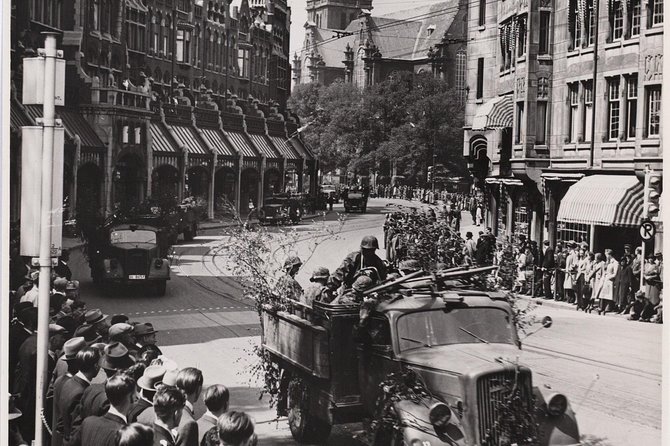
The itinerary is built around one long, major first section—about 2 hours 30 minutes at the opening stage—focused on important sites and monuments tied to the Nazi occupation of Amsterdam (1940–45). Even though the listed stops get shorter after that, the first stretch does most of the teaching.
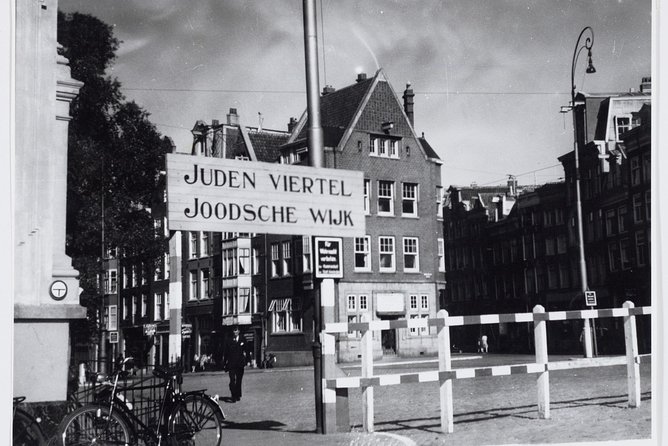
This first part is where your guide sets the mental map. You learn which places served which roles during occupation: public spaces where power was displayed, streets where risk became routine, and neighborhoods where Jewish life was disrupted and targeted.
Then the tour shifts into shorter, high-impact moments—outside Anne Frank’s House, along changed city streets, and through a sequence of landmarks tied to WWII stories. The structure keeps you moving, but it also prevents the tour from turning into a rushed checklist.
Outside Anne Frank House: The Story Comes First
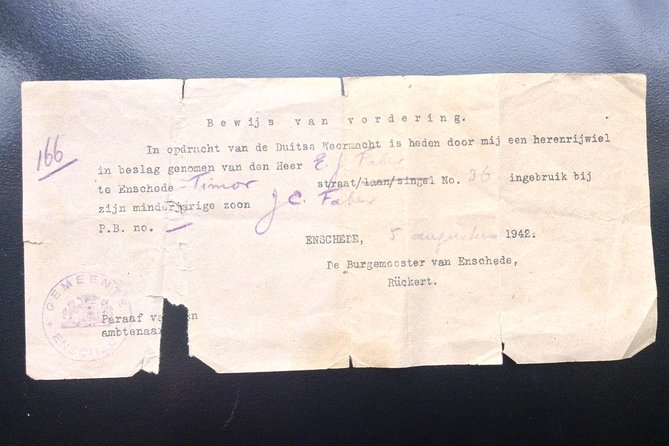
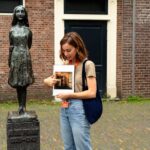
You begin this segment outside Anne Frank’s House. The tour’s framing is clear: you get the story about the German attack and about Jewish refugees, and then you look at the location with that narrative in mind.
Important detail: the tour states that you do not visit the museum. The time budget listed for this stop is about 10 minutes, with admission not included. So if your goal is to spend time inside the museum exhibitions, this tour won’t replace that.
Still, going exterior-first can be powerful. It turns the house into a checkpoint in your larger walk through the occupation era. You understand the location as part of the city’s WWII system—who was hunted, how flight and hiding worked, and what the broader persecution meant beyond a single story.
If you’re pairing tours in Amsterdam, this is a good companion. It gives the “why” and “where” around the Jewish Quarter area, so you don’t just see one famous address—you see the surrounding historical context.
Statue of Multatuli and the Bridge Over the Singel: How Amsterdam Changed
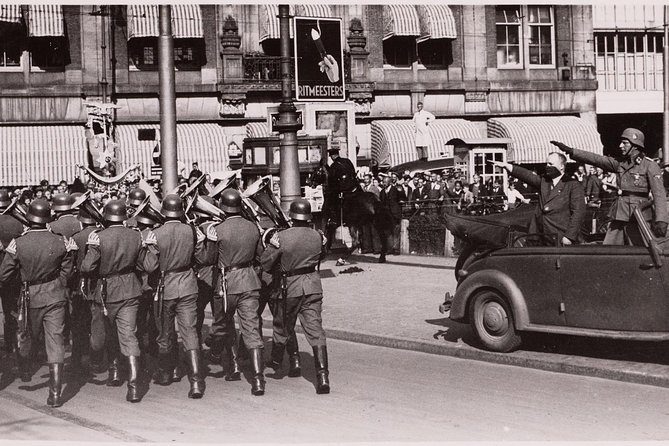
A quick but meaningful stop follows: the Statue of Multatuli along Raadhuisstraat and on a bridge over the Singel. The tour uses this moment to show how Amsterdam changed after WWII.
This kind of stop is easy to skip past on your own. You might just see a statue and keep walking. With a guide, you start noticing that the city didn’t only “end” in 1945—it rebuilt. Streets remained, buildings shifted, and public memory took different forms over time.
These short 10-minute moments are not filler. They reset your focus so you can absorb the heavier WWII stories without feeling like you’re trapped in one mood the entire day.


Magna Plaza as a WWII Post Office: A Location With a Bitter Detail
Next up is Magna Plaza, now a shopping mall, but during WWII it functioned as the post office of Amsterdam. The tour’s key WWII detail is stark: Dutch postmen were executed by the Germans.
You can really feel the purpose here. Your brain expects a mall. Your guide forces the correction: this was a workplace tied to communications, and the occupation turned even ordinary systems into points of control and punishment.
This is one of those stops where you’ll probably want a few extra seconds to look around, because the modern setting makes the wartime use feel unreal. That’s exactly why it’s valuable. It trains you to read the present against the past.
Nieuwe Kerk and the Mozes en Aäronstraat Story: Street-Level History
Then you hit the Nieuwe Kerk area with a WWII story tied to the street between the Royal Palace and the New Church, named Mozes en Aäronstraat.
The listing keeps this segment brief (about 5 minutes), and there’s no mention of admissions. So the value here is interpretive. Your guide uses location and street context to tie events to geography. It helps you understand that “history” in Amsterdam isn’t only in museums—it lives in street layouts and building surroundings.
If you tend to remember cities better through streets than through dates, this style works well. It’s practical history: you walk it, you see it, and you carry it forward as you explore on your own afterward.
Dam Square: Heart of the City and Stage for Key WWII Moments

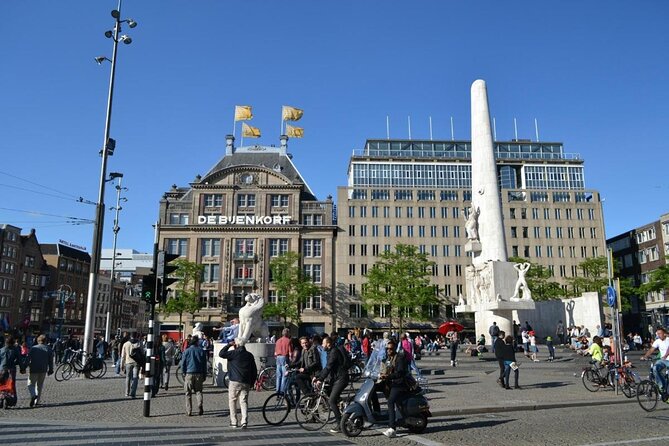
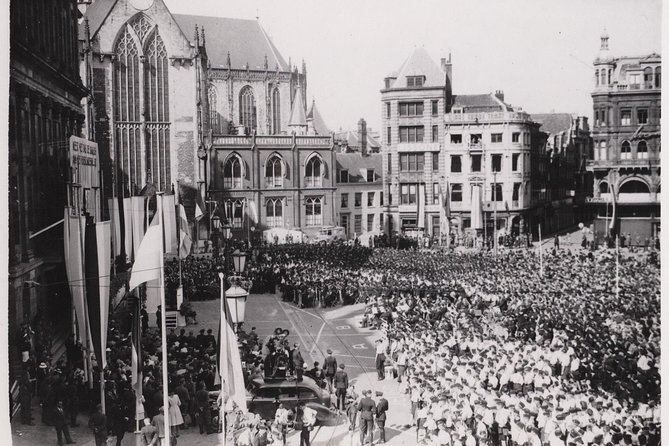
Dam Square is the tour’s next major emotional and historical anchor. The listing calls it the heart of Amsterdam, and during the occupation many things happened there.
You’ll also hear several distinct WWII-linked stories, including:
- a shooting incident on May 7, 1945, two days after German surrender
- volunteers recruited here for the crusade against Bolshevism
- Remembrance Day May 4
- the story connected to the WWII monument
That’s a lot packed into one public space, and it’s exactly why Dam Square belongs on a WWII walk. This isn’t a quiet corner of town. It’s where national events, memory, and crowd life intersect.
One practical note: because the time listed here is about 25 minutes, this is where you’ll likely slow down mentally. Take the extra attention your guide gives you. Ask questions if something grabs you. Dam Square is the kind of place where details matter more than you expect.
Sofitel Legend The Grand Amsterdam (Former City Hall): May 15, 1940 and German Troop Arrival
Your route then points you at Sofitel Legend The Grand Amsterdam, a well-known hotel now, but the tour notes it was the City Hall in WWII. It also adds a key moment: German troops were welcomed by Dutch civil servants on May 15, 1940.
This stop does two jobs. First, it connects an obvious landmark to a wartime power story. Second, it complicates the usual “occupiers vs. everyone else” narrative by pointing to how civil institutions interacted with German authority.
Whether you find that detail comforting or uncomfortable, it’s historically important. It helps you understand how occupation doesn’t only happen at the front lines. It also happens in offices, routines, and official ceremonies.
The listed stop time is short (about 5 minutes), but it lands because it reframes a place you might otherwise treat as just another hotel building.
Price and Value: What $46.44 Buys You for a 3 to 3.5 Hour Walk
The price is $46.44 per person, and the tour is described as usually booked about 44 days in advance. For this type of walking history, that price feels fair because your costs aren’t only “guide time.” You’re paying for interpretation by retired historians and for a carefully designed route through multiple WWII-linked sites.
Most listed stops are free to access (the itinerary marks free admission for the majority of locations). The one big paid-torque issue is Anne Frank’s House, where your stop is exterior-only and admission isn’t included.
So think of this tour as a curated route with free site access built in, plus expert context. It’s not a museum-ticket bundle. If you want both the guided walk and museum time at Anne Frank’s House, you may need to plan museum entry separately.
In terms of value, the small group size (max 8) is what makes the price feel justified. You’re not paying for a crowd. You’re paying for attention and for explanations that connect the dots.
Timing and Weather: How to Plan Your Day Around a WWII Walk
The start time is fixed at 9:30am, and the tour is about 3 hours to 3 hours 30 minutes, walking slowly. The experience also notes it requires good weather, with the option of a different date or a full refund if it’s canceled due to poor weather.
That matters because you’re walking through different parts of central Amsterdam. Your comfort depends on whether the weather cooperates and on your own ability to keep a steady walking pace for the full route.
Also, the tour notes good weather as a requirement, so if you’re booking close to forecasted rain or cold snaps, you’re taking a calculated risk. I’d rather build in flexibility than treat this as a must-hit no matter what.
Who This Tour Is Best For (and Who Might Want Something Else)
This tour is clearly built for people who like history that you can actually see. You’ll get a focus on:
- Amsterdam’s role in WWII
- Jewish heritage and WWII persecution
- military and occupation context across multiple landmarks
If you’re the type of traveler who wants to understand what you’re looking at—why certain streets matter, why public squares are remembered the way they are—this is a strong fit.
If your top priority is spending hours inside major museums, this may not be your best match because Anne Frank’s House museum isn’t visited and the exterior stop is 10 minutes. But as an orientation tour, it can set you up for deeper visits afterward.
Should You Book Amsterdam in World War II?
Yes, if you want a guided route that makes WWII Amsterdam feel coherent, not random. The small-group limit and the historian-led storytelling style are the biggest wins. You’ll also appreciate how the tour mixes heavy moments (Jewish suffering and occupation details) with brief visual and city-change stops so you can keep following the storyline.
I’d skip it only if you’re mainly looking for museum time at Anne Frank’s House. This tour gives context from outside and ties landmarks together. It doesn’t try to replace a museum visit.
If your schedule allows, I’d book this early in your Amsterdam WWII planning so the city starts making sense as you explore on your own afterward—especially in the Jewish Quarter area and around major memorial spaces.
FAQ
Is this tour a small-group experience?
Yes. The tour has a maximum of 8 travelers, and it’s described as walking slowly.
How long is the Amsterdam in World War II tour?
It runs about 3 hours to 3 hours 30 minutes.
Where does the tour start and end?
It starts at Prinsengracht 263, 1016 GV Amsterdam. It ends at the National Holocaust Names Monument, 1018 DP Amsterdam, close to the Portuguese Synagogue and not far from the city hall.
Do you visit Anne Frank House inside the museum?
No. You start outside Anne Frank’s House and hear the story, but the tour states that the museum is not visited. Anne Frank House admission is listed as not included.
What’s included in the price?
The listing includes the guided tour. It does not include coffee/tea or private transportation.
Are there admission fees at other stops?
Most stops are listed as free admission. The tour explicitly notes that Anne Frank House admission is not included.
Is private transportation included?
No. Private transportation is not included.
What if the weather is bad?
The experience requires good weather. If it’s canceled due to poor weather, you’ll be offered a different date or a full refund.
Can I cancel for a refund?
Yes. Free cancellation is available if you cancel up to 24 hours in advance for a full refund.
Are service animals allowed?
Yes, service animals are allowed.