REVIEW · AMSTERDAM
Amsterdam: Life of Anne Frank and World War II Walking Tour
Book on GetYourGuide →Operated by 360 Amsterdam · Bookable on GetYourGuide
Two hours can change how you see Amsterdam. This Anne Frank and World War II walking tour puts a human face on the 1940s, with stops that connect her diary to real streets and places in the Jewish Quarter. I love how the guide maps Anne Frank’s story onto the neighborhood layout, and I love the respectful weight of the WWII memorial moments like the Auschwitz Monument.
One thing to plan around: this tour does not include entrance to the Anne Frank House. If that’s on your must-do list, you’ll want to line up tickets separately, often far in advance.
In This Review
- Key Highlights That Make This Tour Worth Your Time
- What This 2-Hour Anne Frank Walking Tour Really Covers
- Price and value: is $37 a good deal?
- Meeting Outside the Portuguese Synagogue: Starting Where the Story Lives
- Why this start point helps you
- Anne Frank on the Streets: From Germany to Hiding in Amsterdam
- What you should listen for
- The Jewish Cultural Quarter Walk: Synagogue, Museum Area, and Community Context
- A quick reality check
- Dutch Resistance and Hiding Places: Understanding the Risk Behind Survival
- Emotional tone
- The Auschwitz Monument Stop and the Anne Frank House Facade
- If you’re trying to get into the Anne Frank House
- Small Group vs Private: Pace, Language, and How You’ll Feel While Walking
- Who should pick what
- What to Bring (and what to skip) for a Smooth 2-Hour Walk
- Timing Tips to Get the Most From the Tour
- Should You Book This Anne Frank Walking Tour?
- FAQ
- How long is the Amsterdam: Life of Anne Frank and World War II Walking Tour?
- Where does the tour start?
- Does this tour include tickets to the Anne Frank House?
- What sites will we see on the tour?
- Is this tour available as a small group or private tour?
- What languages are offered?
- How much does it cost?
- What should I bring?
- Is there anything I’m not allowed to bring?
- Can children participate?
- Is there free cancellation?
Key Highlights That Make This Tour Worth Your Time
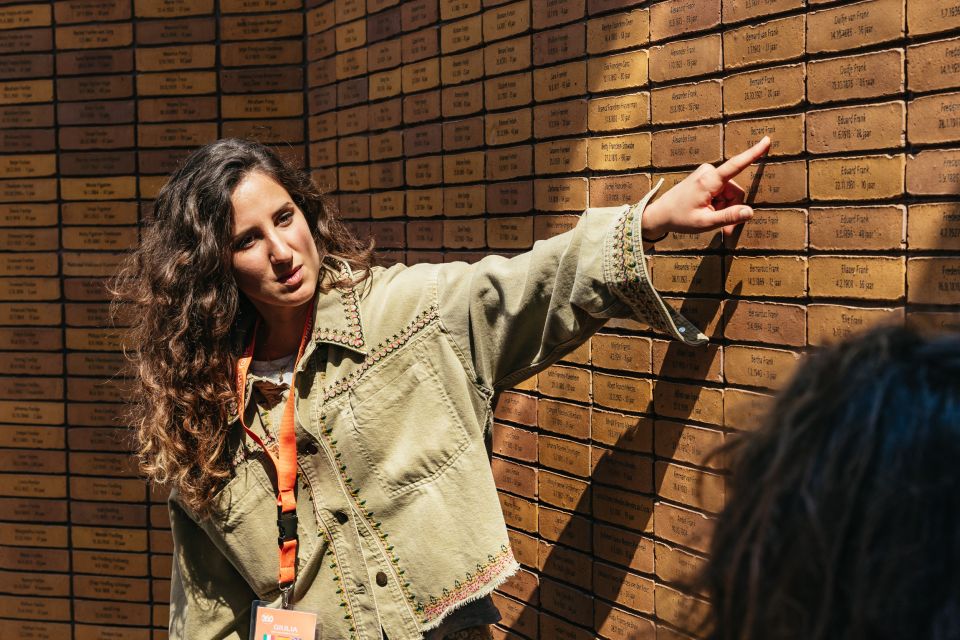
- Portuguese Synagogue start point gives you immediate context in a 17th-century Sephardic synagogue that still functions today
- Anne Frank, place by place: you’ll connect her family’s move from Germany and the reality of life in hiding to what you can see outside
- Auschwitz Monument stop adds a sobering WWII memorial moment without needing a museum ticket
- Dutch Resistance + hiding networks: the guide explains how secret shelter worked in occupied Amsterdam
- Guide styles that land well: names like Ronald, Jonas, Manuel, Giovanni, Martina, and Florian pop up for storytelling, clarity, and sensitivity
- Choose your comfort: small-group or private options, with language availability that can vary by option type
What This 2-Hour Anne Frank Walking Tour Really Covers

Think of this tour as a guided walk through the Jewish Quarter’s WWII-era story, anchored by Anne Frank’s life and diary. In about two hours, you cover multiple layers: the neighborhood’s development, the pressures on Jewish families during the occupation, and the Dutch Resistance networks that helped people survive.
What makes it especially useful for first-timers is that it doesn’t just tell the famous biography. It helps you “read” Amsterdam as a place where history happened in everyday streets—so when you later see the Anne Frank House or memorials on your own, you’ll understand what you’re looking at and why it matters.
You can also read our reviews of more walking tours in Amsterdam



Price and value: is $37 a good deal?
At about $37 per person for a professional guide and a walking tour (with no Anne Frank House ticket included), the value comes down to one thing: how effectively the guide turns the area into a story you can follow. The tour format keeps things efficient—two hours, multiple meaningful stops, and expert explanation—so you’re not spending half a day just getting oriented.
If you already plan to visit the Anne Frank House later, this walk becomes a strong pairing. It sets context first, so the house visit (if you manage tickets) feels less like a checklist and more like understanding.
Meeting Outside the Portuguese Synagogue: Starting Where the Story Lives
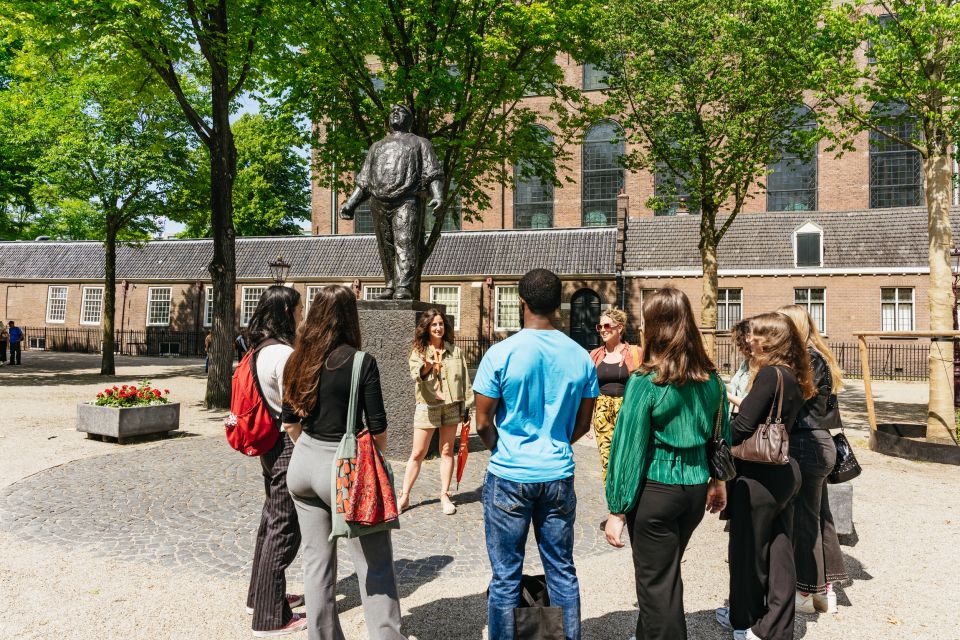
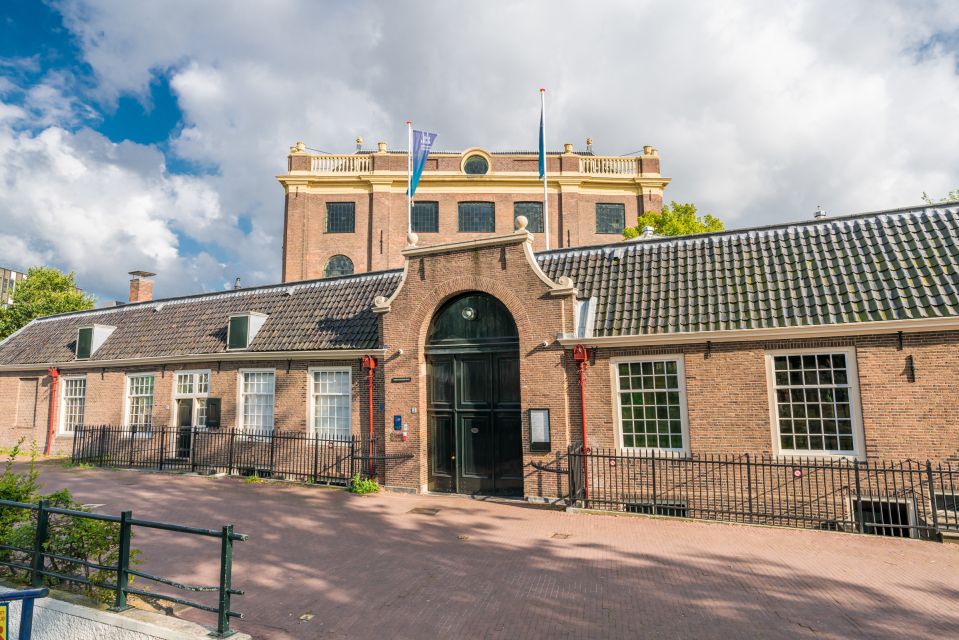
The tour begins outside the Portuguese Synagogue, a 17th-century Sephardic building that still operates as a synagogue. Starting here is smart because it immediately places you in the physical and cultural geography of the Jewish Quarter, instead of starting somewhere generic and then trying to “reach” the neighborhood.
From the beginning, you’re guided to understand how the Jewish neighborhood developed over centuries. That matters because Anne Frank’s story didn’t unfold in a vacuum. She was part of a community shaped by migration, religion, and city life long before World War II.
Why this start point helps you
- You get context early, before you move into quieter side streets and memorial-focused stops.
- You also get a sense of continuity: this isn’t only about tragedy, it’s also about lived community and institutions.
Anne Frank on the Streets: From Germany to Hiding in Amsterdam
As you walk, your guide connects Anne’s life—her family dynamics, their move from Germany, and her time in hiding—to the places you pass. You’ll hear about her love of writing and what shaped the diary that later became so famous.
This section of the tour is where the guide’s approach really matters. Several named guides (like Ronald, Jonas, Manuel, Giovanni, and Martina) are praised for turning dense history into a story that keeps a group engaged. You can also benefit from guides who use visual aids; Peter is specifically mentioned for bringing a binder with pictures to support the points he made.






What you should listen for
The most helpful guides don’t just repeat facts. They help you notice the details that explain why hiding was so hard: the pressures of occupation, the risks, and the way daily life changed in 1930s and 1940s Amsterdam.
If you’re coming in with the assumption that Anne Frank is only a school-reading story, go in with an open mind. This tour focuses on how she became who she was under extreme conditions—and then what happened next, including her father’s life after the war.
The Jewish Cultural Quarter Walk: Synagogue, Museum Area, and Community Context

Mid-tour, you’ll move through the Jewish Cultural Quarter area and get guided history of how the neighborhood shaped community life over time. You’ll also pass by the Jewish Historical Museum, which is part of the broader environment where you can connect museum learning with real-world geography.
Even though you’re not going inside every site, this “outside look with interpretation” is often what helps the neighborhood stick in your mind. A museum can explain objects. A street-by-street tour explains how people actually lived around those objects—where they gathered, how the area worked, and how war disrupted normal rhythms.
A quick reality check
Because the tour focuses on walking and storytelling, it’s not trying to replace a full museum visit. Instead, it gives you the threads you can pull later—especially if you plan to spend additional time in Amsterdam after the walk.
Dutch Resistance and Hiding Places: Understanding the Risk Behind Survival
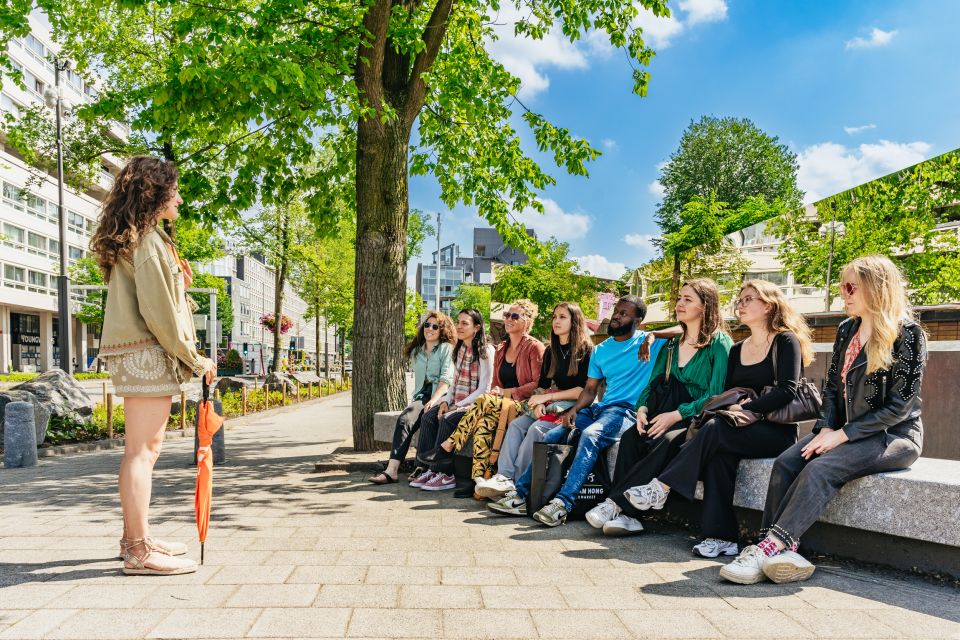
One of the most important parts of the tour is the Dutch Resistance story. You’ll hear how resistance efforts helped people survive under Nazi occupation, including where secret hiding places were located (described in context as you move past relevant points).
This is where the tour becomes more than Anne Frank content. It places her experience inside a wider web of resistance and complicity—showing that survival was rarely simple, and help came with danger for everyone involved.
You’ll also see how memorial points and site stops reinforce the idea that the Holocaust wasn’t only something that happened “far away.” It happened here, through policies, persecution, and the constant fear of discovery.
Emotional tone
This tour doesn’t pretend the subject is light. Many guides mentioned in feedback—like Yoshi, Florian, Julia, and Henk—are singled out for delivering the material with sensitivity. That’s exactly what you want on a topic like this: clear facts, careful framing, and space to reflect.
The Auschwitz Monument Stop and the Anne Frank House Facade
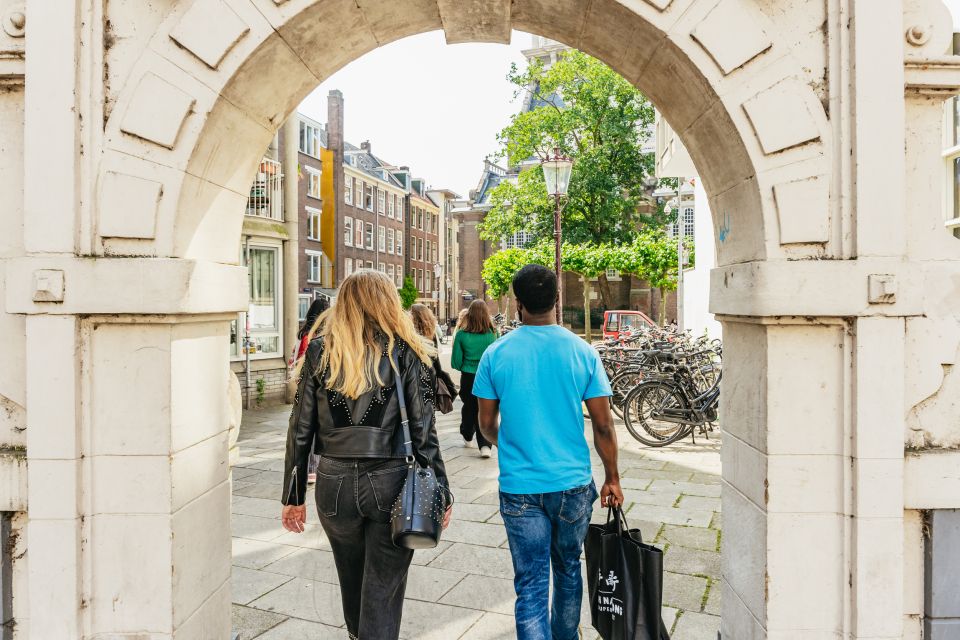
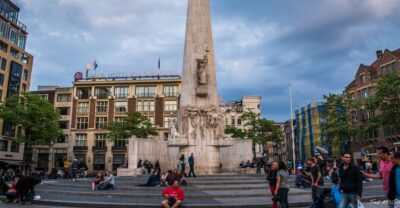
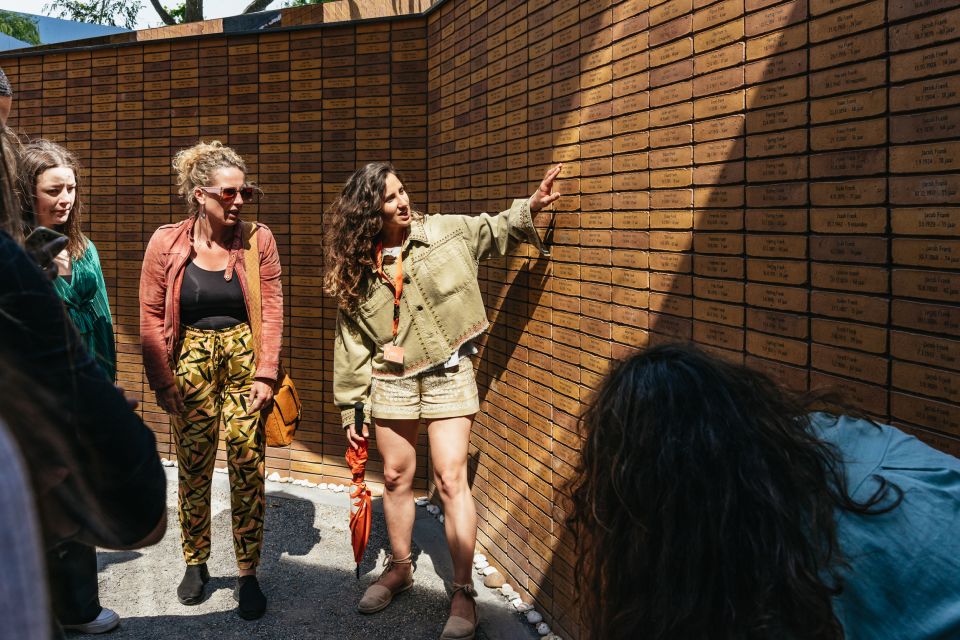
Toward the end, you’ll stop at the Auschwitz Monument. Even from the outside, memorial sites in Amsterdam carry a heavy, grounding impact. This is one of those moments that can feel less like sightseeing and more like paying attention to the meaning of a place.
You’ll also see the outside of the Anne Frank House façade. Since the tour does not include entrance, what you get here is orientation and interpretation. You can connect the location to the events your guide just described, and you’ll know what questions to ask if you later visit the house on your own.
If you’re trying to get into the Anne Frank House
The big practical point: tickets are often sold out in advance. If you want to go inside, the advice is to book your Anne Frank House tickets a few months ahead. Use this tour as your context-builder so the interior visit (when you manage tickets) makes instant sense.
Small Group vs Private: Pace, Language, and How You’ll Feel While Walking
You can choose either a small-group tour or a private guided option. Duration stays about two hours, but the experience can feel different depending on how you like to travel.
The language situation is also worth noting. The tour is offered in Dutch, German, Portuguese, Italian, English, Spanish, and French, but shared group and private options don’t always have the same languages. Check for all languages you care about before you commit, especially if you want English or another specific language.
Who should pick what
- Pick small-group if you like meeting people while still keeping the group size manageable.
- Pick private if you want quieter pacing, more room for questions, or a specific language match.
What to Bring (and what to skip) for a Smooth 2-Hour Walk

This is a straightforward walking experience, but Amsterdam weather and cobblestones can be stubborn.
Bring:
- Comfortable shoes
- Water
- A charged smartphone
Leave behind:
- Luggage or large bags
That small-bag rule matters more than it sounds. It keeps the group moving and helps you stay comfortable during stops near memorial areas where space can feel tight.
Timing Tips to Get the Most From the Tour
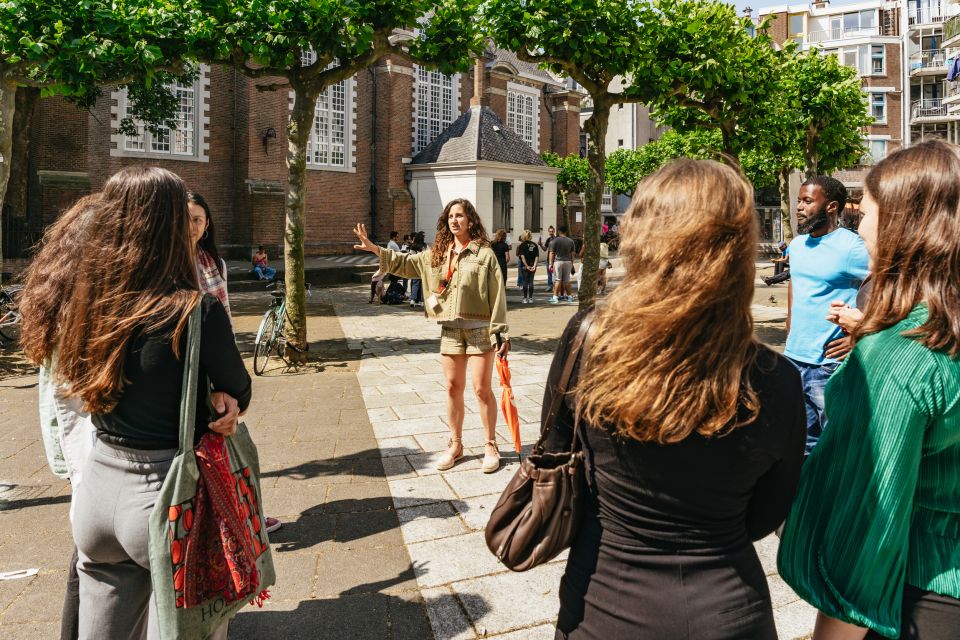
Since the tour runs about two hours, treat it like a focused appointment, not a casual stroll. I’d plan to arrive a few minutes early so you’re not trying to locate the exact starting point with a group already gathered.
Also, think about what you’re pairing it with. If you’re also planning an Anne Frank House visit, this tour works well beforehand. It helps you mentally place what you’ll see next, so you don’t leave the house feeling like you just saw a famous building without fully grasping the story attached to it.
Should You Book This Anne Frank Walking Tour?
I’d book this tour if you want:
- A clear, guided connection between Anne Frank’s life and the Jewish Quarter’s WWII-era story
- Multiple meaningful stops, including the Auschwitz Monument and the area around the Anne Frank House
- A guide-driven experience that makes the neighborhood’s layout and history easier to understand
I might skip it only if:
- You mainly want the Anne Frank House interior and you don’t care about orientation or context (since this tour does not include that entrance)
- You can’t commit to two hours of walking and reflective site stops
If your goal is to get your bearings fast and understand what you’re looking at, this is a strong choice for the first days in Amsterdam.
FAQ
How long is the Amsterdam: Life of Anne Frank and World War II Walking Tour?
The tour lasts about 2 hours.
Where does the tour start?
It starts outside the Portuguese Synagogue. The exact meeting point can vary depending on the option booked, but the Portuguese Synagogue is the start described for the tour.
Does this tour include tickets to the Anne Frank House?
No. Entrance to the Anne Frank House is not included.
What sites will we see on the tour?
You’ll visit/see the Jewish Cultural Quarter area, start at the Portuguese Synagogue, pass by the Jewish Historical Museum, stop at the Auschwitz Monument, and see the outside of the Anne Frank House façade.
Is this tour available as a small group or private tour?
Yes. You can choose either a small-group experience or a private guided experience.
What languages are offered?
The tour is listed in Dutch, German, Portuguese, Italian, English, Spanish, and French. Shared group and private options do not always offer the same languages, so check your preferred language for the option type you book.
How much does it cost?
The price is $37 per person.
What should I bring?
Bring comfortable shoes, water, and a charged smartphone.
Is there anything I’m not allowed to bring?
Luggage or large bags are not allowed.
Can children participate?
Children up to 3 years old can participate for free.
Is there free cancellation?
The tour offers free cancellation up to 24 hours in advance for a full refund.