REVIEW · AMSTERDAM
Anne Frank’s Story – Guided Walking Tour through Amsterdam
Book on Viator →Operated by 360 Amsterdam Tours · Bookable on Viator
Footsteps in history, right in the streets. I love the small-group pace (max 15) and the way the story stays tied to real buildings and monuments. I also love that it’s built for WWII context, not just a quick stop at Anne Frank House—though the big catch is entrance tickets for the Anne Frank House and two other sites are not included.
This is a 2-hour, English-guided walking tour built around the Jewish Quarter and the events that shaped daily life in Amsterdam during Nazi occupation (1940 to 1945). You’ll hear about major moments like the Winter of Hunger and the February Strike, plus how Dutch resistance helped people find secret hiding places. Along the way, guides often use period photos to connect the past to what you see today—something that makes the history land in a very human way.
In This Review
- Key Points Worth Knowing Before You Go
- A WWII Story Walk Through Amsterdam’s Jewish Quarter
- Price and Time: Does It Feel Worth $39.30?
- Small-Group Logistics That Actually Matter on This Walk
- How the Route Builds the Story: Stop by Stop, What You’ll See
- Stop 1: Joods Museum (Outside)
- Stop 2: Portuguese Synagogue (Outside)
- Stop 3: Dokwerker Statue (Outside)
- Stop 4: Auschwitz Monument (Outside)
- Stop 5: Dam Square (National Monument Area)
- Stop 6: Statue of Anne Frank (Outside)
- Stop 7: Anne Frank House (Exterior Only)
- Guides and Storytelling Style: What Makes It Feel Different
- What You’ll Leave With (Besides Photos)
- Who This Tour Is Best For
- When You Might Want a Different Option
- Should You Book This Anne Frank Walking Tour?
- FAQ
- How long is Anne Frank’s Story guided walking tour?
- What’s the group size?
- Is entrance to the Anne Frank House included?
- Are tickets included for the Jewish Historical Museum and the Portuguese Synagogue?
- What language is the tour offered in, and are service animals allowed?
- What if it rains or the tour is canceled due to weather?
Key Points Worth Knowing Before You Go
- Max 15 people means you can actually hear the guide as you move between tight streets and outdoor memorials.
- WWII Amsterdam details go beyond names—you’ll connect the occupation to everyday survival and resistance.
- Stop 1 and 2 are exterior talks at major Jewish sites (no museum or synagogue entry included).
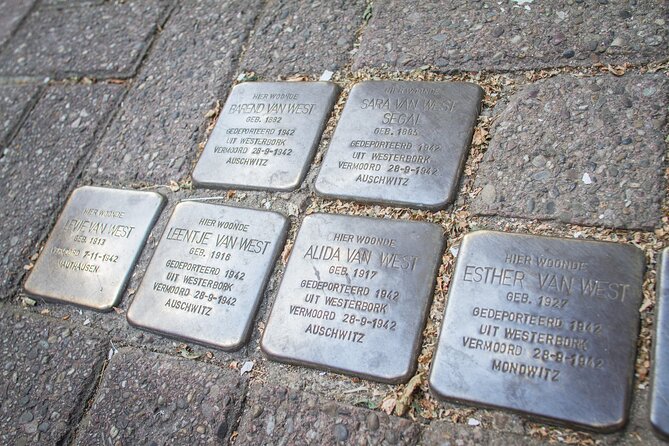
- The Auschwitz Monument and the Holocaust memorial stop can feel unforgettable thanks to the respectful way guides frame them.
- It ends at the Anne Frank House area without entry—you’ll see it from the outside and get strong context first.
A WWII Story Walk Through Amsterdam’s Jewish Quarter
If you want Amsterdam’s Anne Frank story in a way that feels grounded, this tour is a smart fit. It’s not just a route—it’s a guided walk through the neighborhoods where the Jewish community lived, suffered, and tried to survive. And because it’s done on foot with a small group, you don’t feel rushed through the hard parts.
I like that the tour gives you a map of meaning. You’re not simply collecting sights; you’re learning why each place matters—what happened there, and how the occupation changed life all around it. You’ll also be guided through the story of the Franks and the way Otto Frank helped bring Anne’s diaries to publication.
You can also read our reviews of more walking tours in Amsterdam



Price and Time: Does It Feel Worth $39.30?
At $39.30 per person for about 2 hours, you’re paying mainly for three things: a live guide, a tight route that covers multiple key sites, and context that you won’t easily get from a phone alone. The fact that you’re seeing a wide range of landmarks in one tour is a real value point—especially if you’re short on time.
Here’s the tradeoff: entrance to the Anne Frank House is not included, and neither is entry to the Jewish Historical Museum or the Portuguese Synagogue. So this tour works best as a history primer before you decide what you want to do inside. If you’re only hoping for the house itself, you may leave feeling like the headline you wanted didn’t match the ticket you bought.
Small-Group Logistics That Actually Matter on This Walk
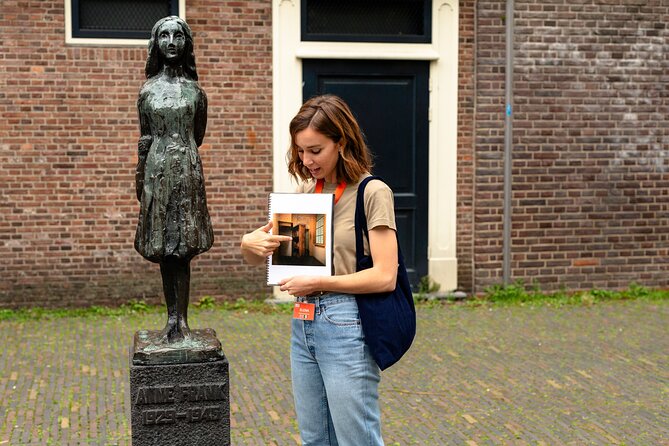
This tour caps at 15 travelers, and that’s not just a nice-to-have. In Amsterdam’s narrower streets and crowded squares, a larger group can turn a meaningful story into a “heads down, listen from a distance” experience. With fewer people, your guide can keep eyes on the group and manage the stops more calmly.
You’ll also want to plan for a moderate walking level—comfortable shoes are recommended. It’s an outdoor-heavy experience, so check weather predictions and dress for wind, rain, or cold snaps. When poor weather cancels the tour, you’ll be offered a different date or a full refund, which takes some pressure off.
And yes, service animals are welcome—always a plus when you’re traveling with a companion who needs support.
How the Route Builds the Story: Stop by Stop, What You’ll See
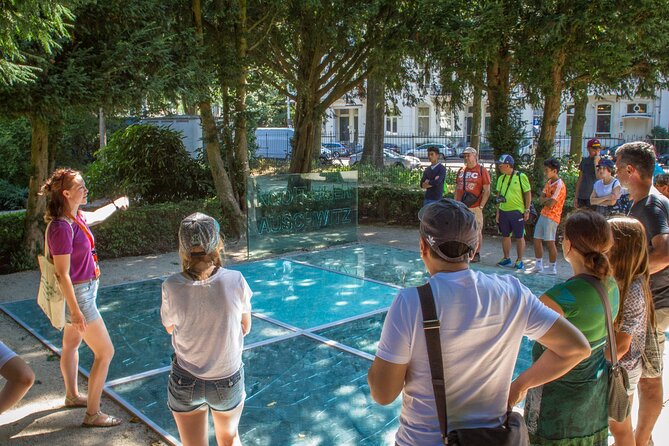
The tour starts in central Amsterdam and moves through the Jewish Quarter and nearby WWII-related landmarks, with short explanation time at each stop. Most of the “big” sites are discussed from the outside, which helps you get context quickly without waiting in extra lines.
Stop 1: Joods Museum (Outside)
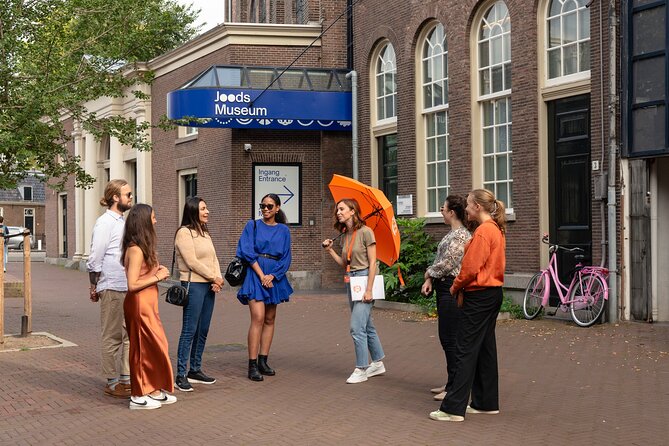
You meet your guide at the Jewish Historical Museum (Joods Museum) area, and the guide talks about it from the outside. You won’t enter, but this stop matters because it sets the stage for the neighborhood you’re walking through.
If you’re the type who likes to understand the background before emotions hit, this is a good opening. You’ll be oriented to what the area represented for Amsterdam’s Jewish community.
What to watch for: the building itself, and any exterior details your guide points out.
You can also read our reviews of more guided tours in Amsterdam






Stop 2: Portuguese Synagogue (Outside)
Next is the Portuguese Synagogue, again from the exterior only. The guide uses this stop to connect religious and cultural life to the harsh turn the city took during occupation.
This is one of those places where an outside-focused explanation can still be powerful. The guide is basically teaching you how to look—what you might miss if you just pass by, and how the history connects to later monuments you’ll see.
Stop 3: Dokwerker Statue (Outside)
At the Dokwerker statue, you’ll pause briefly. This stop helps widen the lens from Jewish religious sites to the everyday labor and hardship that shaped the city.
Even with short time here, the point is to show that WWII wasn’t only about specific locations—it was about how the entire urban system changed.
Stop 4: Auschwitz Monument (Outside)
Then you reach the Auschwitz Monument. This is one of the stops that tends to land hard, and it’s also where the guide’s tone matters. Your focus shifts from historical overview into memorial space.
Some guides take time to explain the symbolism around remembrance—like why small rocks appear at Jewish graves and memorial sites—and may even give a moment for respectful participation at the memorial. Either way, this stop is built for quiet attention, not quick sightseeing.
Best mindset: slow your pace and listen fully here.
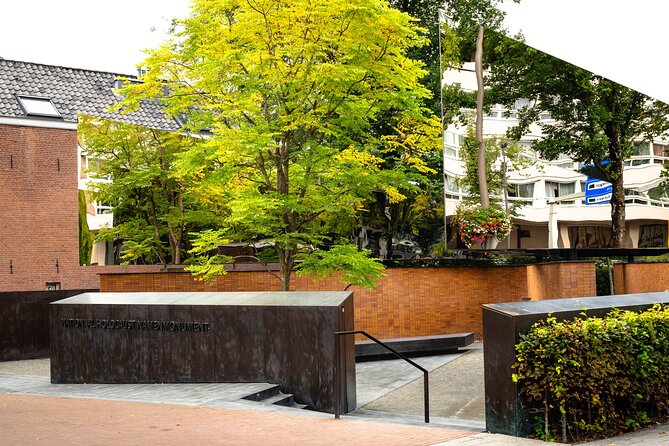
Stop 5: Dam Square (National Monument Area)
From there, the route heads toward Dam Square, with time at the National Monument area. This is a good reminder that WWII history in Amsterdam isn’t hidden in one neighborhood; it affected the whole city.
Dam Square also helps you reset physically. You get a broader urban viewpoint before heading back into more specific Anne Frank-related landmarks.
Stop 6: Statue of Anne Frank (Outside)
Next comes the Statue of Anne Frank. This stop is short, but it plays an important role: it reconnects the WWII story to the person at its center.
If you’ve read a little about Anne already, you may recognize the name immediately. What the guide does well is bring you from “famous diary” to “a real teenager living inside a terrifying system.”
Stop 7: Anne Frank House (Exterior Only)
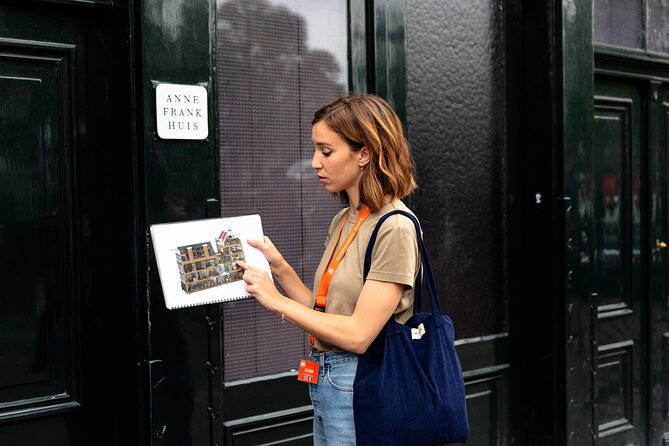
The tour ends outside the Anne Frank House on Westermarkt 20. You’ll get an explanation of Anne Frank’s diaries and how they were published by her father, Otto Frank—but you will not enter.
This is the part that causes the most confusion for people who expected a house visit. If that’s your dream, plan your timing so you can buy house tickets separately through the official Anne Frank House website. The tour is designed to help you understand what you’re seeing when you do go inside later.
Guides and Storytelling Style: What Makes It Feel Different
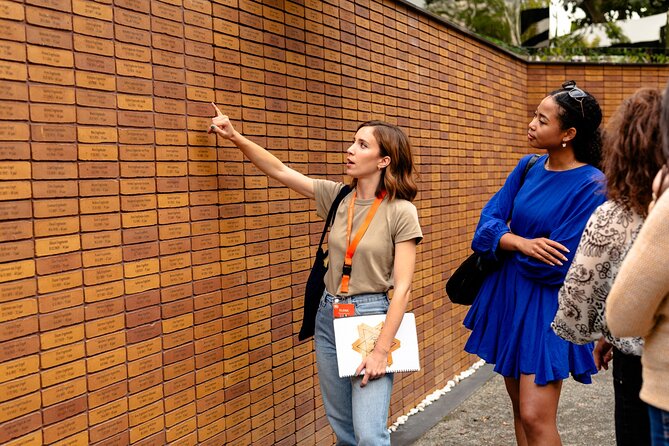
A big reason this tour earns such high ratings is the way guides tell the story. Many guides are praised for being emotionally careful and clear—plus for using photos to connect the past to what’s in front of you now.
You’ll hear guide names in the feedback such as Yoshi, Ollie, Giovanni, Manuel, Patrick, Edwin Duarte, and Peter. Across these different guides, a pattern shows up: they’re not just reading facts. They explain why the locations matter, and they’re willing to slow down when someone has a question.
Some guides also add small, practical local touches during the walk—one example mentioned was help with bike lane etiquette, which is surprisingly useful once you’re back out in Amsterdam streets.
What You’ll Leave With (Besides Photos)
By the end, you’re not just left with a list of landmarks. You’ll have a clearer timeline of how the Nazi occupation affected Amsterdam, what resistance looked like on the ground, and how families like the Franks relied on help to stay hidden.
You’ll also have a sense of how the neighborhood changes what the story feels like. Seeing the monuments in the actual city where people lived (and where memory is now marked in stone) gives the history a physical weight. Even if you’re not normally a WWII-history person, the walk structure helps the story stick.
Who This Tour Is Best For

This tour fits you if you:
- want a WWII-focused walking history that connects events to real locations
- like learning with a guide rather than piecing things together solo
- enjoy memorials and context, not just sightseeing
- are traveling with family and want a respectful introduction to the story
It can also work well if you’re already planning to visit the Anne Frank House later, because this tour gives you the background that makes the house visit more meaningful. And because it’s a manageable 2 hours, it’s easier to fit into a busy Amsterdam day.
When You Might Want a Different Option
If your main goal is going inside Anne Frank House during the tour, this is not that experience. The house entrance is excluded, and so are entries for the Jewish Historical Museum and the Portuguese Synagogue. You’ll finish outside, with strong context—but without the inside view.
If you’re the type who needs ticketed museum time to feel satisfied, you may prefer booking the house visit first (when possible) and using this tour as a separate learning step on another day.
Should You Book This Anne Frank Walking Tour?
Yes—if you want a small-group, emotionally respectful, WWII-centered walk that helps you understand what you’re seeing around the Anne Frank House area. It’s great value for the time because you cover multiple meaningful landmarks in about two hours, and the guiding style (often with photos and a careful tone) makes the story hit with clarity, not chaos.
Book it especially if you’re planning to visit the Anne Frank House later. Take this tour as your “before” step. You’ll arrive with questions answered—then you can choose how long you want to spend inside when you have the separate ticket.
If your heart is set on only going inside the Anne Frank House during the tour, then skip this one and plan an entrance-based visit instead. The route outside is powerful, but it’s not a replacement for the house tickets.
FAQ
How long is Anne Frank’s Story guided walking tour?
The tour lasts about 2 hours.
What’s the group size?
It’s a small-group tour with a maximum of 15 travelers.
Is entrance to the Anne Frank House included?
No. The tour ends next to the Anne Frank House, but entrance tickets are not included and the tour does not grant access inside.
Are tickets included for the Jewish Historical Museum and the Portuguese Synagogue?
No. Tickets for both places are excluded, and you’ll only view and discuss them from the outside.
What language is the tour offered in, and are service animals allowed?
The tour is offered in English, and service animals are more than welcome.
What if it rains or the tour is canceled due to weather?
The experience requires good weather. If it’s canceled due to poor weather, you’ll be offered a different date or a full refund.