REVIEW · AMSTERDAM
Amsterdam Sightseeing Canal Cruise with Audio Guide
Book on Viator →Operated by Tours & Tickets · Bookable on Viator
A canal cruise gets real fast when you float under the bridges. This one runs about an hour with an English audio guide and a glass-topped boat that lets you see the UNESCO canal belt in a relaxing way. I especially like the quick city overview for first-time Amsterdam visits and the chance to spot landmarks without squeezing in walking time. The main catch: on the covered boat, window frames can limit views for photos.
You also get smart route coverage, from the merchant canals to iconic spots like Magere Brug and the Anne Frank House area. And if you time it right, it can be warm and comfortable even when the weather is doing its usual Amsterdam thing.
In This Review
- Key highlights and what they mean for you
- Picking your departure point: Central Station, Anne Frank House, Rijksmuseum, Leidse Square
- What the glass-topped boat feels like (and how to aim for better views)
- Audio guide reality: English narration, earbuds, and noise-proofing your expectations
- The canal belt in one hour: Keizersgracht, Herengracht, and Prinsengracht
- Big landmark passes: Anne Frank House, Westerkerk, and Magere Brug
- Anne Frank House area
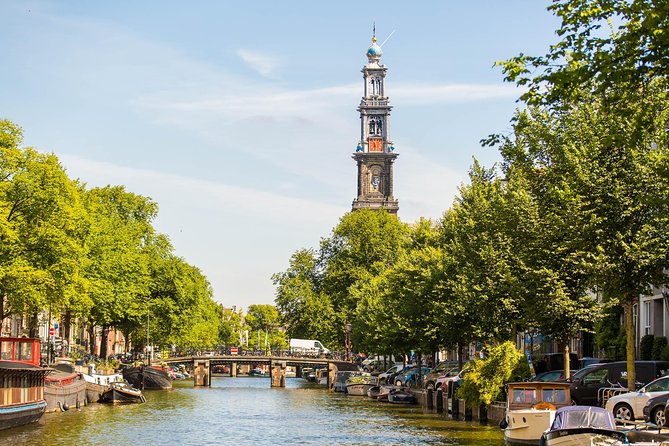
- Westerkerk and the Westertoren
- Magere Brug: the Skinny Bridge
- Canal-side neighborhoods you’ll recognize: 9 Straatjes, De Wallen, and Bloemenmarkt
- De 9 Straatjes (Nine Streets)
- De Wallen (Red Light District)
- Bloemenmarkt: the floating flower market
- Amstel River and Het IJ: the waterways beyond the main canal belt
- Getting the best seats: crowd control, timing, and your comfort in a 60-person max boat
- Price and value: about $16.74 for an hour that actually saves time
- Who this canal cruise suits best (and who might want a different boat)
- Should you book Amsterdam’s one-hour canal cruise?
- FAQ
- How long is the Amsterdam Sightseeing Canal Cruise?
- What does the tour include?
- Is the audio guide offered in English?
- Where can I board the cruise?
- Do I get hotel pickup or drop-off?
- What time should I check in?
- Do I need to bring a paper ticket?
- How many people are on the boat?
- Is it weather dependent?
Key highlights and what they mean for you
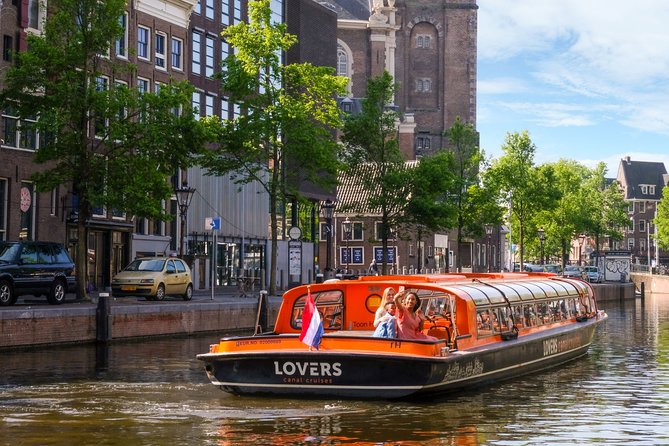
- Glass roof, big canal views: You can look down and around more easily than on older-style boats with fewer clear panels.
- English audio guide included: You’ll learn why canals were built and what you’re seeing along the way.
- Pick your departure point: Central Station, Anne Frank House, Rijksmuseum, or Leidse Square keeps the tour from hijacking your day.
- Iconic sights along the route: Expect passes by Magere Brug, Westerkerk, and the canal belt’s classic streets and bridges.
- Comfort beats rushing: It’s designed for a slow, low-effort sightseeing hour rather than a workout.
Picking your departure point: Central Station, Anne Frank House, Rijksmuseum, Leidse Square
The tour is built around convenience. You make your own way to one of four departure areas—Central Station, Anne Frank House, Rijksmuseum, or Leidse Square—and choose your time. That matters in Amsterdam, where “getting from A to B” can feel like a mini-trip by itself.
If you want the cruise to act like your intro to the city, I’d choose a departure that fits your main morning or afternoon base. For example:
- Central Station is best when you’re moving between neighborhoods by transit.
- Rijksmuseum is handy if you’re already planning museums and want your canals to come next.
- Leidse Square works well if you’re staying in the Museumplein / Vondelpark orbit.
- Anne Frank House is ideal if you plan that area anyway and don’t want to backtrack.
One small practical detail: you check in at Lovers about 10 minutes before your reserved time. Don’t show up exactly at departure—Amsterdam can be efficient, but queues and boat boarding take a moment.
You can also read our reviews of more boat tours in Amsterdam

What the glass-topped boat feels like (and how to aim for better views)
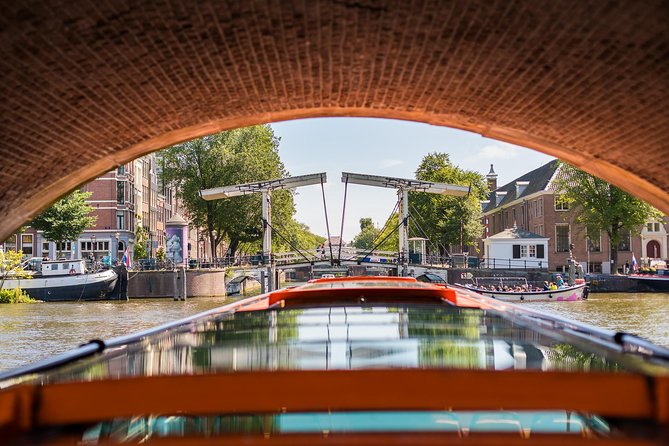
The pitch is simple: a glass-topped canal boat gives you better sightlines than you’d get from a solid deck. You glide through Amsterdam’s canal network in comfort, passing under bridges and past canal houses while the audio guide does the explaining.
From my perspective, the “glass-topped” part is the real value of this tour because it makes the water-and-architecture combo more readable. Still, be realistic about one tradeoff. The boat is covered, so the overhead window framework can restrict some views and make photos trickier.
A couple tips that come straight from how this kind of boat behaves:
- Sit where you’ll face the direction of travel, not just where there’s a seat. You’ll spot landmarks faster.
- If you’re visiting in cooler weather, the enclosure can help keep things warmer, and some boats allow you to open a window for fresh air.
- If photography is your priority, know that you may get better framing by moving a little within your row when it’s safe and allowed.
And yes, the boat can get hot and crowded in peak times. If you’re sensitive to that, choose a less busy departure—early in the day or on a day that isn’t peak tourism season.
Audio guide reality: English narration, earbuds, and noise-proofing your expectations
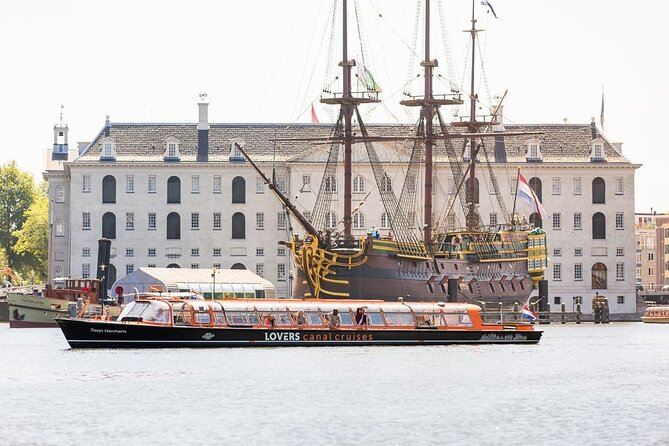
The audio guide is included and offered in multiple languages, with English available. You’ll get commentary about the city and the landmarks as you cruise.
In theory, that means you can relax and listen while the canals roll by. In practice, your experience depends on two things:
1) whether the headphones or earphones work smoothly for your seat, and
2) how loud the boat atmosphere gets.
Some people had perfect results and felt the narration hit the right pace and detail. Others said the earphones were faulty or kept cutting out the information. And a few reviews described a noisy boat where background chatter and children made it hard to hear the recorded commentary. If you’re the type who wants quiet listening time, don’t assume every departure will be calm.
A small mindset adjustment helps: treat the audio as a guide, not a guarantee. Look up often. Amsterdam is pretty enough that you’ll want your eyes working too.
The canal belt in one hour: Keizersgracht, Herengracht, and Prinsengracht
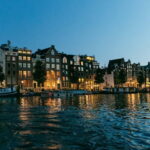
The heart of the cruise is Amsterdam’s canal belt—the interlocking system that gave the city its famous urban design. You’ll glide past the main canals named for political history and power, and you’ll see the merchant-house architecture that shaped the Golden Age.
Here’s what these canals mean as you pass them:
- Keizersgracht: Built in 1612 and named after Emperor Maximilian I. It’s described as the widest of the main canals, and you’ll typically see grand canal houses lining it.
- Herengracht: Also dug in 1612, and the most prestigious. This is where the elite lived, and you’ll notice the grandeur of mansions along the “Golden Bend.”
- Prinsengracht: Dug in the early 17th century during Amsterdam’s major expansion, the Grachtengordel project. Named after the Prince of Orange, it’s tied to residential canal life and cultural landmarks.
What I like about seeing these three together is how quickly you can compare their vibe. From the boat, the city reads like a map. In an hour, you get a sense of how wealth, politics, and urban planning shaped the waterways.
One possible drawback: the boat’s angle and your seat determine what you can actually read from the water. If you want to spot specific details on facades, arrive early to get a better seat position.
Big landmark passes: Anne Frank House, Westerkerk, and Magere Brug
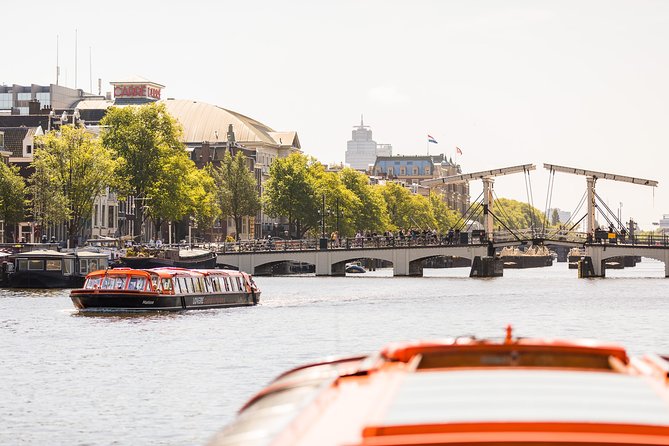
This is where the cruise turns from history lesson to postcard material.
You can also read our reviews of more guided tours in Amsterdam



Anne Frank House area
The route is described as passing by the Anne Frank House area. That’s a major reason many people book—seeing the building from the water gives a different sense of the neighborhood than a quick walk-by.
Important expectation-setting: you’ll likely pass near it, but exact viewing depends on where you sit and how the boat navigates. Also, overhead frames and covered seating can affect how much of the facade you can capture clearly.
Westerkerk and the Westertoren
You’ll also pass Westerkerk (Westerkerk / Western Church), completed in 1631, with its famous tall tower (Westertoren). This is a standout church feature in the cityscape, and the narration is aimed at tying it to the broader area—including how it relates to the Anne Frank area.
Magere Brug: the Skinny Bridge
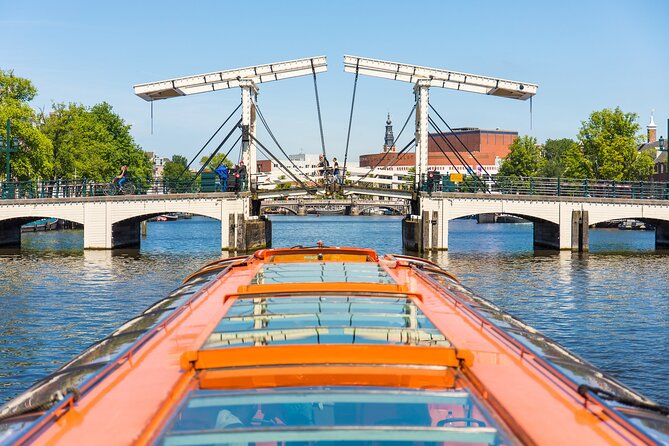
Then there’s Magere Brug, the iconic “Skinny Bridge.” It was originally built in 1691 and rebuilt in 1934 in a traditional style. It’s also known for its nightly illumination, so evening or twilight cruises can feel extra special here.
If you’ve been to Amsterdam once and left wanting more of the bridges, this is the one that usually delivers. Even if you don’t memorize the dates, you’ll recognize the look.
Canal-side neighborhoods you’ll recognize: 9 Straatjes, De Wallen, and Bloemenmarkt
Amsterdam isn’t just canals and big monuments. This cruise also threads through neighborhoods that you’d otherwise have to jump around to catch.
De 9 Straatjes (Nine Streets)
You’ll pass the 9 Straatjes, a canal-belt area known for narrow shopping streets, vintage finds, and cozy cafés. From the boat, you won’t do the shopping part—but you’ll get a feel for the area’s compact, old-city layout.
Practical thought: if you love browsing, consider using the cruise as a preview, then walk those streets later.
De Wallen (Red Light District)
The Red Light District, locally called De Wallen, is also part of what you’ll see from the water. It’s described as Amsterdam’s oldest neighborhood, with roots going back to the 14th century as a harbor area. Today it’s regulated, with legal sex work and a mix of tourism, nightlife, and heritage.
The cruise won’t turn this into a cultural lecture, but it does help you understand how this neighborhood fits into the wider canal network instead of feeling sealed off.
Bloemenmarkt: the floating flower market
You’ll cruise by Bloemenmarkt, established in 1862. It’s famous as the world’s only floating flower market, with stalls set on houseboats along the Singel canal.
This is the kind of stop that looks better in person than in your memory. Even if you don’t get off the boat, it’s a vivid reminder of how living commerce still works along these waterways.
Amstel River and Het IJ: the waterways beyond the main canal belt
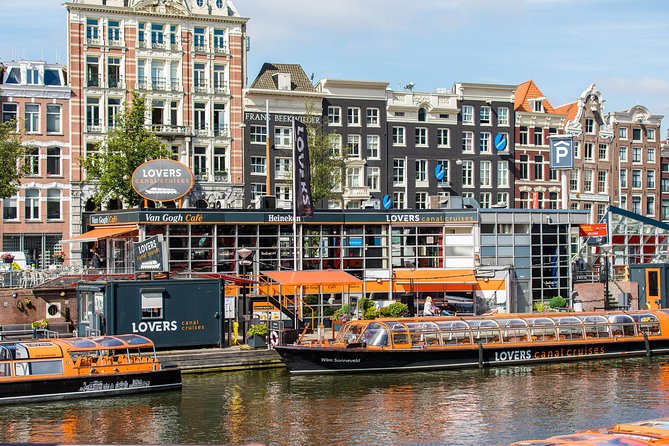
Amsterdam has more water than the classic canal belt, and this cruise name-checks the Amstel River and Het IJ areas.
- The Amstel River is described as central to Amsterdam’s founding and growth, giving the city its name. If you want to understand why the city bends around water instead of around roads, this is the part of the story that clicks.
- Het IJ is a body of water and former bay that connects the city toward the North Sea. Today it’s described as a lively waterfront zone with ferries and cultural venues.
You might not spend time here like you would in a walking neighborhood tour, but it broadens the story beyond merchant-canal postcards.
Getting the best seats: crowd control, timing, and your comfort in a 60-person max boat
The cruise caps at 60 travelers, so it’s not a tiny private boat. Most of the time, that strikes a decent balance: small enough for a relaxed hour, large enough that you should plan around seating.
My advice is simple:
- Arrive early if you can. People specifically recommended getting there first for better seats.
- If you’re booking near peak hours, assume the boat could feel hot and crowded.
- Winter visits can still be pleasant because the boat enclosure helps, but visibility may be limited by the covered design and overhead window frames.
A warm tip from real-life experience: even when you’re in an enclosed boat, windows may be able to open for air. That can make a big difference when you’re on board longer than you expect.
Price and value: about $16.74 for an hour that actually saves time
At around $16.74 per person for about one hour, this is priced like a practical city add-on, not a once-in-a-lifetime museum ticket. And that’s how it earns its value.
You’re paying for:
- a fast overview of the canal belt,
- landmark passes you’d otherwise chase by foot,
- and an included English audio guide so the time isn’t wasted in guesswork.
For first-timers, especially, the math works. If you’ve got limited days and you don’t want to cram five neighborhoods into one day of walking, this cruise gives you a baseline view of Amsterdam’s layout.
Is it perfect? Not always. Some people felt the route coverage was more limited than expected, and some mentioned audio issues. But for the price point, it still tends to land as a sensible way to see a lot quickly.
Who this canal cruise suits best (and who might want a different boat)
I’d recommend this cruise if:
- you want a low-effort way to see Amsterdam’s canals in about an hour,
- you like history explained while you relax,
- you’d rather avoid a long day of transit and walking,
- you’re okay with a covered boat and don’t require open-air photo angles.
You might want a different option if:
- you’re highly sensitive to noise and need quiet audio time (some departures were described as noisy),
- you’re a serious photographer who depends on perfect unobstructed angles,
- you hate the idea of overhead frames limiting what you can see from your seat.
In other words: it’s great for getting your bearings fast, then letting walking tours handle the details.
Should you book Amsterdam’s one-hour canal cruise?
If you’re planning Amsterdam for the first time, I think this is an easy yes—especially if you book it early in your trip so you can use what you learn to guide the rest of your sightseeing. The English audio guide plus the glass-topped view gives you a real sense of the canal belt without burning half a day.
Just go in with smart expectations: the boat is covered, seating matters for what you can see and photograph, and the sound experience can vary depending on how calm (or not) your departure feels. If you want a relaxing, classic Amsterdam view with minimal logistics headaches, book it. If you want quiet audio perfection or open-air photo freedom, compare options before you commit.
FAQ
How long is the Amsterdam Sightseeing Canal Cruise?
The cruise lasts about 1 hour.
What does the tour include?
It includes the 1-hour canal cruise and an audio guide in several languages.
Is the audio guide offered in English?
Yes, the tour is offered in English.
Where can I board the cruise?
You can make your way to one of four departure points: Central Station, Anne Frank House, Rijksmuseum, or Leidse Square.
Do I get hotel pickup or drop-off?
No, hotel pickup and drop-off are not included.
What time should I check in?
Check in at Lovers about 10 minutes before your reserved time.
Do I need to bring a paper ticket?
You’ll use a mobile ticket.
How many people are on the boat?
The tour has a maximum of 60 travelers.
Is it weather dependent?
Yes. The experience requires good weather, and if it’s canceled due to poor weather you’ll be offered a different date or a full refund.