REVIEW · AMSTERDAM
Bruges bus tour from Amsterdam
Book on Viator →Operated by Buendía · Bookable on Viator
Bruges in a single day feels oddly possible. This Amsterdam-to-Bruges day trip pairs an air-conditioned round-trip bus with a Spanish-speaking guide, so you get stories, context, and built-in wayfinding through the medieval center. I especially liked the way the guide tied landmarks to everyday life, from love stories at Minnewater Lake to health care in the Middle Ages.
I also like the pace and variety: you hit major photo points plus short cultural stops like Begijnhof and Saint John’s Hospital, then you get about 2 hours of free time to wander at your own speed. It’s a smart fit if you want more than a checklist without spending all day with your nose in a map.
The main consideration is time: the day runs long (about 12 hours) and the guided walk is broken into many brief stops. If you’re the type who wants to linger for an hour in one place, you might feel rushed, especially if traffic slows the return trip.
In This Review
- Key things I’d bet on before you go
- A Full-Day Bruges Break From Amsterdam: What to Expect
- Getting There in Comfort: Meeting Point, Guide, and Mobile Ticket
- Headphones and Radio Guides: The Real Soundtrack of Bruges
- Bruges at Walking Speed: From Minnewater to Begijnhof
- Chocolate, Beer, and Medieval Streets: The Stops People Remember
- Saint John’s Hospital and Onze-Lieve-Vrouwekerk: When Bruges Turns Educational
- Gruuthuse, Legends, and the Rosy Quay Photo Line
- Burg Square and the Markt: The Best Place to Plan Your Own Time
- Is This Bruges Day Trip Worth the $77.02 Price?
- The Best Fit: Who This Tour Works For
- My Quick Booking Advice
- FAQ
- What time does the Bruges bus tour from Amsterdam start?
- Where does the tour drop you in Bruges?
- How long is the tour?
- Is there a Spanish-speaking guide?
- Are admission tickets included for the stops?
- Do I need headphones for the guide?
- Is food included?
- Is hotel pickup included?
- Is the tour suitable for people with reduced mobility?
- Are there any rules for young children?
- Should you book this Bruges day trip from Amsterdam?
Key things I’d bet on before you go
- Spanish-speaking guide with landmark help, so you don’t spend your time trying to find the next corner
- Dozens of medieval stops in short bursts, which works well for seeing a lot without committing to a full-day guided museum crawl
- Chocolatado at Chocolalino plus tips for spotting handmade chocolate versus industrial
- Photo-ready Bruges moments like Rozenhoedkaai and St Bonifacius Bridge, built into the route
- Two hours of free time at the end to shop, eat, or just soak up the streets
- Headphone/radio reality in Bruges, with guidance on using a wired 3.5 mm jack or buying disposable ones for €1
A Full-Day Bruges Break From Amsterdam: What to Expect
This tour is built for one clear goal: get you from Amsterdam to Bruges, the Venice of the North, and show you the city’s highlights with just enough explanation to make it click.
You start early, at 8:30 am from De Ruijterkade 151 in Amsterdam. Then you’re on the bus both ways, with an air-conditioned ride and a guide handling the flow so you don’t waste time figuring out logistics.
The biggest thing I want you to notice is the rhythm. The day includes a guided walk through the medieval core with many stops that are only a few minutes each, followed by a longer stretch of free time. That setup is ideal for first-timers and anyone traveling efficiently, but it’s less ideal if you hate short stops or you want lots of unstructured hours.
You can also read our reviews of more tours and experiences in Amsterdam.

Getting There in Comfort: Meeting Point, Guide, and Mobile Ticket
Let’s talk practicals, because a smooth morning matters. You meet at De Ruijterkade 151, 1011 AC Amsterdam, near public transport. You’ll need your mobile ticket, and you’ll board at a set time since the day depends on hitting the Bruges walking route in the right window.
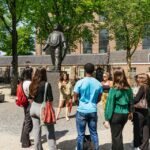
Once you’re in Bruges, the guide keeps everyone together and cues the return time to the bus. At the first drop-off point (Bargeplein / Katelijnparking), you’ll get a short window to handle essentials like the bathroom, and the guide tells you exactly when to be back.
In the best versions of this kind of trip, you can feel the difference between a guide who reads a script and one who helps you enjoy the city. Multiple guides named in feedback—like Pau and Lorena—were praised for being friendly and clear, and for pointing out how not to get lost. That’s the real value of the tour guide: you spend less time guessing and more time looking up at the buildings.
Headphones and Radio Guides: The Real Soundtrack of Bruges
One Bruges wrinkle is the use of radios with headphones. The tour notes that sometimes Bruges tourist regulation requires radios, so you may hear the guide via equipment.
Here’s what you should do:
- If you have them, bring wired headphones with a 3.5 mm jack (not wireless).
- If you don’t have them, you can buy headphones for €1.
This matters because it affects comfort and timing. When audio is required, you want to be ready so you can hear the guide while walking. If you’re sensitive to noise or have a hard time with hearing devices, it’s worth planning for it ahead of time.
Bruges at Walking Speed: From Minnewater to Begijnhof
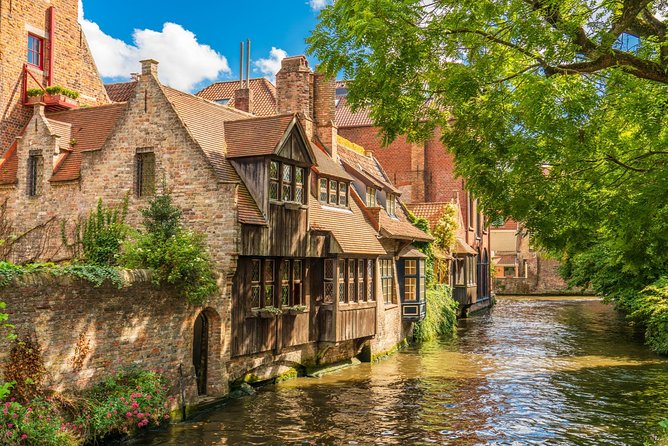
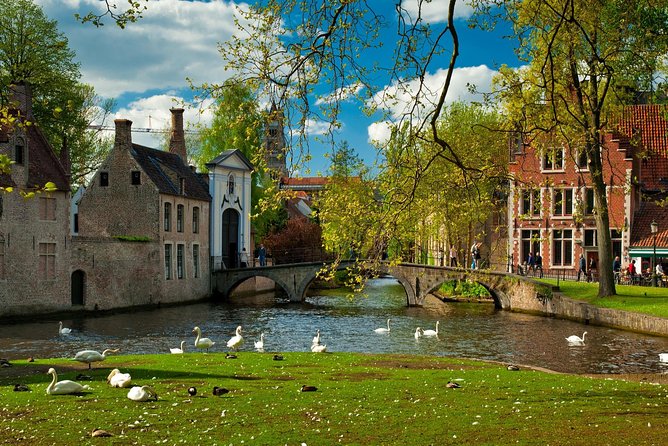
The guided portion starts right in the heart of Bruges. After dropping you near Bargeplein, the first real stop is Minnewater Lake, also called the Lake of Love. The guide explains the history and connects it to the lake’s romance-related story. Even with only a short stop, it’s a nice way to set the tone: water, reflections, and that classic Bruges photo feel.
Next up is Begijnhof (Beguinario). Founded in 1245, it’s where you learn about an important community of women and how they lived. What I like here is that it’s not just a pretty courtyard. It helps you understand why Bruges developed the way it did—people with purpose, faith, and routines shaped the city’s rhythm.
Both of these early stops are quick, but they work because they give you context fast. You leave them seeing the city differently than you would if you just wandered in.
Chocolate, Beer, and Medieval Streets: The Stops People Remember
A big reason people book Bruges from Amsterdam is the food and the fairytale vibe. This tour gives you both, without turning the day into a food festival.
At Chocolalino, you get a chance to taste artisan chocolates. The guide also shares practical tips for spotting differences between handmade chocolate and industrial versions. I like this because it changes the way you shop later: you’re not only buying treats, you’re learning a little enough to tell what you’re tasting.
Then you head to Walplein, where the guide explains the history of Bruges beer. You might not be sampling beer during the guided walk (food and drink aren’t included), but the storytelling adds weight if you plan to grab a local drink during free time.
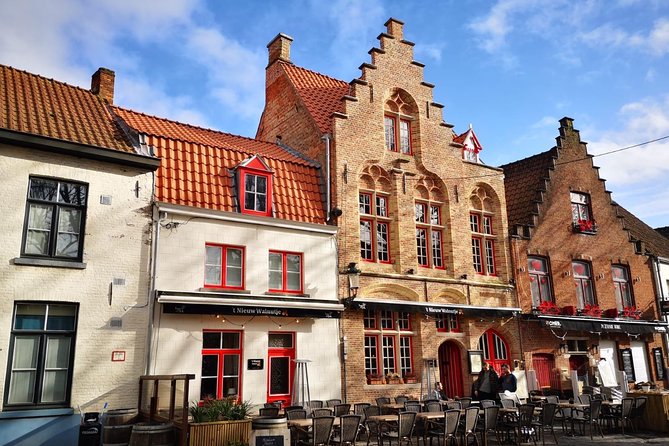
After that comes Stoofstraat, a street where the guide helps you identify original medieval houses. This is one of those stops that pays off later when you’re walking on your own. Once you know what to look for, the city stops being a postcard and becomes a readable place.
You’ll also have a photo moment from a small bridge, timed into the route. It’s short, so treat it like a moment to get your angles, not a time to debate the perfect shot.


Saint John’s Hospital and Onze-Lieve-Vrouwekerk: When Bruges Turns Educational
Now we get into the heavy hitters: places tied to how people lived, not just how the city looks.
At Saint John’s Hospital, the guide explains how the medieval health system worked. It’s a fascinating angle because it reminds you that these buildings were functional, not just decorative backdrops.
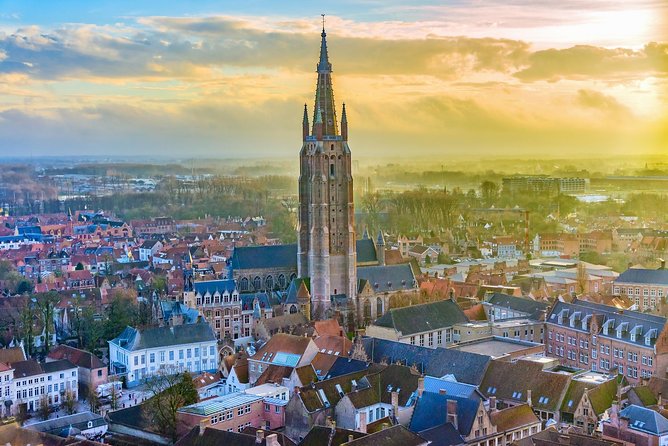
From there you’re at Onze-Lieve-Vrouwekerk (Church of Our Lady). The guide talks about curiosities connected to the church, including the mention of a white marble sculpture of the Virgin and Child created by Michelangelo found inside. Even if you don’t go inside during your time window, the outside context helps you appreciate what you’re seeing and why it matters.
These stops are great if you enjoy history that feels human—sickness, charity, and faith—because the guide keeps it grounded. It’s also a nice change from the constant “look at this building” mode.
Gruuthuse, Legends, and the Rosy Quay Photo Line
Bruges loves stories. This tour leans into that, and it makes the walk more fun than a standard “point and go.”
At the Gruuthusemuseum area, the guide introduces you to the powerful family connected to Bruges between the 17th and 18th centuries. You’re not just learning names—you’re learning how influence shaped city life and what kinds of spaces those families controlled.
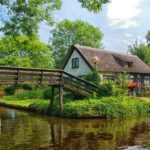
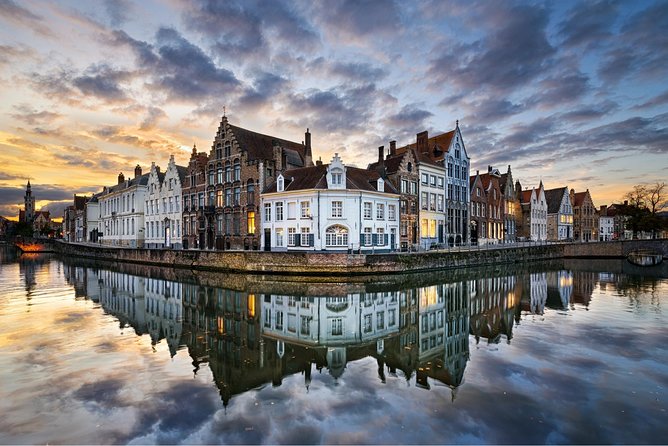
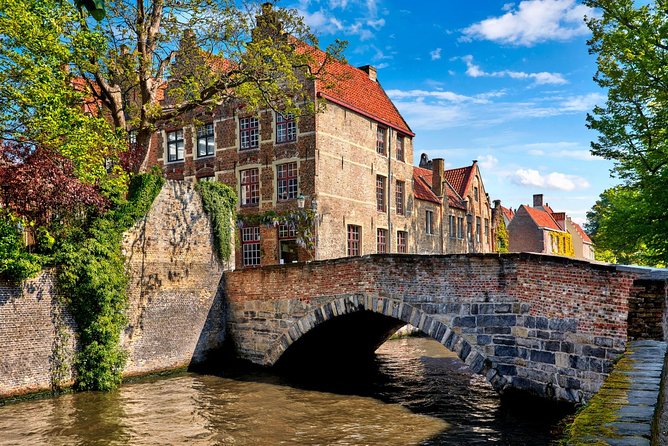
Then it’s St Bonifacius Bridge, where the guide shares an interesting legend tied to the bridge, along with time to take photos. The tour keeps these moments short, but they’re timed well: bridges and reflections are one of Bruges’ big visual rewards.
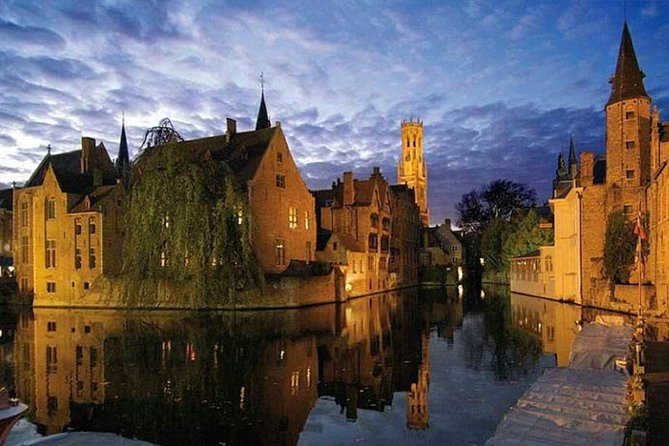
Next is Rozenhoedkaai, the most photographed place in Bruges on this route. The guide tells you the history around the area and the story tied to the Muelle de las rosas (as noted in the tour description). This is where I’d say you should move fast but not frantic—get a couple of good photos, then let your eyes relax and enjoy the view.
You also stop at Huidenvettersplein (Tanners Square), where the guide explains how tanners worked in medieval Bruges. That kind of trade-focused stop adds grit to the pretty streets. It reminds you Bruges wasn’t just wealthy art and lace—it was work and industry too.
Burg Square and the Markt: The Best Place to Plan Your Own Time
The route culminates in two important squares: Burg Square and The Markt.
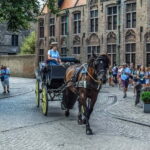
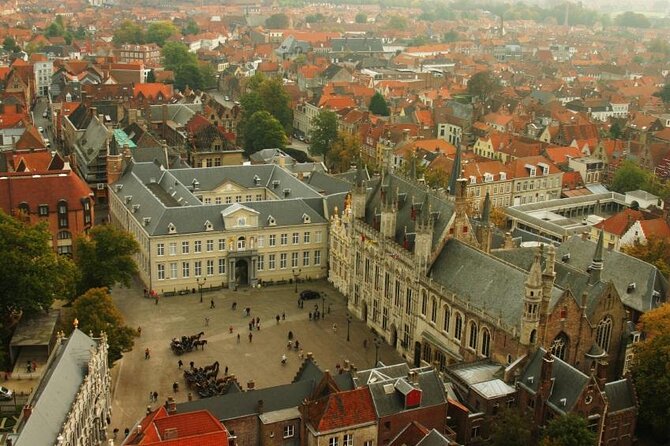
At Burg Square, you’re in front of Gothic civic power: the town hall, the old courthouse, and the Basilica of the Holy Blood. The guide’s job here is to connect what you see to why it was central—how the city governed itself and how faith and symbolism reinforced authority.
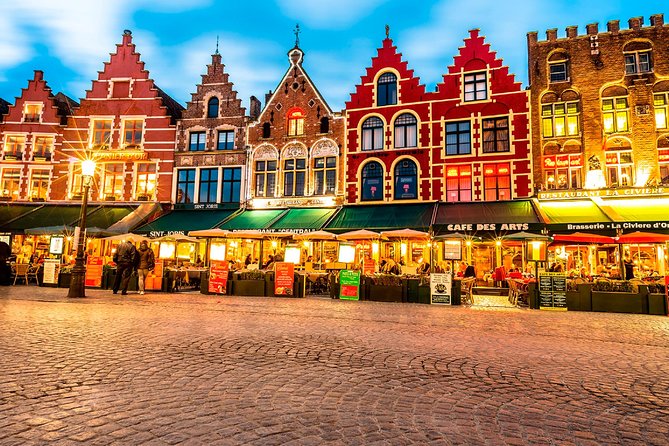
Then you end the guided walking portion at The Markt (Grote Markt). This is where the tour becomes most useful for your next step. The guide explains the buildings around the square and gives practical tips on where to eat and what the best shops are for traditional chocolate. You’ll also get the key reminder about when and where you need to be to catch the bus back.
After that, you get about 2 hours of free time in Bruges. Timing can shift a little based on traffic and the group’s rhythm, but this window is your chance to turn the guided route into your own day: browse, snack, sit for a while, and choose a couple of streets you want to revisit.
Is This Bruges Day Trip Worth the $77.02 Price?
For $77.02 per person, you’re paying for three things that add up fast on your own: round-trip transport from Amsterdam, a guide doing the heavy storytelling, and a structured route that hits major sights without you planning every turn.
If you tried to DIY it, you’d need to solve transport, timing, and translation/interpretation on your own. Here, the guide handles the “what am I looking at and why does it matter” part, and you’re given short stop windows so you can see a lot without spending half your day in transit inside the city.
Also, the tour includes a chocolate tasting stop at Chocolalino and a note about exclusive discounts at select Bruges shops and attractions. Even if you don’t buy much, those small perks can offset part of the cost.
Where the value can feel uneven is the time density. The guided walk is lots of brief stops, and you’re still doing a full travel day. If you’re the type who wants slow travel, you may feel like you paid for a highlight reel.
The Best Fit: Who This Tour Works For
This is a strong match if:
- You’re visiting Bruges for the first time and want the main sites without getting tangled.
- You like structured history but not hours of indoor museum time.
- You’re traveling with people who want guidance and landmarks, not just freedom.
- You care about chocolate and want a quick, guided way to learn what you’re tasting.
It’s less ideal if:
- You have limited patience for short photo stops and quick transitions.
- You need lots of wheelchair-friendly pacing (the tour is not recommended for reduced mobility).
- You’re sensitive to long days and prefer fewer travel hours.
My Quick Booking Advice
If your priority is first-class Bruges highlights in one day, this tour is a solid choice. I’d book it if you’re excited by the idea of hearing stories at Minnewater, learning trade history at Tanners Square, and ending with real free time at the Markt.
Before you go, do two things: bring wired 3.5 mm headphones if you have them, and wear comfortable shoes. The tour runs on time, and Bruges footwork is easiest with footwear you trust.
And if chocolate tasting is a must-do for you, plan your expectations around the fact that stops are short and the day’s flow depends on timing. It’s usually built in, but it’s still a walking day with tight windows.
FAQ
What time does the Bruges bus tour from Amsterdam start?
The tour starts at 8:30 am at De Ruijterkade 151, 1011 AC Amsterdam.
Where does the tour drop you in Bruges?
The bus drops you at Bargeplein (Katelijnparking), and the guided walk begins from there.
How long is the tour?
The duration is listed as 12 hours (approx.). The guided portion and overall timing can vary depending on group rhythm and traffic.
Is there a Spanish-speaking guide?
Yes. The tour includes a professional guide in Spanish.
Are admission tickets included for the stops?
The tour details show admission tickets as free for the listed stops during the guided portion.
Do I need headphones for the guide?
Sometimes Bruges regulations require radios with headphones. You can use wired 3.5 mm headphones, and if you don’t have any, the tour offers headphones for €1.
Is food included?
No. Food and drink are not included, but the guide will share recommendations for where to eat.
Is hotel pickup included?
No. There is no hotel pickup or drop-off. You meet at the provided Amsterdam address and return back to the meeting point.
Is the tour suitable for people with reduced mobility?
It is not recommended for travelers with reduced mobility.
Are there any rules for young children?
Children under 2 years must ride in a safety seat on the bus, so you’ll need to bring the proper chair.
Should you book this Bruges day trip from Amsterdam?
Yes, if you want an efficient, well-guided way to see medieval Bruges without building the plan yourself. The structure is the real benefit: transport handled, Spanish guidance at key stops, and then a practical 2-hour free window to shop and wander.
Skip it only if you hate tight schedules or you know you’ll want to linger much longer in one place. For most first-time visitors, this hits the sweet spot between story time and free time.