
REVIEW · AMSTERDAM
Exclusive small-group Amsterdam Red Light District tour
Book on Viator →Operated by Trigger Tours · Bookable on Viator
Amsterdam’s oldest streets are not what you expect. This exclusive small-group walking tour turns De Wallen (the Red Light District) into a place you can actually understand, with local context about why it developed, how the area fits into the Old Town, and what you’re seeing beyond the headlines. I especially liked the guide’s mix of street-level detail and history, and I also liked how quickly you get your bearings—this is built for people who have limited time.
The main trade-off: this is a Red Light District experience, so the themes and street sights are adult in nature. If that makes you uncomfortable, you’ll need to opt for a different Amsterdam tour.
With a maximum group size of 32, you’re not stuck in a huge crowd. And because the tour runs about 2 hours with multiple start times, it’s easy to slot in without derailing your day.
In This Review
- Key highlights you’ll feel on the street
- How a 2-hour walking tour makes De Wallen make sense
- Where you start: Geldersekade 2HS and a route that stays walkable
- De Wallen streets and Old Town context: what you learn on the first stretch
- The Dam and Amsterdam’s wooden-pole city idea
- Pub The Ape (Int Aepjen): 1540 and why the building still matters
- The Waag: a city gate turned guild hub
- Amsterdam’s smallest house and the VOC story
- The condom shop stop: a place that’s been there since 1987
- Guides like Adam and Aarre: questions, tone, and custom tweaks
- Price and value: $63.67 for 2 hours of context
- Who this tour suits (and who should skip it)
- Final call: should you book this Amsterdam Red Light District tour?
- FAQ
- How long is the Amsterdam Red Light District walking tour?
- What is the meeting point?
- Is there an admission fee for the stops?
- How big is the group?
- Are there multiple start times available?
- Do I get a mobile ticket?
- Is the tour suitable for limited mobility?
- Are service animals allowed?
- What if I need to cancel?
Key highlights you’ll feel on the street
- Small-group pacing: max 32 people, so you can ask questions without shouting
- De Wallen from a local angle: myths get replaced with real neighborhood context
- Built for limited time: 2 hours, so it’s focused rather than exhausting
- Old Town anchors along the way: key buildings and street history included
- Mobile ticket convenience: no paper scramble at the meeting point
- Adult-adjacent stops handled with facts: including a longtime condom shop
How a 2-hour walking tour makes De Wallen make sense
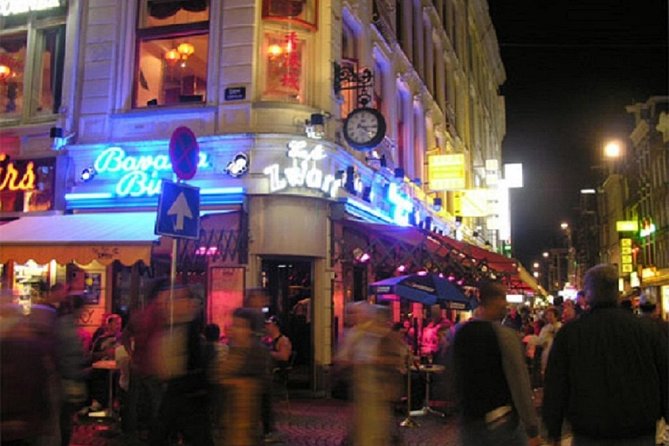
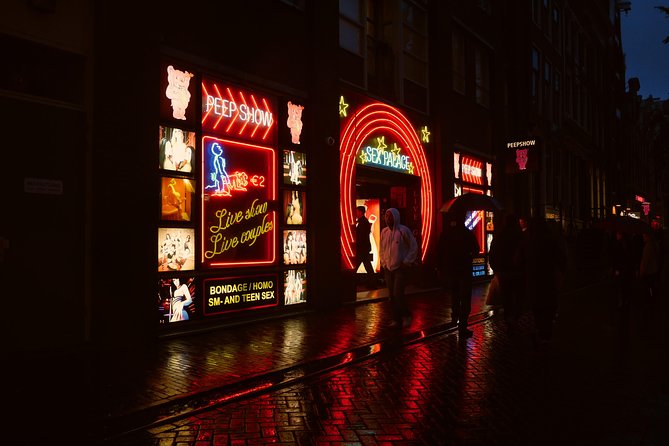
The Red Light District can feel chaotic from the sidewalk. The street lights, the windows, and the constant motion make it easy to reduce the area to stereotypes. What I like about this tour format is that it slows things down just enough to connect the dots.
This walk is positioned to do two things at once. First, you get the story of the neighborhood—why it exists, how it’s part of Amsterdam’s urban fabric, and what “local perspective” actually means on the ground. Second, you get a practical Old Town layer, so you can see Amsterdam as a city built by ingenuity, trade, and constant rebuilding—not just a collection of tourist stops.
If you’re the type who wants to see the famous stuff, but also wants the explanation, this tour hits a sweet spot. You won’t be wandering for hours trying to figure out what you’re looking at.
You can also read our reviews of more tours and experiences in Amsterdam.



Where you start: Geldersekade 2HS and a route that stays walkable
You meet at Geldersekade 2HS, 1012 BH Amsterdam. This matters because it signals the tour’s approach: you’re not starting in some remote parking-lot meeting point. You’re starting in the city core, close enough to get to De Wallen and the Old Town-related sights without wasting time.
The tour ends back at the meeting point, which is a nice benefit if you’re planning dinner or a canal cruise afterward. You keep your time and energy intact. And because the tour is listed as near public transportation, you can line it up with transit without complicated juggling.
Group size is capped at 32 travelers, and the vibe is meant to stay conversational. One of the strongest bits from the guide reviews is that there’s room to ask questions and actually interact.
De Wallen streets and Old Town context: what you learn on the first stretch
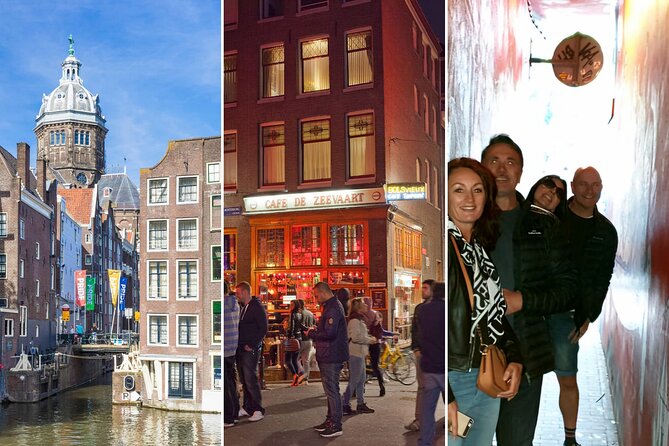
The tour’s first segment is the core neighborhood experience—narrow streets in De Wallen, approached from a local perspective. You’ll also connect what you see to the wider Amsterdam culture around the area, including references to the coffeeshop culture and the sex work industry.
Here’s the value for you: the tour doesn’t treat the neighborhood like a theme park. It tries to help you understand how the district became what it is, and how it sits inside the oldest parts of Amsterdam. That matters because the Red Light District is a real place with a real urban history, not just an attraction.
If your goal is to get past the myths fast, this is the kind of structure that works. It gives you a framework early, so each later stop lands with more meaning.
The Dam and Amsterdam’s wooden-pole city idea
One of the stops shifts from what’s happening at street level to how the city itself was engineered. You’ll learn about how Amsterdam’s soil—fen and clay—forced builders to create foundations using wooden poles fixed into a sandy layer about 11 meters deep.
Why this belongs on a Red Light District tour: Amsterdam’s layout and survival depend on that kind of foundation thinking. When you understand how the city is physically built, you start seeing buildings and streets as the product of long-term problem-solving, not random growth.
You’ll also hear that the area connects to the Old Town, described as the oldest part of the city. That framing matters. It turns De Wallen from a single “attraction zone” into something embedded in the city’s earliest layers.
Practical note: this is the kind of history lesson that works best when you’re paying attention while walking. Keep your eyes up. Look at the street pattern and building edges while the guide explains the foundations and age of the area.
Pub The Ape (Int Aepjen): 1540 and why the building still matters
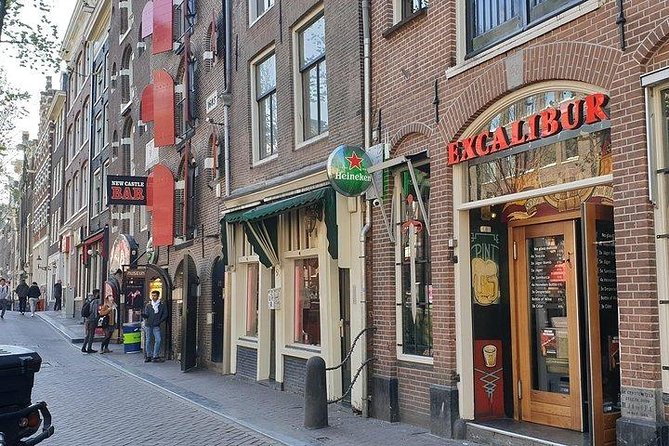
At Pub The Ape (also known as Int Aepjen), you’ll step into a story about survival through disaster. The building dates to around 1540, and it’s noted as one of only two remaining wooden buildings in Amsterdam.
That detail becomes extra meaningful because Amsterdam had a major fire in 1452. After that, the government pushed for brick facades, which is why a surviving wooden structure is such a rare thing to see.
For you, this stop is worth it even if you’re not a pub person. It’s a reminder that Amsterdam’s “old” buildings aren’t just old—they’re often survivors with rules changed around them.
If you’re the type who loves architecture clues you can spot on future trips, this is a good one. You’ll learn what to look for when you see timber elements versus later brick patterns.



The Waag: a city gate turned guild hub
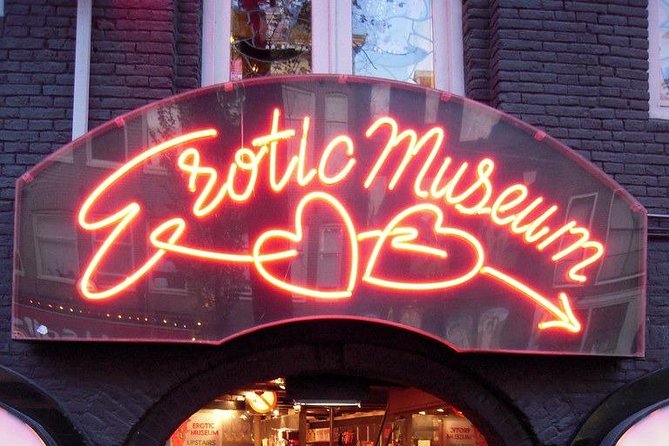
Next is The Waag, described as the second-oldest building of Amsterdam and originally part of the city’s defensive wall system. It’s tied to the idea of a city gate, built around the 1400s.
Later, the building shifted roles. It became a space used by guilds—craftsman organizations—so it was about trade and practical work, not just defense.
This is a strong stop for making Amsterdam feel real. It gives you a sense of how organized business and craftsmanship shaped the city center. And because it connects to the Old Town idea, it helps you see De Wallen not as an isolated pocket, but as part of a broader urban system with gates, walls, and economic institutions.
Amsterdam’s smallest house and the VOC story
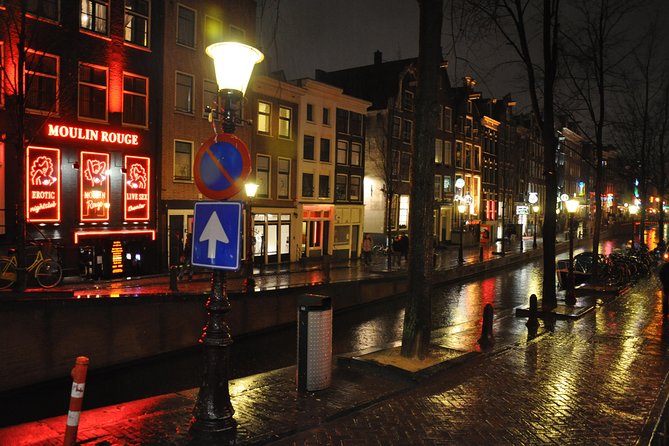
You’ll also visit the smallest house of Amsterdam, built around the 1700s. The explanation is the part you’ll remember: it started as storage for the VOC trading company, then later people lived in the space for a long time.
This stop works because it adds a human scale to Amsterdam’s trade history. You’re not just hearing about empires and ships. You’re seeing how commercial logistics could shape everyday housing and squeeze real life into real corners.
It’s also a useful mental reset. De Wallen is intense, and the stories can feel heavy. A quick factual tour of a small house and its shifting purpose gives your brain a new angle.
The condom shop stop: a place that’s been there since 1987
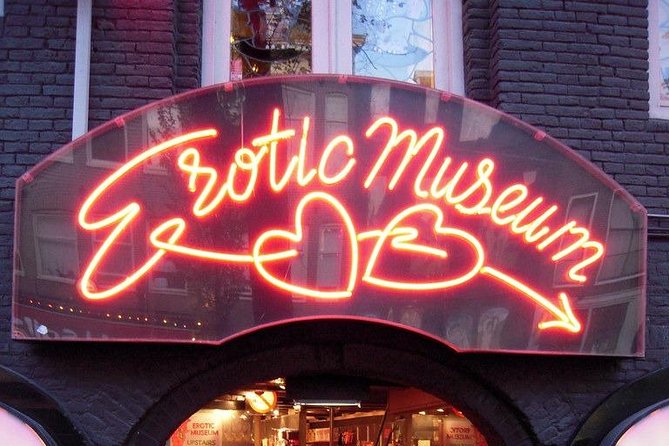
One of the most unexpected stops is a shop described as the world’s first condom shop special for condoms, in place since 1987. The tour highlights that you can get size customized condoms and other special types.
This might sound like a random aside, but it actually ties back to the tour’s overall promise: you’re seeing the neighborhood’s adult reality with real-world context. The condom shop is presented as part of the fabric of the area, not a reaction to it.
If you’re someone who wants your tour stories to feel grounded in actual practices, this kind of stop delivers. It’s not all window drama—it’s also about infrastructure, health, and practical services that have lasted for decades.
Guides like Adam and Aarre: questions, tone, and custom tweaks
The reviews underline a key point: the guides bring energy and structure. Adam is praised as both entertaining and knowledgeable in the best sense—meaning he had facts and kept the pace engaging. Another review calls out that the guide was very informative and that there were lots of chances to ask questions.
Aarre also stands out in the feedback. The tone is described as accommodating and very informative, with a tour that was customized upon request to meet needs.
For you, that means you’re not stuck with a one-size-fits-all lecture. If you have questions about what you’re seeing, your guide is set up to handle them. And because this is a short walk, the Q&A doesn’t get swallowed by long sightseeing detours.
Also, the maximum group size helps here. When the group stays small enough, you feel like the guide can actually read the room.
Price and value: $63.67 for 2 hours of context
At $63.67 per person for about 2 hours, this isn’t an ultra-cheap “see the sights” option. But it can be good value if you treat the tour as an explanation engine.
You’re paying for:
- a local-style narrative about how De Wallen fits into Old Town
- multiple historical stops (Waag, a wooden building at Int Aepjen, the smallest house, and more)
- a short, efficient route that doesn’t demand a half-day commitment
If you only have time for one adult-culture walk, you’ll likely feel the value because it stacks multiple topics into one outing. It’s also a small-group setup, and you get a mobile ticket for convenience.
One more practical note: the tour is often booked about 37 days in advance on average. If your schedule is fixed, book earlier rather than gambling on availability.
Who this tour suits (and who should skip it)
This is a great fit if:
- you want a short walk that still explains what you’re seeing
- you’re curious about the neighborhood’s history and social context
- you prefer guided structure over wandering on your own
It may not be for you if:
- adult themes make you uncomfortable
- you have limited mobility (it’s not recommended for that)
- you need a very kid-friendly, purely family-style sightseeing plan
Service animals are allowed, and the tour is near public transportation, which helps for practical planning.
Final call: should you book this Amsterdam Red Light District tour?
If you’re trying to understand De Wallen instead of just photographing it, I think this tour is a smart choice. The mix of neighborhood context plus Old Town stops (Waag, wooden-building history at Int Aepjen, the smallest house and VOC storage story) makes the experience feel more than just a quick walk through a famous area.
Book it if you want a respectful, fact-focused guide and you like tours that leave you with better questions than you arrived with. Skip it if the topic will distract you from enjoying your day or if you need an accessible route designed for limited mobility.
FAQ
How long is the Amsterdam Red Light District walking tour?
The tour is about 2 hours.
What is the meeting point?
You meet at Geldersekade 2HS, 1012 BH Amsterdam, Netherlands.
Is there an admission fee for the stops?
The tour lists admission as free, and there is no extra admission ticket mentioned.
How big is the group?
The maximum group size is 32 travelers.
Are there multiple start times available?
Yes, you can choose from multiple start times to match your schedule.
Do I get a mobile ticket?
Yes, the tour includes a mobile ticket.
Is the tour suitable for limited mobility?
It is not recommended for travelers with limited mobility.
Are service animals allowed?
Yes, service animals are allowed.
What if I need to cancel?
You can cancel for a full refund up to 24 hours before the experience’s start time. If you cancel less than 24 hours before, the amount paid is not refunded.