REVIEW · AMSTERDAM
From Amsterdam: Rotterdam and The Hague Tour in Spanish
Book on GetYourGuide →Operated by Camaleon Tours · Bookable on GetYourGuide
Rotterdam and The Hague in one day sounds ambitious. It is, and that is exactly why it works: you get two moods, one smooth bus ride, and a guide who ties it all together in Spanish.
What I like most is the mix of seat-of-power stops in The Hague and the postwar rebuild story in Rotterdam. You’ll also get 3 hours of free time to do your own thing for lunch, food shopping, and photos without feeling rushed.
The main drawback is language. This is a Spanish live guided tour, so if your Spanish is basic, plan to rely on visuals and a bit of patience (there can be occasional English, but don’t count on full translation).
In This Review
- Key takeaways before you go
- Two cities, two lessons: power and rebuilding
- Meeting at Aloha Bowling and getting south by bus
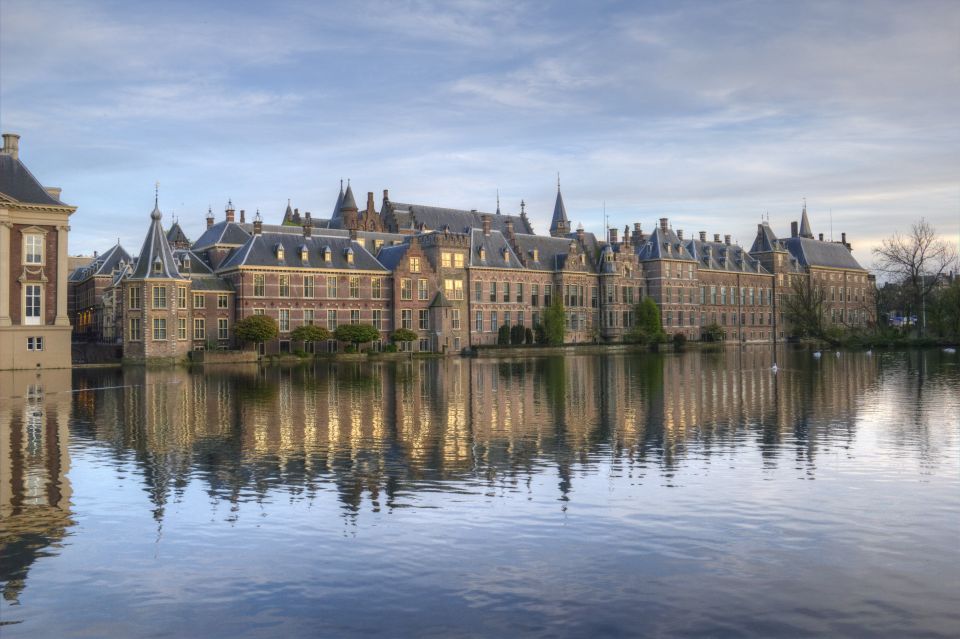
- The Hague’s seat of power: Noordeinde and the Binnenhof complex
- Mauritshuis and the Peace Palace: art and international law together
- Rotterdam after WWII: Man without a Heart and the city’s rebuild mindset
- The Cube Houses of Piet Blom and the city’s most photo-ready blocks
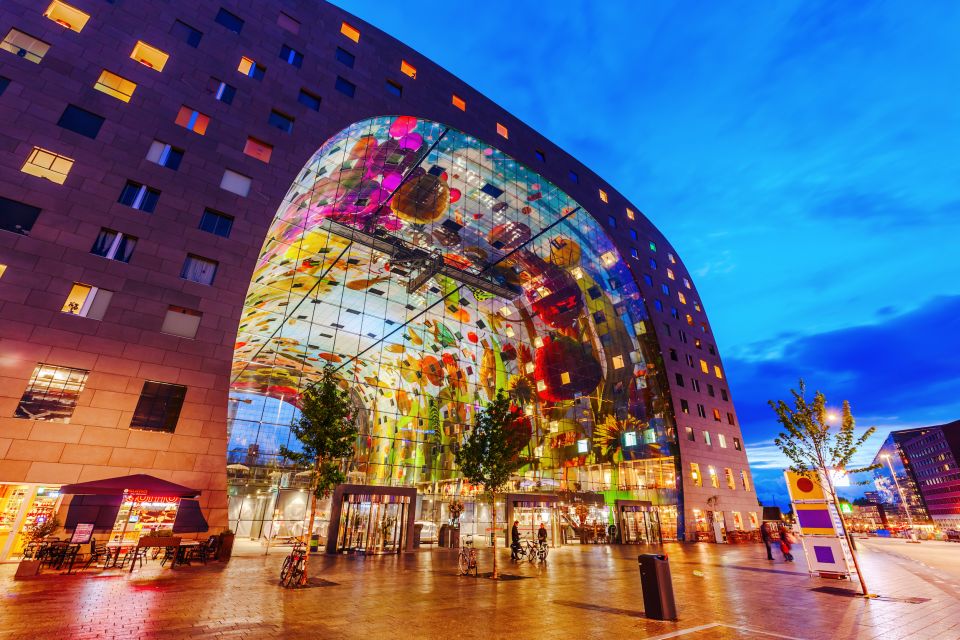
- Markthal food hall and River Meuse skyline views
- Lunch on your terms: how the 3 hours of free time helps
- About the Spanish guide: clear stories, real humor
- Price and value: $46 for a full day that covers two big cities
- Should you book this Rotterdam and The Hague tour in Spanish?
- FAQ
- Is this tour in Spanish?
- How long is the tour from Amsterdam?
- What is the price?
- What does the tour include?
- Is food included?
- Where do I meet the guide?
- How will I recognize the staff?
- Is there free time to explore?
Key takeaways before you go
- Spanish narration that connects sites across both cities, not just a list of photo stops
- The Hague power circuit: Noordeinde Palace area, Binnenhof complex, then art and the Peace Palace
- Rotterdam’s rebuild in real objects: the Man without a Heart sculpture and big architecture from the modern era
- Cube Houses and Markthal for both design fans and people who just want good food vibes
- Green umbrellas meet you at the start, and you should arrive 15 minutes early
- A planned day with built-in freedom: 3 hours free time in Rotterdam for lunch and shopping
Two cities, two lessons: power and rebuilding
I like days like this because they show you contrasts fast. The Hague feels like government and tradition in the open air, while Rotterdam reads like a city that kept moving after catastrophe.
In The Hague, the landmarks point to how decisions get made—palaces, government buildings, and legal power under one umbrella of civic life. In Rotterdam, the sights tell a different story: how a modern city uses architecture to recover identity and look forward.
The tour works best if you want variety without overplanning. You’ll see the headline places, then you get breathing room to wander.
You can also read our reviews of more tours and experiences in Amsterdam.
Meeting at Aloha Bowling and getting south by bus
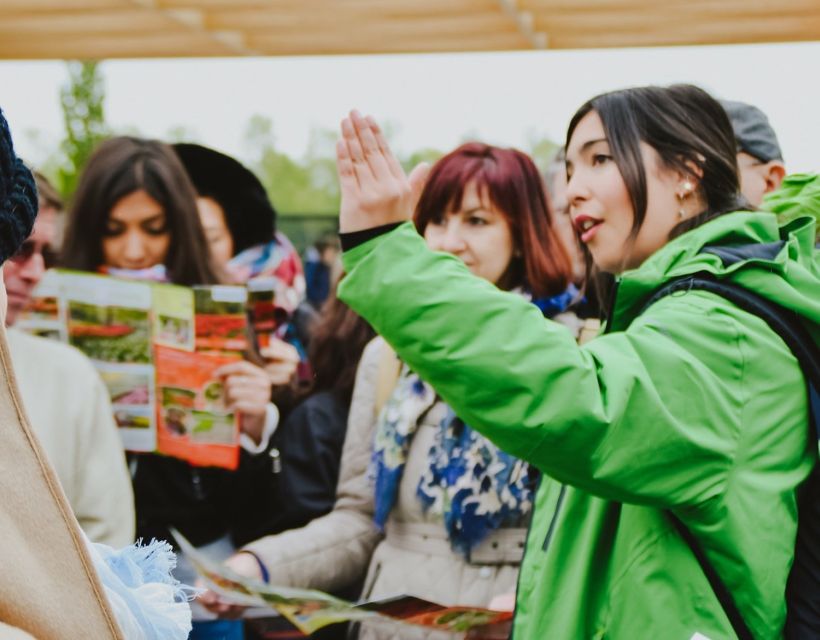
You start outside the main entrance to Aloha Bowling. The staff will be easy to spot with green umbrellas, and you’ll want to be there about 15 minutes early so you’re not sprinting for the group.
Expect a full-day bus format. That matters because the Netherlands is flat and the distances between Amsterdam, The Hague, and Rotterdam are very doable, but you still need a long day of moving and standing.
A quick practical point: pack a light layer. Even in the warmer months, you can get cool wind along waterfronts and between big open squares.
Also note the tour includes transportation and a Spanish guide, with hotel pickup/drop-off only if you picked a private tour. If you’re on the standard option, you’ll be meeting at the stated spot.
The Hague’s seat of power: Noordeinde and the Binnenhof complex
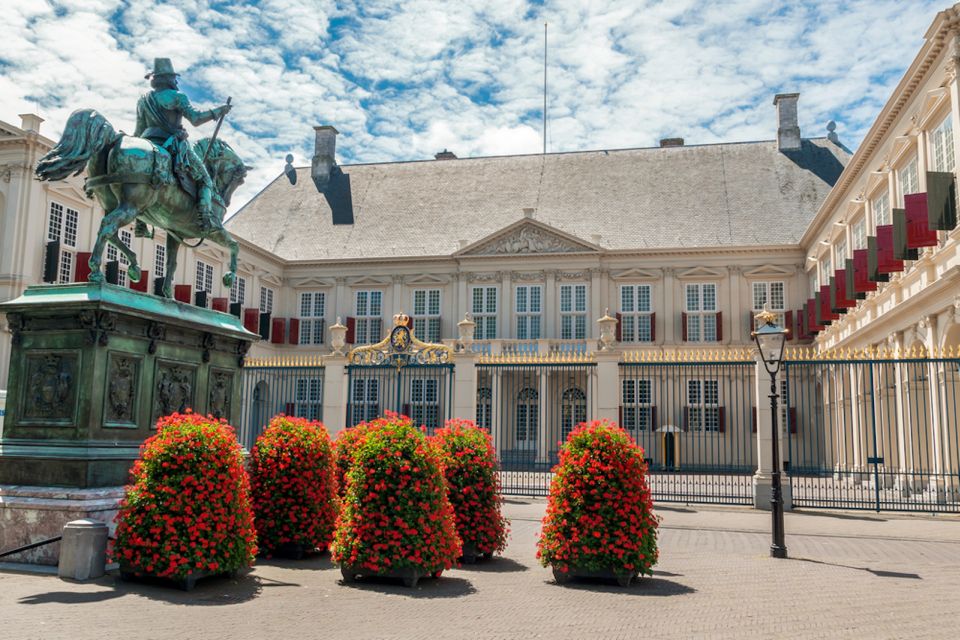
The morning energy shifts as you head into The Hague’s civic core. This isn’t just about pretty buildings. You’re seeing the actual landscape of power: royal symbolism nearby, then government administration close enough to feel real.
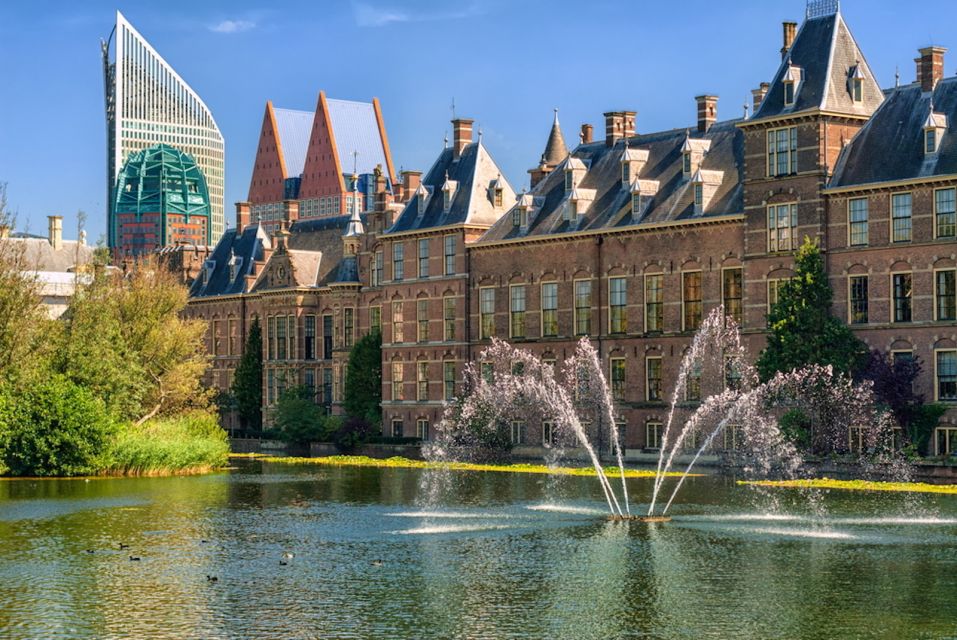
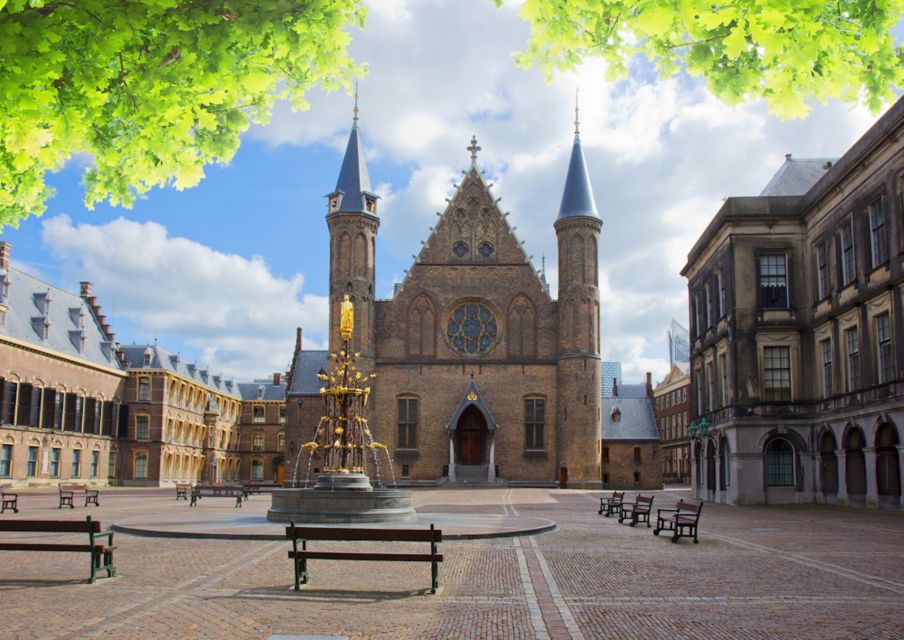
You’ll visit the Binnenhof complex, including the famous government buildings that anchor Dutch politics. This area also pairs well with the tour’s guiding style: a good guide can turn stone-and-steps into a story about how the Netherlands governs itself.
You’ll also pass by Noordeinde Palace. Even if you only see it from outside, it gives context for how royal history still sits in the same urban world as modern decision-making.
If you care about photography, this part is strong. You’ll get angles where architecture and courtyards make sense in relation to each other, not just one isolated facade.
One consideration: places in this area can have security rules at entrances. The tour data doesn’t spell out which buildings you enter versus view from outside, so if you want interior time for anything specific, you’ll want to ask the guide on the day.
Mauritshuis and the Peace Palace: art and international law together
After the political sights, the day gets more human-scale. You’ll go to the Mauritshuis Museum, where you can see works by Rembrandt and Vermeer.
This stop is valuable because it slows the pace. Art museums give you a break from city-walk speed, and Rembrandt and Vermeer are the kind of names that instantly make people understand why The Hague matters culturally, not only administratively.
Then you’ll head to the Peace Palace, home to the International Court of Justice headquarters. That pairing—classic Dutch painting plus global legal power—lands surprisingly well. It shows how the Netherlands projects authority in two different ways: through culture and through institutions.
One practical thought: museum and palace access rules can affect timing. The tour confirms these locations are part of the day, but it doesn’t list extra ticket inclusion details. If you’re the type who hates uncertainty, bring your confirmation details and be ready to pay anything required on-site if it isn’t included.
Rotterdam after WWII: Man without a Heart and the city’s rebuild mindset
Rotterdam’s story starts with rupture. You’ll see the Man without a Heart sculpture by Ossip Zadkine, a memorial tied to the city’s destruction during World War II.
This is more than a dramatic statue. It’s a marker for how Rotterdam rebuilt itself with a future-facing attitude. If you’ve ever wondered why Rotterdam looks so different from older Dutch towns, this stop helps connect that question to real history.
You’ll also learn about the city’s architectural choices by passing key sights that show what survived, what changed, and what new design replaced.
Rotterdam is a place where modern buildings often feel like arguments. This tour does a good job of giving you the context so you don’t just see shapes—you understand why those shapes exist.


The Cube Houses of Piet Blom and the city’s most photo-ready blocks
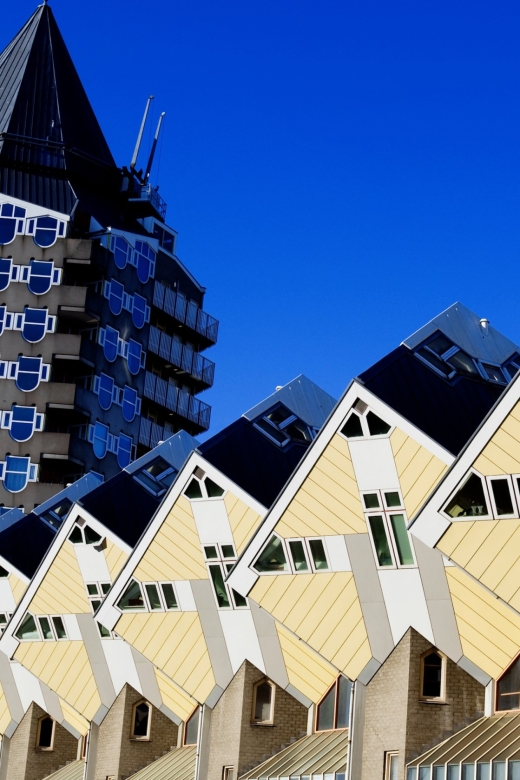
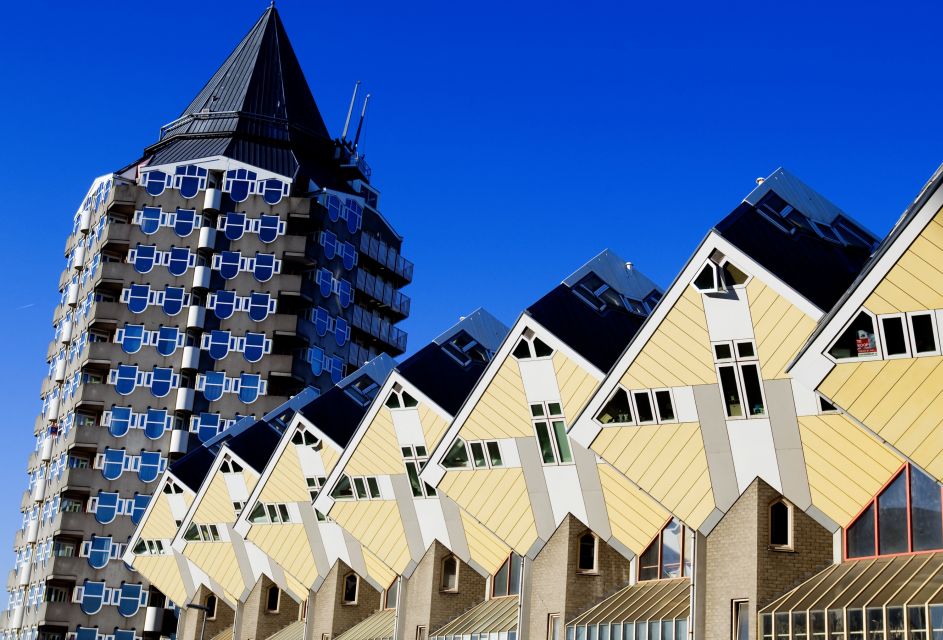
Then you hit Rotterdam’s iconic geometry. The Cube Houses by Piet Blom are the kind of sight that makes people stop mid-walk. From outside, you’ll already understand why they’re famous, but seeing them in person makes the scale feel real.
Nearby, you’ll find the Oude Haven (old port area). This area helps balance the high-tech architecture with older city texture. It’s a good place to reset your eyes and take photos without the constant skyline sweep.
You’ll also see the only medieval building still standing in the city. That detail matters because it underlines Rotterdam’s identity: you’re in a city where the older layers are rare, so the surviving one becomes meaningful.
If you want the best photo results, aim to step back from the sidewalk line. Many of these structures look even better when you include foreground street angles and not just the main facade.
Markthal food hall and River Meuse skyline views
One of the tour’s smartest choices is the Markthal stop. Even if you’re not planning to eat immediately, it’s a chance to see what Rotterdam’s public life looks like around food and markets.
The tour specifically notes the “food on display” in Markthal, and that’s exactly why it’s worth including. It’s not only about meals—it’s about how Rotterdam uses design to make everyday experiences feel like an event.
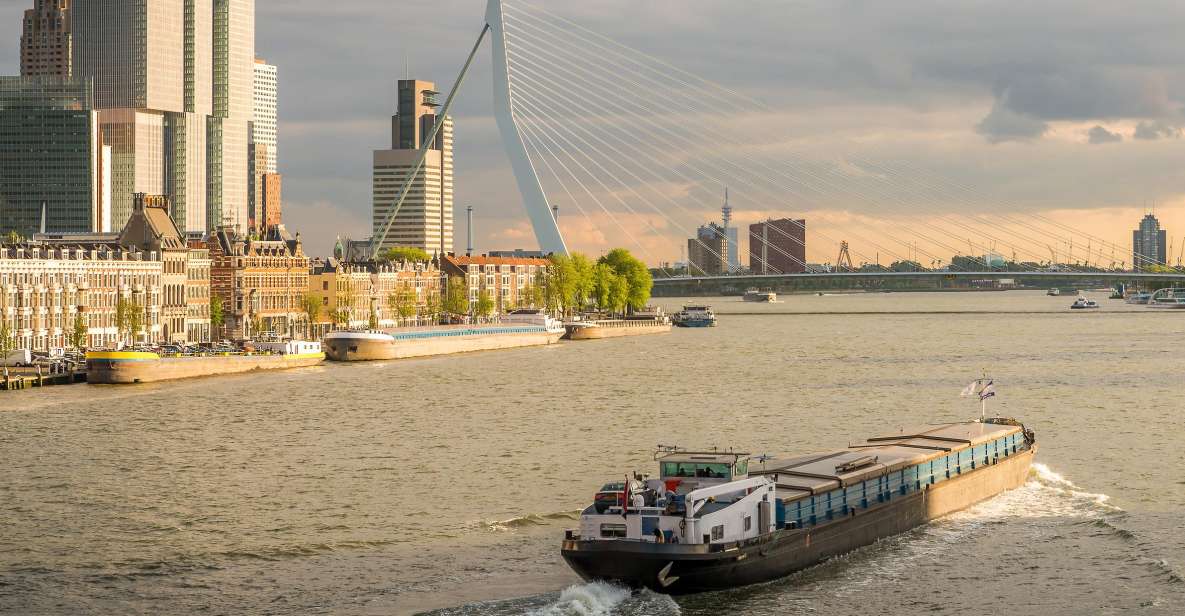
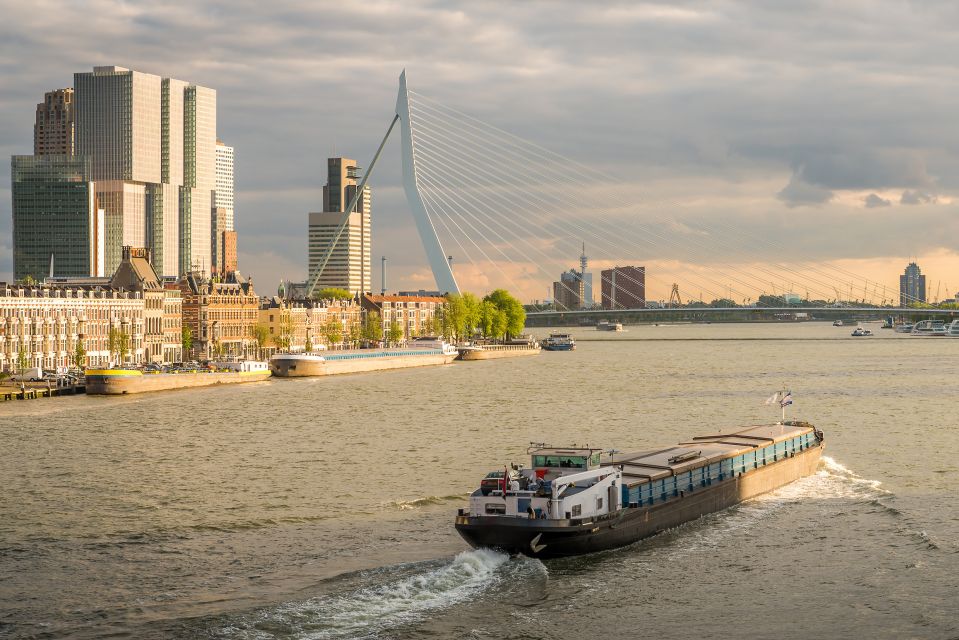
After that, you stroll along the banks of the River Meuse. This is where Rotterdam’s personality clicks. You get panoramic views of the city’s skyscrapers, and the river makes the skyline feel bigger than it does from the street.
This walk is also a good time to stretch. After multiple stops, you need movement that isn’t only stop-and-start.
Lunch on your terms: how the 3 hours of free time helps
The tour builds in 3 hours of free time in Rotterdam. For me, this is the difference between a sightseeing bus ride and a day that actually fits a human schedule.
You can do what you’ll enjoy most: grab lunch, browse shops, circle back for photos, or just sit and watch people move between modern buildings and older harbor corners.
This flexibility also helps with language. Even if your Spanish is limited, you still have time to control your own pace during the part that matters most—food and wandering.
Quick practical tip: if you plan to enter any museum or pay for anything inside a building, use part of your free time for that. The guided portion is built around key sights, and the open time is where you can personalize.
About the Spanish guide: clear stories, real humor
This kind of day lives or dies by the guide. The Spanish narration is central, but it shouldn’t feel like you’re reading captions off a wall.
A strong pattern from past departures is humor plus clear explanations. You may be guided by people like Facundo, Fanny, Silvia, or Blas, and the consistent theme is the way they connect details to bigger ideas without turning it into a lecture.
If you don’t speak Spanish well, you’re still likely to be fine for the highlights. You’ll have exterior architecture, sculpture landmarks, palace/government areas, and major streets that guide your understanding. But do yourself a favor: learn a few basics for common needs:
- where is…
- how much is…
- what do you recommend…
Those little phrases make the free-time part much easier.
Price and value: $46 for a full day that covers two big cities
At $46 per person for 8 hours, the value comes from what’s bundled. You’re paying for round-trip bus transportation from Amsterdam, a Spanish-speaking guide, and a structured route that hits major landmarks across both cities.
If you tried to copy this day alone—transit planning, ticket timing, finding guides for context—you’d likely spend more time and possibly more money without the story thread.
The day also includes a real time payoff: 3 hours of free time in Rotterdam. That isn’t just a nice-to-have. It lets you turn sightseeing into a personal lunch plan, and it prevents the day from feeling like a long checklist.
Food and drinks are not included, so budget for lunch and any snacks you want. The good news is that the Markthal stop gives you a strong shortcut toward where to eat.
If you’re comparing options, judge it by how much of the day is taken up by transportation versus guided sights. This tour spends its time efficiently across key locations.
Should you book this Rotterdam and The Hague tour in Spanish?
Book it if you want a structured, high-impact day that connects power, culture, and modern design without heavy planning. It’s especially a fit if you like architecture, public institutions, and the way cities rebuild their identity.
Pass or choose another option if Spanish language immersion is a dealbreaker. Even with occasional English support, this is still fundamentally a Spanish guided experience, so your comfort with the language matters.
My final advice: treat the guided hours as your orientation and context, then use the 3 hours of freedom to make Rotterdam yours. If you like taking photos, people-watching along the river, and eating somewhere that feels like a local design statement, this day has your name on it.
FAQ
Is this tour in Spanish?
Yes. The tour includes a live Spanish-speaking guide.
How long is the tour from Amsterdam?
The duration is 8 hours.
What is the price?
The price is $46 per person.
What does the tour include?
It includes a Spanish-speaking guide and transportation by bus. If you selected a private tour, it also includes hotel pickup and drop-off.
Is food included?
No. Food and drinks are not included.
Where do I meet the guide?
Meet outside the main entrance to Aloha Bowling. Arrive about 15 minutes before the start time.
How will I recognize the staff?
Staff will be easily recognizable by their green umbrellas.
Is there free time to explore?
Yes. You get 3 hours of free time in Rotterdam for lunch, eating, and shopping.