Amsterdam, but make it quiet. This 8.5-hour, small-group day trip pulls you into Dutch countryside culture and engineering, with a maximum of 7 travelers and included entries at the planetarium and the mummy crypt. I especially like how the stops feel different from the usual canal checklist, yet still connect through one big theme: how the Dutch built their world with windmills and water control.
One thing to factor in: you’ll be on the move for most of the day, and the tour is not recommended for travelers with limited physical movement. Also, lunch isn’t included, so you’ll want a plan for mid-day food beyond the snack pack.
In This Review
- Key points that make this day trip worth it
- A small-group Amsterdam escape that still feels Dutch
- Meeting at De Ruijterkade and keeping the day comfortable
- De Rijp: red roofs, a white bridge, and a Golden Age town hall
- Schermerhorn windmills: climbable engineering and fewer crowds
- Franeker’s Royal Eise Eisinga Planetarium: the oldest working model in the world
- Wieuwerd church crypt mummies: strange science, real people, quick access
- Afsluitdijk: Dutch water management at scale
- Guides who make the day feel personal
- Price and value: what you really get for $155
- What to bring (and what to skip) for a smooth day
- Who should book this route from Amsterdam
- Should you book this five-place Amsterdam-area tour?
- FAQ
- How long is the tour?
- How much does it cost?
- What places are included?
- Are admissions included in the price?
- Is lunch included?
- What language is the tour offered in?
- How many people are in the group?
- Where does the tour start and when?
- Is the tour accessible for people with limited mobility?
- What happens if the weather is bad?
- Can I cancel and get a full refund?
Key points that make this day trip worth it
- Small group, more asking questions: with a cap of 7, the guide can actually slow down for your questions rather than rushing the whole bus.
- Real engineering stops, not just photos: you get windmill access, plus a dyke viewpoint that explains how the Netherlands stays dry.
- Planetarium entry is included: Franeker’s Royal Eise Eisinga Planetarium is the oldest working model of its kind, and you won’t have to time your own tickets.
- A mummy church crypt that feels oddly human: Wieuwerd’s preserved burials are strange in a very grounded way, with entry included.
- Lots of free admissions at the other stops: De Rijp, Schermerhorn, and the Afsluitdijk are free to enter on this route, so your money goes toward the paid highlights.
A small-group Amsterdam escape that still feels Dutch
This tour is built around the Netherlands beyond Amsterdam’s ring of canals. Instead of cramming in five quick look-bys, the timing gives you room to walk, explore, and ask how and why things were built the way they were.
The payoff is that you experience Dutch culture through places most first-time visitors never fit in. De Rijp looks like an open-air museum, but it’s a real village. Franeker takes you into a living science story. Then Wieuwerd adds a creepy-but-real chapter you won’t forget.
You can also read our reviews of more tours and experiences in Amsterdam.

Meeting at De Ruijterkade and keeping the day comfortable
The day starts at Italian Chamber, De Ruijterkade 5 (9:00 am) and ends back at the same meeting point. That’s helpful: no stressful end-of-day travel puzzles to solve.
You’re out for about 8 hours 30 minutes, so comfort matters. The vehicle is air-conditioned, which is a big deal on travel days when weather shifts. And the tour includes a snack pack, but lunch and drinks are not included—so budget extra time (and cash) for food that isn’t in the itinerary.
Also, go in knowing it’s good-weather dependent. If conditions are poor, you’ll be offered a different date or a refund.
De Rijp: red roofs, a white bridge, and a Golden Age town hall
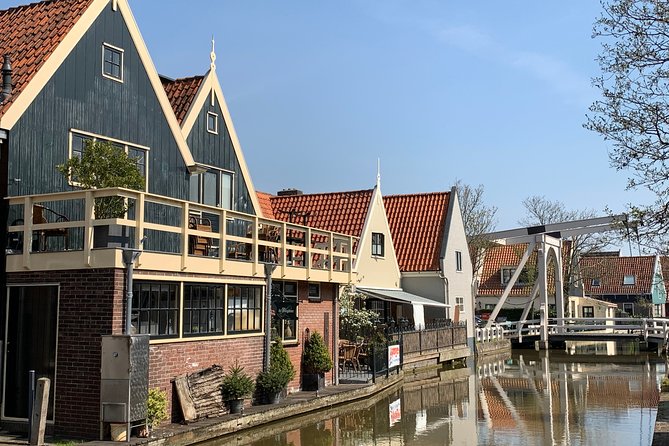
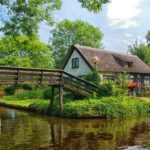
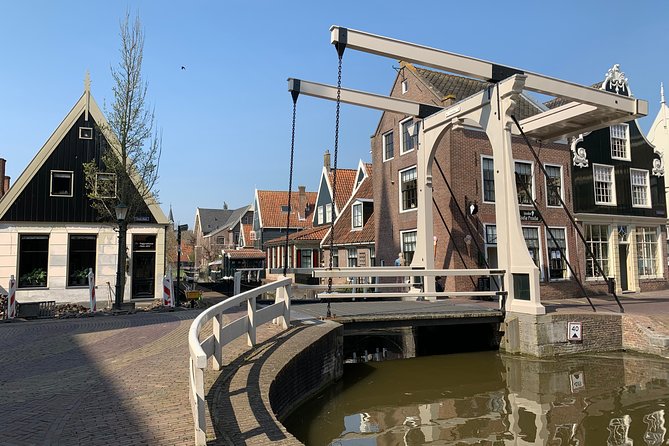
Stop 1 is De Rijp, where the town reads like a postcard you can walk through. Expect wooden houses with red rooftops, an old white bridge over the water, and the kind of street-level details that make you slow down without forcing it.
What makes De Rijp special on this route is how it mixes beauty with historical weight. You’re not just seeing pretty buildings—you’re seeing a village that still feels inhabited and intact. You also get an hour here, which is long enough to wander rather than perform a sprint-and-photos routine.
Practical note: this is a walking stop, so wear shoes that handle uneven outdoor paths. If you’re sensitive to long days on your feet, this is one place where pacing yourself pays off.
Schermerhorn windmills: climbable engineering and fewer crowds
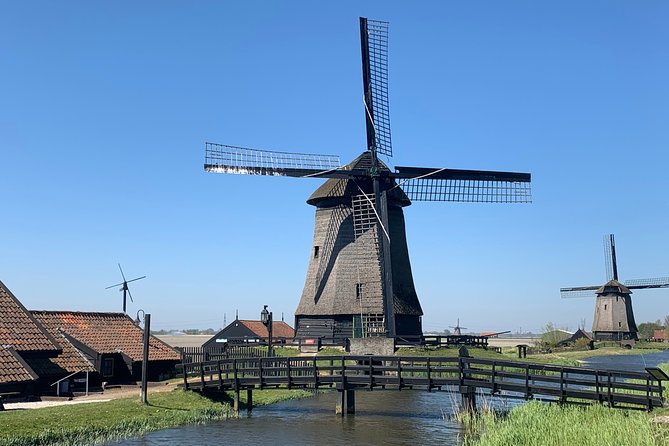
Stop 2 is Schermerhorn, tied to the Dutch golden age and the battle against water. In that era, the region was drained by 52 windmills, and this stop lets you see one of the few that’s still left.
Unlike the more commercial windmill areas, this one feels more focused on function. You can explore it from top to bottom, and you also get views over the surrounding countryside. The time window is 45 minutes, which is perfect for getting the engineering context without turning it into a half-day project.
Why this matters: windmills in the Netherlands aren’t just scenery. They’re a working system—part of how the country shaped itself. A good guide will help you connect what you’re seeing (the mill) to what it did (drain and manage water).
Franeker’s Royal Eise Eisinga Planetarium: the oldest working model in the world
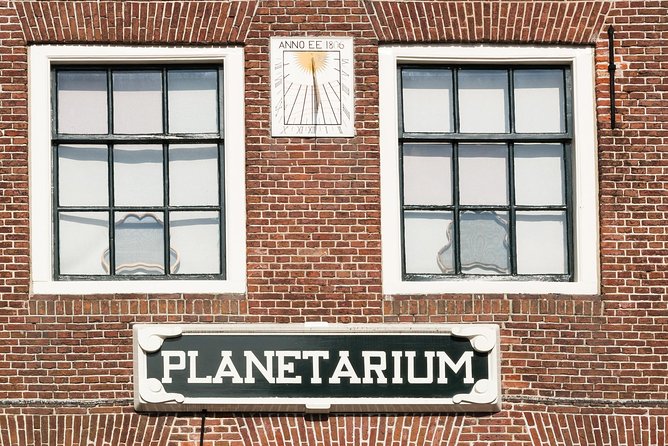
Then you head toward Friesland for the stop that feels like science history made tangible: the Royal Eise Eisinga Planetarium in Franeker. The planetarium is famous as the oldest working planetarium in the world, built between 1774 and 1781.
Here’s what makes it so mind-boggling in a non-stuffy way: the solar system model is suspended from the ceiling inside a canal house living room. You’re not standing in a modern museum hall looking at glass and placards. You’re looking at a historic mechanical model that has been doing its job since the 18th century.
The entry is included, and you get about 1.5 hours. That’s enough time to actually take in what you’re seeing, read what you can, and let the scale sink in.


Wieuwerd church crypt mummies: strange science, real people, quick access
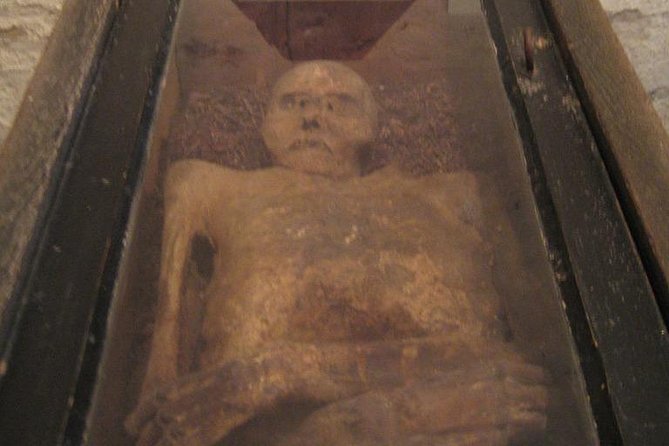
Stop 4 is Mummie kelder Hervormde Kerk Wieuwerd, and it’s one of the most unusual entries on the whole day. In this Frisian village, four mummified individuals were found in the local church—preserved for more than three centuries.
This isn’t presented as a gimmick. You’re shown them in the crypt where they were buried. The stop runs 45 minutes, so it’s enough time to process what you’re looking at without rushing through something that is inherently eerie.
If you’re the kind of traveler who likes history that’s a little off the normal track, this is the point where the tour becomes unforgettable. If you’re squeamish, you might still appreciate it—but keep your expectations realistic: this is a real burial story, not a special effects show.
Afsluitdijk: Dutch water management at scale
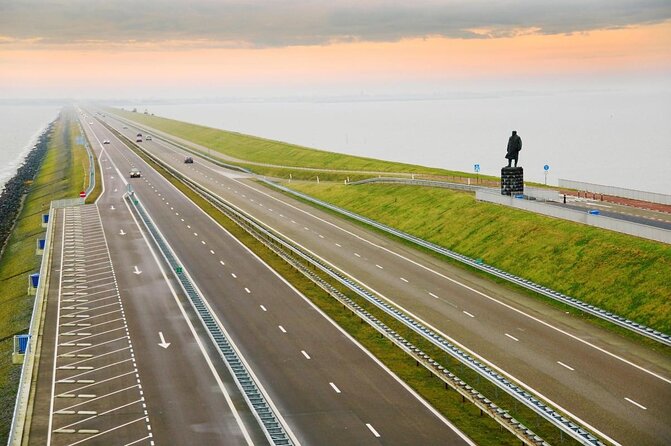
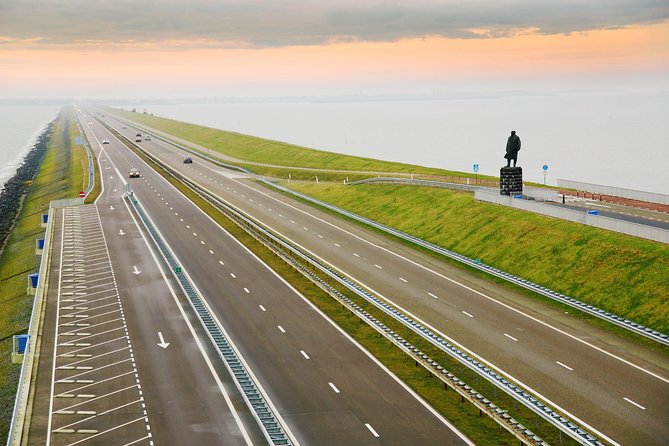
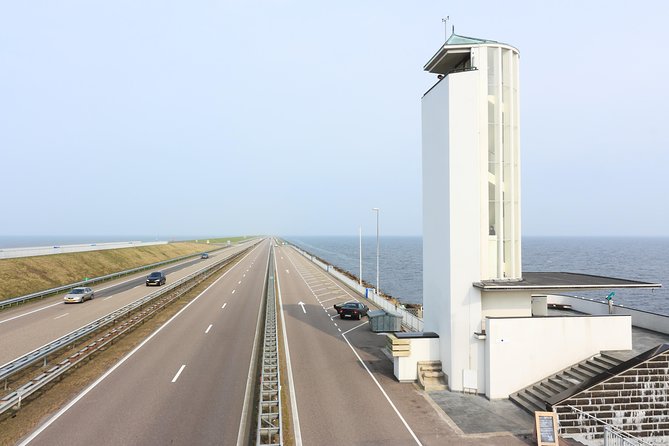
On the way back to Amsterdam, there’s a final stop at the Afsluitdijk. This is one of those places that makes Dutch water control feel concrete instead of abstract.
The dyke is 32 kilometers long, connecting Noord Holland and Friesland. Construction began a hundred years ago, and you stop at a watchtower for a split view: the Wadden Sea on one side and the Ijsselmeer lake on the other.
The time here is about 30 minutes, which works because the viewpoint does most of the job for you. You look, you listen, and the guide ties it back to the theme from earlier stops—wind power, water management, and the long-term planning it took to reshape geography.
Guides who make the day feel personal
This tour runs with small groups and English-speaking guides, and it shows in how the stories get told. On different departures, guides such as Simon, Adrian, and Jan come across as welcoming and focused—good drivers too—so the ride itself doesn’t feel like wasted time.
I like the way these guides connect practical engineering (windmills, dikes) to daily life in the Netherlands. Even if you’ve read a bit about Dutch history, hearing it explained while you’re standing at the actual sites tends to make it stick.
And when the group size drops—like it can on some departures—you may get even more flexibility. That matters on a route like this, where small timing changes can improve the walking experience.
Price and value: what you really get for $155
At $155 per person, this tour costs more than a basic city walking tour. But it earns that price through two things: time and paid entries handled for you.
You get about 8.5 hours of transportation plus guided visits to five distinct places. Admissions at several stops are free, including De Rijp, Schermerhorn’s windmill, and the Afsluitdijk viewpoint. The two biggest “paid moments”—the planetarium and the mummie crypt—are included.
You’ll also receive snacks, and you travel in an air-conditioned vehicle. Lunch is not included, so you should treat food as your main extra cost. Still, if you would otherwise pay for planetarium entry and mummy crypt entry on your own, the pricing starts to look more reasonable.
Bottom line: this is a good value when you want a guided day with enough structure to hit important sites without planning each ticket and transport link yourself.
What to bring (and what to skip) for a smooth day
Because you’ll walk in villages and explore a windmill, pack like you’re doing a city day with extra legs. Comfortable shoes are the safe call.
Bring a layer. The Netherlands can swing temperatures, and you’ll bounce between car time and outdoor viewing. If you’re sensitive to museums or unusual exhibits, decide in advance where you stand on the mummy crypt stop so you can mentally pace the day.
And don’t forget: lunch isn’t included. The tour gives you snacks, but you’ll likely want a plan for a real meal later in the day or right away before/after the tour depending on your schedule.
Who should book this route from Amsterdam
This is a strong choice if you:
- Want a day outside Amsterdam’s most crowded areas
- Like history that you can see and touch (windmill mechanics, dyke scale)
- Enjoy science-meets-history stories like the planetarium
- Are traveling in a small group or like the feel of a quieter tour
It may not be the best fit if:
- You have limited physical movement (the tour isn’t recommended for that)
- You need a long sit-down break each stop (most stops involve walking or viewing)
- You want only city-center sights with minimal driving
Should you book this five-place Amsterdam-area tour?
I’d book it if your ideal Amsterdam day is part culture, part engineering, and part real-life weird history. The route connects the Netherlands’ big survival skills—water control and wind power—with places you can actually stand in.
Skip it if you’re looking for a mostly indoor, low-footsteps day or if you can’t manage the tour’s physical pacing. If you can, though, you’ll get a full day that feels both well-organized and surprisingly different from the standard Amsterdam itinerary.
FAQ
How long is the tour?
It lasts about 8 hours 30 minutes.
How much does it cost?
The price is $155.00 per person.
What places are included?
You visit De Rijp, Schermerhorn, Koninklijk Eise Eisinga Planetarium in Franeker, the mummie crypt at Hervormde Kerk Wieuwerd, and Afsluitdijk.
Are admissions included in the price?
Yes. Admission fees are included for the mill in Schermerhorn, the planetarium in Franeker, and the mummie crypt in Wieuwerd. The other stops listed are free.
Is lunch included?
No. Lunch, food, and beverages are not included other than the free snack pack.
What language is the tour offered in?
The tour is offered in English.
How many people are in the group?
The tour has a maximum of 7 travelers.
Where does the tour start and when?
It starts at Italian Chamber, De Ruijterkade 5, 1013 AA Amsterdam at 9:00 am. It ends back at the meeting point.
Is the tour accessible for people with limited mobility?
It is not recommended for travelers with limited physical movement.
What happens if the weather is bad?
The tour requires good weather. If it’s canceled due to poor weather, you’ll be offered a different date or a full refund.
Can I cancel and get a full refund?
Yes, free cancellation is available. You can cancel up to 24 hours in advance for a full refund.