REVIEW · AMSTERDAM
Red Light District tour in Amsterdam
Book on Viator →Operated by Guidance Travel · Bookable on Viator
One city lesson: rules, sex, and coffee. This 90-minute walk is a smart way to understand Amsterdam’s Red Light District through history, laws, and street-level culture, without turning it into a spectacle. I love the relaxed pace and the focus on coffee houses and how they shaped the city’s reputation.
The route threads together places that explain how this neighborhood became a symbol of tolerance: De Wallen, Dam Square, Warmoesstraat, Zeedijk, Nieuwmarkt, Kloveniersburgwal, and then a map for the last stretch. I also like that it’s a small group (max 15), so you’re not shouting over a crowd just to ask a question.
One drawback to keep in mind: since city rules changed in 2020, you’re not allowed to walk through the main Red Light District windows during the tour. You’ll stay on the outskirts, get strong context, and then use the map to explore respectfully on your own.
In This Review
- Key highlights at a glance
- Red Light District tour stays on the perimeter (and why that helps)
- The 90-minute route that connects sex work, tolerance, and coffee culture
- Stop-by-stop: what you’ll learn around De Wallen, Dam Square, and more
- Stop 1: De Wallen (the neighborhood anchor)
- Stop 2: Dam Square (where the story shifts to coffee culture)
- Stop 3: Warmoesstraat (old street, new energy)
- Stop 4: Zeedijk (Chinatown’s past and its comeback)
- Stop 5: Nieuwmarkt (legalization and the human side of today)
- Stop 6: Kloveniersburgwal (coffeeshops and their legal status)
- Stop 7: Paulusbroederssluis (map handed off for your last stretch)
- Coffee houses and coffee shops: why the tour keeps circling back here
- Your guide experience: what people loved (and what to watch for)
- Meeting point in central Amsterdam: find it, arrive early, and start smooth
- Price and value: is $31.44 a smart buy?
- Who should book this tour, and who should skip it
- Final decision: should you book?
- FAQ
- How long is the walking tour?
- What’s the price per person?
- Is the tour in English?
- Do I need to bring a paper ticket?
- How big is the group?
- Where does the tour start and end?
- Does the tour go inside the Red Light District?
- What stops are included?
- Are service animals allowed?
- Can I cancel for a full refund?
Key highlights at a glance
- Perimeter walk instead of inside-access, so you get context without crossing current city rules
- Coffee-shop origins and legal status explained at key stops like Dam Square and Kloveniersburgwal
- Thoughtful route through nearby streets that connect De Wallen to Chinatown and Nieuwmarkt
- Small group size (up to 15) with time to ask questions and get direct answers
- Guides bring tone and humor, often mixing facts with real street perspective (including locals like Carlos, Nadav, Valeria, David, and Manouk)
- Map + a small gift at the end to help you finish your self-guided exploration
Red Light District tour stays on the perimeter (and why that helps)
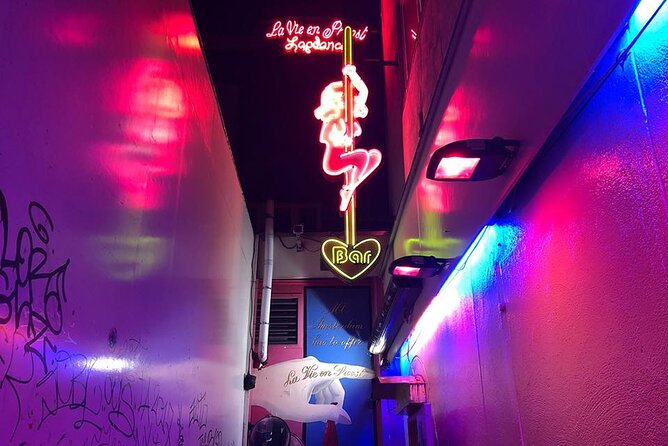
This is one of those Amsterdam experiences where the city itself sets the rules. Since 2020, guided groups aren’t allowed to enter the Red Light District area. So instead of standing in front of the windows, you walk around the edges and learn what’s going on—then you get a map for the part you can’t do as a group.
For me, that ends up being a practical advantage. You get a clear, respectful framework first: where the neighborhood came from, why sex workers settled here, how Amsterdam built a different attitude toward the topic, and how current rules shape daily life. And you still get to see the surrounding streets that visitors confuse or flatten into one big stereotype.
It also means your expectations should be honest. Some people want the tour to function like a “walk right up to everything” pass. This one doesn’t. You’ll get street views from the perimeter and a better ability to interpret what you’re seeing, which is the whole point.
You can also read our reviews of more tours and experiences in Amsterdam.



The 90-minute route that connects sex work, tolerance, and coffee culture
The tour runs about 1.5 hours at a manageable walking pace. Amsterdam is famously flat, and many reviews call this an easy walk in terms of effort. You’ll still want moderate physical fitness since it’s continuous walking between stops.
You’ll also notice the structure: short stops with big explanations. Most locations are about 10 minutes each, with a couple of quicker segments. In between, the guide talks while you move through the streets, so you don’t sit around for long stretches.
And because it’s limited to 15 travelers, it doesn’t feel like you’re trapped inside someone else’s schedule. That small-group setup shows up again in the review pattern: people loved asking questions and felt the guide kept things open and conversational.
Stop-by-stop: what you’ll learn around De Wallen, Dam Square, and more
Here’s the tour flow in plain language, and what each stop is doing for your understanding.
Stop 1: De Wallen (the neighborhood anchor)
De Wallen is the starting point, and it sets the tone. You learn about the neighborhood’s historical connection to prostitution and why sex workers chose to settle in this specific area. You also hear the argument behind Amsterdam’s reputation for a liberal attitude toward sex, framed as a mix of civic choices, social norms, and long-term tolerance.
Why it matters for you: this is where the tour moves from rumor to context. Without this start, it’s easy to treat the district like a single attraction. With it, you start seeing it as a real neighborhood with real rules.
Stop 2: Dam Square (where the story shifts to coffee culture)
Dam Square comes next, and it’s not just a famous landmark. This stop focuses on the idea behind the origin of the coffee shop concept and connects it back to Amsterdam’s older image of tolerance and freedom.
Why it matters: it links two things people associate with Amsterdam—sex work and coffee culture—without assuming they’re just tied to nightlife. The guide’s job here is to explain the cultural significance and how public attitudes formed over time.


Stop 3: Warmoesstraat (old street, new energy)
Warmoesstraat is one of Amsterdam’s older streets, now known more for entertainment. You’ll also get a glimpse of the Old Church in the general area.
What to expect: this is a “street-reading” stop. The guide helps you notice how the city keeps changing the function of places while still keeping them part of the same wider story.
Stop 4: Zeedijk (Chinatown’s past and its comeback)
Zeedijk is where the tour intentionally widens your lens. You learn about Chinatown here and how it was once seen as more dangerous in the 1970s. Then you hear about the neighborhood’s decline and transformation into a place many Amsterdammers favor today.
Why it matters: it prevents the Red Light District from being treated like an isolated bubble. It shows you how nearby areas evolve—and how reputation can change when a city’s social and economic dynamics shift.
Stop 5: Nieuwmarkt (legalization and the human side of today)
Nieuwmarkt focuses on the legalization of prostitution and the challenges sex workers face today. This is also where the tour can feel more serious, because it moves from history into present-day reality.
A useful mindset here: listen for nuance. The tour isn’t only about what people assume. It’s about what legal frameworks mean in real life, including the trade-offs and pressures that come with any regulated system.
Stop 6: Kloveniersburgwal (coffeeshops and their legal status)
This shorter segment zeroes in on the coffeeshops: their cultural significance and their legal status. The timing is brief (about 5 minutes), but the point is to connect back to what you heard earlier at Dam Square.
Why it matters: Amsterdam’s coffee culture is often described in slogans. This stop aims to ground it in what’s allowed, what’s not, and why the city has built an approach that’s different from many countries.
Stop 7: Paulusbroederssluis (map handed off for your last stretch)
The tour ends with Paulusbroederssluis, where you receive a map with information. This is your tool for the part you can’t do as a group.
Think of it as the tour’s smart follow-through. You leave with direction, not vague curiosity. And because you’ve learned the context first, you’ll be more likely to notice the details that matter rather than just walk past them.
Coffee houses and coffee shops: why the tour keeps circling back here
Coffee is not an afterthought on this tour. You’ll hear about coffee-house culture as a key thread through Amsterdam’s identity. Dam Square and Kloveniersburgwal are the big “coffee stops,” and the guide’s job is to explain why coffee houses became culturally significant—and how their legal status fits into the broader tolerance story.
Here’s the value for you: the tour helps you connect Amsterdam’s reputation to actual street-level practices. Instead of treating coffeeshops as a quirky side show, you understand them as part of how the city managed behavior that other places often suppressed.
This is also where your guide can make or break the experience. Reviews repeatedly praise guides for being open to questions and for keeping the conversation respectful. That matters, because it’s easy to turn a sensitive topic into awkward silence. A good guide keeps it human, factual, and clear.
Your guide experience: what people loved (and what to watch for)
If you’re picking this tour for the guide, you’re in good shape. The most consistent praise is for guides who are friendly, enthusiastic, and able to answer questions. You’ll also see a theme about local perspective and a light sense of humor.
Names that show up across the feedback include Carlos, Nadav, Valeria, David, and Manouk. People describe them as making the topic approachable without losing substance. One review even called out how the guide made the group feel comfortable, which is exactly what you want in a neighborhood that can be emotionally loaded for first-time visitors.
Still, there are two realistic considerations:
- Some guides can move quickly or talk fast. A couple reviews mention the pace felt faster than expected.
- This can feel more like a lecture than a casual walk for some people. One reviewer pointed out it was interesting but they felt they spent too much time standing while the guide explained.
How to handle that as a traveler: if you want maximum interaction, bring your questions early. Small groups help, and many reviews specifically mention being able to ask and get answers.
Meeting point in central Amsterdam: find it, arrive early, and start smooth
The meeting point is Bistro Berlage, Beursplein 1, 1012 JW Amsterdam. The tour starts there and ends back at the same place. It’s also near public transportation, which is handy if you’re mixing this with other Amsterdam plans.
One practical snag shows up in the reviews: some people had trouble finding the exact meet-up location. So I’d plan to arrive a bit early, especially in wind or rain. Amsterdam weather can shift fast, and you don’t want to be hunting for the group while everyone else is already lined up.
Price and value: is $31.44 a smart buy?
At $31.44 per person for about 1.5 hours, this isn’t an “impulse splurge” or a luxury experience. It sits in the budget-to-mid range where the real question is: do you get enough context to justify paying instead of walking the area yourself?
Here’s why it can be worth it for the right traveler:
- You get guided interpretation of what you’re seeing, including history, legalization, and cultural meaning.
- You get a map for the last stretch, which matters because current city rules prevent group access inside the main district.
- You get a small gift at the end. One review mentions funny gummies shaped like genitalia, which is exactly the kind of light touch that matches the tone of a respectful, factual tour.
- Admission fees at the stops are listed as free, so you’re not paying extra along the way.
Also, the experience is often booked about 37 days in advance on average. That’s not a guarantee it sells out, but it’s a hint that people plan ahead for this topic, especially if they’re stacking multiple Amsterdam activities.
Who should book this tour, and who should skip it
This is a strong fit if you want:
- Context about why De Wallen developed the way it did
- Clear explanations about legal status and how regulation shows up in daily life
- A guided walk that keeps a respectful tone
- A small group experience where your questions actually get answered
You might skip it if:
- You specifically want a tour that walks inside the Red Light District windows. Current rules mean you won’t do that on this tour.
- You’re very sensitive to topics that relate to prostitution and drugs. The tour includes those themes, discussed in a respectful way, but it’s still the subject matter.
Final decision: should you book?
If your goal is to understand Amsterdam beyond postcards, I’d book it. The perimeter route can feel limiting at first, but it actually supports the experience: you learn the background, then use the map to explore in a way that fits current city rules. With the high rating and the consistent praise for guides like Carlos, Nadav, Valeria, David, and Manouk, you’re paying for interpretation, not just walking time.
If you want the neighborhood’s vibe plus practical direction, this tour can be a solid starting move. Just go in knowing you’re here for context, not an inside pass.
FAQ
How long is the walking tour?
It’s about 1.5 hours.
What’s the price per person?
The price is $31.44 per person.
Is the tour in English?
Yes, it’s offered in English.
Do I need to bring a paper ticket?
No. You’ll have a mobile ticket.
How big is the group?
The tour has a maximum of 15 travelers.
Where does the tour start and end?
It starts at Bistro Berlage, Beursplein 1, 1012 JW Amsterdam, and ends back at the meeting point.
Does the tour go inside the Red Light District?
No. Tours have been prohibited since 2020, so this tour stays on the outskirts and uses a map for the last stretch.
What stops are included?
The main stops are De Wallen, Dam Square, Warmoesstraat, Zeedijk, Nieuwmarkt, Kloveniersburgwal, and Paulusbroederssluis.
Are service animals allowed?
Yes, service animals are allowed.
Can I cancel for a full refund?
You can cancel up to 24 hours in advance for a full refund. Canceling less than 24 hours before the start time won’t be refunded.