REVIEW · AMSTERDAM
Amsterdam : Guided Cultural Food Tour
Book on Viator →Operated by Amsterdamliebe · Bookable on Viator
Amsterdam is a city you can read if someone points at the details. This 2.5-hour guided cultural food tour does that fast, from big landmarks to the quiet corners that make the neighborhoods feel lived-in. I like the mix of history stops (from medieval roots to the Golden Age) and the food-tour style pacing, with snacks and local guidance along the way. One thing to consider: it’s mostly walking through central Amsterdam, so you’ll want comfortable shoes and good weather.
What makes it work is the scale. The group is capped at 15 people, which keeps it relaxed enough for questions and quick side stories without turning into a rush-job. You’ll finish on Spui Square, with tips that help you keep going on your own. The possible drawback is that a couple of famous sights on the route are only brief exterior looks, so if you want full-depth time inside, you may need to plan a follow-up.
In This Review
- Key things to know before you go
- A small-group food walk that helps you get your bearings fast
- National Monument to Dam Square: seeing Amsterdam’s origin story up close
- Royal Palace Amsterdam and Oude Kerk: where power and old streets overlap
- Beurs van Berlage to Magna Plaza: trade wealth and reuse of big buildings
- Multatuli Statue: prosperity with a colonial shadow
- Jordaan and De Negen Straatjes: the neighborhood charm part (with real guidance)
- Anne Frank House, Westerkerk, and Begijnhof: what you see on the route
- Snacks, questions, and what the guide adds beyond the stops
- Price and value: what $102.41 buys you in Amsterdam
- Who this tour suits best (and who might want a different format)
- Should you book Amsterdamliebe’s cultural food tour?
- FAQ
- How long is the Amsterdam guided cultural food tour?
- Where does the tour start and end?
- How much does the tour cost?
- Is the tour offered in English?
- What group size should I expect?
- Are tickets included for every stop?
- Are snacks included?
- Is the tour weather-dependent?
- Do I need to book far in advance?
Key things to know before you go
- Small-group cap (15 max) keeps the vibe friendly and question-friendly
- English guide with enough time at each stop to connect the dots
- National Monument to Jordaan to 9 Straatjes covers both the center and the charm
- Snacks included, plus practical restaurant and bar suggestions
- Several major churches/palace areas are free to approach, while a few entrances aren’t included
- Tour ends at Spui Square, letting you continue easily in that lively area
A small-group food walk that helps you get your bearings fast

I love tours that don’t just list places. This one gives you the why behind what you’re seeing, and it does it in the part of Amsterdam that’s easiest to connect on foot. You start at the National Monument on Dam, then you work outward through key sights: the political center, the trade/history layers, and finally the pretty neighborhood streets that people dream about before they even arrive.
The group size matters. With a maximum of 15, the guide can answer questions without shouting over a crowd. And the tour is timed so you’re not stuck staring at one monument for 45 minutes while everyone else sweats in the sun. Expect a steady rhythm: short, focused stops, then a bit of walking to the next “aha.”
You’ll also get a mobile ticket for the experience, and snacks are included. There’s also a tourist tax of 1.50€ built in, so you’re not scrambling for extra payments mid-walk. The tour is offered in English, and it runs in good weather—if the weather turns, the experience can be rescheduled or refunded.
You can also read our reviews of more food & drink experiences in Amsterdam


National Monument to Dam Square: seeing Amsterdam’s origin story up close
The tour opens on the steps of the National Monument, right where the city’s modern identity is staged. From there, you learn how Amsterdam formed in the 13th century and how the city’s role grew from local roots into a major European power. This isn’t museum trivia. It’s the kind of context that makes later stops make sense—why certain areas became important, and how political meaning got layered onto the stones.
Then you head to Dam Square, Amsterdam’s central, historical hub. The guide connects the square to the story of how Amsterdam shifted from a small fishing village into the city you recognize today. You’ll also walk past the national monument area while the guide addresses World War II victims—so the square isn’t treated like just a postcard background. It gives you a more human sense of what those spaces represent.
Time here stays tight: roughly 5–10 minutes at each key point. That’s good. If you want the big-picture map of Amsterdam’s timeline, this is the right way to start: short stops, strong context, and no waiting in lines for every landmark.
Royal Palace Amsterdam and Oude Kerk: where power and old streets overlap
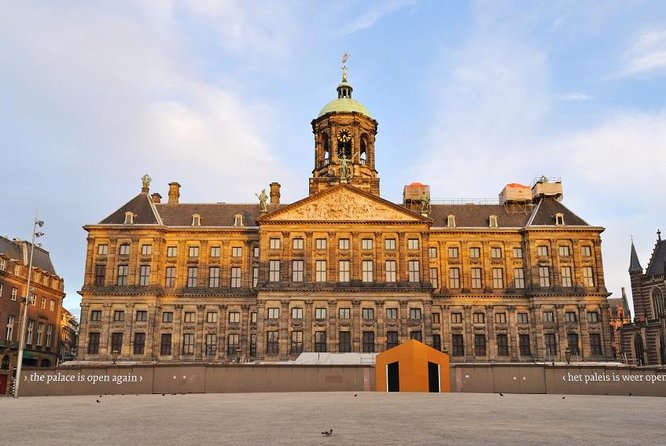
From Dam Square, you move to the Royal Palace Amsterdam. Even if you’re not a monarchy fan, this stop is worth it because it explains the role of monarchy in today’s Netherlands. That matters in Amsterdam because symbols of power are often close to everyday life. You’re not just learning history—you’re learning how the country frames its authority now, too.
Next comes Oude Kerk (Old Church), Amsterdam’s oldest church. The interesting part isn’t only that it’s old. It’s how the guide links the area’s later social history—specifically the way the red light district’s development is tied to earlier urban patterns starting in the 14th century. That can sound heavy, but the tour approach keeps it grounded: you’re shown how the city evolved block by block.
This is also a good moment to notice street scale. Amsterdam can feel flat and uniform until you start looking. Oude Kerk gives you a physical anchor. You feel the age in the surrounding streets, and suddenly the city’s “character” isn’t random—it’s built.
Beurs van Berlage to Magna Plaza: trade wealth and reuse of big buildings

Now you shift from politics and religion into money—and not the boring spreadsheet kind. The Beurs van Berlage stop is where you learn how trade helped turn a smaller town into one of the richest cities worldwide during the Golden Age. The building itself signals importance. This is the kind of architecture that says, We meant business.
You spend a bit more time here (around 15 minutes), which I appreciate. You need a touch more breathing room to understand why trade mattered and how it shaped the city layout. When you know this, later neighborhoods make sense as outcomes, not just decorations.
After that, you swing to Magna Plaza, a former post office. You’ll explore the architecture and get a feel for how Amsterdam repurposes grand buildings rather than bulldozing and rebuilding everything from scratch. The tour keeps this stop short, about 5 minutes, but it lands a key idea: Amsterdam’s “new” often lives inside “old” structures.
If you’re the type who likes to connect buildings to stories, these two stops are a strong pairing. One explains the economic engine; the other shows what that engine left behind in concrete form.
Multatuli Statue: prosperity with a colonial shadow

One of the most thoughtful stops comes at the Statue of Multatuli. You’ll hear about the dark sides of colonialism that helped the Netherlands gain great wealth—and also led to growing criticism. Then the guide connects it to Multatuli, one of the Netherlands’ important authors.
I like this inclusion because it balances the “Amsterdam got rich” narrative with the human consequences. It also keeps you from leaving with only a polished version of the Golden Age story. The tour doesn’t ask you to pick a side; it gives you the context to understand why people argue about these histories even today.
This stop is around 10 minutes, and it works well as a mid-tour reset. You get a chance to think, not just look. And honestly, it makes the later neighborhood stroll feel more grounded, because you now understand what prosperity cost.
You can also read our reviews of more tours and experiences in Amsterdam






Jordaan and De Negen Straatjes: the neighborhood charm part (with real guidance)
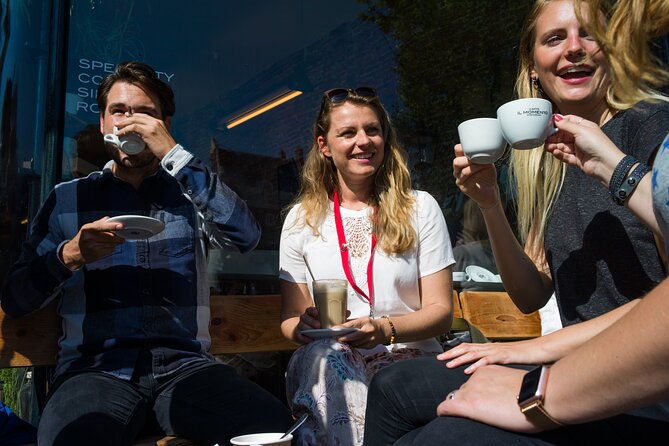
Next you get to enjoy Amsterdam’s softer side: the Jordaan neighborhood. It’s described as one of Amsterdam’s most picturesque areas, and you can see why. You’re given the story behind the Jordaan and how its cute little houses came to be, which helps you understand that charm didn’t just happen. It developed through city planning and social shifts.
You’ll spend around 15 minutes here, enough time to feel the vibe rather than just pass through it. The streets are narrow, the atmosphere is more intimate, and you’ll probably notice details you’d otherwise skip—street corners, façades, the rhythm of everyday life.
After Jordaan, you hit 9 Little Streets, also known as De Negen Straatjes. This is Amsterdam’s most famous shopping-street cluster, and the tour treats it like more than retail. You’ll get tips for the best bars, restaurants, and shopping opportunities. That’s practical value—because once you arrive, it’s easy to wander randomly and miss the good stuff that matches your tastes.
This part runs about 10 minutes. It’s not meant to replace a full day of shopping. It’s a “direction shot”: enough to point you toward where to go next and help you avoid wasting time on places that aren’t right for you.
Anne Frank House, Westerkerk, and Begijnhof: what you see on the route

You also get a quick look at the Anne Frank House from the route, with time set aside around 5 minutes. Important note: the admission isn’t included. So think of this stop as a respectful glimpse, not a full visit. If you want inside time, you’ll want to plan that separately.
Next is Westerkerk. You’ll see one of the biggest churches in Amsterdam for around 5 minutes, again as a route view. Admission isn’t included here either, so you’re mainly getting the exterior presence and the guide’s framing of why it matters.
Finally, you reach Begijnhof, a stunning courtyard space. Here the tour is more than just looking from a sidewalk. You’ll visit Begijnhof and try to spot the hidden church inside. Admission is listed as not included, so you’ll want to be ready for the possibility that you’ll see what you can from the visit route, rather than assuming every interior space is open in the way you might expect.
This cluster is smart because it gives you three big cultural landmarks with minimal fuss. It also keeps the tour moving so you end at Spui with energy left to keep exploring.
Snacks, questions, and what the guide adds beyond the stops
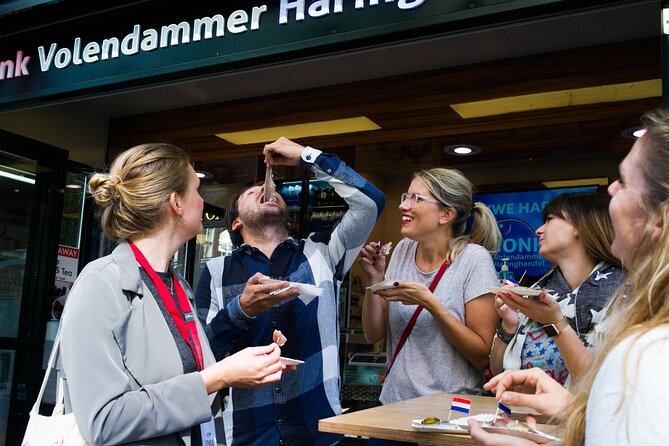
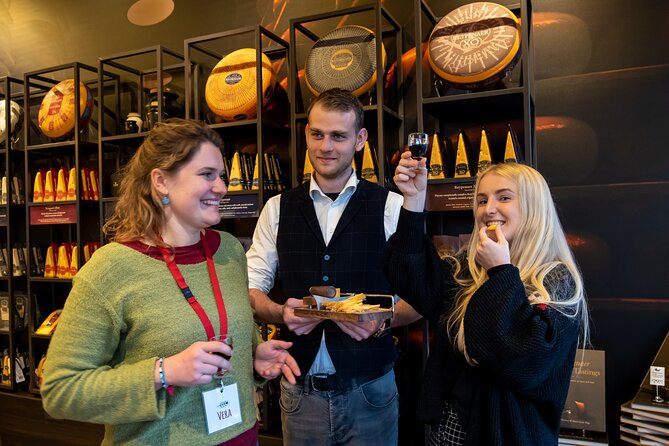
This is labeled as a cultural food tour, and you’ll feel that in the way the guide connects place to taste. You get snacks included, and the guide uses the sights to frame what Amsterdam values—trade, neighborhood character, architecture, and the stories people tell about their city.
Even without a detailed list of specific dishes in the tour description, you can expect a typical food-tour benefit: you leave with names of places and a better sense of where to look. The tour explicitly includes tips for bars, restaurants, and shopping in the De Negen Straatjes area. That’s useful because Amsterdam has plenty of food options, but finding the right ones on your first day can take trial and error.
The guide’s role is also clear in how the tour is paced. Stops are short and frequent enough that you won’t zone out. And because the group is small, you can ask questions when something clicks—like why trade changed the city’s layout, or why certain historic narratives are told differently depending on the viewpoint.
Price and value: what $102.41 buys you in Amsterdam
Let’s talk money in plain terms. At $102.41 per person for about 2.5 hours, this isn’t a throwaway walking tour. But you’re paying for three concrete things: a guide, a small group size, and admission coverage for most stops.
A lot of the stops you encounter are marked free for admission ticket, including the National Monument area, Dam Square context points, Royal Palace area time, Oude Kerk, Beurs van Berlage, Magna Plaza, and the Jordaan/De Negen Straatjes segment (since those are neighborhood areas). A few notable attractions on the route—Anne Frank House, Westerkerk, and Begijnhof—are listed as not included, so your cost covers the route time and interpretation, not paid entry to those attractions.
When I think about value, I weigh that against what you’d likely do on your own. Without a guide, you’d see some of the same streets and buildings, but you might miss the causal story: how Amsterdam’s growth ties to trade wealth, how power symbols appear right at the center, and why colonial history is part of the conversation even when you’re walking through “beautiful streets.”
Add the included snacks and the 1.50€ tourist tax, plus a 15-person cap, and the price starts to feel more justified. It’s a way to get a guided “first city draft” that you can build on later.
Who this tour suits best (and who might want a different format)
I’d book this if you want a strong first-day orientation that still feels more personal than the big-group bus tours. It’s a great match for history buffs and foodies because the guide connects neighborhoods to bigger themes: power, trade, social change, and the way culture lives in street-level spaces.
You’ll also like it if you want both sides of Amsterdam: the formal center (Dam/National Monument and Royal Palace context) and the softer, scenic streets (Jordaan and De Negen Straatjes).
You might want a different approach if you’re planning to spend lots of paid time inside major sites. Since some entrances aren’t included and you only get brief route time for places like Anne Frank House and Westerkerk, this isn’t the best option if you want a full in-depth “tickets and touring” day inside multiple attractions.
Should you book Amsterdamliebe’s cultural food tour?
Yes—if your goal is a smart, small-group introduction that ties food-culture energy to real Amsterdam history. The route covers the city’s big storyline, then rewards you with the pretty neighborhood streets and practical “where to go next” tips. The small group cap is a real quality upgrade, and the pace keeps you moving without feeling like you’re speed-walking past everything.
If you’re the kind of traveler who wants to prioritize paid museum time, treat this as your guided set-up. Use it to get oriented, then return later on your own with tickets where you want deeper entry time—especially around Anne Frank House and the interior spaces tied to churches and courtyards.
If you’re deciding in one sentence: book it for the guided context and snack-and-stroll format. Plan separate tickets if your heart is set on full interior visits.
FAQ
How long is the Amsterdam guided cultural food tour?
It runs for about 2 hours 30 minutes.
Where does the tour start and end?
It starts at the National Monument on Dam (1012 JS Amsterdam) and ends at Art Amsterdam Spui on Spui (Spui 20HS, 1012 XA Amsterdam). The tour ends on Spui Square, and you can follow your guide back to Dam Square if you want.
How much does the tour cost?
The price is $102.41 per person.
Is the tour offered in English?
Yes, it’s offered in English.
What group size should I expect?
The tour has a maximum of 15 travelers.
Are tickets included for every stop?
Most stops are listed with admission ticket free, but admission is not included for Anne Frank House, Westerkerk, and Begijnhof.
Are snacks included?
Yes, snacks are included.
Is the tour weather-dependent?
Yes. It requires good weather, and if it’s canceled due to poor weather, you’ll be offered a different date or a full refund.
Do I need to book far in advance?
On average, it’s booked about 30 days in advance.