REVIEW · AMSTERDAM
Amsterdam High-End Dutch Food & History Tour – Up to 8 guests
Book on Viator →Operated by Amsterdam Food Tours · Bookable on Viator
Food history in Amsterdam, served bite by bite. This 4-hour small-group tour strings together Dutch classics, colonial-era flavor, and the city’s streets—so you taste the story, not just the samples. You’ll move between standout specialty stops with a guide who keeps the pace human and the details practical.
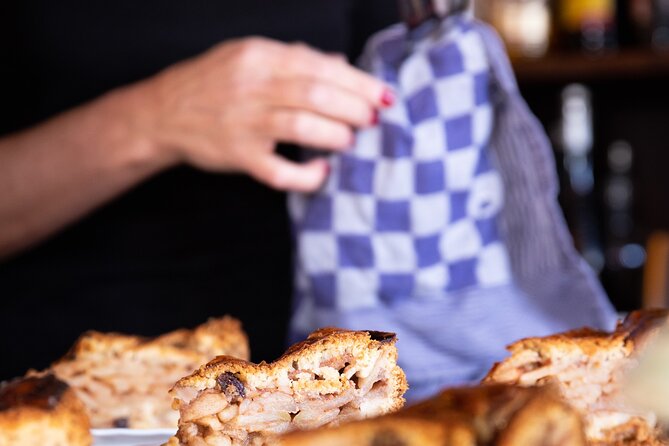
I like how the menu hits high-end food counters, not the usual tourist buffet. The homemade Dutch apple pie is a recurring star, and it comes with the kind of brown-café Amsterdam mood that makes you understand why locals pace their days around places like these. I also like the private speakeasy wine tasting, where you’re pairing Dutch wine with farmhouse cheeses (and you can go non-alcoholic or choose beer instead).
One drawback to plan for: it’s not vegan, and it isn’t a super sit-down experience. You should be able to walk and stand for up to 20 minutes at a time, even though bad weather keeps things inside and the walking between stops may shrink.
In This Review
- Key things you’ll notice fast
- Why this Dutch food and history tour feels worth the money
- The 6-stop format: how the tastings are paced
- What you’ll eat on Saturday: apple pie, Lindengracht satay, and a speakeasy pairing
- What you’ll eat Sunday and Monday: grillworst, Holtkamp shrimp croquette, and spekkoek
- What you’ll eat Tuesday to Friday: sausage-and-cheese with fish and wine
- The speakeasy wine pairing: how to make it work for you
- Cheese, sausage, and fish: what each stop teaches you
- Guides and group size: why the experience feels personal
- Dietary reality check: not vegan, and the butcher stop needs a heads-up
- Price and value: what you’re really paying for at $157.21
- Practical tips so you enjoy the full 4 hours
- Should you book this Amsterdam Dutch food and history tour?
- FAQ
- How long is the Amsterdam high-end Dutch food and history tour?
- How many people are in the group?
- Is the tour offered in English?
- Where do you meet and where does the tour end?
- Is the tour suitable for vegans?
- Are non-alcoholic options available for the wine tasting?
- Are there bathroom stops during the tour?
- Can I cancel for a full refund?
Key things you’ll notice fast
- Up to 8 people means more back-and-forth with your guide and less rushing through each stop
- Dutch apple pie appears on every day’s schedule, so you get a clear theme across the route
- Speakeasy wine pairing is built around Dutch cheeses, not just wine for wine’s sake
- Fish, sausage, and cheese each get their own moment, so you taste a full slice of Dutch staples
- Indonesian influence shows up through satay and spekkoek, tied to Amsterdam’s colonial connections
- Bitterballen finale lands at a historic Dutch company building tied to the founding-era story of New York
Why this Dutch food and history tour feels worth the money
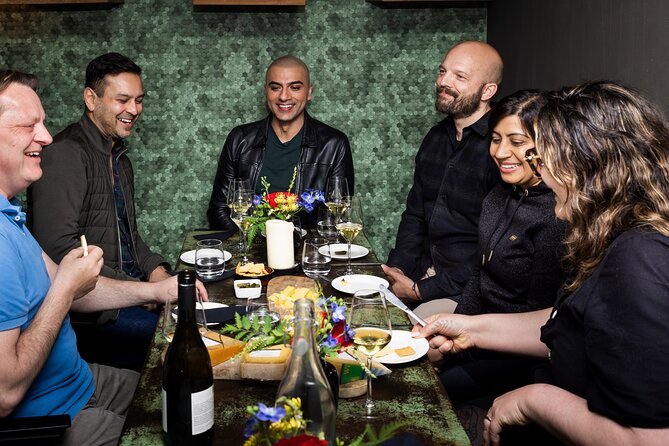
This is a food tour that takes Amsterdam seriously. The route is built around small specialty places, and the food choices are specific enough that you actually come away learning why each item belongs in the Netherlands. You’re not just collecting bites. You’re building a map in your head of how Dutch food culture grew—from inland farmhouse comfort to coastal fish shops and the colonial ties that still flavor the menu.
The price is $157.21 per person, and yes, it’s “high-end” pricing. The value part is the mix: you’re paying for multiple guided tastings, including a private-room wine experience, plus meals that go beyond common street-food hits. If you’ve done cheaper food walks, you’ll spot the difference immediately: here, the servings and the pairing logic feel intentional.
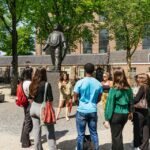
The other value signal is the group size. With a maximum of 8, the guide can steer conversations, answer questions about what you’re tasting, and keep the pace from turning into a shuffle line. That matters when you’re standing in small shops trying things that are easier to enjoy slowly.
You can also read our reviews of more food & drink experiences in Amsterdam

The 6-stop format: how the tastings are paced
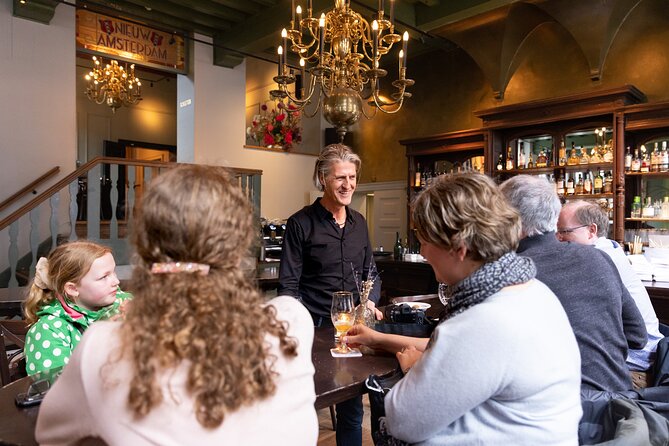
This tour runs about 4 hours and typically flows like this: you start with a classic sweet (apple pie), then move into savory Dutch staples (cheese, sausage, or fish depending on the day), and end with a final bite connected to a major Dutch historical storyline. Some stops also include seating and bathrooms—useful when you’re sampling multiple things back-to-back.
A practical note: the schedule is designed for normal mobility, and you’ll be walking and standing in short stretches. The tour also adapts to weather. If it’s nasty out, the tastings stay inside and the walking links between stops may be shortened. So you’re not trapped outside with a coat that never gets warm.
And yes, you should plan to eat. Even people who think they can “just nibble” tend to end up ordering more than expected because each stop is small but purposeful.
What you’ll eat on Saturday: apple pie, Lindengracht satay, and a speakeasy pairing
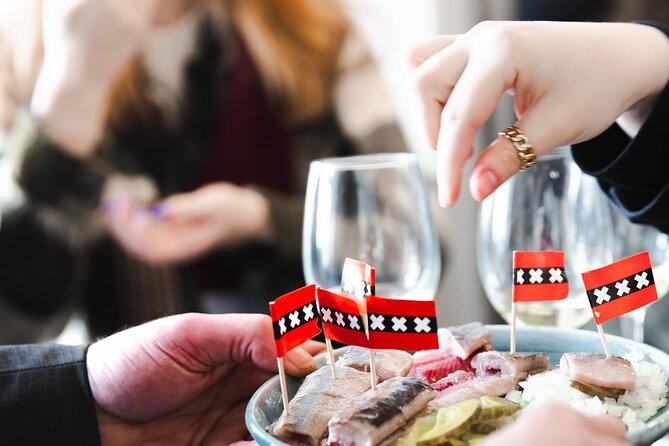
Saturday has a very “Amsterdam variety” feel. You start with homemade Dutch apple pie in one of the city’s famous brown cafés. Brown cafés aren’t just a vibe—they’re part of how Amsterdam does hospitality. You’ll taste the pie and also get the story behind the place and why this kind of comfort food matters here.
Next comes an Indonesian flavor stop at the Saturday Lindengracht market: satay with sides. This is one of the key ways the tour connects Amsterdam to its global past. Indonesian-style satay shows up in the Netherlands because Dutch trade and colonial history shaped what became familiar.
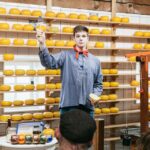
Then you’ll hit a boutique deli for three farmhouse Dutch cheeses. This isn’t just random cheese tasting. The stop sets up the next experience: a Dutch wine tasting in a private speakeasy room, paired with the cheeses. If you’d rather not drink, you can choose non-alcoholic options or go with beer.
After that, you’ll go to a local fish shop for the Dutch favorites: herring, fried cod, and smoked eel. This is where the Netherlands stops feeling like “only cheese” and starts feeling like a coastal country with a strong tradition of preserved and fried fish.
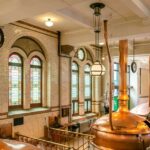
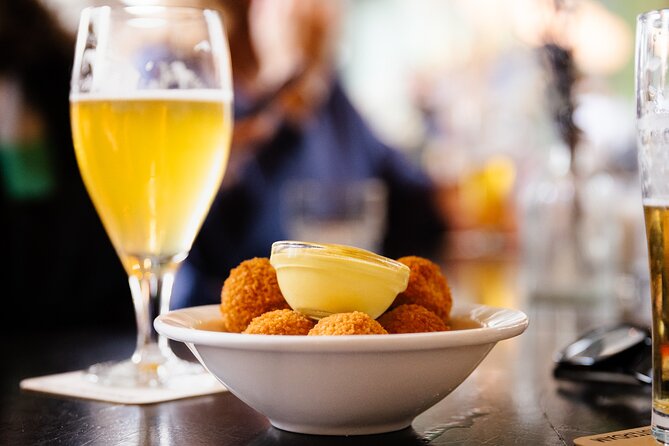
You finish at the former headquarters of the Dutch West India Company, a 17th-century building tied to the birthplace of New York. The endpoint is also a food moment: traditional bitterballen, a classic Dutch snack that’s basically the perfect “I need one last bite” conclusion.
What you’ll eat Sunday and Monday: grillworst, Holtkamp shrimp croquette, and spekkoek
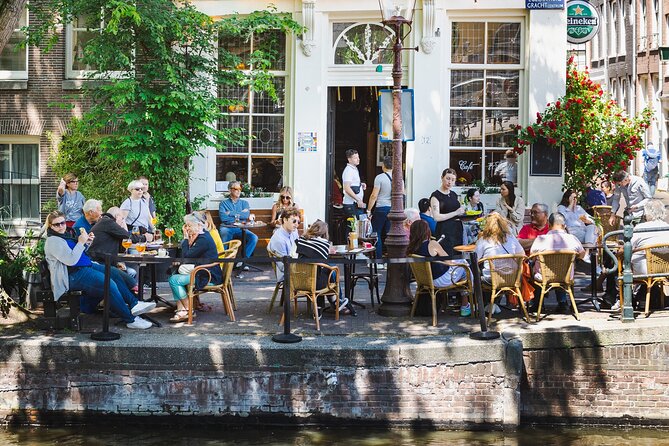
If you’re going on a Sunday or Monday, expect a slightly different flavor journey. The apple pie opening stays, but the savory path shifts toward sausage-forward bites and more Indonesian baking.
You’ll start with apple pie again, then move to a boutique deli for a warm baguette topped with Dutch grillworst—served with honey-mustard sauce, mayonnaise, pine nuts, and rocket salad. That combination matters because it shows how Dutch bread-and-sausage can feel both hearty and carefully assembled.
Next is a stop for a legendary pastry/patisserie bite: Dutch shrimp croquette at Patisserie Holtkamp. This is a big deal for anyone who likes classic Dutch comfort food that still feels refined.
Then comes a two-part Indonesian-themed stop: freshly grilled Javanese chicken satay with peanut sauce, cassava kroepoek, and sambal, followed by handmade Indonesian spekkoek (layered cinnamon cake). This is one of the tour’s best “taste the history” moments. The Netherlands kept parts of Indonesian foodways, then made them Dutch-sized and Dutch-schooled.
Finally, you’ll round it out with cheeses plus meat: three artisan soft and hard Dutch cheeses with crackers and quince pear, plus ossenworst (smoked beef sausage) served with pickles and mustard. It’s a clear finish: sweet earlier, savory center, and a classic Dutch meat-and-cheese close.
What you’ll eat Tuesday to Friday: sausage-and-cheese with fish and wine
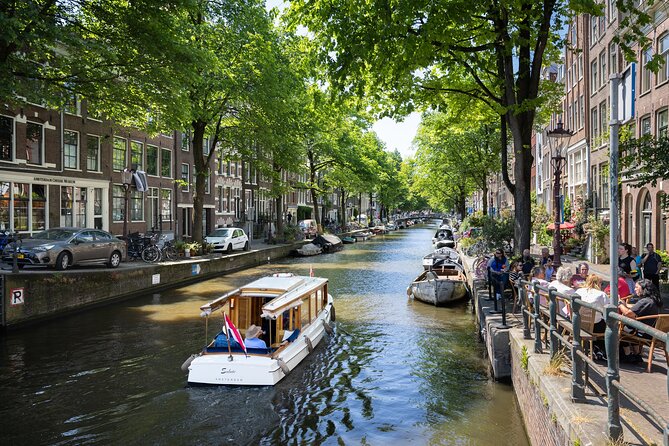
On Tuesday through Friday, the route leans into a traditional butcher stop plus the cheese-and-wine rhythm.
You begin again with the homemade Dutch apple pie at a brown café. Then you’ll visit a long-running family butcher shop (130 years old) for Dutch sausage tastes: ossenworst (smoked beef sausage) and grillworst (flavoured pork sausage).
After that, you pick up farmhouse cheese selections from a boutique deli, then head for the private speakeasy wine tasting. The pairing is the point: Dutch wine (or your alternative of non-alcoholic/beer) is served with the cheeses so you can taste how flavors shift.
The final major food stop is the fish shop again—herring, fried cod, and smoked eel—and then you wrap up at the Dutch West India Company building with bitterballen.
So if you want the fish and the historic finale, Tue–Fri and Saturday are usually your best bet based on the way the menu is described.
You can also read our reviews of more tours and experiences in Amsterdam
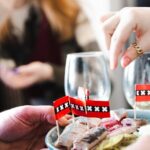

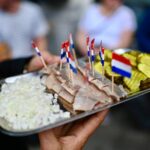
The speakeasy wine pairing: how to make it work for you
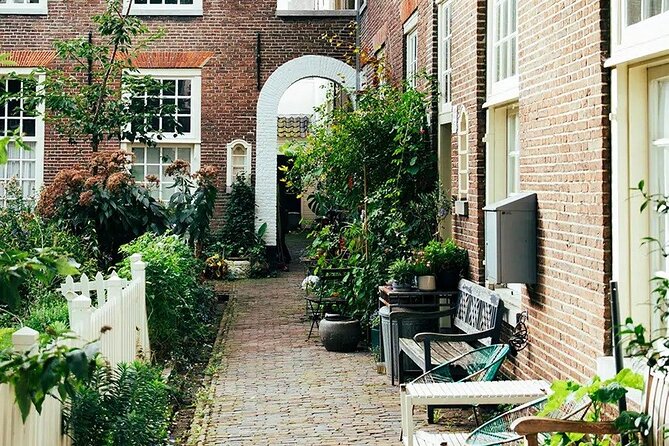
This is the kind of stop that can be either a great experience or just a fancy room, depending on how you approach it. The smart move is to treat it like a guided tasting, not a sip-and-scroll moment.
Here’s what you’re getting: Dutch cheese selections paired with a Dutch wine tasting in a private speakeasy room. And there are non-alcoholic or beer options, so you’re not boxed into only wine-drinking.
If you’re curious, ask your guide what to try first. With cheese and wine, order can change your impression, because one flavor can “reset” your palate for the next bite. Also, don’t be shy about scent and texture. Dutch cheeses can be firm, sharp, creamy, and funky in ways that are easier to appreciate with a little attention.
Cheese, sausage, and fish: what each stop teaches you
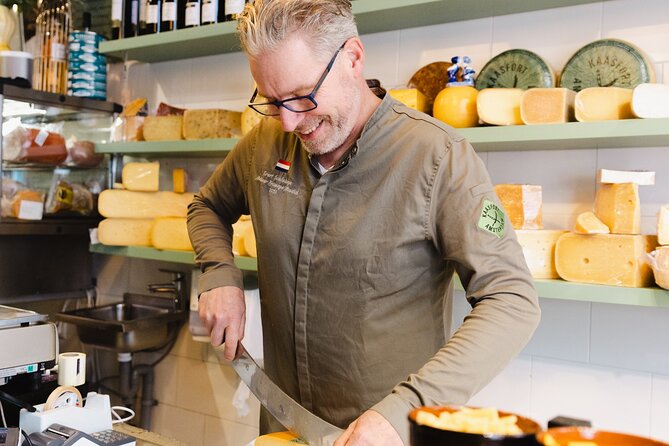
One reason people rave about this format is that the foods aren’t random. Each item maps to Dutch everyday life.
- Cheese is a farmhouse identity. The tastings are built around farmhouse selections, not just any cheese slices, and the experience ties into the wine pairing.
- Sausage shows up in two styles: smoked beef and pork grillworst. It’s hearty, spiced, and often served with condiments like pickles and mustard, so you taste Dutch preferences for balancing fat with tang.
- Fish gives you the coastal logic. Herring, fried cod, and smoked eel cover fresh-ish, fried, and preserved—three different ways the sea ends up on a plate.
Even if you don’t consider yourself a “food person,” this structure helps you see patterns. You start noticing how Dutch meals often lean on preservation, dairy, and simple but careful seasoning.
Guides and group size: why the experience feels personal
Your guide makes a huge difference on any walking tour, and this one leans on that. The guide lineup changes, but the common thread in people’s feedback is clear: a fun personality, a strong local sense of place, and good relationships with the vendors, which matters when shops are small and staff need to keep the rhythm.
You’ll see names like Katrina, Rudolph, Jan, David, Catharina, Dirk, Caroline, Bo, Jelte van Koperen, and Mark tied to great tour experiences. What’s consistent across those accounts is pacing and conversation. It doesn’t feel like you’re being marched between stops; it feels more like dinner with a friend who also knows the architecture and street history.
And because the group is capped at 8, the guide can keep checking in with you. That’s a practical advantage. When you’re in a big group, you can end up just waiting for the rest.
Dietary reality check: not vegan, and the butcher stop needs a heads-up
The tour isn’t suitable for a vegan lifestyle. That’s the cleanest constraint. For other dietary needs, you’ll want to specify them during booking.
Here’s the part to plan for: one of the stops involves a butcher shop. If you’re vegetarian, a butcher stop may not have what you need. In at least one reported case, extra chocolate was offered when vegetarian options weren’t available at that specific shop. That tells you something useful: the team can sometimes improvise, but you should communicate your needs up front so you’re not relying on last-minute substitutions.
Bottom line: if you’re vegan, skip this one. If you’re vegetarian or have another restriction, confirm details early.
Price and value: what you’re really paying for at $157.21
A $157.21 per-person price tag is easy to question until you look at what’s included in the flow.
You’re paying for:
- multiple tastings across different Dutch food categories (sweet, cheese, sausage, fish)
- a private-room wine tasting with pairing logic
- specialty stops at known shops (including a major patisserie name on certain days)
- a small-group format that supports conversation and pacing
If you compare this to cheaper “snack walks,” the biggest difference is the pairing and the shop quality. Wine/beer paired with cheese in a private setting costs real money. So does sending a small group into multiple specialty counters for guided samples.
So the value case is strongest if you want more than taste. You want context—why these foods show up in these neighborhoods, and why Amsterdam’s global past still tastes Dutch.
Practical tips so you enjoy the full 4 hours
Keep these in mind and you’ll have an easier time:
- Go hungry in a sensible way. The stops are small but frequent, and people often end up eating more than they planned.
- Wear shoes you trust. You’ll walk and stand up to about 20 minutes at a time.
- Plan for indoor tastings in bad weather. The tour adjusts by shortening walking and keeping tastings inside.
- If you care about alcohol, tell the guide your preference. Non-alcoholic or beer alternatives are available for the wine pairing portion.
Also, if you’re booking for a specific day and you have strong preferences (fish vs sausage vs more Indonesian sweets), use the day menus as your guide. The route changes by day.
Should you book this Amsterdam Dutch food and history tour?
Book it if you want a food tour that feels like Amsterdam—brown cafés, specialty cheese counters, proper sausage and fish stops, and a historical finish tied to the Dutch West India Company and the New York origin story. The small group size and the speakeasy pairing are the two things that make it feel higher-end rather than “just another snack walk.”
Skip it if you’re vegan, or if you know you can’t handle standing and walking in short stretches for about 20 minutes at a time. Also skip if you’re the type who hates structured tastings and prefers to wander on your own.
If you like tasting well-chosen foods while someone explains how Amsterdam got that way, this one is a strong pick.
FAQ
How long is the Amsterdam high-end Dutch food and history tour?
It runs about 4 hours.
How many people are in the group?
The tour is capped at a maximum of 8 travelers.
Is the tour offered in English?
Yes, it’s offered in English.
Where do you meet and where does the tour end?
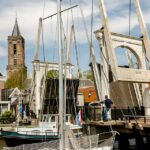
You start at Papeneiland, Prinsengracht 2, 1015 DV Amsterdam, and you end at Café Nieuw Amsterdam, Haarlemmerstraat 75, 1013 EC Amsterdam.
Is the tour suitable for vegans?
No. It is unfortunately not suitable for a vegan lifestyle.
Are non-alcoholic options available for the wine tasting?
Yes. The wine tasting in the private speakeasy room has non-alcoholic options, and beer options are also available.
Are there bathroom stops during the tour?
Yes. Three out of six food stops have reserved seats and a bathroom available.
Can I cancel for a full refund?
Yes. You can cancel up to 24 hours in advance for a full refund.