REVIEW · AMSTERDAM
Amsterdam: Leisurely Windmill & Countryside Bike Ride
Book on GetYourGuide →Operated by Mike's Tours Amsterdam · Bookable on GetYourGuide
Peddling north of Amsterdam feels like a reset. What I love most is the IJ ferry start and the up-close Admiral windmill moment, right in the mix. One thing to plan for: the ride is a bit quick-paced, so if you want to coast and stare for ages, you may feel slightly rushed.
The route takes you through Waterland’s charming villages (like Zunderdorp and Ransdorp), along canals and dikes, and out over the working polder countryside that sits below sea level. You also get a real food payoff with Dutch cheese tasting plus a friendly stop to say hi to big, well-fed pigs. Guides (like Hugh and Sebastian) tend to mix bike coaching with local stories in clear, practical English.
If you like active travel with built-in photo stops and you’re comfortable riding on your own, this is a fun way to see a side of the Netherlands that most people only fly past from the city.
In This Review
- Key highlights you’ll feel right away
- Oosterdoks Island start: easy to find, quick to get moving
- The IJ ferry and the first canal stretch north
- The Admiral windmill: the moment most people hope for
- Waterland villages: Zunderdorp and Ransdorp in real time
- Polder riding: seeing what below-sea-level living looks like
- Eco-farmers cooperative stop: cheese tasting (and more)
- How long you ride, how hard it feels, and bike comfort
- Price and value: is $49 worth it north of Amsterdam?
- Should you book this Amsterdam windmill and countryside ride?
- FAQ
- How long is the Amsterdam countryside bike tour?
- How far do you bike?
- Where do you meet near Amsterdam Central Station?
- Is lunch included?
- What cycling ability and age are required?
- Does the tour run in rain?
Key highlights you’ll feel right away
- Start by ferry across the IJ: it’s a quick change of scenery and a great warm-up
- The Admiral windmill close-up: you don’t just spot one from far away
- Waterland village riding: Zunderdorp and Ransdorp add real character to the trip
- Polder roads below sea level: you’ll see how the Dutch manage water in everyday life
- Cheese tasting and a snack stop: included, and worth planning around
- Small group size (up to 15): easier pacing, plus more personal guidance
Oosterdoks Island start: easy to find, quick to get moving
The tour meets just a short walk from Amsterdam Central Station—about five minutes—on Oosterdoks island, slightly east, by the train tracks. You’ll walk toward the OBA (public library) and then take a side street left in front of the library. At the corner near the tracks, you’ll find Mike’s Tours Amsterdam.
Why I like this meeting setup: it gets you out of the crowded “Amsterdam shuffle” fast. You’re not spending your whole first hour lost in tram lines or fighting for the right canal crossing. It’s also a good location for the big first visual payoff: the tour’s move from city energy to countryside calm happens immediately after the start.
One practical note: the IJ crossing can be windy, even when the weather looks decent. The ride is outdoors, and you’re on a bike for the bulk of the time, so I’d treat wind gear as part of your plan (especially if you run cold).
You can also read our reviews of more cycling tours in Amsterdam
The IJ ferry and the first canal stretch north
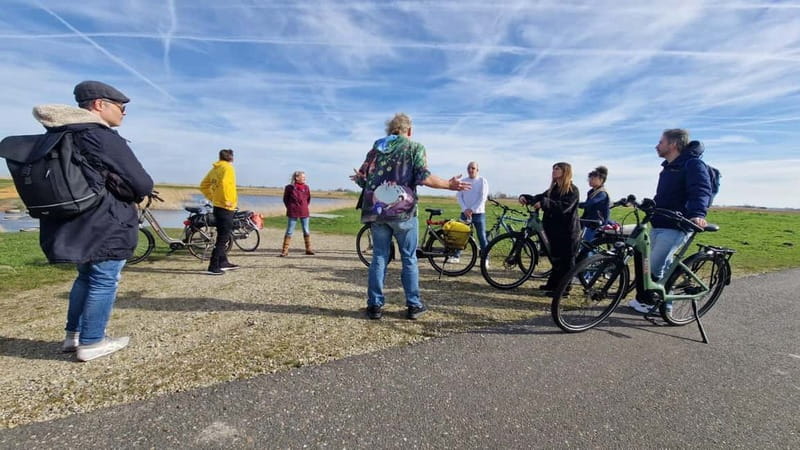
A standout early moment is taking a ferry across the IJ. Even if you’ve been around Amsterdam canals before, this ferry jump changes the feel quickly. You get that in-between “we’re leaving the city” moment, and it also buys you a smoother launch into the ride.
After the ferry, you’ll head along the North Holland Canal, with early visual anchors like an old windmill you pass along the way. This is the kind of start that helps your brain connect the dots: first you see Dutch water transport in motion (ferry), then you roll alongside canals built to move people, goods, and water control solutions through flat terrain.
This portion also sets the tone for how the ride works. You’re not doing a slow sightseeing crawl. It’s structured: you bike, you stop briefly, you bike again. That’s great if you want to fit a countryside experience into half a day.
The Admiral windmill: the moment most people hope for
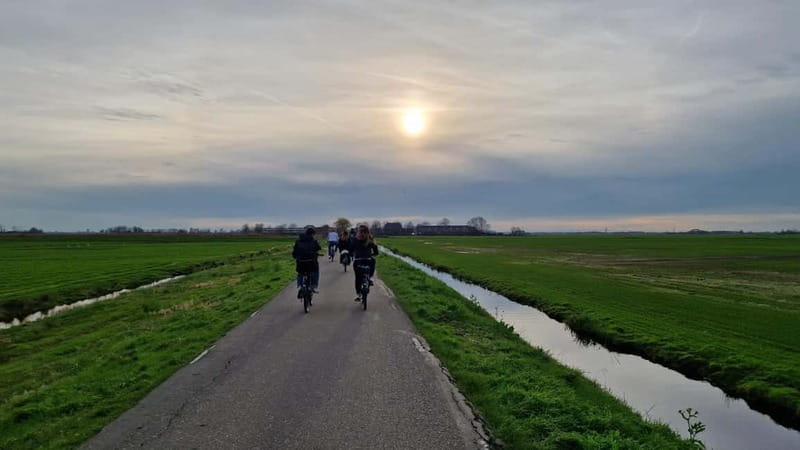
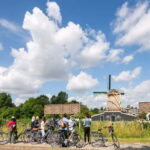
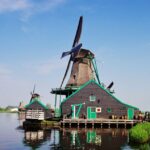
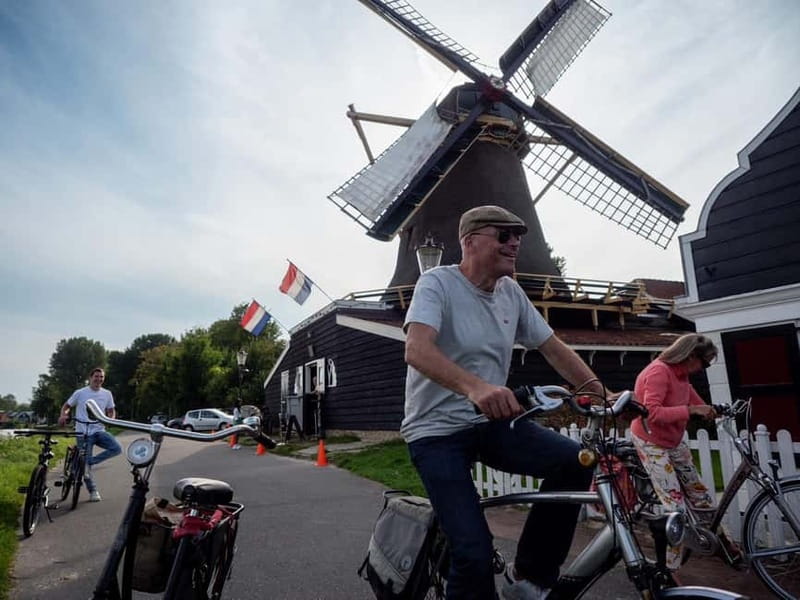
The tour’s classic windmill stop is The Admiral, which you get to see up close rather than as a distant dot on the horizon. That matters. Windmills are easiest to appreciate when you can stand near them and read the scale—especially in the Netherlands, where so much is framed by flat space and open sky.
What I like about this stop is the timing. It happens after you’ve already warmed up with the ferry and the early canal stretch. By the time you reach The Admiral, you’re fully in cycling mode, so the windmill feels less like a random checkpoint and more like a peak reveal.
Also, windmill viewing on a bike tour tends to be more natural than bus travel. You can look around, take photos from a comfortable angle, and move on without worrying about traffic schedules. Just keep an eye on the wind—standing still near water can feel colder than you expect.
Waterland villages: Zunderdorp and Ransdorp in real time
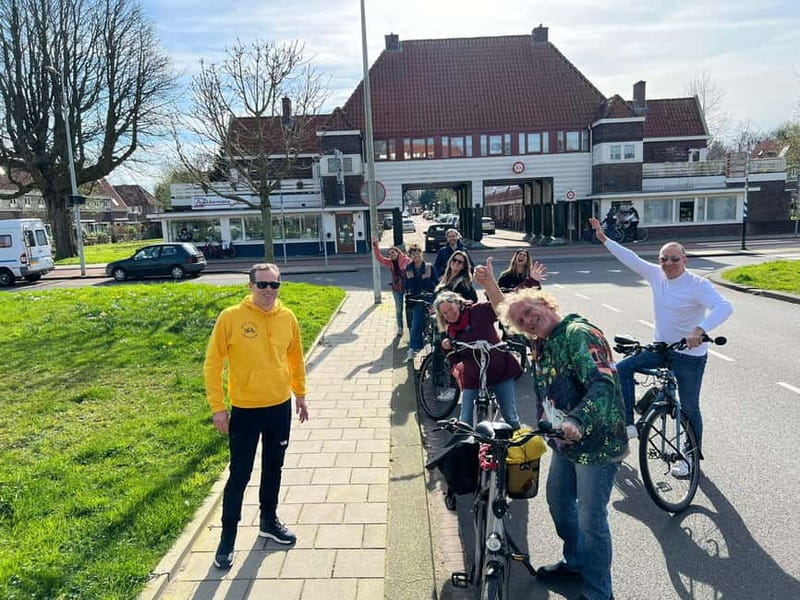
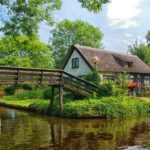
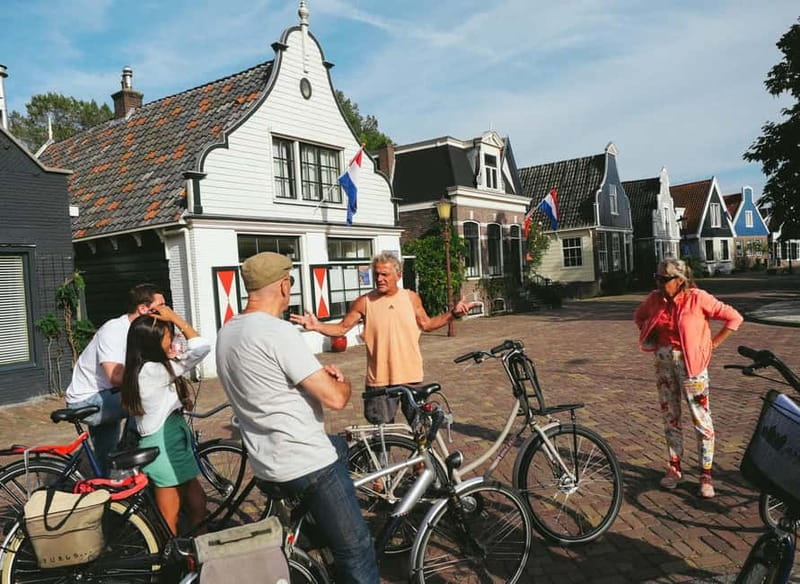
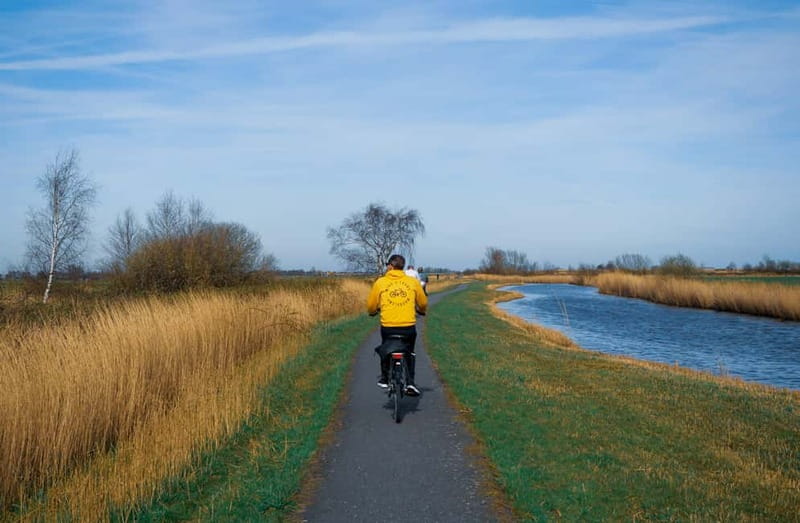
Once you’re out in Waterland, the tour leans into the Dutch “everyday postcard” feel: dikes, canals, and small village streets that look made for bicycles. Villages highlighted include Zunderdorp and Ransdorp.
These stops aren’t just photo opportunities. They give you a sense of how people actually live in this part of North Holland: the built environment is small, practical, and closely shaped by water management. In other words, you’re seeing the Netherlands as a working system, not a theme park.
I also like that the tour builds in time to capture moments along the roughly 23 km (14 miles) route. That’s a meaningful distance, but it’s long enough that villages don’t feel like a token “pass-through.” You get enough time in each village to feel the change in scenery—then you’re back on the road.
If you care about photos, bring a phone case or make sure your gear can handle damp air. The tour runs in rain or shine, and the countryside can mean misty conditions even when the city looks clear.
Polder riding: seeing what below-sea-level living looks like
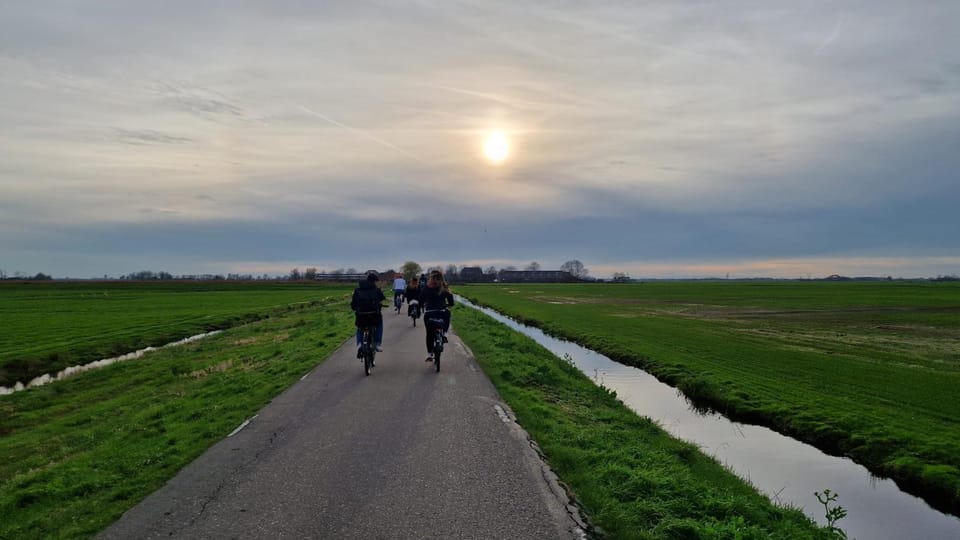
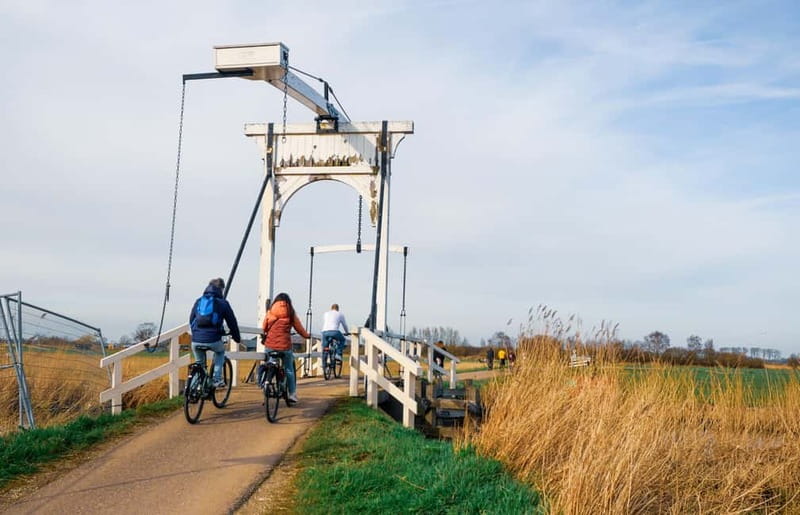
One of the most “you have to see it” parts of this tour is cycling through the polder countryside, which includes areas below sea level. You feel it in how the route is built: the terrain stays very flat, and the water control structures (dikes and canals) keep showing up in the background like quiet infrastructure.
This is one of those Dutch realities that makes more sense when you experience it physically. When you’re biking along low-lying roads, you understand why the Netherlands treats water management as everyday life rather than a special project. You also start noticing how villages, waterways, and windmills all relate to each other as part of the same logic.
On a practical level, this section also affects your ride. Flat doesn’t mean easy if the wind is pushing sideways. A guided route helps here because the pacing and stops keep you from guessing where to rest or how long you’ll be exposed.


Eco-farmers cooperative stop: cheese tasting (and more)
The included food moment is a stop at a local eco-farmers cooperative for cheese tasting. This is one of the best parts of the tour if you enjoy learning through taste, because it connects what you see outside—farmland, water control, rural life—to what ends up on shelves and tasting tables.
You’ll also get a Dutch snack as part of the included items, and you’ll have a good chance to reset before the ride back. Lunch is not included, so plan to eat either before the tour or after you return to Amsterdam Central.
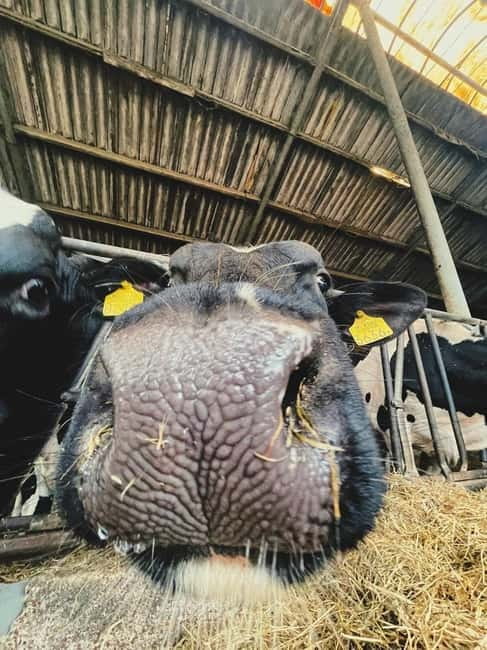
The stop also includes a chance to say hi to the well-fed pigs of Amsterdam North. It’s goofy-fun, and it breaks up the day nicely. This also helps explain why the tour feels more like a countryside visit than a basic transport session.
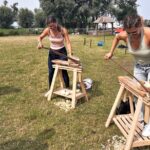
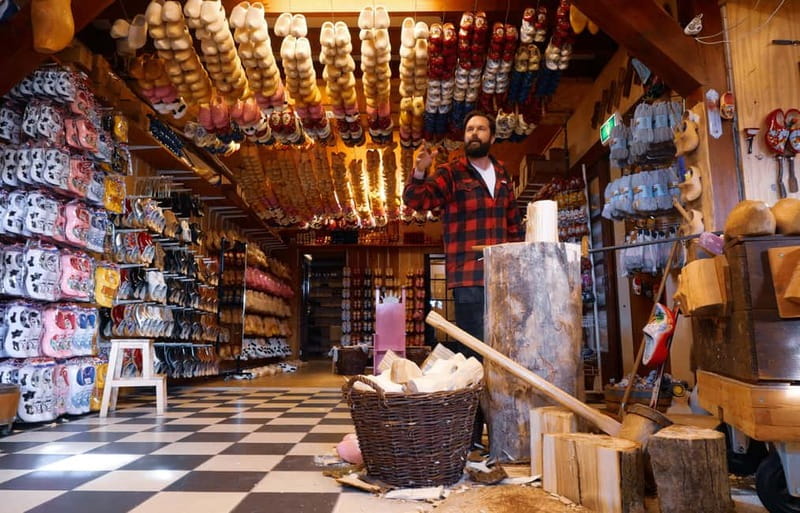
Some past groups also reported extra fun on certain runs, like a clog workshop stop and a drink stop on the way back. Those aren’t listed as every-time guarantees in the core description, but it’s a good sign the route often mixes in small cultural breaks—not just cycling.
How long you ride, how hard it feels, and bike comfort
The tour runs about 3.5 hours with a route of roughly 23 km (14 miles). It’s set up for confident riders who can handle cycling on their own. The basic rule is clear: you must be able to ride confidently without constant support from the guide.
That’s important because this is not a “training wheels” experience. Even on comfortable Dutch bikes for all sizes, you’ll still be pedaling. One review described the tour as fairly quick-paced, and that lines up with the distance and duration. If you’re expecting a slow amble with long scenic pauses, you might feel like you’re working just to keep the group momentum.
Weather matters too. The tour runs rain or shine, and wet weather isn’t a reason to cancel. Bring good rain gear. If your plan is photos, remember that water and wind can make it harder to stop and adjust constantly—so pack and dress with minimal fuss.
Group size is capped at 15, which makes the pacing easier to manage than big tours. You’re also riding with an English-speaking guide who provides clear bike guidance and local context.
If you need more help with effort, some groups have mentioned using e-bikes. That’s not spelled out as a universal feature here, so I’d treat it as something you might ask about when booking.
Price and value: is $49 worth it north of Amsterdam?
At $49 per person, this tour is priced like a small-group guided outing that includes the “big cost items” you’d otherwise pay separately. Here’s what’s built in:
- Local guide
- Dutch bike
- Unique bike route
- Ferry across the IJ
- Cheese tasting
- Dutch snack
In plain terms, you’re paying for transportation out of the city, a guided route, and two food stops, in a half-day. A self-guided bike ride to Waterland is possible, but you’d still need to figure out ferry timing, safe route planning, and where to do a cheese stop that’s actually worth it. The guide handles the threading.
The one “value trade” is time. Since it’s around 3.5 hours and designed for active cycling, you don’t get an all-day slow wander. You’re buying efficiency plus key highlights—windmill close-up, Waterland villages, and cheese—rather than letting the day stretch.
If you’re traveling with limited time and you want countryside without losing the afternoon to logistics, this is solid value.
Should you book this Amsterdam windmill and countryside ride?
I’d book if you want a practical countryside day from Amsterdam with:
- real rural sights like The Admiral windmill and Waterland villages
- an active ride that still includes meaningful stops
- a tasting component that isn’t just symbolic (cheese tasting + snack)
- a small group with an English guide and clear bike direction
I would think twice if:
- you’re not a confident, independent cyclist
- you prefer slow walking-style sightseeing over biking momentum
- you’re very sensitive to wind and rain, since this tour runs outdoors regardless
- you want a long, lingering windmill festival vibe rather than a route-based highlight run
FAQ
How long is the Amsterdam countryside bike tour?
The duration is about 3.5 hours.
How far do you bike?
The route is about 23 km (14 miles).
Where do you meet near Amsterdam Central Station?
You meet about five minutes from Central Station at Oosterdoks island east of the station, next to the train tracks. Look for Mike’s Tours Amsterdam near the OBA (public library) and a side street left in front of the library.
Is lunch included?
No, lunch is not included. The tour includes a cheese tasting and a Dutch snack.
What cycling ability and age are required?
You must be able to ride a bike confidently on your own. The minimum age is 12. The tour is not suitable for people with low level of fitness.
Does the tour run in rain?
Yes. The tour happens whatever the weather, rain or shine, so bring good rain gear.
If you book, go in with the right mindset: you’re here for an efficient, guided countryside ride with a couple of real payoffs—windmill close-up and Dutch cheese—without the hassle of planning the route yourself.