REVIEW · AMSTERDAM
Van Gogh Museum Amsterdam Small Group Guided Tour
Book on Viator →Operated by 360 Amsterdam Tours · Bookable on Viator
Van Gogh clicks faster with the right guide. This small-group tour uses a wireless headset setup so you can actually follow the story inside a crowded museum.
I especially like how the guide walks you through Van Gogh’s growth in clear stages, not random highlights. I also love that the museum admission is included, so you can focus on looking instead of figuring out tickets and logistics.
One thing to consider: the tour moves in set time blocks, so if you want to linger only on a few famous paintings, you may feel the squeeze during the guided route. The good news is you can continue on your own after the tour ends inside the museum.
In This Review
- Key things to know before you go
- Why a guided Van Gogh Museum tour is worth the extra time
- Meeting at Cobra Café and how the experience actually moves
- Stop-by-stop: self-portraits and the early foundations
- Paris years (1886–1888): the paintings you’ll see differently
- Arles and the South of France (1888): color, mood, and experiments
- Saint-Rémy-de-Provence: the late style gets heavy fast
- Auvers Room: quick route, big emotional punch
- What makes the guides matter (from real guide styles you might get)
- Price and value: is $77.43 a fair deal?
- Practical logistics that affect your day (without the fuss)
- Who should book this tour (and who might skip it)
- Should you book the Van Gogh Museum Small-Group Guided Tour?
- FAQ
- How long is the Van Gogh Museum small-group guided tour?
- What’s the meeting point for the tour?
- Where does the tour end?
- Is admission included?
- What language is the tour offered in?
- How large is the group?
- Does it include audio equipment?
- Is free cancellation available?
Key things to know before you go
- Wireless whisper-style headsets help you hear the guide clearly, even when galleries get busy
- Max 14 people keeps the group small enough for questions and closer looking
- Admission included during the guided museum time, so you don’t have to manage separate entry moments
- A guided timeline from Paris (1886–1888) to Arles, Saint-Rémy, and Auvers
- Short, focused stops (often about 15–20 minutes) keep you moving to the next idea
Why a guided Van Gogh Museum tour is worth the extra time
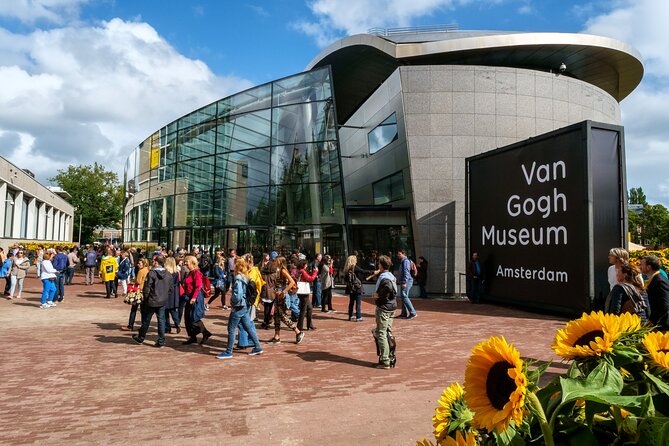
The Van Gogh Museum is popular for a reason. But without context, you can end up doing the classic museum shuffle: see something famous, nod, and then forget what you saw five rooms later.
This tour is built to prevent that. It’s only about 2 hours, and it’s structured around how Van Gogh’s life and art changed over time. That matters because many paintings start to make more sense when you know what was happening to him—what he was painting from, what he was trying out, and what themes he kept returning to.
The small-group size helps too. With a limit of 14 travelers, you’re not just another body in the crowd. The guide can call out details, answer questions, and encourage you to get closer to brushwork and composition.
You can also read our reviews of more guided tours in Amsterdam

Meeting at Cobra Café and how the experience actually moves
You meet at Cobra Café, Hobbemastraat 18. Then you head into the museum and stay with the guide while you work through the key rooms.
The tour includes a whisper system (wireless headphones). In practice, this means you can listen comfortably without constantly turning to face the guide. It also helps if the galleries feel loud or packed, which is pretty much the default in a world-class museum.
Timing is another reason this works. The stops are deliberately short—often around 20 minutes—so you get a guided “packet” of meaning per room. You’re not stuck listening for an hour before you see the next painting. You also won’t wander off track, which is a big deal in a museum as full as this one.
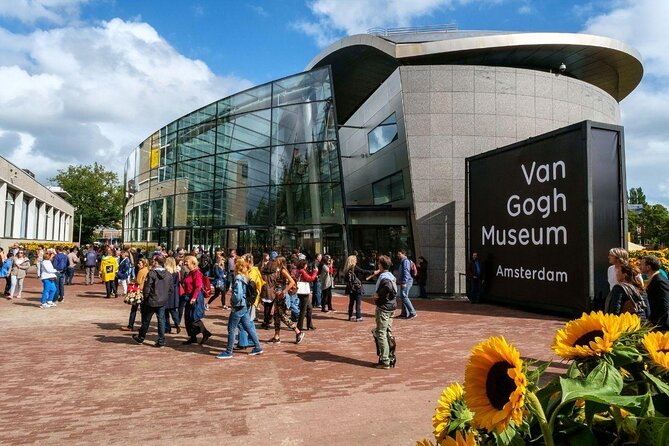
And when you’re done, the tour ends inside the Van Gogh Museum at Museumplein 6. That’s great because you can keep going at your own pace right away, including after the guided portion ends.
Stop-by-stop: self-portraits and the early foundations
The route starts with Self-Portraits. You spend about 20 minutes here, and it sets the tone. Van Gogh’s self-portraits aren’t just vanity. They’re a running record of how he sees himself changing—style, mood, and confidence included. If you’ve ever thought, I know I should look closer, this is where you start learning how.
Next, you move to the first-floor foyer where the museum frames Van Gogh in a wider art context. You’ll see works connected to Millet and Jules Breton, plus major pieces like:
- Woman Lifting Potatoes
- The portrait wall featuring Head of a Peasant Woman
- The Potato Eaters
This stop is useful because it shows the world Van Gogh looked at before his style fully hit its later intensity. It’s also a chance to notice how subject matter and emotion can be communicated through paint handling and composition, not only through the subject itself.
There’s a subtle benefit here: the tour teaches you what to look for. Instead of treating paintings like isolated trophies, you start connecting choices—color, pose, lighting, and how figures are placed in the picture space.
Paris years (1886–1888): the paintings you’ll see differently
Then comes one of the tour’s strongest ideas: turning the museum into a timeline. Between 1886 and 1888, Van Gogh moves toward his Paris period, and the guide shows you that change through specific works you’ll see up close.
Expect about 20 minutes here on paintings such as:
- Self Portrait with Felt Hat
- Still Life with Absinthe
- In the Café: Agostina Segatori in Le Tambourin
- Garden with Courting Couples
This part tends to click fast because you can see experimentation. Even if you don’t know names or dates, you can often feel the shift in mood and style once you’re guided through what the paintings are doing.
Also, I like that the tour doesn’t treat each painting like a standalone poster. It connects them to the city period—where Van Gogh is absorbing influences and testing new visual ideas.
In the real world, a guide can make this section feel alive. Some guides, including Martina, have been praised for using visuals like an iPad to support the story. If your guide does something like that, it can make the timeline easier to hold in your head.
Arles and the South of France (1888): color, mood, and experiments
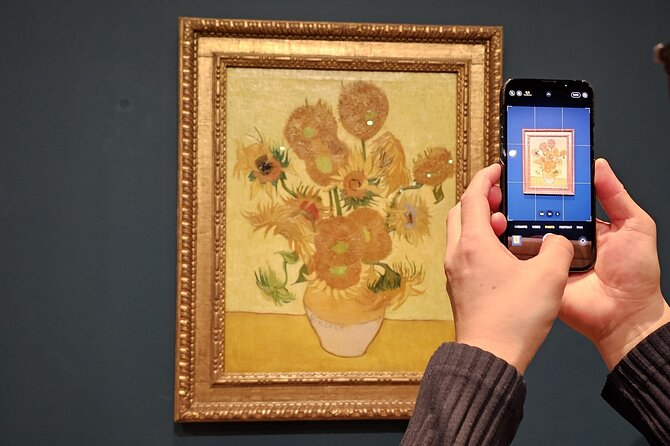
In 1888, Van Gogh relocates to Arles, and the tour spends about 20 minutes highlighting how the South changes his subject matter and color choices. This is where many people start thinking, Oh right, that’s why these paintings are so famous.
You’ll see pieces including:
- Sunflowers
- Almond Blossoms
- The Bedroom
- Copies of Japanese paintings (based on prints)
- The Yellow House
Two things make this stop especially satisfying. First, the paintings feel more direct and more personal. Second, the guide’s job is to help you notice how the style supports the feeling. You don’t just see objects. You see how Van Gogh built an image to carry emotion—through brush texture, pattern, and the way forms are arranged.
If you’re a “look close” person, this is also where the museum rewards patience. One review experience highlighted brush strokes up close and technique evolution, and that’s exactly what this room is good for when paired with a live guide.
One mild caution: there are multiple works titled Almond Blossoms across different rooms. The tour is still useful here because the guide can help you keep track of what’s similar and what’s different, but you’ll want to stay attentive.
You can also read our reviews of more museum experiences in Amsterdam





Saint-Rémy-de-Provence: the late style gets heavy fast
On Level 3, you move into Saint-Rémy-de-Provence. This is about more than a change of scenery. It’s about a shift in tone—often darker, more intense, and more symbolic.
You’ll spend around 20 minutes here with works like:
- Almond Blossoms
- Wheatfield with a Reaper
- Iris
- Pietà (After Delacroix)
This stop is where I recommend slowing down with your eyes. The guide gives you context, but you also get the chance to notice how Van Gogh builds mood. The painting choices aren’t just pretty. They can feel like they’re trying to say something bigger than a landscape or a portrait.
You’ll also likely pick up on how Van Gogh worked with art traditions. The Pietà (After Delacroix) is a good example because it connects him to earlier religious art themes while still carrying his distinct visual voice.
Auvers Room: quick route, big emotional punch
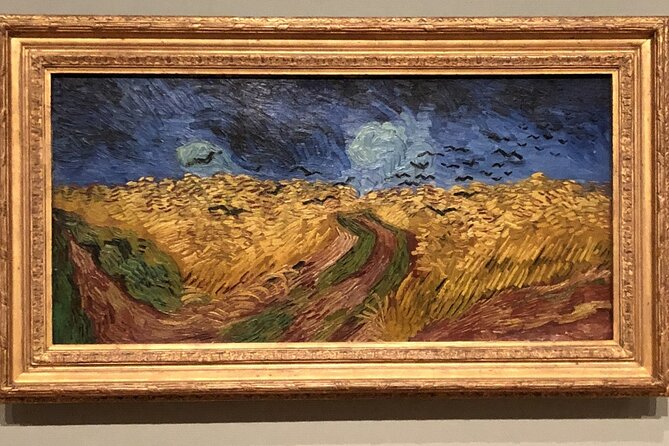
Finally, the tour reaches the Auvers Room on Level 3 for about 15 minutes. Even though the time is shorter, this is often where the impact hits hardest.
Expect:
- Tree Roots
- Wheatfield with Crows
This end stop works because it compresses the late period into something you can feel in your body, not just your head. Wheatfield with Crows, in particular, tends to land with most people once they’ve just spent time understanding the earlier timeline.
The short length here is practical. It keeps the tour moving so you still have energy for self-guided exploration after. And it prevents the group from burning out before the museum’s closing hours.
What makes the guides matter (from real guide styles you might get)
The tour experience lives or dies with the guide, and the pattern in the positive feedback is pretty clear: guides link life context to paint choices, and they keep the pace friendly.
Names you might encounter include Martina, Clare, Kawika, Roland, Sylvia, Marlene, and Holly. Many of these guides were praised for explaining technique evolution and connecting personal experiences to what you’re seeing on the walls.
A few specific strengths that show up repeatedly:
- Encouraging you to get closer to details, not just stand at the crowd line
- Using clear explanations about painting style and how brushwork changes over time
- Answering questions and adjusting pace when people want to linger
I also found it meaningful that one review noted the headsets worked well even with hearing aids. That doesn’t mean they’ll solve every hearing situation for every person, but it’s a good sign for audio clarity.
Price and value: is $77.43 a fair deal?
At $77.43 per person for about 2 hours, this is not a budget add-on. But it can feel like good value for a museum ticket plus expert guidance—especially because admission is included during the guided time.
Here’s the way I think about it:
- If you’re the kind of person who would otherwise wander without a plan, the guide is basically turning the museum into a structured lesson.
- If you’ll spend additional time afterward anyway (and this tour lets you), you get a guided start plus free-choice exploration afterward.
Small-group size also affects value. With up to 14 people, you’re more likely to get personal attention and clear answers than on a large tour bus setup.
The best value usually comes when you book morning or afternoon based on when you want to explore on your own later. Since you can stay after the tour ends inside the museum, it’s smart to pick a slot that gives you time to linger.
Practical logistics that affect your day (without the fuss)
This is adult-only: 18+. Most people can participate, and it’s offered in English.
Also, plan for crowds. The Van Gogh Museum can be busy, so the headset system isn’t just a nice extra—it’s part of how you keep the tour enjoyable rather than stressful.
A small timing tip: if you’re picky about self-portraits or specific favorites, the tour’s fixed stop structure means you may want to plan your own return. The guided route covers a lot, but you’re still going to have moments where you’ll think, I want to see that again.
Who should book this tour (and who might skip it)
This tour is a great fit if you want:
- A clear timeline of Van Gogh’s development
- Help noticing technique, not just subject
- A museum visit that’s structured but still leaves time afterward
It may be less ideal if:
- You prefer long solo wandering with no time limits
- You only care about a few specific paintings and hate the idea of spending set time elsewhere
- You’re sensitive to pacing in guided groups
One more honest consideration: while most experiences are smooth, there is at least one unhappy account where a guide didn’t show up and the person couldn’t enter because tickets were tied to the tour. That’s rare in the overall sentiment, but it’s a good reminder to confirm your start time and have a plan if anything feels off on the day.
Should you book the Van Gogh Museum Small-Group Guided Tour?
I’d book it if you want your Van Gogh visit to feel organized and meaningful. The tour’s big strength is simple: it guides you through the artist’s evolution in a way that makes the paintings easier to understand—and easier to remember.
If you’re the type who enjoys close looking and wants the museum to teach you something beyond the obvious, this is a solid use of time. And because you can keep exploring after the guided portion ends inside the museum, you get the best of both worlds: a guided start, plus your own follow-up at your pace.
If you mainly want a leisurely stroll with zero structure, you might feel the time limits. In that case, you could consider skipping the guided route and relying on an audio option. But if you want the story tied directly to what you’re seeing, this tour is one of the best ways to do it.
FAQ
How long is the Van Gogh Museum small-group guided tour?
The tour lasts about 2 hours.
What’s the meeting point for the tour?
You meet at Cobra Café, Hobbemastraat 18, 1071 ZB Amsterdam.
Where does the tour end?
The tour ends inside the Van Gogh Museum at Museumplein 6, 1071 DJ Amsterdam, and you can continue exploring on your own until closing time.
Is admission included?
Yes. Museum admission is included for the guided portion.
What language is the tour offered in?
The tour is offered in English.
How large is the group?
The group size has a maximum of 14 travelers.
Does it include audio equipment?
Yes. It includes a whisper system (wireless headset setup).
Is free cancellation available?
Yes. You can cancel up to 24 hours in advance for a full refund. If you cancel less than 24 hours before the start time, the amount paid is not refunded.