REVIEW · AMSTERDAM
Amsterdam Open Boat Sightseeing Canal Cruise
Book on Viator →Operated by Blue Boat Company · Bookable on Viator
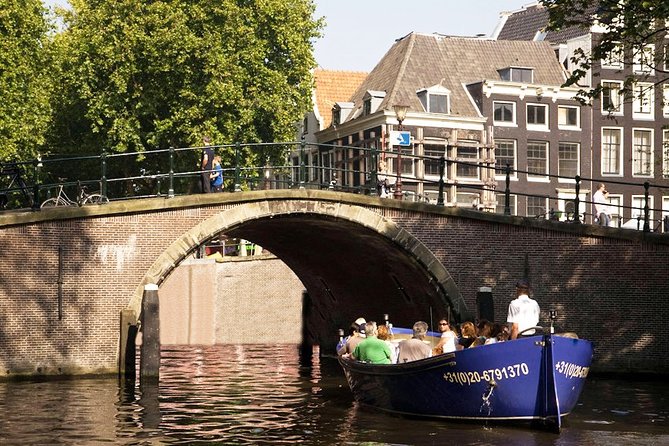
Amsterdam’s canals look different from a boat. This open-top cruise gives you a clean, water-level view of the city’s famous rings and major landmarks, with commentary from the captain. Small-group size and an open-air deck are the big reasons this works so well, especially if it’s your first time here.
My favorite part is how much you can see in about 75 minutes without the usual bottleneck of larger boats. I also like that the captain’s narration helps you connect what you’re seeing—churches, canal houses, and landmark buildings—to the Amsterdam story. One thing to keep in mind: because it’s open-air and sometimes a bit crowded, hearing the guide can be tricky if the boat is fully loaded or the sound system isn’t doing much.
In This Review
- Key highlights to know before you go
- Open-Top Views: What Makes This 75-Minute Cruise Feel Worth It
- Where You Start at Blue Boat Company (and How to Plan Your Timing)
- Westerkerk and the Canal Ring: Seeing Amsterdam’s “Classic” Core from Water Level
- Amstel River Hotel Moments: InterContinental Amstel Amsterdam as a River Landmark
- NEMO Science Museum and the Rijksmuseum: Two Stops That Balance Modern Curiosity and Museum Power
- Amsterdam Centraal and A’DAM LOOKOUT: Big City Energy Without Walking Too Much
- Captain Commentary, Small Groups, and the Real-World Hearing Factor
- Price and Value: What $23.40 Gets You in Amsterdam
- Weather Reality: How to Dress for an Open-Air Canal Cruise
- Who This Cruise Is Best For (and Who Might Want Another Option)
- Should You Book This Open Boat Canal Cruise?
- FAQ
- What’s the duration of the Amsterdam Open Boat Sightseeing Canal Cruise?
- How much does the cruise cost?
- Is the tour commentary in English?
- What happens if the weather is bad?
- Where is the meeting point and where do we end?
- How big is the group?
Key highlights to know before you go
- Open-top viewing: fewer obstructions for 360-degree canal views
- 75-minute route: a focused circuit that’s ideal for first-timers
- Captain commentary: personal narration as you pass landmarks
- Small groups (max 10): easier sightlines than bigger boats
- Rain backup plan: you’ll switch to a regular canal cruise if weather is too rough
Open-Top Views: What Makes This 75-Minute Cruise Feel Worth It
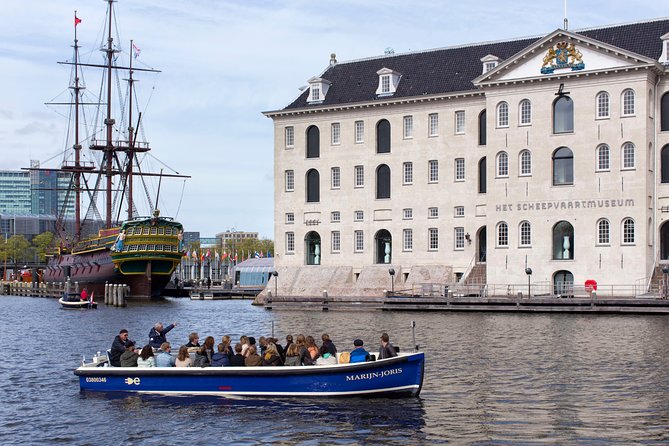
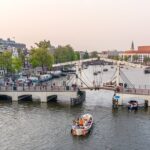
Amsterdam canals are a lot like good street photography: angles matter. From an open boat, you get that sense of being right alongside the buildings instead of hovering above the water. It’s also a great way to spot details you’d miss from a bridge—doorways, canal steps, houseboats, and the way streets flow right into the waterfront.
This cruise is designed to be short enough to fit any schedule and long enough to feel like a real tour. You’re on the water for about 75 minutes, and boats run multiple times throughout the day. If you want a quick “reset button” for your bearings—after arrival, before you commit to museum time—this is a solid pick.
The other quality here is the small-group format (up to 10). That usually means you spend less time craning for a view and more time actually looking out at the canal ring and the skyline as it changes.
You can also read our reviews of more boat tours in Amsterdam

Where You Start at Blue Boat Company (and How to Plan Your Timing)
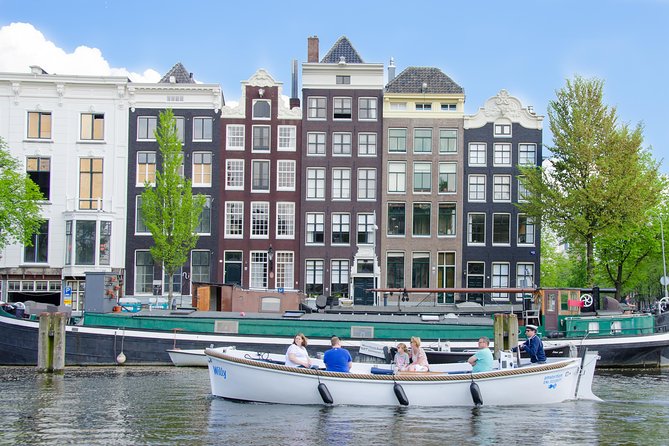
The meeting point is Blue Boat Company, Stadhouderskade 501, 1071 ZD Amsterdam, and the cruise ends back there. Being back at the same dock matters: you can hop on a tram or walk to dinner without a second round of logistics.
Timing is your friend on this one. One cruise time you might consider is early in the morning, when light can be easier on photos and you’re less likely to deal with harsh glare off the water. If you’re sensitive to sound, you’ll also want to choose where you sit so you can hear the captain clearly.
Because this is a popular canal experience, it’s smart to book ahead. The average booking window listed here is about 7 days in advance, which usually means the best time slots can go first.
Westerkerk and the Canal Ring: Seeing Amsterdam’s “Classic” Core from Water Level
Your route begins with the area around the Westerkerk—a Renaissance-style church built between 1620 and 1631. The architect Hendrick de Keyser provided the design, and he’s buried in the same church (he also designed the earlier Zuiderkerk). Construction was finished and completed by his son Pieter de Keyser, and the church was inaugurated on June 8, 1631.
Here’s what I’d watch for from the water: the church’s massing and the way its high nave sits above lower aisles. The building’s length is about 58 meters and width about 29 meters. Even if you don’t study floor plans on vacation, knowing that it’s a three-aisled basilica with a rectangular plan (featuring two transepts that create the look of connected Greek crosses) makes the architecture feel less random when you see it up close.
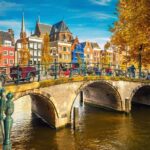
Then you’ll enter the Canal Ring, known in Dutch as the Grachtengordel. This UNESCO-listed canal district (added to the World Heritage List in August 2010) centers on four main canals: Singel, Herengracht, Keizersgracht, and Prinsengracht. As you move between canals, the layout creates those long sightlines and repeating building rhythm—very Amsterdam, very 17th-century.
A big practical payoff: canal houses here are mostly associated with the Dutch Golden Age (17th century), but they’ve also been restored or rebuilt across later centuries. From a boat, you can actually see that layering—front facades that don’t always match the original era, plus the patchwork of architectural styles.
If you like architecture, your best move is to keep scanning between banks rather than staring at just one building. The canal district’s charm is in the pattern: bridges, houseboats, narrow corners, and the way the waterline shapes what you notice.
Amstel River Hotel Moments: InterContinental Amstel Amsterdam as a River Landmark
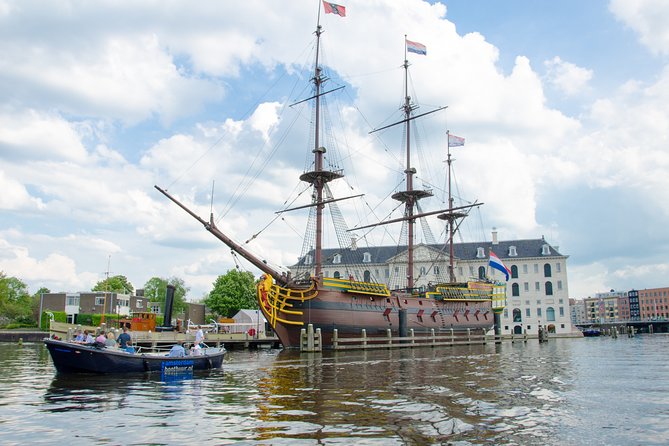
Along the route you’ll also pass the InterContinental Amstel Amsterdam Hotel, commonly called the Amstel Hotel. It’s on the east bank of the river Amstel, and it carries some real “institutional” weight in Amsterdam.
The standout fact here: in 2007 it was the only hotel in the Netherlands on the World’s Best Hotels list and ranked 90th. The building has also changed hands over the years—sold to Morgan Stanley in 2006, bought by Toufic Aboukhater in 2011, and later acquired by Qatar-based Katara Hospitality in 2014—while still operating under InterContinental’s brand management.
From your viewpoint on the water, this kind of stop matters because it anchors the cruise beyond just canals and churches. It helps you read the city as a place where hospitality, business, and river life overlap—Amsterdam isn’t frozen in the 1600s, even though it looks that way from a postcard angle.
NEMO Science Museum and the Rijksmuseum: Two Stops That Balance Modern Curiosity and Museum Power
NEMO Science Museum is a very different kind of landmark. It’s an interactive, informal learning environment focused on science and technology, where visitors see, hear, and experience how scientific phenomena show up in daily life. The museum also holds a significant historical collection and works closely with science and education fields.
What you’ll likely appreciate from the canal is that NEMO doesn’t just sit in the background. It signals that Amsterdam’s creative side isn’t only historical. A canal cruise gives you a way to “glance” at modern Amsterdam without committing to museum time right away.
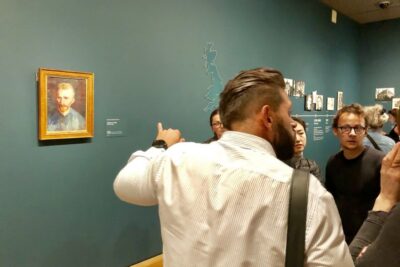
Next up is the Rijksmuseum, which is a must-visit for culture lovers. It houses more than 8,000 works of art from Dutch and European history, including masterpieces by Rembrandt, Vermeer, and Van Gogh. Even when you’re not stepping inside, seeing it from the water is useful: it helps you understand how major institutions relate to the city’s flow and viewpoints.
Practical tip for your mindset: treat these museum moments as context. Use the canal cruise to decide whether you want “full attention” museum visits later, or if you’ll be happy with the exterior views and move on to streets and neighborhoods.

Amsterdam Centraal and A’DAM LOOKOUT: Big City Energy Without Walking Too Much
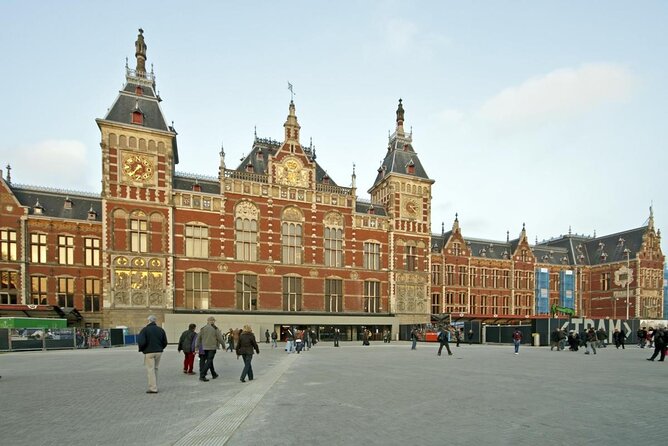
As the cruise continues, you’ll pass Amsterdam Centraal. The station was designed by Pierre Cuypers, also known for the Rijksmuseum. The provided design detail that’s especially helpful is the split between aesthetics and structure: Cuypers was the principal architect, but it’s believed he focused mostly on decoration while structural design was left to railway engineers.
From the water, this helps you read the station as more than a transport hub. You’ll catch the idea that the building was meant to be seen—Amsterdam wanted a landmark you could recognize from across its water routes, not just from platform lines.
Then there’s A’DAM LOOKOUT, an observation deck at the top of the A’DAM Tower in Amsterdam North. It’s described as giving an unrivaled panoramic view of Amsterdam—historical center, the port, polder landscape, and the famous UNESCO canals. There’s also an interactive exhibition and a free audio tour about Amsterdam’s history and culture.
Here’s why this matters on a canal cruise: even though you’re not going up into the tower, you get a visual “preview” of what high viewpoints add. It’s one of those moments where you can decide, right there, whether you want a second angle later.
Captain Commentary, Small Groups, and the Real-World Hearing Factor
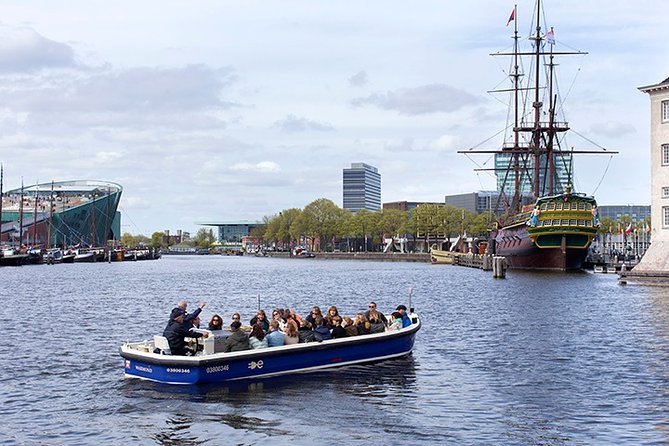
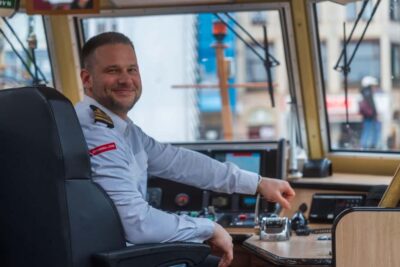
Included with the experience is personal commentary from the captain, and the cruise runs with a small maximum group size of 10. That’s a meaningful difference from big tourist boats: in theory, you get narration that feels more human and less like a looped recording.
That said, hearing can depend on the boat setup and how full it is. Some people have reported the guide being soft-spoken or not using a microphone, which can make the narration harder to catch when the deck is busy. If you care about the story as much as the scenery, I’d aim to sit closer to the guide’s position and avoid getting too far to the side or bow.
On the plus side, I’d also note that captains can handle the water gracefully. One captain named Hans was specifically mentioned for an excellent tour experience, and the overall feedback points to the boat being able to navigate narrow channels and show sights you wouldn’t normally see from the usual routes.
Price and Value: What $23.40 Gets You in Amsterdam
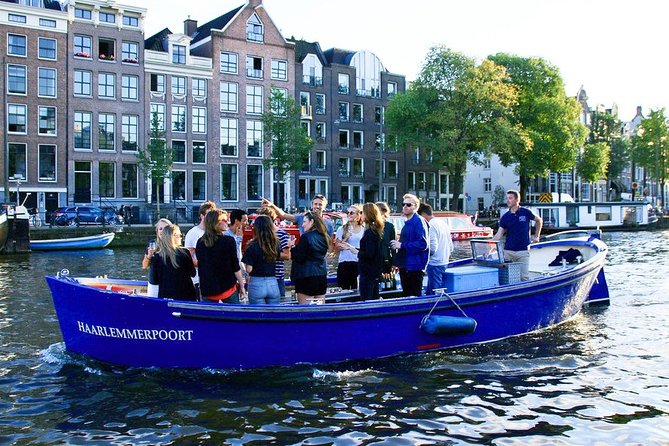
At $23.40 per person, you’re paying for a 75-minute sightseeing experience with a small group, plus captain commentary, plus the biggest benefit—being out on the canals in an open boat. For many first-timers, the value isn’t just “time on a boat.” It’s that this cruise helps you plan the rest of your trip with a clearer sense of what’s where.
Also, because boats run multiple times throughout the day, you’re more likely to find a time that works with your museum schedule or dinner reservations. And because it’s short, you can treat it like an investment in orientation rather than a half-day commitment.
If you’re deciding between open and covered options, the open-top view tends to be the draw here. You’re choosing unobstructed sightlines and a more direct connection to the canals—even if it means you’ll want to dress for the weather.
Weather Reality: How to Dress for an Open-Air Canal Cruise
Amsterdam weather can be rainy, and the tour notes a practical solution: when weather is too bad to make the cruise, you’ll be transferred to a regular canal cruise. That’s an important reassurance because you’re not stuck with zero options.
Still, since this is open-top, you should plan for wind and damp air. Pack a light rain layer and dress in flexible layers you can adjust quickly. If the day is bright, consider what the sun glare does to your photos and your comfort; choosing a time with lower sun angle can make the experience feel easier.
Who This Cruise Is Best For (and Who Might Want Another Option)
This is a strong match for first-time visitors who want a fast, scenic orientation. It’s also great for people who love the canal district’s architecture and want to see it from the water rather than from bridges or streets.
It’s also a good fit if you want smaller-boat energy—quiet, manageable group size, and an experience that can include narrow canals. If you get picky about hearing the narration, just remember that crowded decks and soft-spoken guides can reduce clarity.
On the seating side, pay attention to sightlines. One mention noted that passengers in certain positions had trouble seeing over others, so if you’re shorter, I’d try for seating where your line of sight stays clear and doesn’t get blocked by taller passengers or the boat’s layout.
Should You Book This Open Boat Canal Cruise?
Book it if you want maximum canal views in minimum time and you like the idea of hearing Amsterdam’s story from the captain while you glide past the canal district and major landmarks. The small-group cap and open-top perspective are the core reasons to choose this.
Skip it or reconsider if you’re very sensitive to noise, hearing details matter most to you, or you strongly prefer fully sheltered boats. In that case, you might do better with a covered option that’s designed for clearer audio.
FAQ
What’s the duration of the Amsterdam Open Boat Sightseeing Canal Cruise?
The cruise runs for about 1 hour 15 minutes.
How much does the cruise cost?
It’s listed at $23.40 per person.
Is the tour commentary in English?
Yes, it’s offered in English.
What happens if the weather is bad?
If the weather is too bad to make the open-top cruise, you’ll be transferred to a regular canal cruise.
Where is the meeting point and where do we end?
You meet at Blue Boat Company, Stadhouderskade 501, and the activity ends back at the same meeting point.
How big is the group?
The maximum group size is 10 travelers.