REVIEW · AMSTERDAM
Amsterdam: Self-Guided Food Tour in De Pijp Neighbourhood
Book on GetYourGuide →Operated by Who Is Amsterdam Tours · Bookable on GetYourGuide
Follow the snacks through De Pijp. This self-guided Amsterdam street-food route sends you from Ferdinand Bolstraat to Europe’s biggest outdoor day market, the Albert Cuyp Market, then through De Pijp’s family-run stops. I love that it keeps you moving at your speed, and I also like that the food choices mix classic Dutch hits with international comfort food.
My favorite part is the built-in discounts and tastings at most of the stops, so you’re not just paying cover for a stroll—you’re buying into real places locals actually return to. One thing to keep in mind: not every stop is guaranteed every day, and if you hit it later in the day you may run into closures or smaller tastings than you hoped for.
In This Review
- Key things I think you’ll care about
- Starting in De Pijp: FEBO on Ferdinand Bolstraat
- Why De Pijp is such a smart neighborhood for street food
- Albert Cuyp Market: Europe’s biggest outdoor day market, built into the route
- Stop-by-stop: what you’re actually eating in the De Pijp loop
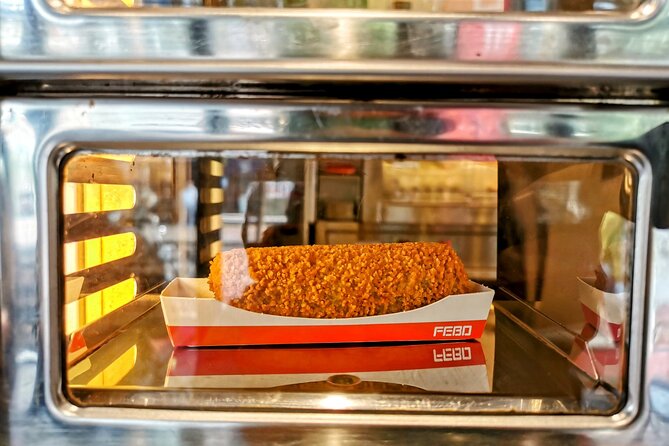
- 1) Kick off with a traditional Dutch croquette
- 2) Suriname flavors with pom, long beans, and pickles
- 3) Israel street food: smoked brisket and chicken roulade
- 4) Dutch seafood: herring and kibbeling (fried cod)
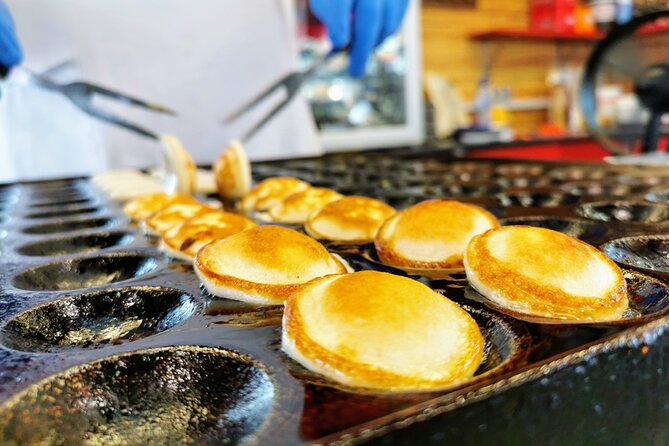
- 5) Sweet intermission with poffertjes
- 6) Stroopwafel from a maker with over 45 years
- 7) Takoyaki balls with Osaka technique and Tokyo ramen muscle
- 8) Finish strong with hand-cut fries and Patatje Oorlog sauce
- Value check: is $15 worth it when food costs extra?
- How to time it so you don’t lose half the day
- Vegetarian options, and the reality of diets
- What to bring (and why this matters more than you think)
- Who should book this self-guided food route
- Quick FAQ on the De Pijp street-food experience
- FAQ
- Where does the food tour start?
- Is there a live guide with you during the tour?
- What will I eat on this route?
- How many stops are on the tour?
- Are tastings included in the price?
- How much should I budget for food?
- Are vegetarian options available?
- Do I need internet access on my phone?
- Should you book this Amsterdam self-guided De Pijp food tour?
Key things I think you’ll care about
- Self-guided with a PDF map: phone navigation links help you bounce between stops fast
- Albert Cuyp Market coverage: you get a planned route through Europe’s biggest outdoor day market
- Discounts at 7 of 8 stops: the value comes from actually using the PDF at each location
- A real mix of cuisines: Dutch croquette and herring next to Suriname, Israel, and Osaka-style takoyaki
- Plan for sharing: portions can stack up quickly once you start sampling
- Not vegan-friendly / gluten-sensitive: vegetarian options exist, but vegans and gluten intolerance are not supported
Starting in De Pijp: FEBO on Ferdinand Bolstraat
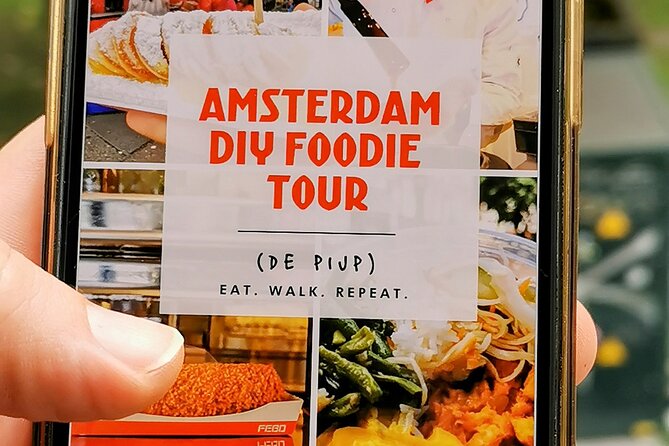
This tour is built for people who don’t want to wait for a group, and you definitely get that feel from the start. Your first move is to show up at FEBO on Ferdinand Bolstraat, grab your bearings, and begin following the PDF route on your charged smartphone.
Because it’s self-guided, the pacing is on you. That’s great for hungry walkers, slow strollers, and anyone who likes to stop for a photo without asking permission. It also means you should think about timing up front: markets and shops can close earlier than you’d expect in the Netherlands, especially on the kind of day when the weather is unpredictable.
One practical detail matters more than it sounds: each person in your booking needs their own copy of the PDF guide on their phone to be eligible for the discounts and special tastings. If you’re traveling with a friend, don’t share one screen like it’s a concert ticket.
You can also read our reviews of more food & drink experiences in Amsterdam

Why De Pijp is such a smart neighborhood for street food
De Pijp is the kind of Amsterdam area where the food feels like it belongs to the street, not to a brochure. The whole point of this tour is to move you past the usual tourist snack loop and into the neighborhood rhythm—family-owned places, local regulars, and markets that look busy because they actually are.
You’ll get the best of both worlds: recognizable Dutch classics and dishes tied to Amsterdam’s wider immigrant food scene. That shows up in the stop list, which goes far beyond stroopwafels and waffles-on-every-corner. You’ll also see how De Pijp’s food culture connects to places like Suriname, Israel, and Japan through everyday take-away comfort food.
And yes, you’ll still get the famous Amsterdam staples (croquette, poffertjes, stroopwafel, and fries). But the international stops help the tour feel less repetitive—and more like what a real food walk looks like in this part of the city.
Albert Cuyp Market: Europe’s biggest outdoor day market, built into the route
A big reason this tour works is the presence of the Albert Cuyp Market. This isn’t a random market detour. It’s part of the structured path through the day-market zone, which makes it easier to navigate on foot.
The trade-off is simple: outdoor markets mean things can change with the day, and some stands may not be open when you arrive. That’s also why you should aim to start earlier rather than later. If you squeeze this tour into the final hours of the day, you risk missing more than one stop—exactly the kind of disappointment that can hurt value for money.
If you like browsing, this is where you’ll get the most atmosphere. And if you prefer eating first, market time still helps because it’s where you can see multiple flavors and styles happening in one area without hopping across town.
Stop-by-stop: what you’re actually eating in the De Pijp loop
The tour is described as 8 stops with exclusive discounts and tastings at 7 of them, and at least 6 are expected to be open. You’ll follow a sequence like this:
1) Kick off with a traditional Dutch croquette
You start with a traditional Dutch croquette. This is a smart opener because it sets the tone: Dutch street food is often comfort food, fried, and sauce-forward. It’s also filling, so don’t plan to do the rest of the day at full speed right after—expect to pace yourself.
You can also read our reviews of more tours and experiences in Amsterdam
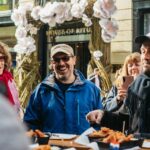
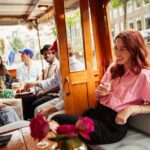
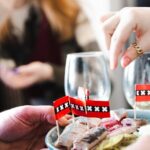

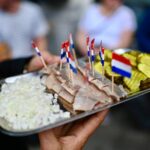
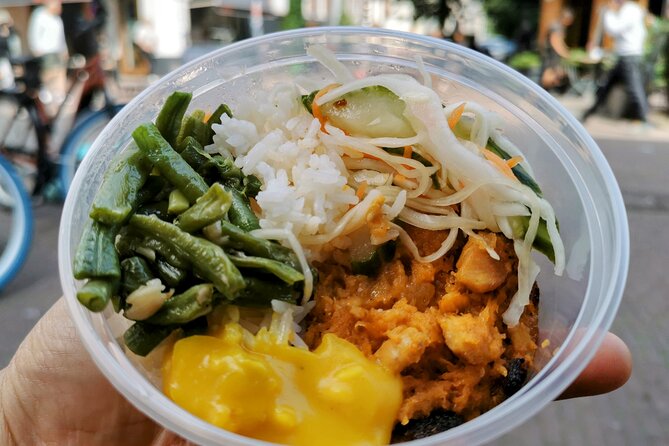
2) Suriname flavors with pom, long beans, and pickles
Next you’ll head into Suriname food with a place known for pom, which comes as oven-baked root plant with chicken. Alongside it you get long beans, rice, homemade pickles, and hot sauce.
This is one of the most interesting stops on the list because it doesn’t feel like a token international item. The description signals a full plate approach—more than just a snack nibble—so come hungry, and be ready for spice and tang from the pickles and hot sauce.
3) Israel street food: smoked brisket and chicken roulade
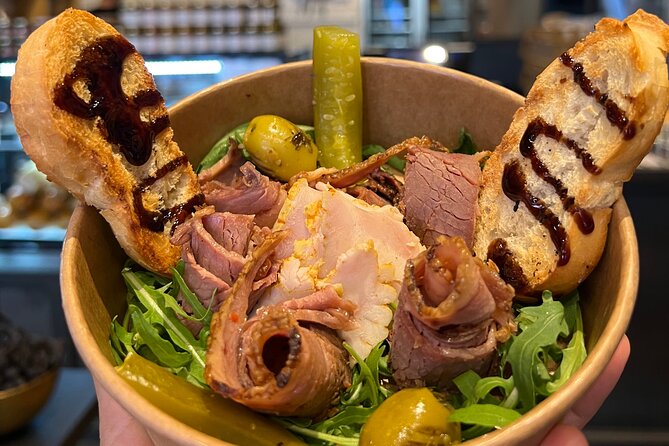
After that, the tour shifts again with Israel flavors, including smoked beef brisket and chicken roulade. You’ll also see Israeli pickle, olives, and bread served with balsamic vinaigrette.
This is a great “middle act” when you’re craving something savory and layered. If you like flavors that balance rich meat with sharp pickles, this stop should click. It also adds variety so you don’t feel like you’re just repeating fried comfort food.
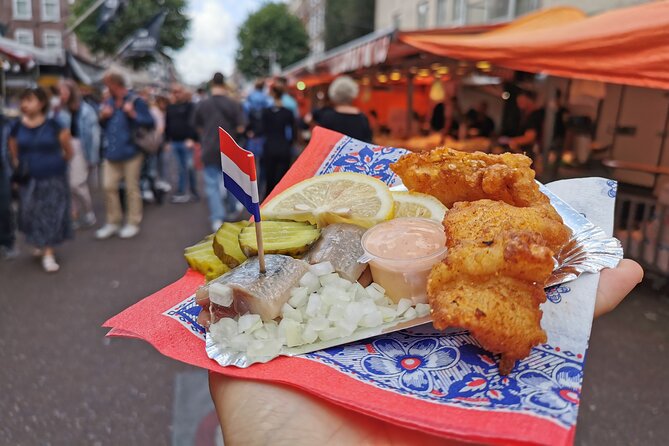
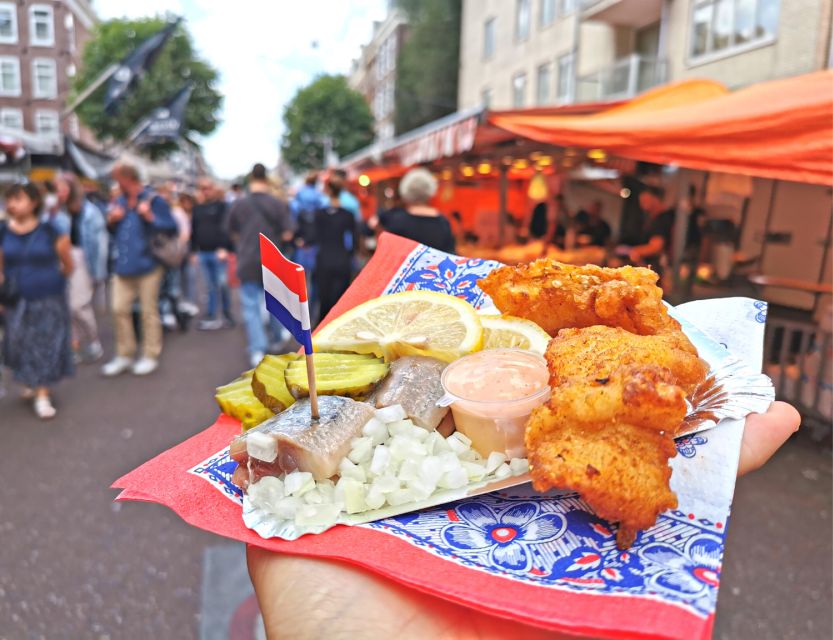
4) Dutch seafood: herring and kibbeling (fried cod)
Then comes the classic Dutch seafood street-food moment: fresh Dutch herring and kibbeling, which is fried cod.
This is the kind of stop that can split opinions—some people love seafood street snacks, others find fish-on-a-walk challenging. But if you already like herring or fried fish, this is a “do it in Amsterdam” kind of stop.
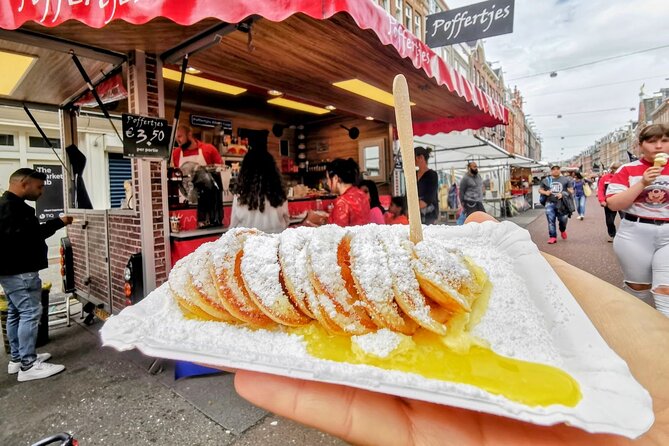
5) Sweet intermission with poffertjes
Before you get too far down the savory line, you’ll hit poffertjes, tiny pancakes that bubble as they cook. This part of the tour is a reset for your palate, and it’s also fun to watch the pan action if you like food theater.
6) Stroopwafel from a maker with over 45 years
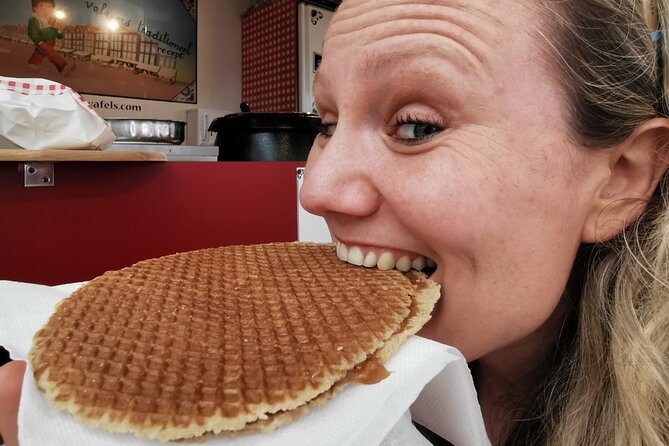
Next you’ll try Goudse stroopwafels, syrup waffles made by a family that has been doing it for more than 45 years. Stroopwafel is Amsterdam canon, but it matters who makes it. A long-running maker usually means consistent syrup, good caramel snap, and that classic warm bite.
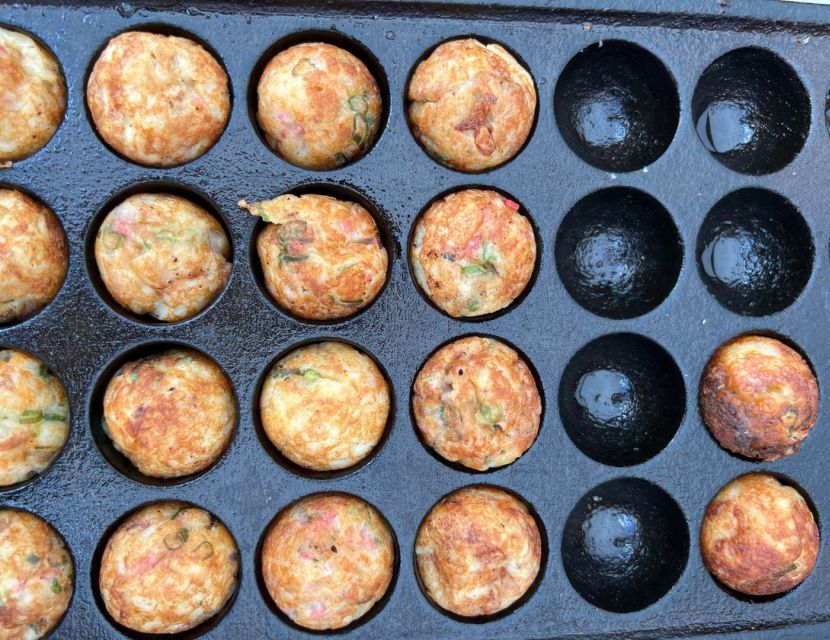
7) Takoyaki balls with Osaka technique and Tokyo ramen muscle
Now the tour gets a little cheeky—in a good way. You’ll sample takoyaki balls, made by a takoyaki chef from Osaka who teamed up with a ramen specialist from Tokyo.
This stop is useful because it breaks the pattern of purely Dutch and purely fried things. Even if you don’t consider yourself a Japanese-food person, takoyaki is built for snacking while walking.
8) Finish strong with hand-cut fries and Patatje Oorlog sauce
Your final stop is a payoff: award-winning hand-cut fries with Patatje Oorlog, the Dutch sauce combo of peanut sauce, mayonnaise, and onions.
This is a great way to end. Fries are forgiving, shareable, and deeply local-feeling even if you’ve never had them before. If your stomach is already nudging back, this is where sharing can save you—one reason people recommend splitting items early rather than eating everything at full solo size.
Value check: is $15 worth it when food costs extra?
The tour price is listed at $15 per group (up to 1), and you should budget about 20 euros per person for total food. Also note that food tastings and drinks are not included in the basic price, even though the tour does include exclusive discounts and tastings at 7 of 8 locations.
So here’s the real value question: do you plan to use the discounts at most stops and actually follow the route as intended? If yes, you’re buying research time and a guided sequence. If you only manage 3 stops, you might feel like the value slipped—exactly the kind of disappointment that can happen when closures hit or your day runs late.
In a self-guided setup, value depends on your behavior. I recommend treating it like a plan, not a suggestion: start early, keep your phone ready, and move between stops without letting lunch drift into dinner.
How to time it so you don’t lose half the day
The biggest practical risk isn’t the food—it’s the clock. Some stops may not be open daily, and at least 6 are expected to be open, but not all 8 can be counted on.
Here’s how to protect yourself:
- Start with the first stop and keep momentum.
- Don’t “save” market time for later if the tour includes market-oriented stops.
- If a stop isn’t there or you find it closed, don’t panic. Continue to the next one on your PDF route and focus on getting your planned minimum number of open stops.
Also: one review-style caution point you should take seriously is that calling parts of it a tasting doesn’t always mean a full sample spread. In some cases, the practical tasting feels smaller than the word tasting suggests—so expect snacking and bites more than a multi-course tasting menu.
Vegetarian options, and the reality of diets
The good news: vegetarian options are available at 7 stops. That’s fairly strong for a street-food loop loaded with fish and meat.
The less good news: the tour is not suitable for vegans, and it’s not suitable for people with gluten intolerance. If you’re vegetarian (not vegan) you’ll likely have options. If you need gluten-free specifically, plan for disappointment unless you’re willing to skip stops entirely.
If you’re traveling with mixed dietary needs, it helps to know the limits before you waste time hunting for substitutions. This is an eat-every-stop tour by design.
What to bring (and why this matters more than you think)
Bring:
- Cash and a credit card
- a charged smartphone with internet access
You’ll also want the PDF guide accessible throughout your walk. Since discount eligibility depends on each person having their own guide copy on their phone, being prepared isn’t just convenient—it’s part of the deal.
And because it runs rain or shine, pack for weather like you mean it. Wet pavement in Amsterdam is not just a comfort issue; it changes how long you’ll want to stand around, wait for cooked items, or browse markets.
Who should book this self-guided food route
This tour is ideal if you:
- want a self-guided way to eat street food without a group schedule
- love classic Dutch foods but also want international variety
- enjoy markets and walking routes, especially around De Pijp and the Albert Cuyp Market
- like splitting food to avoid getting too full too fast
It’s not a great fit if you:
- need vegan-only options
- require gluten-free food
- hate “plan-based” experiences where timing affects what’s open
Quick FAQ on the De Pijp street-food experience
FAQ
Where does the food tour start?
It starts at FEBO on Ferdinand Bolstraat.
Is there a live guide with you during the tour?
No. It’s a self-guided food tour, so you follow the PDF instructions on your own.
What will I eat on this route?
You can expect a mix of Dutch and international street foods, including croquette, pom (Suriname dish), Israeli-style items, herring and kibbeling, poffertjes, stroopwafel, takoyaki balls, and hand-cut fries with Patatje Oorlog sauce.
How many stops are on the tour?
The tour includes 8 stops, with exclusive discounts and tastings at 7 out of 8 locations.
Are tastings included in the price?
Food tastings and drinks are not included in the base price, but the tour provides exclusive discounts and tastings at most stops.
How much should I budget for food?
The total cost of food is described as around 20 euros per person.
Are vegetarian options available?
Yes, vegetarian options are available at 7 stops. However, the tour is not suitable for vegans.
Do I need internet access on my phone?
Yes. The tour asks you to bring a charged smartphone and internet access.
Should you book this Amsterdam self-guided De Pijp food tour?
If you want a walkable food plan that hits classic Amsterdam comfort foods and adds serious international stops, this is a solid pick. The discounts and tastings at most locations make the $15 fee feel like it buys you structure, not just a name on a map. And De Pijp plus Albert Cuyp Market is a smart pairing when you want local-feeling street food.
I’d only hesitate if you’re very timing-sensitive or you expect every single stop to be guaranteed. Build the day around an early start, follow the PDF instructions, and be ready to split items so you don’t overdo it. If you do that, you’ll likely end the route with that last-stop payoff: hand-cut fries and Patatje Oorlog, the kind of ending that feels perfectly Dutch and completely worth walking for.