
REVIEW · AMSTERDAM
Amsterdam: Private Guided City Tour by Pedicab
Book on GetYourGuide →Operated by a Pedicab in Amsterdam · Bookable on GetYourGuide
Want Amsterdam without the walking grind? A private pedicab tour is a smart way to see the city’s big landmarks and quieter corners fast. I love how it threads through small streets and bridges that buses and cars skip, so you get a better view of the real city. I also like the built-in stops for history and photos, which keeps the tour from feeling like a ride-by slideshow.
One thing to think about: the ride may not be practical in bad weather, and the tour isn’t set up for wheelchair users. There’s also a weight limit of 243 lbs (110 kg), so it’s worth checking that before you book. Pickup is optional for hotels in the city center area (Nassauke–Stadhourderskade), and the guide is available in Italian, English, Spanish, and German.
In This Review
- Key Highlights You’ll Feel Right Away
- Pedicabs Make Sense in Amsterdam (and Here’s Why)
- Your Route: Damrak, Canals, Flower Market, and the Jordaan Loop
- Damrak and Dam Square: The City’s Center of Gravity
- IJ Bay: A Quick Change of Scene
- Munttoren and the Flower Market: Landmarks You Can Spot Fast
- Rembrandt Square and Rembrandt House: Art History in Walking Distance
- The Old Jewish Quarter: A Different Kind of Amsterdam Lens
- Herengracht, Keizergracht, Prinsengracht: The Canal Belt in Real Context
- Museum Quarter and the Finish in Jordaan
- Guide Performance: How the Best Tours Actually Feel
- Choosing Between 1 and 2 Hours (Don’t Underestimate Timing)
- Price and Value: What $118 for Up to Two Really Buys
- Practical Notes: Weather, Comfort, and the Reality of Pedicabs
- Should You Book This Amsterdam Pedicab Tour?
- FAQ
- How long is the Amsterdam pedicab private tour?
- What is the price for this tour?
- Is this a private guided tour?
- What areas of Amsterdam does the route include?
- Do you offer hotel pickup?
- What languages is the live guide available in?
- Is the tour wheelchair accessible?
- Is there a weight limit?
- What happens if the weather is bad?
- Can I cancel and get a refund?
- Is there a pay-later option?
Key Highlights You’ll Feel Right Away

- Back-street routing: small streets and bridges that are off-limits to cars and buses
- Photo and story stops: you pause to listen, then grab pictures without rushing
- Private 1–2 hours: perfect for arrival-day orientation or a quick first pass
- Lots of classic areas in one loop: from Damrak to the canal belt and Jordaan
- Pro bike-lane navigation: the driver handles Amsterdam traffic so you can focus on sights
Pedicabs Make Sense in Amsterdam (and Here’s Why)
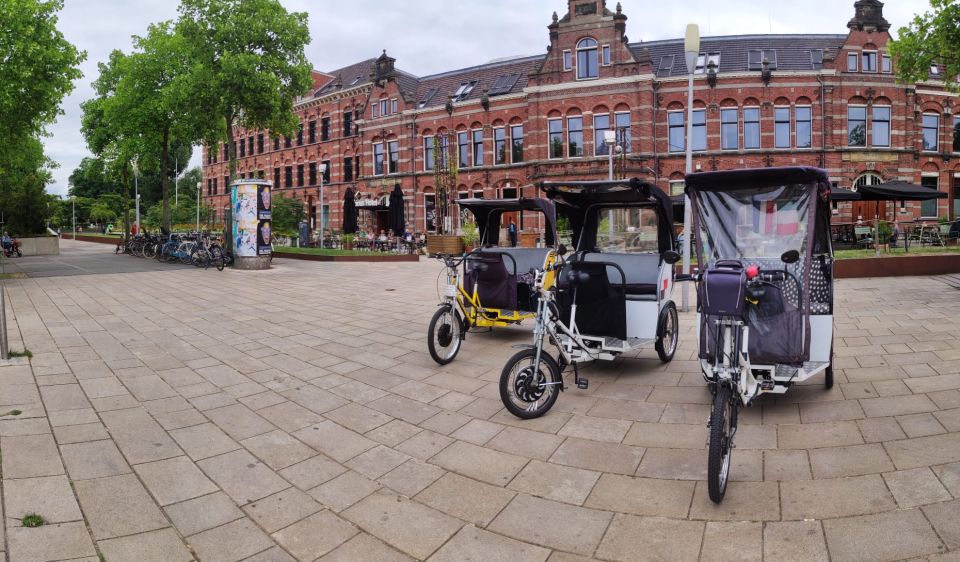
Amsterdam is made for bikes, canals, and narrow streets. A pedicab turns that reality into a comfort-first way to sightsee, especially if you don’t want to sprint between stops on foot. You sit up high enough to see the streets clearly, but you don’t have to fight crowds or cross streets repeatedly.
The best part is the route style. When you’re able to travel through the smaller streets and over bridges that larger vehicles can’t use, you stop seeing Amsterdam as a list of famous points and start seeing it as a connected neighborhood network. That makes the whole city feel easier to read when you walk it later.
And the guide component matters. This isn’t just someone pointing things out from a distance; it’s a live guide who talks through the history and significance of places as you go. You’re getting context in real time, right when it helps you understand what you’re looking at.
You can also read our reviews of more guided tours in Amsterdam



Your Route: Damrak, Canals, Flower Market, and the Jordaan Loop

This private tour covers a classic sweep across Amsterdam’s center and key neighborhoods. Expect a paced loop that mixes well-known landmarks with areas that help you understand how the city grew and where different communities settled.
Damrak and Dam Square: The City’s Center of Gravity
You’ll hit Damrak and Dam Square, which are the go-to orientation points for first-time visitors. From here, you’re in the mindset of the city’s core: major connections, heavy foot traffic, and the kind of history you feel just by walking the area.
One story you may hear (because it comes up in the guide material) is the city name origin: Amsterdam ties back to a dam on the Amstel River. It’s the kind of detail that makes the rest of the walk-through history feel more grounded.
Possible drawback: because this is central, it can be visually busy. The upside is that your pedicab ride keeps you moving while still stopping for photos and explanations.
IJ Bay: A Quick Change of Scene
The route also brings you toward the IJ bay, which gives you that brief visual reset away from the tight canal streets. It’s a good place to notice how Amsterdam’s waterways shape movement and city life. Even without a long stop, you get a sense of scale.
Photo tip: try to plan a camera moment here if you like wide views. The ride gives you a steady vantage without trekking.
Munttoren and the Flower Market: Landmarks You Can Spot Fast
You’ll pass by Munttoren, a recognizable tower stop that helps break up the day from street-level back-and-forth. It’s the kind of landmark that’s useful for navigation later when you’re trying to get your bearings.
Then comes the Flower Market area. This is one of those stops that feels immediately Amsterdam: color, market energy, and a canal-linked location that’s hard to recreate anywhere else. If you want a sensory break, this is a strong mid-tour moment.
Possible drawback: the Flower Market area can feel crowded on foot. Your pedicab doesn’t eliminate that completely (you may still be near the flow), but it reduces the amount of time you need to weave through people.
You can also read our reviews of more city tours in Amsterdam



Rembrandt Square and Rembrandt House: Art History in Walking Distance
The route continues to Rembrand square and the Rembrandt house area. Even if you’re not stepping inside, the stop points you toward Amsterdam’s art legacy and the neighborhoods connected to it.
What I like about including these areas is how it creates variety. You get canals and civic landmarks, then you shift to culture and personal stories tied to place.
The Old Jewish Quarter: A Different Kind of Amsterdam Lens
Next you’ll travel toward the Old Jewish quarter. This part of the tour works well if you’re curious about Amsterdam’s community history rather than only its architecture photos. The guide time here is key, because it helps you connect streets and buildings to real historical themes.
Practical note: this area can involve pedestrian-heavy lanes. Your pedicab ride gives you a smoother way to experience it without turning the tour into a long walk.
Herengracht, Keizergracht, Prinsengracht: The Canal Belt in Real Context
A big selling point is the canal section: Herengracht, Keizergracht, and Prinsengracht. Seeing these canals from a slow-moving seat is different from viewing them while rushing on foot. You can better notice how the streets, bridges, and canal edges relate.
Also, the names themselves help you remember Amsterdam. Once you’ve heard the guide’s explanation while passing them, you’ll find it easier to recognize the canal belt on your own later.
Museum Quarter and the Finish in Jordaan
The loop reaches the museum quarter, then continues toward Jordaan. The museum quarter is useful as a “map anchor,” even if you’re not planning a full museum day right after. Jordaan, on the other hand, gives you that neighborhood vibe where you can imagine daily local life.
If you’re doing this on an arrival day, this finish is smart. You come away with a clearer mental picture of where the city’s energy sits, and where it slows down.
Guide Performance: How the Best Tours Actually Feel

The difference between a good guided tour and a great one comes down to how the guide manages pace, questions, and your comfort. This tour shines because the driver-guide role blends navigation skill with storytelling.
From the experience notes and repeated patterns, guides like Alphonso, Guido, Bobby, Kristian, and Alfonso-style guides (multiple names show up across bookings) consistently show up as friendly and attentive. Many guides also stop often enough for you to take pictures without feeling like you’re interrupting them.
What also stands out is flexibility. If there’s a sight you care about more, the guide can adjust the stops and where you spend time. People mention feeling helped with bike-lane/traffic navigation too, which matters in Amsterdam because the flow of bicycles is real and constant.
One more practical angle: if you have hearing challenges, don’t assume the same audio setup will work for everyone. At least one booking note specifically recommends checking in advance about whether a speaker or ear piece is available if you need it.
Choosing Between 1 and 2 Hours (Don’t Underestimate Timing)

This tour runs 1 to 2 hours, and that range affects what you can absorb. A one-hour version works best for getting your first orientation: you’ll see many highlights and leave with a sense of direction. If you want the history to land and you like taking photos without rushing, go for the full 2 hours.
Here’s how I’d think about it:
- If it’s your first afternoon and you still want energy for dinner, 1 hour is a clean starter.
- If you’re traveling with limited walking time (or you just want more explanation and fewer “quick glances”), 2 hours is the better match.
From the comfort perspective, pedicab time is a win. Several bookings include people who couldn’t walk long distances well (including someone with a foot cast or family members with mobility limits). If you’re worried about stamina, the pedicab is the whole point.
Price and Value: What $118 for Up to Two Really Buys
The price shown is $118 per group up to 2, for about 1–2 hours. That’s not a “bargain deal,” but it’s also not priced like a high-end private chauffeured car tour. You’re paying for two things: a private guide and vehicle time that reduces walking.
Compared with bus tours, you often get more frequent stopping for photos and more focused explanation for the areas you actually care about. Compared with self-guided wandering, you get context without spending your limited travel hours looking up facts on your phone.
One booking flagged that the tour felt pricey at around 110 euros, so price sensitivity is real. If you’re the type who loves museums and deeper exploration, this is more of an orientation and storytelling tour than a full deep-dive day. But if you want a compact route that gets you from the center to the canal belt and back, it’s good value.
Practical Notes: Weather, Comfort, and the Reality of Pedicabs
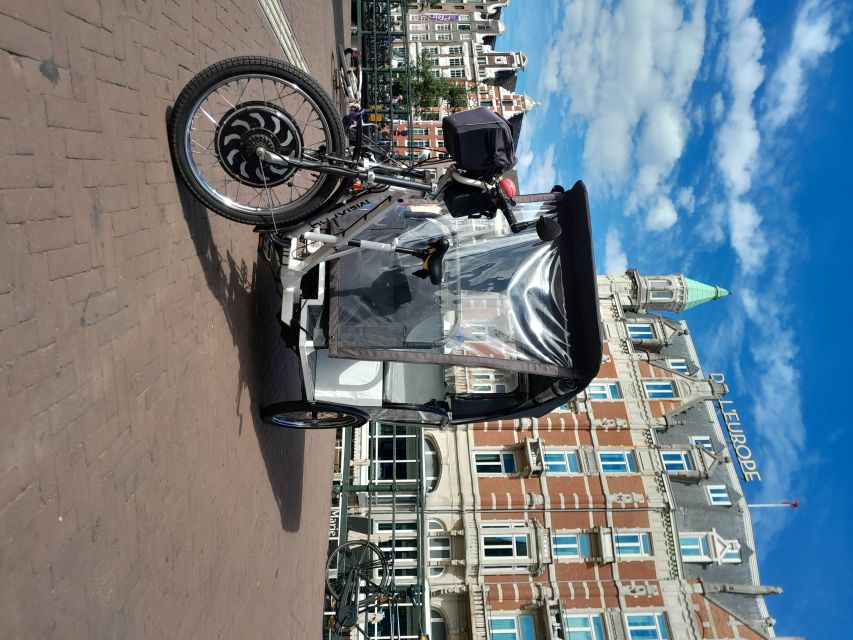
First: weather. The tour might not be practical during bad weather conditions, so check the forecast and have a plan B. If rain is light, it might still run, but don’t assume every day works the same.
Second: comfort constraints. It’s not suitable for wheelchair users, and there’s the weight limit of 243 lbs (110 kg). If you’re outside that range or have mobility needs, it’s worth looking for another format in Amsterdam.
Third: pickup. Hotel pickup is optional for addresses within the city center limit of Nassauke–Stadhourderskade. If your hotel is close but not exact, contact ahead and ask what pickup points are possible.
Finally: how to make the most of your ride. Bring expectations that match the format. This is a paced sightseeing experience, not a stop-forever walking tour. If you want quick history, photos, and a smooth route through back streets, you’ll get exactly that.
Should You Book This Amsterdam Pedicab Tour?
I’d book this if you want a first-day (or short-stay) orientation that mixes major sights with the canal belt and Jordaan, without turning your trip into a long uphill walking contest. It’s also a strong choice if mobility is limited, since the pedicab reduces the need to cover lots of distance on foot.
I’d skip it (or at least pause) if you’re traveling during likely bad weather, need wheelchair access, or you’re specifically hoping for a slow, museum-style day where you spend long stretches on one site.
If you like guided stops, photo breaks, and a private pace, this tour is a solid way to get Amsterdam into focus fast.
FAQ
How long is the Amsterdam pedicab private tour?
It runs for 1 to 2 hours. You can check availability to see the starting times.
What is the price for this tour?
The price is $118 per group for up to 2 people.
Is this a private guided tour?
Yes. It’s listed as a private group experience.
What areas of Amsterdam does the route include?
The tour covers the historical center, Newmarket, Chinatown, IJ bay, Damrak and Dam Square, Munttoren, Flower market, Rembrand square, Rembrandt house, Old Jewish quarter, Herengracht, Keizergracht, Prinsengracht, Museum quarter, and Jordaan.
Do you offer hotel pickup?
Hotel pickup is offered for hotels within the city center limit (Nassauke–Stadhourderskade). It’s optional, and you’re advised to ask during reservation to confirm pickup feasibility for your hotel.
What languages is the live guide available in?
The live guide is available in Italian, English, Spanish, and German.
Is the tour wheelchair accessible?
No, it is not suitable for wheelchair users.
Is there a weight limit?
Yes. It’s not suitable for people over 243 lbs (110 kg).
What happens if the weather is bad?
The tour might not be practicable during bad weather conditions.
Can I cancel and get a refund?
Yes. It offers free cancellation up to 24 hours in advance for a full refund.
Is there a pay-later option?
Yes. The booking offers reserve now & pay later, so you can book without paying immediately.