REVIEW · AMSTERDAM
Amsterdam Traditional Dutch Syrup Waffle Making Workshop
Book on Viator →Operated by FunAmsterdam · Bookable on Viator
Want warm syrup on your own hands?
This Amsterdam workshop turns the famous Dutch stroopwafel into a hands-on lesson, with the sweet smell of caramel and baked dough filling a cozy market-area space. I like that it’s built for a small group (max 12), so your host can actually help you get the dough and hot-iron timing right. You also get a quick English history chat on stroopwafel origins, plus the practical thrill of making the real thing yourself.
Two things I especially like: first, you don’t just watch. You roll the dough, cook the wafer on a traditional iron, and assemble the stroop filling so you leave with two finished waffles. Second, the class moves fast but stays friendly, with a short break for coffee or tea while your waffles cool. One consideration: the process is easy for beginners, but some ingredients are pre-prepared, so it’s more about learning technique than rebuilding every recipe component from scratch.
In This Review
- Key Things To Know Before You Go
- A 45-Minute Stroopwafel Workshop That Fits Real Travel Days
- Albert Cuyp Market Area: The Smell, the Setting, and the Meeting Point
- What You’ll Make: Classic Stroopwafels, Not a Simplified Imitation
- The Hot-Iron Cooking Part: Why It Feels Like a Real Skill
- Coffee or Tea Break While Waffles Cool
- Value for Money: Why $27.55 Can Be a Smart Spend
- Learning the Stroopwafel Story Without Making It a Lecture
- Tips to Get the Best Results (Without Overthinking It)
- Who Should Book This Workshop in Amsterdam?
- Should You Book the Amsterdam Stroopwafel Workshop?
- FAQ
- How long is the Amsterdam Traditional Dutch Syrup Waffle Making Workshop?
- How much does it cost?
- Is the workshop offered in English?
- How many people are in the class?
- What will I make, and how many waffles do I get?
- Do I need any baking or cooking experience?
- Where do I meet for the workshop?
- Can I take the stroopwafels home?
Key Things To Know Before You Go
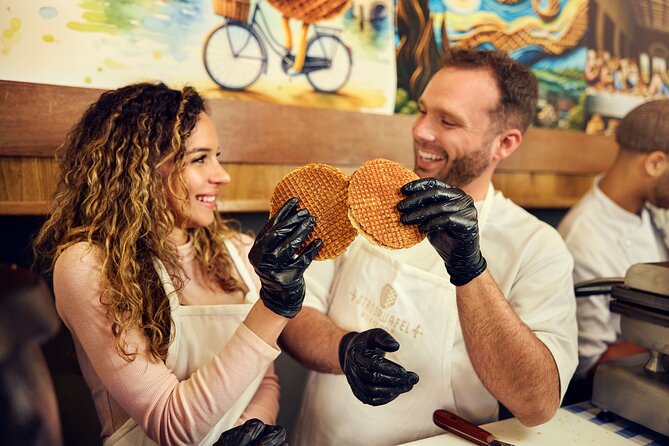
- Small-group format (max 12): You’ll get real attention while working the hot iron.
- Two stroopwafels per person: Plan on eating immediately or taking them away.
- Hands-on, not just a tasting: Dough, cooking, and syrup sandwiching are all on your schedule.
- Traditional method: The class focuses on getting that golden, crisp wafer and gooey center right.
- English-led: The workshop is offered in English, and hosts keep instructions clear.
- Family reality check: It’s not recommended for kids under 6, and the hot equipment needs careful handling.
A 45-Minute Stroopwafel Workshop That Fits Real Travel Days

This is the kind of Amsterdam food activity that works when your calendar is packed. The workshop runs about 45 minutes, and it’s designed so you can slot it between museums, canal walks, and market browsing without burning half a day. That speed matters in Amsterdam, where “one more stop” can turn into a long queue and a late dinner fast.
What makes it feel authentic is the focus on the core stroopwafel idea: thin wafers cooked to crispness and then filled with warm syrup. You’ll learn how the “stroop” gets drizzled and trapped between the layers so it turns from hot and runny to thick and chewy as it cools. That’s the difference between a stroopwafel that tastes like candy and one that actually feels Dutch.
I also like the class length because it keeps things fun. You’re not stuck in a long lecture. You’re moving from apron-on to mixing/rolling to hot-iron cooking, with a small break for coffee or tea before you leave with your results.
You can also read our reviews of more tours and experiences in Amsterdam


Albert Cuyp Market Area: The Smell, the Setting, and the Meeting Point
The meeting point is Albert Cuypstraat 194, 1073 BL Amsterdam. It’s in the Albert Cuyp market area, which is useful because you can treat the workshop as part of a bigger neighborhood loop rather than an isolated event. Before or after, you’ll likely find it easy to wander for snacks, coffee, and a quick browse of market life.
The workshop itself is described as cozy and welcoming. The most practical detail is also the most pleasant: as you step in, you get hit with the aroma of caramel and freshly baked dough. That smell is more than ambiance. It signals you’re in the right moment of the baking cycle, with warm wafers and syrup assembly happening during the class.
Because the workshop ends back at the meeting point, you don’t have to worry about a long walk or a change of location at the end. It also means you can plan a nearby canal-side walk or transit ride right after.
What You’ll Make: Classic Stroopwafels, Not a Simplified Imitation
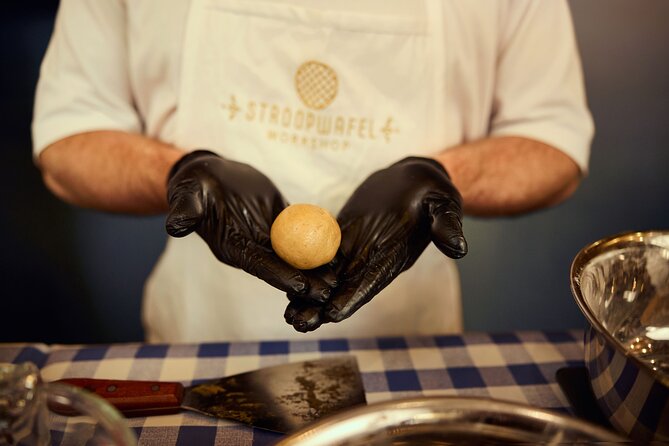
Here’s the heart of the experience: you’ll make Dutch stroopwafels using a traditional iron and then fill them with warm syrup. The guide starts with a short introduction and history context (stroopwafel is tied to the 18th century as a beloved Dutch specialty). Then the instructions shift quickly to technique.
During the hands-on part, you can expect a workflow like this:
- You’ll gather around as the host demonstrates the basics of the dough and the wafer cooking method.
- You’ll roll out your dough and learn how the iron process creates that crisp, golden texture.
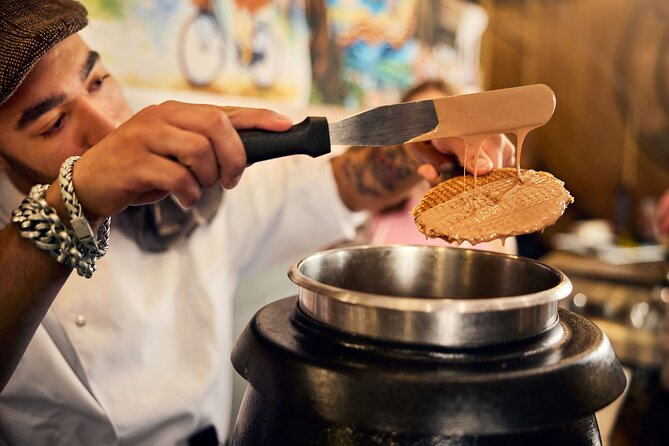
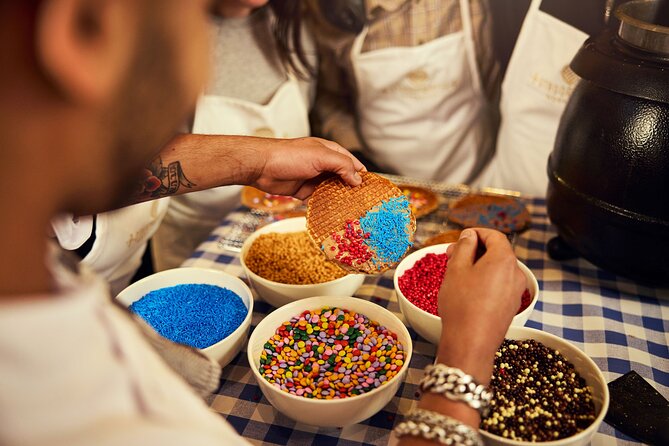
- You’ll drizzle the warm syrup between the thin layers, sealing the sweet filling.
What I like about this structure is that it’s learn-by-doing, but still organized. You’re not guessing. You’ll be taught what “good” looks like—especially when it comes to the iron cooking stage and how to handle sticky filling without panicking.
One more helpful note: this is friendly and beginner-proof, but it may not be a fully from-scratch baking lesson. Some classes use flour that’s already pre-prepared with added ingredients, so you might feel like you’re “adding water and moving on” rather than learning every ingredient step you’d do at home. If your goal is strict culinary training from raw pantry items, manage expectations. If your goal is Dutch food craft plus a finished product, you’re in the right place.
The Hot-Iron Cooking Part: Why It Feels Like a Real Skill
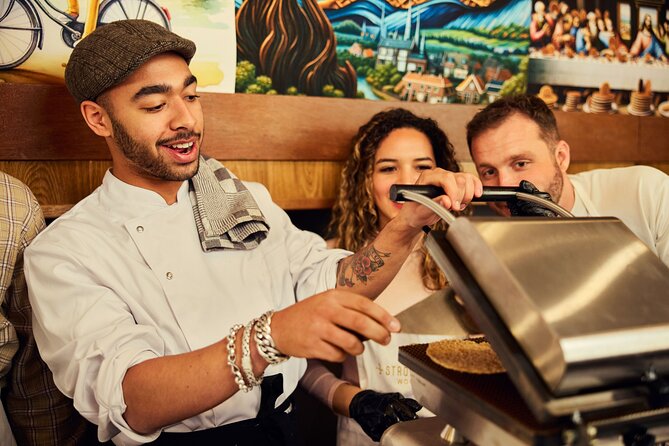
Working the iron is the “wow” moment. Stroopwafels are distinctive because of that thin, crisp wafer and the way the syrup softens it into a chewy-sweet bite. In a workshop like this, you get to see how heat and timing matter.
In practical terms, you’ll focus on:
- Getting the dough pressed and cooked evenly
- Watching for the golden result that signals readiness
- Assembling with warm syrup so it spreads and bonds between layers
The hot equipment is also why the activity isn’t recommended for kids under 6. Even if you’re a confident adult, remember you’ll be dealing with heat and sticky sugar. It’s still easy for beginners, but the setup demands attention.
Small-group size helps here. With a class capped at 12, the host can keep an eye on your timing, and you won’t spend the whole workshop waiting your turn.
Coffee or Tea Break While Waffles Cool

After cooking and filling, your waffles need a bit of time to set. That’s where the workshop gives you a short break with coffee or tea. It’s not a long hangout, but it’s a welcome pause that makes the whole thing feel relaxed rather than rushed.
In addition, you can often eat right away or pack them to go. Several people mention taking their waffles home as a practical souvenir. That means you can treat this as both an activity and a built-in snack plan for later, which is a big deal if you’re trying to pace your food budget.
If your timing is tight, plan to grab your drink quickly once it’s available. The class moves on a steady pace, and the waffle assembly is the star of the show.






Value for Money: Why $27.55 Can Be a Smart Spend

At $27.55 per person, the price isn’t just “pay for dessert.” You’re paying for ingredients, equipment access (including the traditional iron), a guided process, and the time you would otherwise spend figuring out how to do it yourself.
For value, ask yourself two questions:
- Would I enjoy learning a hands-on Dutch technique more than buying a single pastry?
- Do I want something edible and take-home that feels like a real local food moment?
This workshop tends to answer yes to both. You leave with two giant stroopwafels, which is a lot more substantial than many cooking classes where you get small samples. And because it’s around 45 minutes, you’re not paying for a half-day experience you’ll resent later when you’re tired.
It’s also a good value for families, couples, and solo visitors who want an easy, structured activity. You don’t need baking experience, and the host provides the step-by-step cues.
Learning the Stroopwafel Story Without Making It a Lecture
One nice touch is the way the class connects food to place. You’ll get a brief introduction and history overview as part of the start of the workshop, including the long-standing Dutch love for stroopwafels since the 18th century.
But it doesn’t drag. The main goal is to get you cooking, not to make you sit through a full cultural talk. That balance is exactly what you want on vacation.
Hosts often add personality too. Names that have led sessions include Morris and Jay, along with instructors like Rosa and Dirk in past groups. Regardless of who’s on your session, the format is consistent: friendly guidance, clear steps, and enough humor to keep it from feeling like a school lab.
Tips to Get the Best Results (Without Overthinking It)

If you want your stroopwafels to come out well, don’t overcomplicate it. Do these simple things:
- Arrive a touch early so check-in doesn’t spike your stress. Some sessions can feel busy right when you show up.
- Watch the demonstration closely before your turn. With hot equipment, you want the rhythm in your head.
- Expect a sticky, sweet process. That’s part of the fun. Wear clothes you don’t mind if you get syrup on them.
- If you have food allergies or dietary needs, you should ask about ingredients before you start. The basic workshop info doesn’t spell out ingredient lists.
And if you’re the type who loves photos, take a moment to capture the process while it’s happening. The whole point is that you’re making the thing, not just buying it.
Who Should Book This Workshop in Amsterdam?
This workshop is a strong fit if you want:
- A short, fun food activity you can do without planning a big tour day
- A hands-on experience with a clear payoff (you make and take home two stroopwafels)
- A friendly English-led class with small-group attention
It’s also a solid choice for first-timers because no baking experience is required. You’ll learn the technique while doing it.
You might want to skip or reconsider if:
- You’re traveling with very young kids (it’s not recommended under age 6, and the iron is hot)
- You’re looking for a strict “from raw flour with every ingredient measured” style class, since some components may be pre-prepared
- You’re expecting a long sit-down coffee break or a separate space to hang out after you finish (the workshop time is tight and the focus stays on producing waffles)
Should You Book the Amsterdam Stroopwafel Workshop?
Yes, you should book it if you want a classic Dutch taste with actual hands-on skill in under an hour. The best part is the combination: traditional method + small-group help + big edible payoff. Even with a busy trip, you can pull this off without feeling like you spent the day in a classroom.
Book it soon if your dates are tight. It’s commonly reserved about a month ahead, so planning gives you more options.
If you’re unsure, think about what you want from Amsterdam. If you want local food culture you can carry home (literally in syrupy form), this is a tasty, practical choice.
FAQ
How long is the Amsterdam Traditional Dutch Syrup Waffle Making Workshop?
It runs for about 45 minutes.
How much does it cost?
The price is $27.55 per person.
Is the workshop offered in English?
Yes, it is offered in English.
How many people are in the class?
The workshop has a maximum group size of 12 travelers.
What will I make, and how many waffles do I get?
You will learn to make Dutch stroopwafels and receive two waffles to eat or take away.
Do I need any baking or cooking experience?
No experience is required. It’s designed as an easy activity.
Where do I meet for the workshop?
You meet at Albert Cuypstraat 194, 1073 BL Amsterdam, Netherlands.
Can I take the stroopwafels home?
Yes. You can eat them there or take them away.