REVIEW · AMSTERDAM
Amsterdam: Traditional Dutch Syrup Waffle Making Workshop
Book on GetYourGuide →Operated by We Are Amsterdam · Bookable on GetYourGuide
Amsterdam runs on treats, and this one is practical. In a warm home-kitchen setup, you learn the stroopwafel basics step-by-step and leave with a real take-home sweet. What I like most is the hands-on process plus the included coffee or tea break, and the fact you get two XL stroopwafels total. One thing to factor in: the class can be a bit tight and the instructor can be harder to hear if you end up seated far back.
This is a fun, low-stress cooking workshop that still feels authentic. Expect an English-speaking host, a quick history moment (stroopwafel roots go back to the 18th century), and a traditional iron method where the syrup layer matters. If you’re visiting around the Albert Cuyp Market area, this is also a great way to turn a snack stop into an actual skill.
In This Review
- Quick hits: why this stroopwafel workshop is worth your time
- A 45-minute stroopwafel lesson in the center of Amsterdam
- Meeting Point by Albert Cuyp Market: finding the workshop door fast
- What you make: two XL stroopwafels (one eaten, one taken home)
- The stroopwafel you learn to love: texture, syrup, and timing
- Step-by-step workshop flow: what happens minute by minute
- 1) Intro and stroopwafel history
- 2) Apron up and learn the dough basics
- 3) Roll, cook, and build
- 4) Cool-down, coffee or tea, and first bite
- 5) Pack one to go and pick up your certificate
- The best part: instructors bring the energy
- Price and value: $23 for two XL stroopwafels plus instruction
- Who this workshop suits best (and who might not love it)
- Practical tips to get the most from your stroopwafel class
- Should you book this Amsterdam stroopwafel workshop?
Quick hits: why this stroopwafel workshop is worth your time
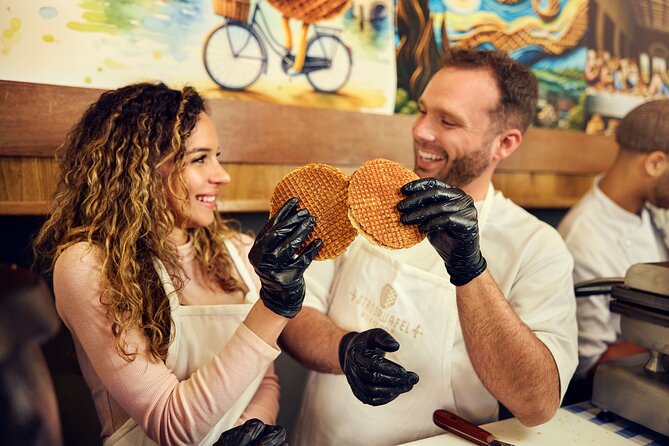
- Traditional iron technique: You learn how to hit that crisp-yet-tender texture that makes stroopwafels what they are.
- XL waffles and real take-home value: You eat one on site and take one home in a bag.
- History in plain language: You get the story of the stroopwafel going back to the 18th century, not a long lecture.
- Small, social break included: You’ll pause with coffee or tea and chat with other participants.
- English hosts with strong group energy: Names that come up often include Vince, Julia, Lisa, Jay, Franziska, and Roza.
- Certificate at the end: A simple but satisfying souvenir that makes it feel like a real class.
A 45-minute stroopwafel lesson in the center of Amsterdam

At 45 minutes, this workshop is built for tourists who want something more meaningful than just buying a pastry. You’re not only tasting caramel waffle flavor—you’re learning the sequence that creates the signature bite: thin waffle layers, warm syrup (the stroop), and the right cook so it firms up instead of turning soggy.
You’ll start with an instructor-led intro and history, then move quickly into the practical part: putting on an apron, learning the dough step, and using the traditional iron. That timing matters. Stroopwafel dough and syrup work best when you keep moving. The class is paced so you don’t sit there watching too long, and you’re still done before your day gets swallowed up by crowds.
If you’re coming with kids, this kind of structured, hands-on food class tends to land well. One review specifically called out the experience as great for two teens, and that tracks with the format: clear steps, a quick payoff, and enough time to enjoy what you make.
You can also read our reviews of more tours and experiences in Amsterdam



Meeting Point by Albert Cuyp Market: finding the workshop door fast
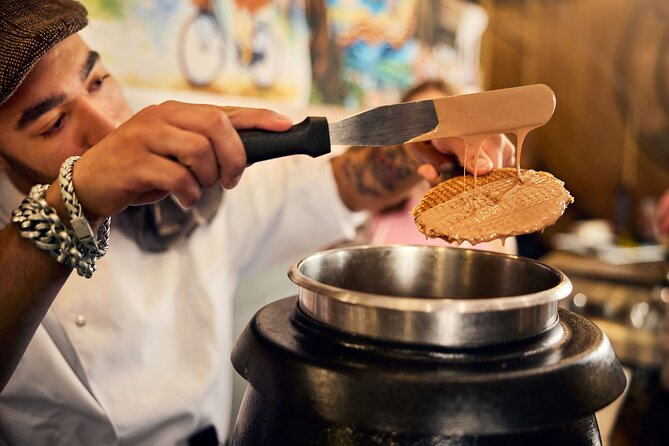
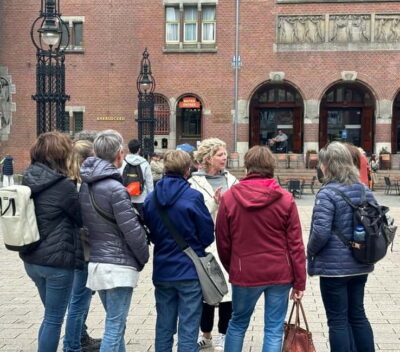
The workshop meeting spot is in the city center near the Albert Cuyp Market area. The building is behind the market stands, and the door opens about 5 minutes before your starting time.
Here’s the practical advice I’d follow:
- Arrive 10 minutes early so you can locate the door calmly.
- If you need a fallback, call the number listed on your voucher when you’re close but can’t find it.
If you’re driving, plan ahead. Parking in this area can be challenging, so you’re advised to arrive about 20 minutes in advance just to avoid stress. That’s a big deal in Amsterdam, where a “quick stop” can turn into a slow detour.
Also note the class isn’t set up for wheelchair users, so plan accordingly if accessibility is a concern.
What you make: two XL stroopwafels (one eaten, one taken home)
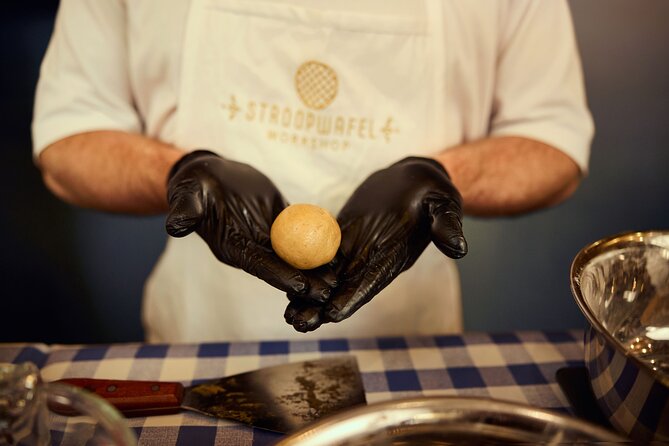
This isn’t a tiny sample-size activity. You’ll bake and receive 2 XL stroopwafels total—one is eaten during the workshop and one can be taken home. That matters for value because stroopwafels can be pricey when you’re buying them as a ready-made treat.
One review made the comparison directly, noting stroopwafels can cost around €13 each in shops, which makes the “two big ones” format feel like you’re paying for more than just labor and instruction. You’re leaving with the product, too.
You’ll also get extras that make it feel like a proper takeaway: an apron and supplies are included, and many participants mention receiving a certificate and small branded items like a sticker and bag. Those details aren’t why you book, but they do make the experience feel complete.
The stroopwafel you learn to love: texture, syrup, and timing
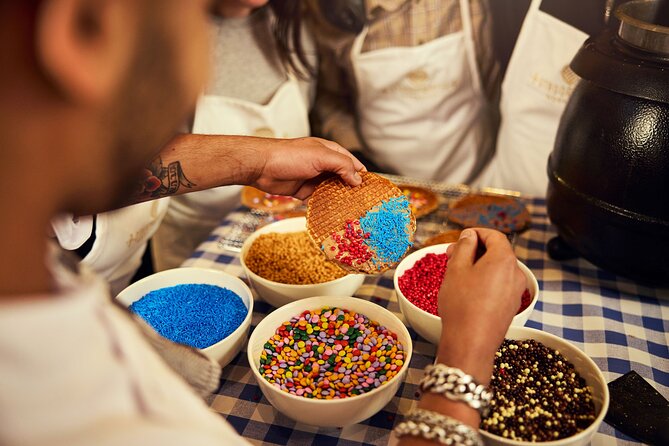
A good stroopwafel has a specific personality: crisp outside, tender inside, and syrup that’s warm and gooey at the right moment. The workshop teaches the technique that creates that effect, including how the warm syrup gets sealed between thin layers.
You start with the dough and learn the cooking method on the traditional iron. Then comes the key part: drizzling warm syrup—the stroop—between the layers so the waffles bond properly. If you’ve only ever eaten stroopwafel straight from a wrapper, this is the moment that turns it from a snack into something you understand.
You’ll also get to take your first bite during the session, paired with a hot drink. That’s not just for comfort. It helps you taste what you made while it’s at its best temperature, which is where syrup flavor and texture really show up.
Step-by-step workshop flow: what happens minute by minute

The class structure is straightforward, and that’s part of what makes it work.






1) Intro and stroopwafel history
You’ll begin with a short introduction from the host. The instructor shares the history of the stroopwafel, a Dutch specialty dating back to the 18th century. The goal here isn’t trivia for trivia’s sake—it sets context so the technique feels meaningful, not random.
English instruction is included, and hosts named in reviews include Vince, Julia, Jay, Lisa, Franziska, Nicola, and Roza. Different personalities, same core process.
2) Apron up and learn the dough basics
Next, you put on your apron and gather around as the guide demonstrates the steps. This is where you learn what to do, not just what to watch. The instructions are built for beginners; you don’t need baking experience.
That matters because many food workshops fail at this stage—too much theory, too little clarity. In contrast, the feedback you get here consistently points to clear, step-by-step guidance.
3) Roll, cook, and build
Once the demonstration is done, it’s your turn. You roll out your dough, then use the traditional iron to cook it properly. Then you assemble the stroopwafel by adding the warm syrup layer and sealing the sweet between the waffles.
This section is hands-on, and it’s also where timing matters. If you’ve ever burned something once and sworn you’re not a cook, this kind of short, supported workflow helps you succeed without feeling tested.
4) Cool-down, coffee or tea, and first bite
While your stroopwafels cool, you get a break with coffee or tea. This is one of the nicer parts of the setup because it lets the workshop become social. You can mingle with other participants, talk about what you’re doing, and compare notes if someone’s syrup ended up slightly more centered than yours.
Then you’ll enjoy your own stroopwafel with your drink—crispy yet tender, with that caramel-syrup flavor that makes the Netherlands famous for waffles in the first place.
5) Pack one to go and pick up your certificate
When the workshop wraps, you pack one stroopwafel to take home. You also receive a certificate, which sounds like a gimmick until you realize it’s a “proof of participation” souvenir—something you can actually reference later when you make friends jealous with your homemade stroopwafel skills.
The best part: instructors bring the energy

The workshop quality here isn’t only about dough and irons. It’s the hosts.
Across the names mentioned in reviews, a few patterns show up:
- Hosts tend to be attentive to the group, walking around while people work at their station.
- Many keep the session lively and funny without turning it into chaos.
- Several instructors are described as answering questions and adjusting to the pace of the room.
You might get someone like Franziska (praised for attentive group focus), or Vince (praised for warmth and guidance), or Roza/Lisa (praised for friendliness and humor). Even if personalities differ, the consistent theme is clear instruction plus a relaxed atmosphere.
One practical consideration: if the room fills up and you’re seated farther back, you might find it a little harder to hear. That’s not a dealbreaker, but if you’re sensitive to sound, try to get a seat where you can see and hear the demonstrations.
Price and value: $23 for two XL stroopwafels plus instruction
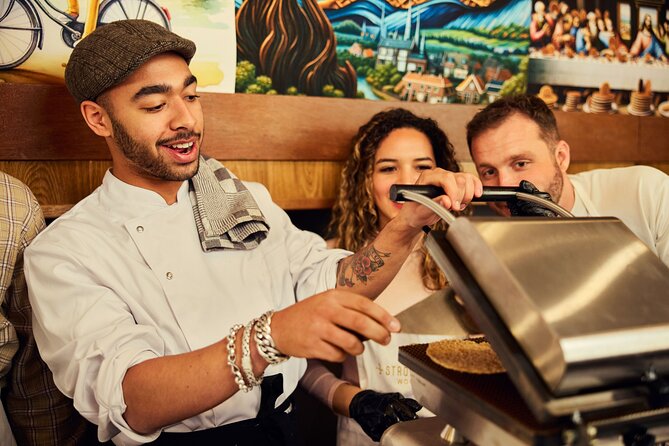
At $23 per person, this is priced like a “real activity,” not a quick tasting. The math gets easier when you look at what’s included:
- Instructor-led class
- 2 XL stroopwafels total (one eaten, one taken home)
- Coffee or tea
- Apron and supplies
- Certificate
Compared to buying ready-made stroopwafels, the included take-home waffle pushes it toward good value—especially if you planned to snack your way through Amsterdam anyway. One reviewer specifically highlighted how this felt worth it versus buying similar waffles at higher per-waffle prices.
Is it still a “special treat” price rather than a budget activity? Yes. But you’re paying for a skill-based experience, not just caramel and sugar.
Who this workshop suits best (and who might not love it)

This is well matched to:
- Couples who want a shared hands-on moment
- Families (especially if you want an activity that isn’t just walking)
- Friends looking for something fun and different
- Solo travelers who like meeting people in small-group settings
It’s also a smart choice if you enjoy learning food techniques. Stroopwafel making has a bit of craft to it, and the workshop teaches the reason behind the steps.
It’s less ideal if:
- You need wheelchair access (the workshop isn’t suitable for wheelchair users)
- You strongly prefer quiet activities. This is social and lively, with conversation happening during the coffee/tea pause.
Practical tips to get the most from your stroopwafel class

A few small choices make the experience smoother:
- Arrive early: the workshop is behind market stands, and signs can be hard to spot when you’re new to the area.
- Wear clothes you don’t mind getting a little sticky. Syrup is part of the deal, and the process can get hands messy.
- Expect a short wait at the iron if your group is larger. One review described a setup with limited waffle makers versus a bigger group size. It didn’t ruin the experience, but it’s good to know the equipment is finite.
- Bring your curiosity. The history component and the technique explanation reward people who like to understand what they’re tasting.
If you’re using this as part of a day around the market, build in time to stroll the Albert Cuyp Market area before your workshop. That way you’re not rushing from snack to snack—you’ll actually have a reason to be there.
Should you book this Amsterdam stroopwafel workshop?
If you want an Amsterdam food experience that feels hands-on, guided, and genuinely local in technique, I think this is an easy yes. You get English instruction, a quick history grounding, and the practical method that turns stroopwafel from a pastry into something you can picture making.
Book it if:
- You’ll enjoy learning a classic Dutch method
- You want two big XL waffles, with one to take home
- You like small-group social activities with a clear structure
I’d hesitate only if you’re expecting a private, super-spacious setup or you have accessibility needs the workshop can’t support. Other than that, $23 for an organized 45-minute class with two XL results is strong value.
If you’re in Amsterdam and you’re planning to eat stroopwafels anyway, make it count: take the class, then compare your homemade one to the store-bought ones later. You’ll leave with a better sense of what matters.