REVIEW · AMSTERDAM
Cheese making workshop next to De Hallen, heart of Amsterdam
Book on Viator →Operated by De Kaasserie · Bookable on Viator
Cheese making in Amsterdam with real results is rare. This workshop near De Hallen is hands-on, small-group, and teaches two fresh styles of cheese so you leave with food you actually made. I especially love the calm, patient teaching and the fact you can take your cheeses home. The main drawback to consider is that it’s only about 3 hours, so you’ll learn the process, but you won’t master aged or complicated cheese types.
You’ll work in a food design studio environment, not a loud demo space. You’ll also get a finished tasting with spices and herbs, plus a drink to wrap things up. If you expect a big party atmosphere or a super long, in-depth course, adjust your expectations.
In This Review
- Key things I’d bet on (before you book)
- Cheese making next to De Hallen: why the setting matters
- The core lesson: rennet cheese vs acid cheese (and what it teaches you)
- Inside the workshop: what you’ll do during the 3 hours
- Herbs, colours, and spice finishes: turning a basic curd into your own cheese
- The tasting: eating your results instead of just taking notes
- What you take home: cheese, basic tools, and emailed recipes
- Price and group size: is $144.49 worth it?
- Where it fits in your Amsterdam day (De Hallen and Ten Katemarkt)
- Who this cheese workshop is best for
- Should you book De Kaasserie’s cheese making workshop?
- FAQ
- How long is the cheese making workshop?
- How many people are in the class?
- What types of cheese will I make?
- Are ingredients and materials included?
- Do I get to take the cheese home?
- Where do I meet, and what language is the class in?
Key things I’d bet on (before you book)
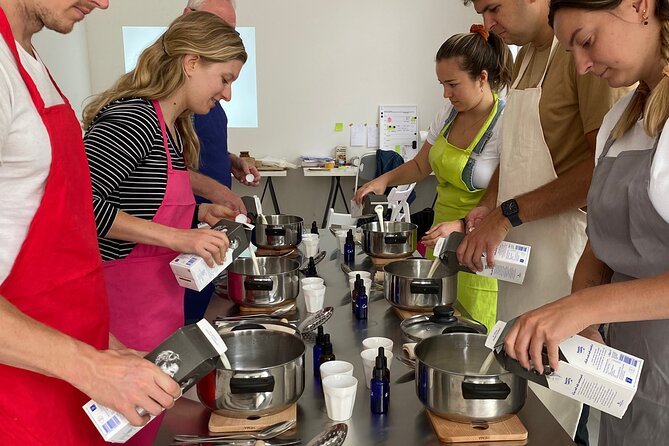
- Small group of up to 8: easier questions, more hands-on time, less waiting around
- Two coagulation methods: rennet first, then acid, so you understand what changes the curd
- Customize the acid cheese: experiment with herbs and colours while you’re making it
- Take-home cheese + basic tools: you can keep experimenting after the workshop
- Tasting session with a drink: you taste your work, not just listen to how it’s done
Cheese making next to De Hallen: why the setting matters
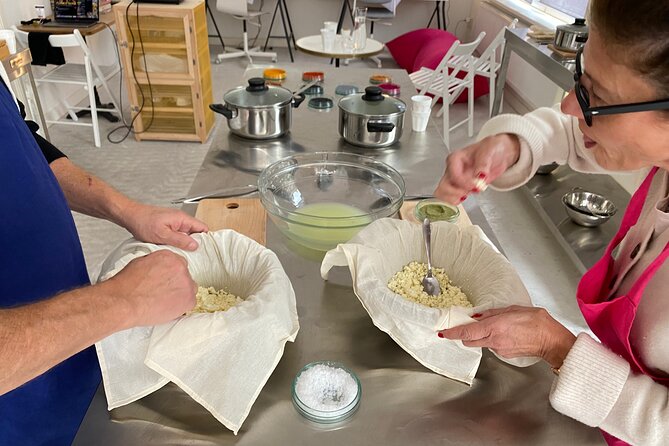
Amsterdam food experiences are often either museum-quiet or market-loud. This one hits a sweet spot: a calm studio setting that feels focused, not rushed. You’re meeting in the De Hallen area, so you can pair it with a proper day of wandering before or after.
What I like most is how “local” the vibe feels. Instead of fancy staging, you get a workshop space where the work is the point. Even the way the class is run supports that. It’s small, paced well, and the teacher is known for being patient and letting you learn without stress.
One more practical win: you’re not trapped in a bus ride or a long schedule. The workshop runs about 3 hours, and it ends back at the meeting point. That makes it easy to plan around, whether you’re pairing it with a museum slot or a casual stroll through the Ten Katemarkt area.
You can also read our reviews of more tours and experiences in Amsterdam


The core lesson: rennet cheese vs acid cheese (and what it teaches you)
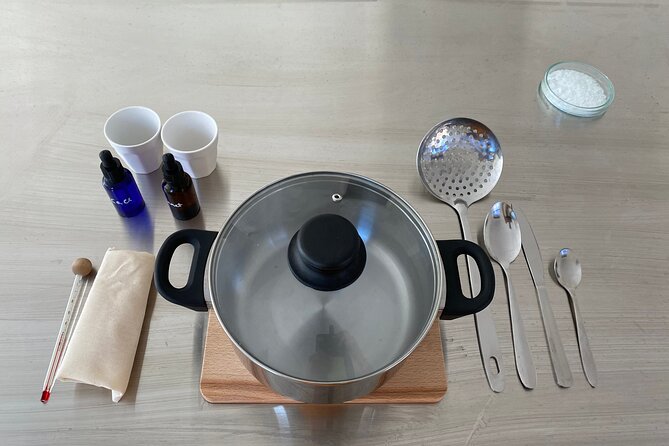
The heart of the workshop is simple: you make two types of fresh cheese using two different coagulation approaches. First, you make a cheese coagulated with rennet. Then you make one coagulated with acid. That contrast is the learning engine.
Why this matters for you: rennet and acid behave differently in milk. When you work with both, you start to see cheese making not as magic, but as controllable steps. You’ll learn how curds form, how textures change, and how the “same” milk can become different results depending on the method.
You’re not expected to have any cheese background. The class is designed as beginner-friendly, with all ingredients and materials included. That takes away the biggest headache for first-timers: figuring out what to buy and what matters.
And since both cheeses are fresh, you get fast feedback. You can compare the results during tasting later, instead of waiting days or weeks to find out whether you got it right.
Inside the workshop: what you’ll do during the 3 hours
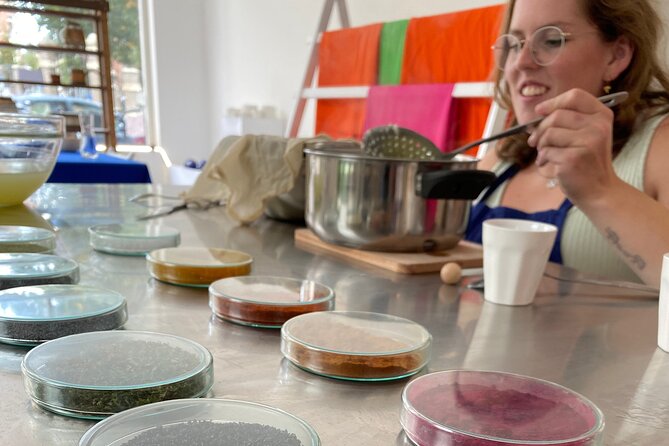
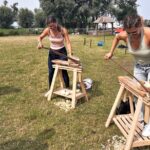
This is a hands-on class. You won’t just watch someone do everything. You’ll actively participate through both cheese-making phases, moving from setup to formation to finishing touches.
In the rennet portion, the focus is on getting the curd to form properly with rennet-based coagulation. You’ll follow the workflow that guides fresh-cheese results, and you’ll see the kind of consistency the instructor is looking for. This step is where you learn patience. Small timing and handling choices make a noticeable difference.
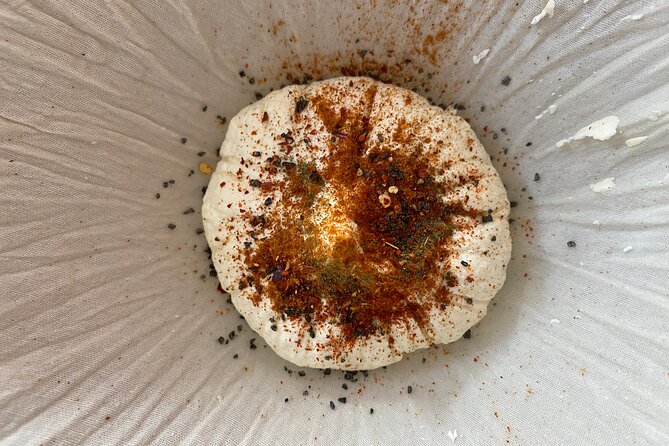
Then you switch to the acid-coagulated cheese. Acid creates curds through a different mechanism, so it feels like a new mini-project. This is also where you get a little more freedom. When you finish the acid cheese, you can experiment with herbs and colours.
That customization is more than a fun add-on. It teaches you that cheese isn’t just a single thing. You can steer flavor with spices, herbs, and how you finish the mixture. If you like cooking, this section is the most “creative chef” moment of the workshop.
Herbs, colours, and spice finishes: turning a basic curd into your own cheese
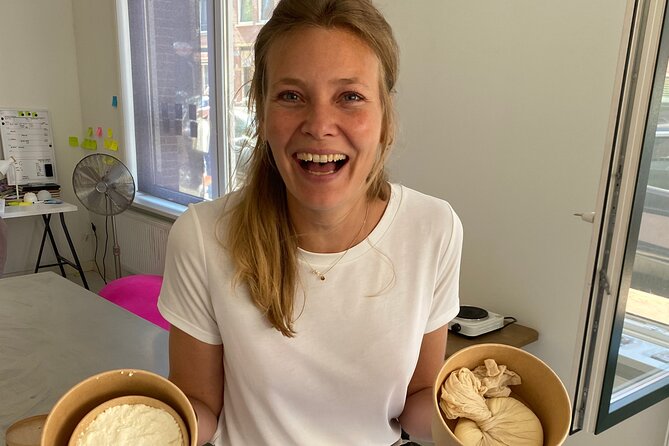
The acid-coagulated cheese phase comes with an invitation to play. You can experiment with herbs and colours while finishing your cheese. In practical terms, this means you’re learning how to incorporate mix-ins and finishes in a way that stays balanced, not random.
You’ll also see how flavor choices connect to the tasting later. The workshop ends with a cheese tasting served with spices and herbs, and you’ll have a drink to go with it. So you’re not just making something and hoping it turns out. You’re making, then evaluating, then learning from what works.
If you’re coming from a background of home cooking, you’ll probably enjoy this part most. It’s the bridge between a craft process and your personal taste. Want it more herby? More earthy? More aromatic? This is where you get to steer.
The tasting: eating your results instead of just taking notes
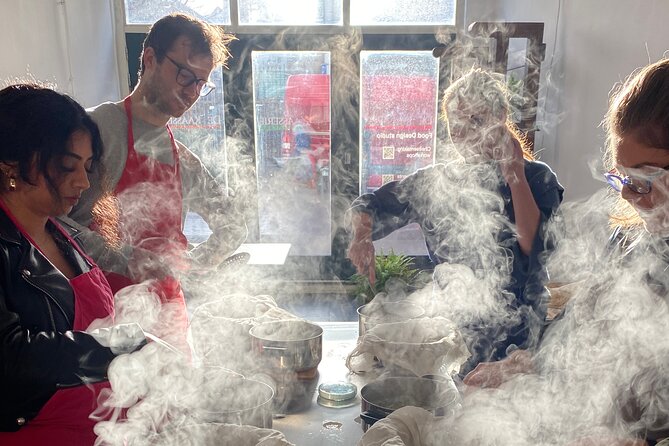
At the end, you sit down for a tasting of homemade cheeses, plus a drink. This matters more than you might think. A lot of cooking classes end with food, but not all of them let you compare results and actually learn from the differences you made.
Here, you’re tasting cheeses that are connected to what you made in class. That makes it easier to understand texture and flavor changes between the rennet and acid methods. It’s also a nice moment to slow down. The workshop has a calm tone, and the tasting is part of that pacing.
It’s served with spices and herbs, so you get a sense of pairing ideas right away. Even if you don’t plan to become a full-time cheesemaker, the tasting helps you understand how to build flavor beyond salt alone.
You can also read our reviews of more tours and experiences in Amsterdam


What you take home: cheese, basic tools, and emailed recipes
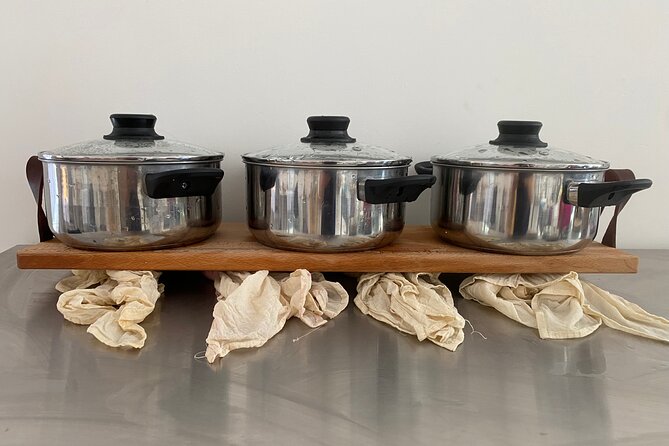
One of the best value parts is that you can take your results home. You’ll take with you your two cheeses, plus the basic tools used in the class. That’s a big deal for beginners because it lowers the friction next time. You’re not starting from zero with a random kit.
You’ll also receive recipes via email so you can repeat the process at home. This is where the workshop turns from a fun outing into real skill. It gives you a path to keep going instead of fading after one memorable day.
For most people, the “I’ll try this later” plan dies because they don’t remember steps or lack proper guidance. The emailed recipes help you keep the craft in reach without needing to book another class immediately.
Also, making fresh cheese at home is more approachable than aged cheese. Even if you only try it once, you’ll come away with a better sense of timing, curd handling, and how to flavor the finish.
Price and group size: is $144.49 worth it?
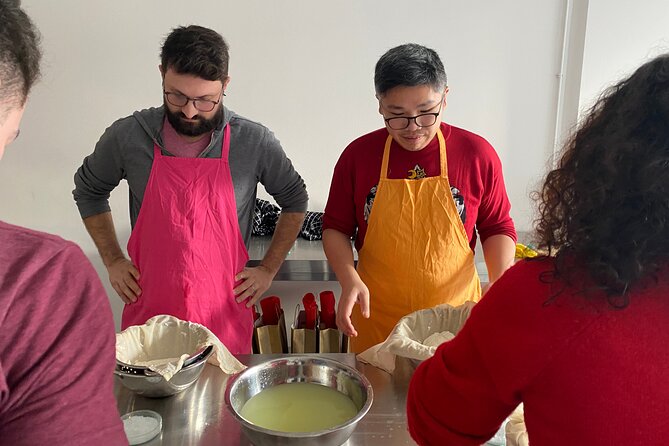
At $144.49 per person for about 3 hours, this isn’t a cheap snack tour. But it does include the big-cost items that often push workshops into “only for die-hards” territory: ingredients, materials, and the fact that you leave with actual cheese and basic tools.
You’re also getting a small-group format (up to 8 travelers). In a class like this, that matters. More people in a room can mean more waiting and less hands-on learning. Here, the smaller number supports better instruction and more participation.
When I judge value, I look at the mismatch problem. If you pay a lot but mostly watch, it feels overpriced. If you pay a mid-to-high price but leave with food you made, tools you can use again, and written recipes, it feels fair.
This workshop lands in the second category. You’re paying for guided craft time plus a take-home outcome, not just a demonstration.
Where it fits in your Amsterdam day (De Hallen and Ten Katemarkt)
You meet at De Kaasserie, Bellamystraat 8, 1053 BL Amsterdam. The workshop is next to De Hallen, which is useful because it anchors you in an area with lots to do before or after. You don’t have to build your day around a remote location.
You also have a second stop tied to Ten Katemarkt. Since the class is based locally around the area, it’s a good setup if you’re already planning on exploring these neighborhoods. In other words: you’re not traveling across town just for cheese basics.
The session ends back at the meeting point. That’s a small detail, but it’s practical. You can plan your next move fast and avoid last-minute map chaos.
Who this cheese workshop is best for
This class is ideal if you like food craft and want a guided way to learn something real. It’s especially good for:
- First-time cooks who want a beginner-friendly intro
- Food lovers who enjoy hands-on learning, not just tasting
- Travelers who like small-group activities with a calmer pace
- People who want something different from the usual Amsterdam food tour format
If you’re chasing aged cheese techniques, long fermentation timelines, or advanced cheesemaking theory, you might find this too short and too fresh-focused. But if your goal is to understand the basics and take home cheese you made with confidence, it fits well.
Also, it’s offered in English, so you can relax and focus on learning rather than translation math.
Should you book De Kaasserie’s cheese making workshop?
I’d book it if you want a small, friendly class where you make two fresh cheeses, customize one with herbs and colours, and leave with food plus tools and recipes. It’s a strong choice when you’re curious about cheesemaking but don’t want to guess your way through the first attempt.
I’d skip it only if you’re expecting a huge tourist show, a long multi-day course, or a deep dive into aged cheese culture. This is craft time for real results, not a lecture hall.
If you’re already in the De Hallen area, it’s also a smart slot. You get a memorable experience without blowing up your whole day.
FAQ
How long is the cheese making workshop?
It runs for about 3 hours.
How many people are in the class?
The workshop has a maximum group size of 8 travelers.
What types of cheese will I make?
You’ll make two fresh cheeses: one coagulated with rennet and one coagulated with acid.
Are ingredients and materials included?
Yes. All ingredients and materials are included, and you’ll also receive basic tools to take home.
Do I get to take the cheese home?
Yes. You can take both cheeses you make with you.
Where do I meet, and what language is the class in?
You meet at De Kaasserie, Bellamystraat 8, 1053 BL Amsterdam. The workshop is offered in English.
You Might Also Enjoy

More Workshops & Classes in Amsterdam
More Cheese in Amsterdam
- Zaanse Schans Windmills, Clogs and Dutch Cheese Small-Group Tour from Amsterdam
★ 4.5 · 2,369 reviews