REVIEW · HAARLEM
Cultural and Historical Audio guided walking tour Tour of Haarlem
Book on Viator →Operated by Pocketguide Caribbean · Bookable on Viator
Haarlem rewards slow wandering. This GPS audio walk helps you move through the city with your eyes on the streets, not your phone, and it puts hofjes and Frans Hals Museum into clear context as you go. I especially like the flexibility: you can pause when you want, then restart the moment you’re ready, without feeling like you’re trapped in a group schedule.
One catch: it’s audio-only and GPS-triggered, so you need to get reasonably close to each stop for the next track to play. If you prefer a live guide who constantly reorients you, this may feel a bit hands-off, and several major sights require separate museum or house admission.
In This Review
- Quick highlights
- Why this Haarlem GPS audio tour feels natural on foot
- Price and value: what you’re paying for (and what you’re not)
- Getting started: headphones, GPS cues, and why the start/end matter
- Hofje van Oorschot: seeing a courtyard life you can’t enter
- The Corrie ten Boom House: faith and WWII history
- Grote Markt and the historic core: Vleeshal, City Hall, and statues
- Canals and bridges: Bakenessergracht and Spaarne at Gravestenenbrug
- Teylers Museum and The Waag: science, art, and Lieven de Key
- Vijfhoek lanes and the Frans Hals Museum finish
- Jopen brewery stop: a local beer story without forcing a detour
- Pace, comfort, and how to avoid the common GPS frustration
- Who this Haarlem audio walk suits best
- Should you book this Haarlem audio tour?
- FAQ
- How long is the Haarlem walking tour?
- Is this tour fully guided by a person?
- Do I need to bring a headset?
- Where does the tour start and end?
- Do I have to pay admission for all stops?
- Which sites are listed as free?
- What do I need to do before I start walking?
- Is the tour accessible for most people?
- Are service animals allowed?
- Is the experience refundable?
Quick highlights

- GPS audio navigation means you don’t stare at your screen all the time.
- Hofjes sightseeing gives you a look at Haarlem’s famous almshouse courtyards, even when a gate blocks entry.
- WWII story at the Corrie ten Boom House adds emotional depth beyond the postcard view.
- City-center landmarks link together in a way that makes the Grote Markt area click.
- Canal and bridge stops are built in for easy photo breaks.
- You pay for the narration, then decide which museums to enter with your own tickets.
Why this Haarlem GPS audio tour feels natural on foot
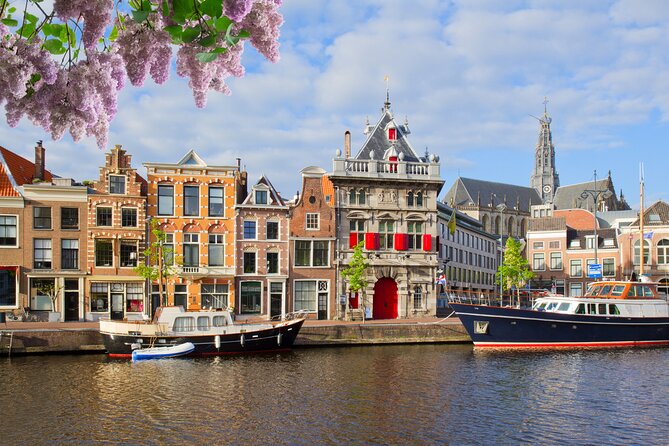
Haarlem is compact, walkable, and full of details you’d miss if you were speed-reading a map. This kind of audio guide works because it matches how the city looks: brick facades, canals, courtyards, and small streets that reward turning your head at random. Instead of a constant string of instructions, you get guided narration that kicks in as you reach specific places, and then you can absorb what’s in front of you.
I also like that you can control the pace. The tour is about being in the city first, and the story second. That matters in Haarlem, where a quiet courtyard like a hofje can feel like a whole “mini-city” inside the busy streets. And it’s practical: an audio track is usually easier to listen to while walking than trying to read text while balancing on cobblestones.
The best part is that you can use the tour like a framework. Even if you end up spending extra time at one stop, you’re not breaking the experience—you’re just shaping it around what catches your attention.
You can also read our reviews of more walking tours in Haarlem



Price and value: what you’re paying for (and what you’re not)
At $15.05 per person for about 1 hour 45 minutes, you’re mainly paying for the self-guided narration and GPS navigation. That’s a strong value if your main goal is context: why a building looks the way it does, what it was used for, and how different spots connect across Haarlem.
But you should plan your budget around the fact that most admissions are not included. In the provided info, only a few stops are explicitly listed as free (like Hofje van Oorschot viewing from outside, parts where admission is marked free, and some neighborhood viewing). Key museums and historical sites have tickets listed as not included, meaning you’ll likely add separate entry costs if you want to go inside places like Teylers Museum or the Frans Hals Museum.
So the value comes from two scenarios:
- If you’re happy to see many buildings from the street (and only enter a couple of paid sights), the tour can stay budget-friendly.
- If you plan to enter several museums, the audio guide becomes the “brain” of your visit, but the total cost rises with additional tickets.
Getting started: headphones, GPS cues, and why the start/end matter

This walk is set up as a download-in-advance experience. You get the app, you enable GPS, and the audio starts when you’re close to the start area. The directions also include a clear endpoint on the Grote Houtstraat—Haarlem’s main shopping street—so it’s easier to orient yourself afterward and head back toward transit.
A small practical note: you’ll want your own headset. That’s listed as required, and it affects comfort immediately—without it, the narration won’t be usable.
Also consider this if you’re new to GPS tours: you’re not being guided by sight alone. You’re listening for audio triggers, and those triggers are distance-based. That means if you miss a marker—by turning early, walking too far away, or lingering in the wrong doorway—the next piece of narration might not play until you loop back close enough.
Finally, the tour is described as private in the sense that only your group participates. There’s no live-guide meeting vibe, which can be a plus if you prefer quiet, solo-style wandering, or it can be a mismatch if you want constant human guidance.
Hofje van Oorschot: seeing a courtyard life you can’t enter
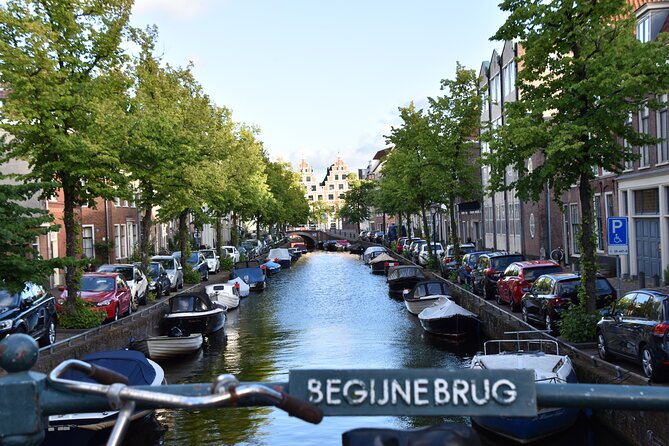
Haarlem is known for hofjes—closed courtyards tied to almshouses for people who needed support, often funded through bequests from prominent families. It’s one of those urban features that makes the city feel layered: busy streets outside, stillness and history inside.
Hofje van Oorschot is a special case. You can admire it only from behind a closed gate, and the info clearly notes there’s no admittance for outsiders. That sounds frustrating at first, but it can also be a useful lesson: not every historic site is meant to be accessed. Sometimes the real experience is standing at the threshold and understanding what it represents.
Practically, this stop works as an early orientation moment. It sets the tone for the walk—Haarlem isn’t just about big squares and museums. It also lives in quiet corners and tucked-away spaces you might otherwise ignore.
Tip for enjoyment: when you can’t go in, slow down. Look for architectural clues at the gate and the surrounding facade, because the audio context helps you connect what you’re seeing to why it matters.
The Corrie ten Boom House: faith and WWII history

If you want your Haarlem walk to carry weight, the Corrie ten Boom House is the place. It’s described as more than a museum: an account of a family whose strong faith led them into underground efforts in the Netherlands during WWII. The audio tour tells the story, and the information also flags this as a must-do pause point.
Since admission is not included, you’ll likely decide in advance whether you’re planning to go inside here. If you do, build extra time. WWII history often benefits from reading and lingering, even when you’re following a self-guided audio format.
If you don’t enter, the stop can still deepen the walk because it changes how you look at the city. Buildings stop being just backdrops. They become witnesses to real events.
In short: this is the tour’s emotional and historical pivot. Everything else keeps you oriented to buildings and neighborhoods; this is the moment where the story connects to people and risk.
You can also read our reviews of more guided tours in Haarlem





Grote Markt and the historic core: Vleeshal, City Hall, and statues
The Grote Markt is Haarlem’s central stage. Here you’ll find the kinds of buildings that concentrate a city’s identity: market architecture, civic power, and public art. This is where the audio helps you read the scene instead of just walking through it.
In the provided details, the narration focuses on iconic points around the square, including:
- The quaint old Vleeshal
- The town hall
- Several statues
Vleeshal deserves a closer look. It’s dated to 1603, and the name connects to its original purpose—Vlees means meat. That’s the kind of detail that makes a historic building feel grounded in everyday life, not just made-for-tourism appearances.
Then there’s City Hall. The info says it was built in the 14th century, replacing a Count’s castle. That’s a powerful shift in one sentence: a move from noble stronghold to civic governance. Again, you’re not just seeing walls. You’re seeing a change in what power looked like in Haarlem.
One practical consideration: squares are open, so GPS cues can sometimes trigger a bit faster if you cross the area at the wrong angle. If you feel unsure about which building you’re hearing about, use the app’s map view if it’s available to you and step a little closer to the exact facade the narration points toward.
Canals and bridges: Bakenessergracht and Spaarne at Gravestenenbrug
Haarlem’s canals aren’t just pretty. They’re part of how the city’s neighborhoods formed and how people moved through daily life. That’s why stops like Bakenessergracht matter. The audio is set up to tell neighborhood stories as you stroll along the canal-side.
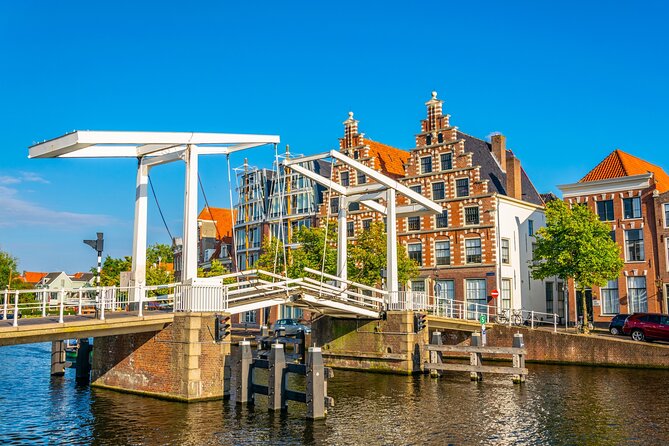
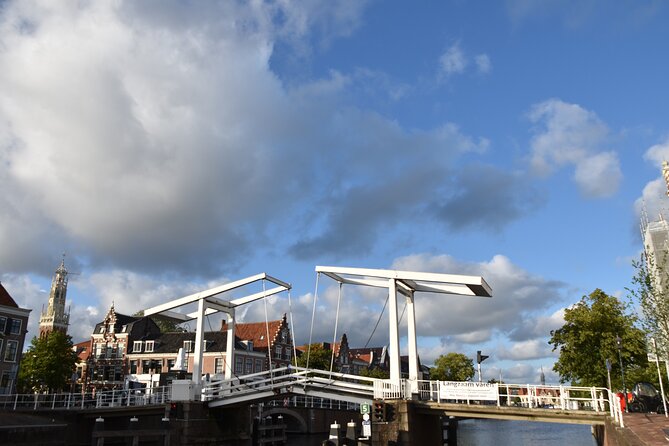
Then comes Spaarne & Gravestenenbrug—named explicitly for its iconic bridge. This is a built-in photo moment, and it’s a great place to pause your pace and just watch how the canal frames the buildings and streets.
These canal moments do something useful for first-timers: they help you understand Haarlem as a living layout, not a list of sights. When you’re walking, you can connect earlier stops to later ones without feeling like you’re tracing a straight-line itinerary.
Advice: treat these as short breaks, not rushed “transfer points.” A 10-minute linger here can make the rest of the tour feel more coherent.
Teylers Museum and The Waag: science, art, and Lieven de Key
Two famous stops in the route are paired with very different vibes, which is smart for balance.
Teylers Museum is described as a museum of wonders, established in 1778. It was founded as a centre for contemporary art and science, and the audio tour is set up to add layers as you walk toward it. Admission is not included, so decide if you want the full ticketed experience or if you prefer to take the exterior context and keep moving.
Then The Waag (the weigh house) shows a different side of old Haarlem. The info notes it was designed by Lieven de Key, and it now functions as a café catering to tourists. Admission is not listed as included, which usually means you’re not buying a ticket for a viewing in the way you would for a museum—more like you can choose whether to step inside for a drink or snack.
Pairing science-and-art museum context with a historical weighing building that’s now casual and social is a nice reminder: Haarlem reuses its past. It doesn’t only preserve it behind glass.
If you like practical breaks: this is a good spot to recharge your legs and mind before the walk continues into more neighborhood streets and the final museum area.
Vijfhoek lanes and the Frans Hals Museum finish
As the walk progresses, it shifts from the obvious landmarks to the smaller streets that help you feel the “old city” texture.
Vijfhoek is described as a neighborhood in the Oude Stad area, with great small streets where the audio includes historic stories. This is a good part of the walk to slow down, because in smaller lanes your sense of direction can get fuzzy—and that’s exactly when narration helps you stay oriented.
Then the tour heads to Frans Hals Museum, also known as the Museum of the Golden Age. The info says the collection is based on the city’s own rich collection built up from the 16th century onwards, and it includes many works by Frans Hals, where the museum takes its name.
Admission is not included, so treat this as your last likely “decision point.” If you’re museum-curious, this is where you spend your time. If you’d rather keep your ticket costs down, you can still enjoy the walk context and move on when you reach the museum zone.
Also, because the endpoint is along the Grote Houtstraat shopping street, you have an easy “after” plan: you can keep wandering, grab food, or head toward transit without feeling stuck.
Jopen brewery stop: a local beer story without forcing a detour
Haarlem has a modern identity too, and the tour includes a stop connected to beer culture: Jopen. The info describes it as a beer brewery from Haarlem, and notes that Jopen beer is the result of work by Stichting Haarlems Biergenootschap, founded in 1992.
This is a smart pacing tool. After museums and civic buildings, the brewery-related stop gives you a more relaxed, present-day angle. It’s also practical: you can pair the story with something simple like a drink or bite, depending on what you feel like doing that day.
Since admission isn’t included, this isn’t a “ticket required” element in the way museums are. It’s more about using the stop to connect the city’s past and present through something people actually do—eat, drink, talk, linger.
Pace, comfort, and how to avoid the common GPS frustration
A self-guided GPS walk can be wonderful, but it does require one mindset shift: you’re the tour guide too. The audio triggers when you’re close, so your job is to stay aware of where you are in relation to the building or street marker the narration expects.
Here’s what helps:
- Keep a charged phone and enable GPS before you start listening.
- Wear comfortable shoes, because you’re covering a full route in about 1 hour 45 minutes plus any stops you extend.
- Don’t treat every stop as a sprint. When you’re right at the marker, you’ll get the story.
- If you miss a cue, don’t panic. Step back and re-check the location in the app map if it’s there.
One reason self-guided tours sometimes disappoint is that people want the narration to clearly label the exact building in a way that’s obvious from far away. If you’ve got that expectation, you may feel lost when landmarks look similar. Your best defense is simple: pause, look, and match what you see to what the audio is describing.
And if you’re the type who wants to rewind smoothly, take a minute before you start to familiarize yourself with the player controls. The tour is designed to be straightforward, but audio apps vary in how they handle replay.
Who this Haarlem audio walk suits best
This tour style fits you if:
- You like walking at your own pace and pausing for photos or quiet reading.
- You want context for Haarlem’s hofjes, canals, and major landmark buildings, not just a sightseeing checklist.
- You’re okay paying separate tickets for specific museums you choose to enter.
It might feel wrong if:
- You expect a live guide to herd you into every stop and correct your route instantly.
- You want a constant flow of dense facts without breaks, because the audio approach is designed to let you absorb what you’re seeing in the moment.
The sweet spot is first-time Haarlem visitors who want to feel oriented quickly and then keep exploring after the walk ends.
Should you book this Haarlem audio tour?
I’d book it if your goal is to understand Haarlem while you wander, using GPS audio as your guide. For $15.05, you’re getting a structured story trail through the city’s strongest themes: hidden courtyards (hofjes), civic and market architecture (Grote Markt, Vleeshal, City Hall), water and bridges (Bakenessergracht, Spaarne), and big-name cultural stops (Teylers Museum, Frans Hals Museum), plus a relaxed local angle with Jopen.
I’d think twice if you’re hoping for a hands-on experience that replaces a live guide. It’s self-guided by design, and you’ll get the best results when you follow the GPS cues and accept that some admissions are on you.
If you want a smart use of time in Haarlem, this tour is a practical way to turn a pleasant walk into a clearer, more meaningful one.
FAQ
How long is the Haarlem walking tour?
It’s about 1 hour 45 minutes.
Is this tour fully guided by a person?
No. It’s an audio guided walk using a GPS-enabled app.
Do I need to bring a headset?
Yes. Bring your own headset.
Where does the tour start and end?
It starts at Kruisweg 70BR, 2011 LG Haarlem, Netherlands, and ends at Grote Houtstraat 1312, 2011 SJ Haarlem, Netherlands.
Do I have to pay admission for all stops?
No. Some sights are listed as free, but many stops (including several museums and notable buildings) have admission tickets not included.
Which sites are listed as free?
Hofje van Oorschot (viewing only behind a closed gate) is listed as free, Bakenessergracht is listed as free, and Vijfhoek is listed as free.
What do I need to do before I start walking?
Download the app in advance, enable GPS, and then head to the start point. The guide starts once you are close.
Is the tour accessible for most people?
The information says most travelers can participate, and it’s near public transportation.
Are service animals allowed?
Yes, service animals are allowed.
Is the experience refundable?
No. It is non-refundable and cannot be changed for any reason.