REVIEW · AMSTERDAM
History & culture tour in Amsterdam with a local
Book on Viator →Operated by Guidance Travel · Bookable on Viator
Amsterdam makes sense on foot. This 2-hour history-and-culture walking tour in Amsterdam with a local turns major landmarks into a connected story, from Beursplein to Centraal Station. I especially liked the small group feel and the fact you get a classic Dutch stroopwafel during the route.
You also get real personalization. In the reviews, I saw examples of guides like Manouk tailoring the walk to fit guests, and that same friendly, responsive approach shows up in how the tour is described. If you want a first-day orientation that still feels like a true neighborhood walk, this works.
One consideration: this is a walking tour, and you should plan on moving around for about 2 to 2.5 hours. It’s not a sit-and-watch style outing, so comfortable shoes matter.
In This Review
- Key things you’ll notice on this Amsterdam walk
- Walking from Beursplein to Centraal Station: the real value
- Beursplein: where Amsterdam’s economy story starts
- Dam Square and the Royal Palace: formation, power, WWII
- Begijnhof courtyard: religion, tolerance, and old houses
- A house on three canals: the bicycle bridge idea at work
- Nieuwmarkt: Waag, guilds, and the dancing houses
- Zeedijk and Chinatown: from danger in the 1970s to a favorite street
- Centraal Station: architecture plus why it matters for centuries
- Timing and pace: how this 2 to 2.5 hour format works
- Price and value: what $30.07 buys you in practice
- Who should book this Amsterdam history-and-culture walk
- A short note on guides and personalization
- Should you book this tour?
- FAQ
- FAQ
- How long is the tour?
- Where does the tour start and where does it end?
- Is the tour offered in English?
- What’s the group size?
- Do I get a ticket for the tour?
- Is there any food included?
- Which stops are included?
- Is there free admission at the stops?
- What cancellation options do I have?
- Are service animals allowed?
Key things you’ll notice on this Amsterdam walk
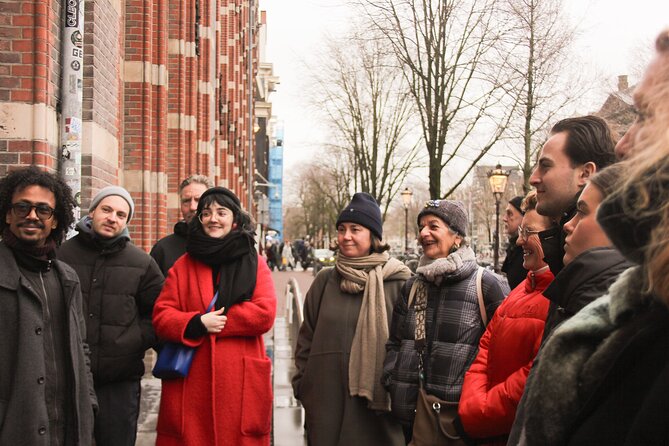
- Small group size (max 15): easier questions, less standing around, and more back-and-forth with the guide
- Stroopwafel stop: a simple, classic break that keeps energy up during sightseeing
- Packed with turning points: each stop is tied to how Amsterdam formed and changed over time
- A calm pace between highlights: the guide fills the walking time with context, not just directions
- Old Amsterdam in multiple layers: religion, canals, city gates, guild life, and WWII history in one route
- Centraal Station as the final wow: strong architecture + why it matters as a long-running hub
Walking from Beursplein to Centraal Station: the real value
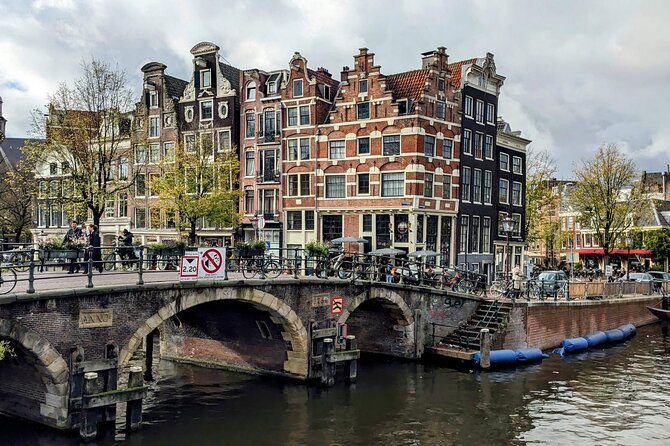
If you’re trying to understand Amsterdam fast, this kind of route is smart. You’re not just ticking off famous spots. You’re hearing how the city’s identity was shaped, then seeing how those same ideas show up right where you’re standing.
The tour’s format is straightforward: a local guide leads you on foot and explains what connects each landmark to Amsterdam’s bigger story. With up to 15 people, you’re not disappearing into a crowd. You can ask questions when something clicks, or when it doesn’t.
And the small perks help, too. You get a mobile ticket, the tour runs in English, and there’s a classic Dutch stroopwafel included along the way. That treat may sound minor, but it’s the kind of practical touch that makes a short tour feel complete instead of rushed.
You can also read our reviews of more historical tours in Amsterdam



Beursplein: where Amsterdam’s economy story starts
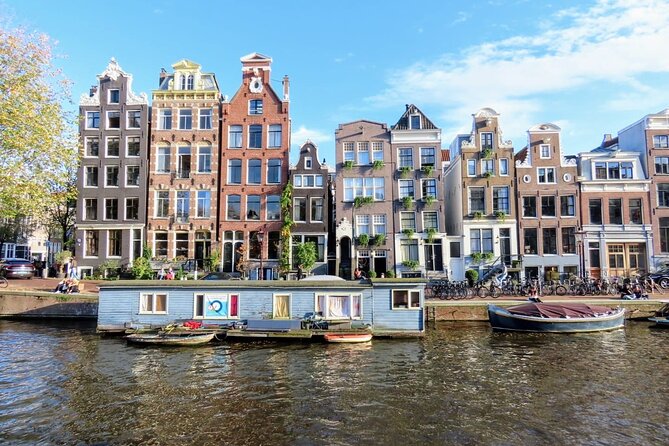
Your first stop is Beursplein, and it’s a good opener because it frames Amsterdam as more than scenery. The guide talks about the origins of the city and even how it acquired its name.
Then the story moves into the 17th century, when a fishing village evolved into the center of the global economy. I like how this stop sets up the rest of the walk. Instead of learning random facts, you start with the big “why Amsterdam matters” thread.
Practical tip: Be ready for an intro that’s more historical than architectural. This is the kind of start that helps the later stops make sense.
Dam Square and the Royal Palace: formation, power, WWII
From Beursplein, you head to Dam Square, another anchor point where you can feel Amsterdam’s shifts in focus over time. Here, the guide connects Dam Square to the city’s formation, and you’ll admire the Royal Palace on the Dam.
The other reason Dam Square is powerful is that it’s tied to the Second World War. This stop helps you understand that Amsterdam’s identity wasn’t built only through commerce and culture. It also had to deal with serious historical disruption.
Drawback to keep in mind: Dam Square is a major public space, so the exact feel of the stop depends on the time and crowd level. If you’re the type who likes quiet, you may feel the contrast as the tour shifts back into calmer streets.
Begijnhof courtyard: religion, tolerance, and old houses
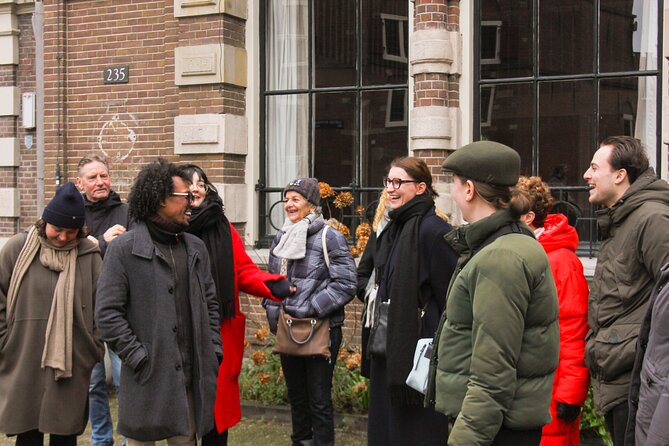
Next comes Begijnhof, and this stop changes the mood. It’s described as a lovely, serene courtyard, and the tour uses that quiet setting to explain the religious history of the place.
What I liked here is the direct link to Amsterdam’s reputation for tolerance. Instead of treating faith history as distant, the guide connects the courtyard to what this space reveals about how Amsterdam handled different beliefs.
You’ll also see one of the oldest houses in Amsterdam, plus one of the two wooden cottages. That mix of atmosphere and physical details is exactly what makes a short walking tour feel worthwhile: you’re seeing an actual place, not just hearing about it.
If you’re the kind of person who loves small settings that feel like time machines, Begijnhof is likely the stop that lingers after the tour ends.
A house on three canals: the bicycle bridge idea at work
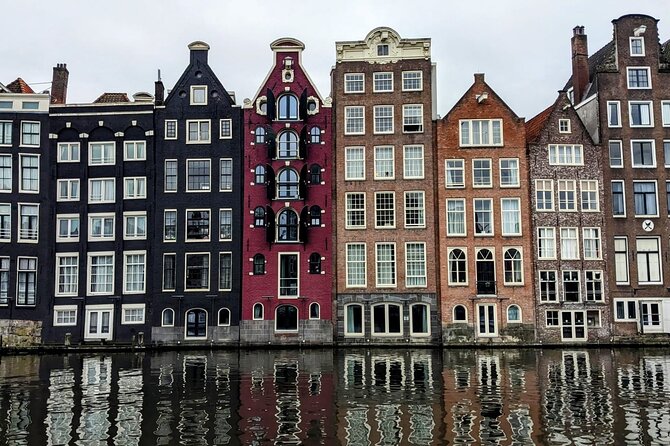
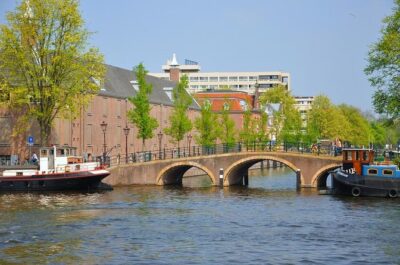
The tour then moves to House On The Three Canals. This stop sounds unusual for a reason: you’re going to see a house positioned across three canals, and you’ll learn about the idea of a bicycle bridge.
Even if you’re not obsessed with canal engineering, this is one of the most “Amsterdam-specific” moments. It’s a reminder that the city solved everyday movement problems in its own style, using canals and practical design.
A small caution: this is a short stop, about 10 minutes. If you want extra time for photos or questions, decide quickly what you care about most: the canal layout, the bridge concept, or how the location reflects how Amsterdam grew around water.






Nieuwmarkt: Waag, guilds, and the dancing houses
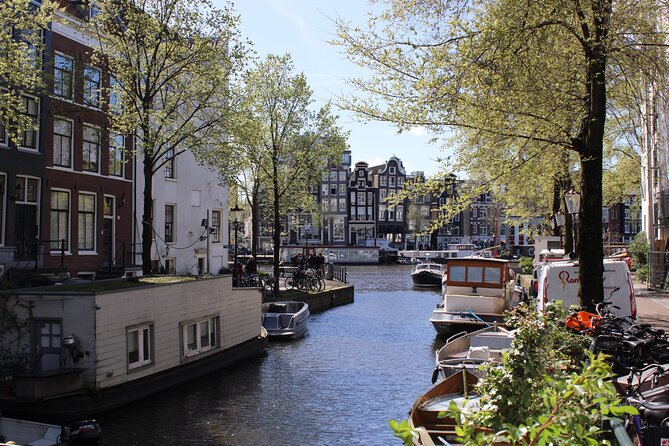
At Nieuwmarkt, you’ll learn about the Waag, which the tour describes as one of the old city gates that later became a guild hall. This stop is useful because it explains guild life as a core part of how Amsterdam functioned.
The guide’s focus on guild importance gives you a lens for understanding the city’s early economy and civic structure. It’s not just “merchants did business,” it’s “organized groups mattered.”
You’ll also see the so-called dancing houses, which adds a visual twist after the more historical material. I like pairing a concept-heavy segment (guilds) with a street-level visual oddity. It helps your brain stay engaged.
If you’re a history lover, this stop is one of the points where the tour feels especially efficient: you get meaning plus something you can actually see.
Zeedijk and Chinatown: from danger in the 1970s to a favorite street
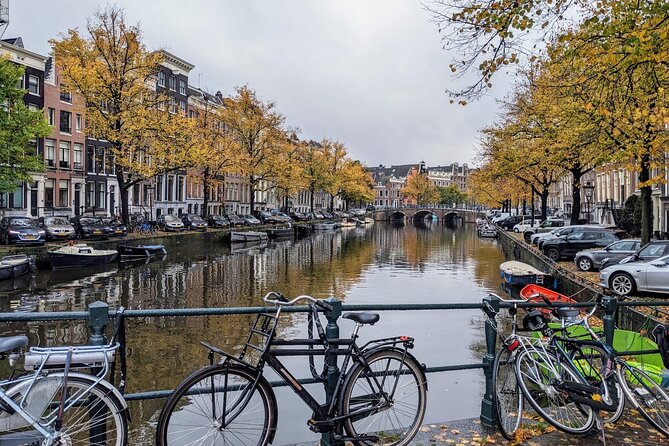
Next up is Zeedijk, where the tour shifts from old city structures to social change. The guide talks about Chinatown on Zeedijk and how, during the 1970s, it was once seen as the most dangerous place in Amsterdam.
Then the route moves into decline and transformation. You’ll learn how the street later shifted into one of the favorite spots for many Amsterdammers.
I appreciate that the tour doesn’t paint Amsterdam history as only pleasant. This stop gives you a more realistic timeline: a community, a reputation, then a change over time.
Possible consideration: this kind of stop can feel sensitive depending on your personal comfort with crime-focused historical storytelling. If you’d rather avoid heavy topics, you can still enjoy Zeedijk as a neighborhood walk, but know the guide will address the 1970s framing.
Centraal Station: architecture plus why it matters for centuries
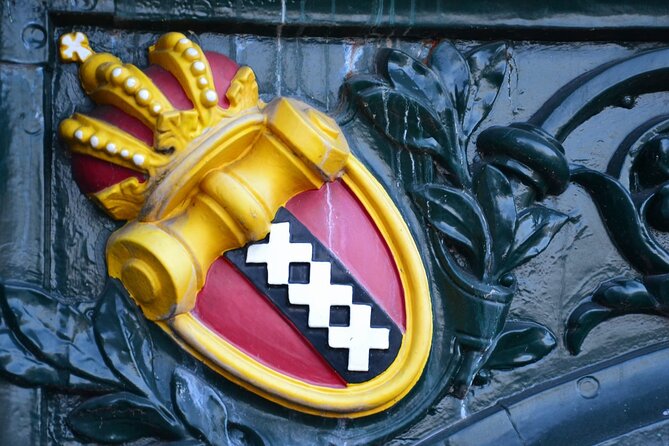
You end at Centraal Station, and it’s the right kind of finale. The tour highlights it as one of Amsterdam’s most stunning buildings and points out its impressive architecture.
But the real payoff is the “why here” part. You’ll learn why Centraal Station’s location has played a crucial role for centuries as a transportation hub, and why it became a historical symbol of connection and prosperity.
In a short walking tour, this is how you close the loop. Earlier stops explain how Amsterdam grew and organized itself. The station stop shows how the city continued pulling people in, keeping connections moving long after the 17th century.
If you want a final photo, aim to take it as you’re finishing the tour at Centraal Station. It’s one of those places where the space feels designed for scale, not just sightseeing snaps.
Timing and pace: how this 2 to 2.5 hour format works
The tour runs for about 2 to 2.5 hours, moving between highlights mostly on foot. Between stops, the group walks through the city while the guide talks about history and culture tied to what you’re seeing.
This matters because it keeps the experience from turning into a series of disconnected mini-tours. You’re hearing the connecting tissue while you still have the landmarks in front of you.
You also get a small-group advantage. With up to 15 travelers, you’re less likely to feel like you’re waiting your turn at every curb or doorway. That’s one of the reasons this format works especially well as a first-day activity.
Price and value: what $30.07 buys you in practice
At $30.07 per person for a roughly 2-hour guided walking experience, the value is mainly about three things: focus, group size, and inclusions.
First, it’s not a generic sightseeing loop. The stops are curated around Amsterdam’s formation and how the city changed: economy, governance/power, religion and tolerance, canals and movement, guild life, and WWII context. That kind of structured context is what turns a walk from scenery into understanding.
Second, the small group size (max 15) gives the guide room to interact. In the reviews, I saw examples of guides like Manouk tailoring the tour to fit guests, and that same flexibility is exactly what you’re paying for.
Third, the inclusion of a stroopwafel is a small cost-holder that improves the feel of the tour. You’re not just “given time,” you’re given a simple Amsterdam moment during the walk.
Bottom line: if you want history and culture without spending your whole day in museums or audio apps, this is a strong value pick.
Who should book this Amsterdam history-and-culture walk
This tour is a great match if:
- You’re visiting Amsterdam for the first time and want a sensible orientation across multiple eras
- You like your sightseeing tied to stories instead of just descriptions
- You prefer small groups and a guide you can actually talk to
- You enjoy a mix of famous landmarks and quieter spaces like courtyard streets
It may be less ideal if:
- You dislike walking for 2 to 2.5 hours
- You want only modern Amsterdam and don’t care much about historical context
Because it’s offered in English and is described as suitable for most travelers, it’s also a solid choice for groups with mixed backgrounds who still want one shared, coherent experience.
A short note on guides and personalization
From the reviews, I saw clear examples of what makes this tour work: the guides don’t just read a script. One review praised Manouk for being a thoughtful guide who shaped the walk around the guests, including a mix of history and today’s city vibes and an end-of-tour treat. Another review highlighted Malik as friendly and informative, with customization to meet the group’s needs.
That matters because Amsterdam can feel overwhelming fast. A guide who can match the pacing and interests makes a short tour feel like it fits your day, not just theirs.
Should you book this tour?
I think you should book it if your goal is to understand Amsterdam in a compact, walkable way. The route hits the major threads you’d want for a first pass: how the city formed, how it organized life, how it handled major events, and how its neighborhoods shifted.
The decision is easier if you like small-group tours with a guide who can answer questions. At max 15 people, you’re more likely to actually connect with the story.
If you want an easy win for your first day, this is the kind of tour that helps you get your bearings fast, then explore the city on your own with better context.
FAQ
FAQ
How long is the tour?
The walking tour takes about 2 to 2.5 hours.
Where does the tour start and where does it end?
It starts at Beursplein, 1012 JW Amsterdam and ends back at the meeting point.
Is the tour offered in English?
Yes, it’s offered in English.
What’s the group size?
The tour has a maximum of 15 travelers.
Do I get a ticket for the tour?
Yes. It uses a mobile ticket.
Is there any food included?
Yes. You enjoy a classic Dutch stroopwafel along the way.
Which stops are included?
The route includes Beursplein, Dam Square, Begijnhof, House On The Three Canals, Nieuwmarkt, Zeedijk, and Centraal Station.
Is there free admission at the stops?
Each listed stop indicates Admission Ticket Free.
What cancellation options do I have?
You can cancel for a full refund up to 24 hours before the experience’s start time.
Are service animals allowed?
Yes, service animals are allowed. The tour is also described as near public transportation and suitable for most travelers.