REVIEW · AMSTERDAM
Van Gogh Museum Private Tour
Book on Viator →Operated by 360 Amsterdam Tours · Bookable on Viator
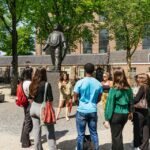
Van Gogh Museum can feel huge. This private 2-hour tour lines up the best stops and gives you context along the way, with a guide in your chosen language and a whisper system so the stories land clearly. I especially like the private guide format, where you can ask questions instead of just walking and guessing. You’ll move through the permanent collection in a focused route, from self-portraits to the Paris years, then to Arles and the later work at Saint-Rémy and Auvers.
The pacing is built for real viewing, not sprinting. In particular, guides like Sylvia and Giulia are described as fun and interactive, while Kiran kept a steady flow and still made room for questions. That mix matters, because Van Gogh’s life is dramatic, but the paintings reward calm attention.
One possible drawback: this is about 2 hours, so you’re not doing a full, slow museum marathon. If you want to spend long stretches on every single gallery, you may feel a little time-pressured.
In This Review
- Key highlights worth planning for
- A private guide turns the museum into a story
- Meeting at Cobra Café and ending by Museumplein
- The stop-by-stop route: from self-portraits to the Paris years
- Stop 1: Self-portraits and the artist’s gaze
- Stop 2: Millet and Jules Breton, and the world of rural subjects
- Stop 3: Paris between 1886 and 1888—new subjects, new energy
- Arles: Sunflowers, the Yellow House, and the South’s pull
- Sunflowers and what they signal
- The Bedroom and The Yellow House: interior life becomes a statement
- Japanese paintings: copies from prints
- Saint-Rémy and Auvers: the late-work rooms that change the pace
- Saint-Rémy-de-Provence: almond blossoms to Iris
- Auvers Room: Tree Roots and Wheatfield with Crows
- Why the timing works: short view windows, real explanations
- Price and value: is $263.20 per person worth it?
- What to ask your guide (so you get your money’s worth)
- Who should book this private tour?
- Should you book the Van Gogh Museum private tour?
- FAQ
- How long is the Van Gogh Museum private tour?
- Is the tour private or shared?
- What language is the tour offered in?
- Does the price include museum admission?
- What’s included besides the guide?
- Where does the tour start?
- Where does the tour end?
- Are food and drinks included?
- Is the tour only for adults?
- Can I stay in the museum after the tour?
- Is there free cancellation?
Key highlights worth planning for
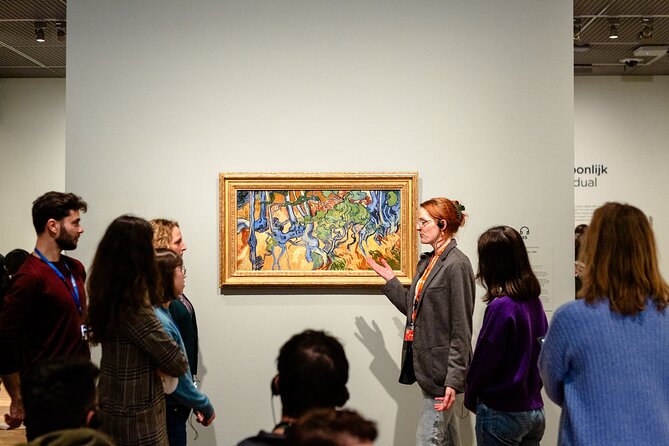
- Whisper system: clearer audio than typical museum narration, even in busy rooms
- Private, adult-only experience: just your group, with a guide who can answer questions
- A life-in-order walkthrough: self-portraits → Paris → Arles → Saint-Rémy → Auvers
- Included museum admission: you don’t have to manage tickets mid-tour
- Guide-led viewing beats solo wandering: you see more with less confusion
- You can still try to stay after: but only if you travel lightly
A private guide turns the museum into a story
I’ll be honest: the Van Gogh Museum can be overwhelming if you go in cold. You see amazing work, sure. But without a guide, it’s easy to miss the thread—what Van Gogh was responding to in each period, and how his choices show up in the brushwork, subjects, and even the way he returns to earlier themes.
That’s why a private format works well here. With one guide for your group, you get explanations right where the paintings are, not in a lecture hall later. The included whisper system also helps, especially when you’re standing close to other visitors or in galleries where sound bounces around. It’s a small detail that makes the experience feel more like a guided conversation than a noisy scramble.
You’ll also love the practical payoff: this tour is designed as a focused route. Instead of trying to decide what to see across the whole museum, you follow a curated sequence that tracks Van Gogh’s development through key places in his life.
You can also read our reviews of more private tours in Amsterdam
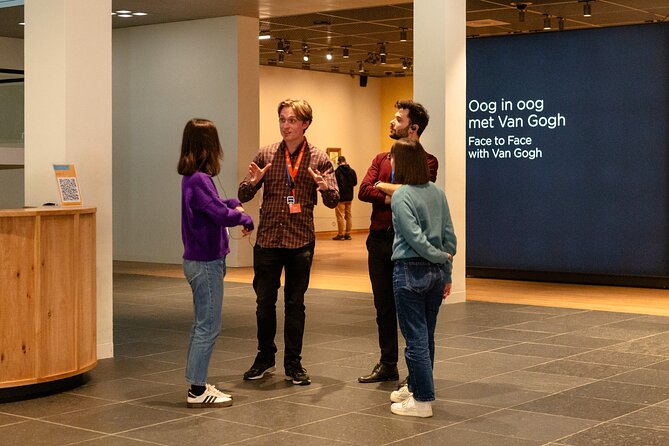
Meeting at Cobra Café and ending by Museumplein
The tour starts at Cobra Café (Hobbemastraat 18, 1071 ZB Amsterdam). That’s a convenient setup if you’re already using tram and metro stops around the South/De Pijp side of town. It’s also an easy waypoint to plug into your day without complicated transfers.
The tour ends at Museumplein 6 (1071 DJ Amsterdam). Since that’s the heart-of-things area around the museum complex, it’s simple to keep going afterward—grab a drink nearby, add another museum stop, or head toward the canal areas with less backtracking.
One thing to plan for: after the visit, you’re not allowed to stay in the museum unless you travel lightly. The rule is specific—no thick winter jackets, no suitcases, no large bags, and no liquids. If you’re carrying just a small jacket and a small handbag, you can usually stay until closing time.
The stop-by-stop route: from self-portraits to the Paris years
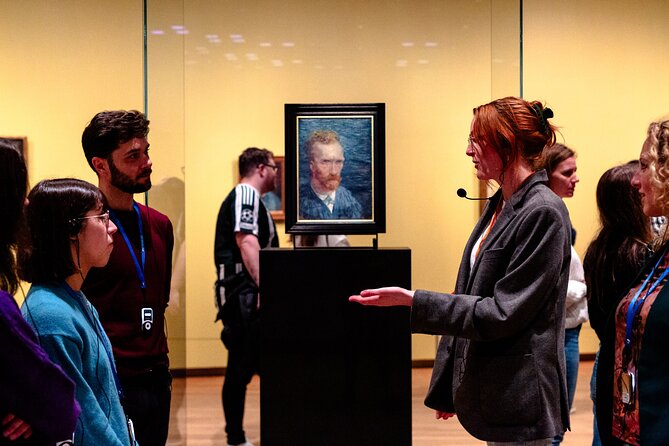
This tour doesn’t just toss art at you. It gives you an “in order” route, with short viewing windows and a guide who links each room to the next.
Stop 1: Self-portraits and the artist’s gaze
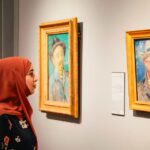
You start at the museum with self-portraits, including works like Self portraits of Van Gogh. Even if you’ve only heard the basics, this is a smart opener. It frames the whole visit: Van Gogh isn’t only painting landscapes and scenes—he’s constantly painting himself as he changes.
In a private setup, you’ll likely notice details you’d skip alone: how his expression shifts across different periods, and how the portrait format becomes a personal tool, not just a likeness.
Stop 2: Millet and Jules Breton, and the world of rural subjects
Next comes the first floor foyer, where you’ll see paintings connected to artists like Millet and Jules Breton, plus major works such as Woman Lifting Potatoes and The Potato Eaters. This part is valuable because it shows what Van Gogh was looking at and learning from before he built his own unmistakable approach.
You’ll also pick up why these rural scenes matter. They’re not random genre paintings; they’re a bridge between earlier influences and Van Gogh’s later intensity. The guide’s job here is to explain what you’re seeing—otherwise, you can easily read these as just “sad peasants” with no deeper context. With a live guide, you’re more likely to get the why.
You can also read our reviews of more museum experiences in Amsterdam




Stop 3: Paris between 1886 and 1888—new subjects, new energy
Then you move into the Paris stretch (1886 to 1888). Expect works such as Self Portrait with Felt Hat, Still Life with Absinthe, and In the Café: Agostina Segatori in Le Tambourin.
This is the part where you can see Van Gogh absorbing city life. You’re not just looking at color—you’re looking at life in motion: the social spaces, the nightlife, the still lifes that hint at taste and setting. If you like stories about how artists think, this stop is a good place to ask questions. You might find yourself asking why he chose specific settings or how the compositions mirror what was happening around him.
You’ll also see Garden with Courting Couples. It’s a shift in mood that helps you understand why Van Gogh’s work is never only about one thing at a time.
Arles: Sunflowers, the Yellow House, and the South’s pull
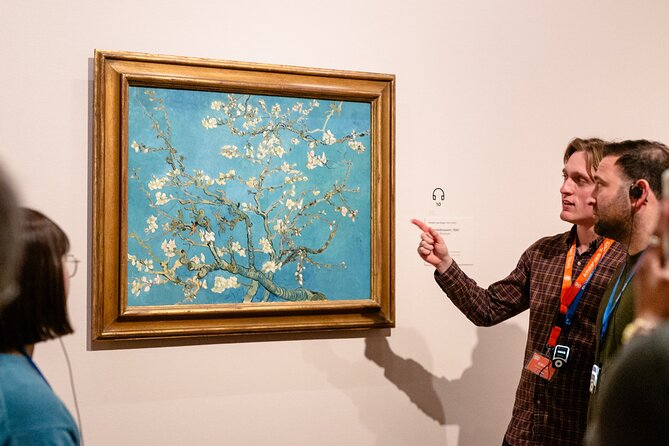
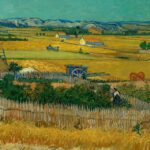
After Paris, the tour moves to Arles and the South of France. It’s a major transition, and the museum route reflects that. You’ll focus on the move itself and the visual markers of Arles, including Sunflowers and Almond Blossoms, plus key works like The Bedroom and The Yellow House.
Sunflowers and what they signal
Sunflowers can feel like a standalone “famous painting” if you don’t have context. With a guide, it’s easier to see the bigger idea: Van Gogh wasn’t just painting flowers. He was testing color relationships and emotional tone, and he was making images that carry weight.
The Bedroom and The Yellow House: interior life becomes a statement
Then come interior-focused pieces like The Bedroom and the Yellow House. These stops are helpful because they slow you down for a different kind of looking. Instead of outdoor brightness, you’re studying structure, space, and the way he turns everyday rooms into something almost theatrical.
The guide can make this click: you start noticing not only what objects are present, but how they’re arranged and how that arrangement creates mood.
Japanese paintings: copies from prints
You’ll also see Japanese Paintings—copies from prints. This is a surprisingly important detail because it explains influence without pretending it’s imitation. Van Gogh used what he saw to push his own style forward.
If you like art history that actually changes how you look, this is a good moment to ask the guide what to watch for. Look for the differences between a source image and the way he transforms it once it becomes his painting.
Saint-Rémy and Auvers: the late-work rooms that change the pace
The tour moves on to Level 3 for Saint-Rémy-de-Provence, and then again to Level 3 for the Auvers Room. These sections can feel emotionally heavier, even if you’re not trying to read feelings into paint.
Saint-Rémy-de-Provence: almond blossoms to Iris
You’ll see Almond Blossoms, Wheatfield with a Reaper, Iris, and Pieta (After Delacroix). This mix matters because it shows range. Even in a later period, he’s not only repeating one subject type. You get landscapes that feel like they have their own weather, flowers that carry a strong presence, and one work that connects to another artist’s treatment (Pieta after Delacroix).
Auvers Room: Tree Roots and Wheatfield with Crows
In the Auvers Room, you’ll spend about 15 minutes on Tree Roots and Wheatfield with Crows. This is a compact finish, and that brevity is part of the design. You’re left with a strong final impression: nature, structure, and that distinct tension Van Gogh built into his compositions.
If you find yourself wanting more time here, that’s a good sign. It means the late works landed. If you’re carrying light bags and not wearing thick outerwear, you may be able to stay until closing time—so you can return for a calmer look.
Why the timing works: short view windows, real explanations
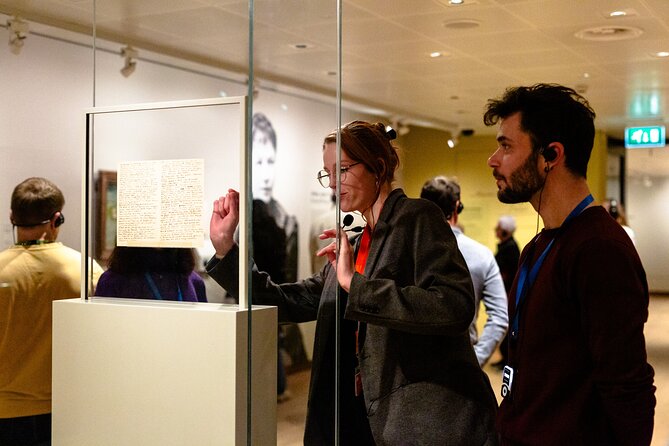
Each stop is built around a short viewing window—often around 20 minutes, with a slightly shorter slot in the Auvers room. At first, that can sound limiting. But here’s the practical truth: Van Gogh’s museum is big, and if you try to do everything your way, you end up tired and confused.
This tour’s format gives you:
- a reason to move (so you don’t lose momentum)
- a reason to focus (so you don’t just skim)
- a reason to ask questions at the moment you’re looking at the work
That question-friendly pace is something I’d put near the top of the value list. One of the reviews specifically highlights that Kiran kept the small group moving but still made time to answer questions. Another praises how Giulia kept an easy pace where people could ask questions and get thoughtful explanations.
In a solo visit, you might wander into a room, admire the paintings, and leave thinking, I loved it—but what did I just learn?
Here, you have a guide to turn admiration into understanding.
Price and value: is $263.20 per person worth it?
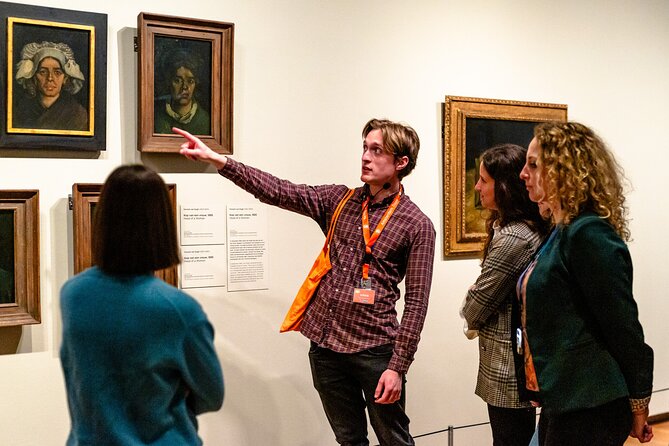
At $263.20 per person, this isn’t a budget activity. But it also isn’t just paying for someone to stand next to you. You’re paying for:
- a private guide (your group only)
- admission included for the museum viewing
- a whisper system that improves listening quality
- a time-efficient route that covers multiple key periods
If you’re an art fan who wants to leave the museum with a clear sense of Van Gogh’s arc—from Paris to Arles to Saint-Rémy and Auvers—then paying for guidance can be money well spent. If you prefer slow museum browsing and you’re fine using the museum audio or guidebooks, a self-guided day might cost less.
The sweet spot is this: you want the best hits and the story behind them, but you don’t want to spend hours figuring out what matters most.
Also, the tour notes group discounts are available. If you’re traveling with a friend or small group and can bundle within your private booking, that can improve the cost-per-person feel.
What to ask your guide (so you get your money’s worth)
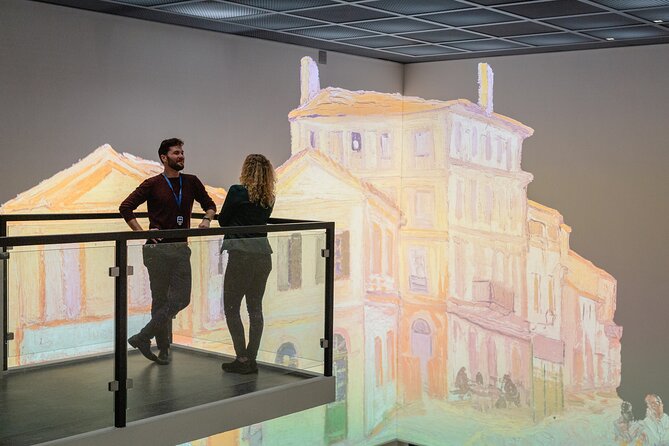
You don’t need to be an art expert to ask good questions. Here are a few that fit directly with what this tour covers:
- How does this period connect to what came right before it (self-portraits to Paris, Paris to Arles)?
- What should I look for in the composition—not just the subject?
- Why does Van Gogh return to certain themes (flowers, fields, portraits, interiors)?
- What’s the point of showing the influence of Millet and Jules Breton in the route?
- For the Japanese prints, what changes when it becomes his version?
This kind of questioning helps you see the paintings as decisions, not as random masterpieces.
Who should book this private tour?
This tour makes the most sense if you:
- want a focused 2-hour route that covers the museum’s biggest story beats
- prefer a private setting where you can ask questions
- care about clarity while listening in real museum conditions (the whisper system helps)
- plan a sightseeing day and need a predictable break in the middle or late morning
It’s only for adults 18+, and it’s a private activity, so it’s ideal if you want your group to move together rather than blend into a crowd.
Should you book the Van Gogh Museum private tour?
If your goal is to understand Van Gogh faster—and to leave with the feeling that the paintings connect to each other—then yes, I’d book it. The main reason is simple: the route is designed to teach, and the live guide plus whisper system makes the explanations easy to follow in real gallery space.
Skip it only if you want a long, slow, do-it-yourself museum day where you can linger room by room with no deadlines. This tour is helpful, not exhausting, but it’s still a guided “best-of the story” format.
If you do book, go in with one mindset: ask questions at the painting in front of you. That’s when the tour stops being a checklist and starts feeling like a real conversation with the art.
FAQ
How long is the Van Gogh Museum private tour?
It’s approximately 2 hours.
Is the tour private or shared?
It’s private. Only your group participates.
What language is the tour offered in?
The tour is offered in English, and the private guide is in your chosen language.
Does the price include museum admission?
Yes. Admission ticket(s) are included as part of the tour stops.
What’s included besides the guide?
The tour includes a 2-hour guided visit through the permanent collection and a whisper system for clearer listening.
Where does the tour start?
The meeting point is Cobra Café, Hobbemastraat 18, 1071 ZB Amsterdam.
Where does the tour end?
The end point is Museumplein 6, 1071 DJ Amsterdam.
Are food and drinks included?
No. Food and beverages are not included.
Is the tour only for adults?
Yes. It’s only available for adults age 18 and older.
Can I stay in the museum after the tour?
You’re not allowed to stay unless you are traveling lightly. Thick winter jackets, suitcases, large bags, and liquids are not allowed; with a small jacket and small handbag, you can stay until closing time.
Is there free cancellation?
Yes. You can cancel for a full refund up to 24 hours in advance.