REVIEW · AMSTERDAM
Zaanse Schans windmill tour with Italian guide
Book on Viator →Operated by AmsterdamViaggi · Bookable on Viator
Zaanse Schans feels like a time machine. In just a half-day, I like that you get the windmills of the Zaan River plus hands-on stops run with an Italian guide who keeps the explanations clear and practical. It’s a UNESCO-listed windmill village near Amsterdam, so you’re not spending your whole day commuting.
What I really like is the mix of everyday Dutch craft and food: you’ll see the spice mill and get to taste Dutch cheeses at a working farm. I also like that the tour includes a clog workshop-style stop, so the story is told with demonstrations, not just photos.
One consideration: this is a popular site with lots going on, so it can feel a bit touristy and you’ll be on a steady schedule to hit everything by return (around 1:30 pm). Also, the tour needs decent weather.
In This Review
- Key highlights at a glance
- Zaanse Schans, where the windmills actually run the story
- Stop 1: Zaanse Schans mills, spice routes, diamonds, and clogs
- Stop 2: Specerijenmagazijn Indie’s Welvaren spice mill demo
- Stop 3: Catharina Hoeve cheese farm and Gouda tasting
- Stop 4: the clog workshop experience, plus the trade-world extras
- Tour pace, group size, and what the Italian guide changes
- Price and value: why $43.78 can make sense
- Weather, timing, and how to plan your day in Amsterdam
- Who this tour fits best
- Should you book Zaanse Schans with an Italian guide?
- FAQ
- How long is the Zaanse Schans windmill tour?
- How much does it cost per person?
- Where do I meet for the tour?
- What time does the tour run?
- Is the ticket mobile?
- What language are the explanations provided in?
- What stops are included during the tour?
- Is cheese tasting included?
- How large is the group?
- What if the weather is bad?
Key highlights at a glance
- UNESCO windmill village, close to Amsterdam: Zaanse Schans is about 15 minutes by car from the city.
- Italian explanations throughout: You’ll get context for daily life, trade, and the “why” behind the crafts.
- Cheese tasting included: Expect typical Gouda in different fragrances and a tasting at the dairy stop.
- Spice mill tech and history: You’ll visit the Specerijenmagazijn Indie’s Welvaren for a demonstration tied to the era’s expeditions.
- Clogs with a real demonstration: The workshop stop focuses on how Dutch wooden shoes are made.
- Small-group feel: Maximum group size is 50, which keeps the day from feeling chaotic.
Zaanse Schans, where the windmills actually run the story
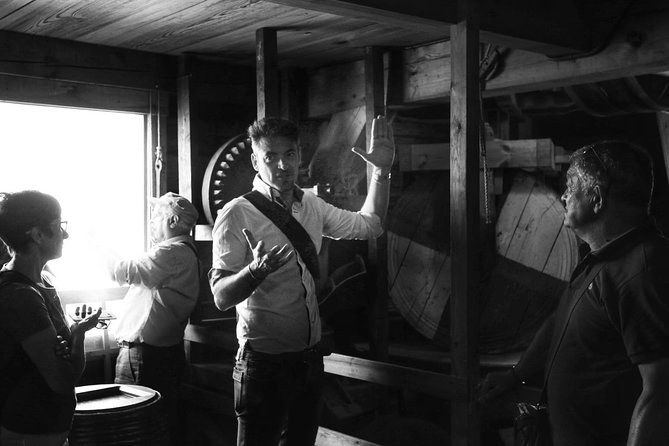
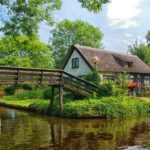
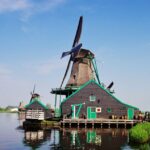
Zaanse Schans is one of those places that makes the Netherlands feel specific. The windmills aren’t there for decoration—they’re tied to milling, trade, and the working life along the Zaan River. Since the site is UNESCO-listed and only a short drive from Amsterdam, this is one of the easiest ways to get a “different Netherlands” without changing hotels or booking a full day out of town.
You’ll start at the Grand Hotel Amrâth Amsterdam (Prins Hendrikkade 108). From there, the day follows a tight flow: walk a riverbank route, step into workshop-style stops, then head back by early afternoon. The total time is about 3 hours 30 minutes, so it’s long enough to feel like you left the city, but short enough that you can still plan something the rest of the day.
A neat bonus is how often the guides include their own personal touch. In past tours, guides like Valerio, Luca, Gianni, Emanuele, and Antony show up as named guides, and the common theme is answering questions and keeping the pace comfortable. That matters because windmills and village crafts can turn into a checklist unless someone gives you the meaning behind them.
You can also read our reviews of more guided tours in Amsterdam


Stop 1: Zaanse Schans mills, spice routes, diamonds, and clogs
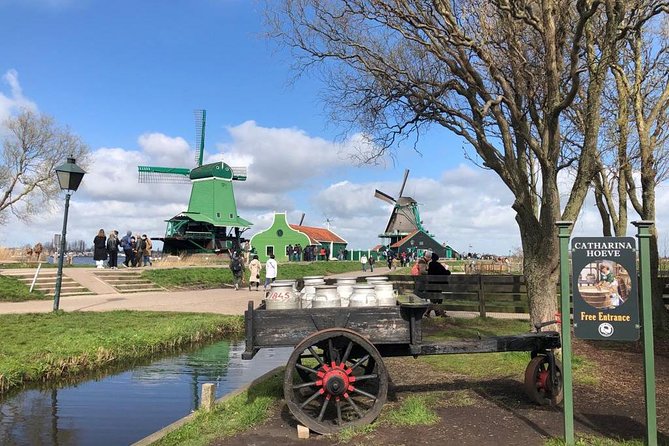
The first stop is the heart of the day: the Zaanse Schans windmill village itself. You’ll follow an itinerary along the banks of the Zaan River, with a mix of dairies, diamond cutters, and clogs. This part works best if you go in with curiosity about how old industries shaped daily life—because the guide ties the sites to 17th-century Dutch culture and economics.
Here’s what you can expect while you’re in this zone:
- Spice mill entry and explanation
You’ll get into the story of spices and trade, including references to the era’s expeditions and what those routes meant for the Netherlands. It’s not just a building to look at; you’re told why it mattered.
- Dutch clogs demonstration (in Italian)
The tour includes an explanation of how clogs connect to Dutch work culture. If you’ve ever wondered why clogs became a symbol, this is where it gets explained with real craft.
- Cheese factory stop with free tasting
You’ll visit a dairy-related workshop area and sample typical local cheeses. This is usually the first moment you can slow down, snack, and reset before the next activity.
- Small diamond maker visit
There’s also time for a diamond-making/diamond-cutting related stop. Even if diamonds aren’t your thing, it’s a strong contrast to the windmills and farm products, showing how varied Dutch industry was.
One thing to keep in mind: Zaanse Schans is famous, so you’ll be among crowds in this open-air village. The good news is the guide-driven structure helps you move with purpose instead of wandering and losing time.
Stop 2: Specerijenmagazijn Indie’s Welvaren spice mill demo
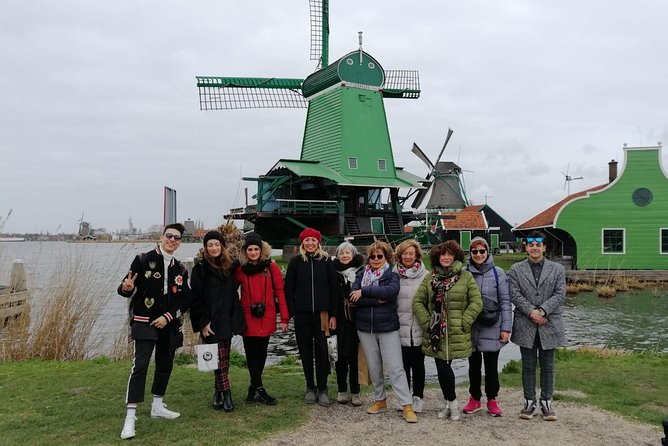
Next comes Specerijenmagazijn Indie’s Welvaren, the spice mill visit. This is the stop that turns the spice-route idea into something tangible. You’ll enter a mill tied to the history of spices and you’ll hear a demonstration of period technologies—how people processed and handled commodities at the time.
Why this stop is valuable: spices are one of those subjects that sound abstract until someone explains the process. The tour focuses on the “how” and “why,” including the role of companies connected to the Indies and their expeditions. If you’ve ever heard about Dutch trading power and wondered what it looked like on the ground, this is the practical answer.
Timing is also tight here—about 15 minutes—so you’ll want to listen closely during the demo. If you’re the type who asks questions, this is usually a good moment to do it, since the guide is actively explaining.
Stop 3: Catharina Hoeve cheese farm and Gouda tasting
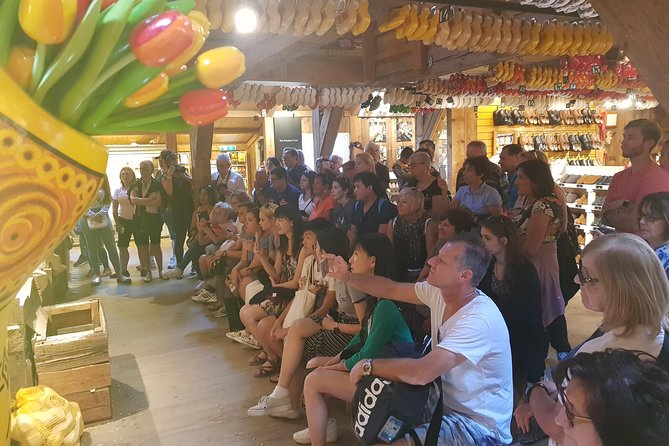
After the spice mill, you shift gears to food—always a smart move on a short excursion.
At Catharina Hoeve, you’ll experience a typical Dutch dairy setting and get a cheese tasting. The tour description calls out famous Gouda and the idea of tasting it across different fragrances. You’ll also hear explanations connected to Dutch land and water management, including the “birth of polders” and the irrigation system that supports reclaimed land.
This stop lands well for two reasons:
1) You can taste immediately, so the story doesn’t float away.
2) The polder/irrigation talk connects neatly to the rest of the Netherlands’ engineering mindset. Windmills, drainage, farming—same logic, different chapter.
This dairy portion is also about 15 minutes, so again: it’s short, but it’s built for a quick reset. If you’re sensitive to strong dairy flavors, just pace yourself during tasting.
Stop 4: the clog workshop experience, plus the trade-world extras
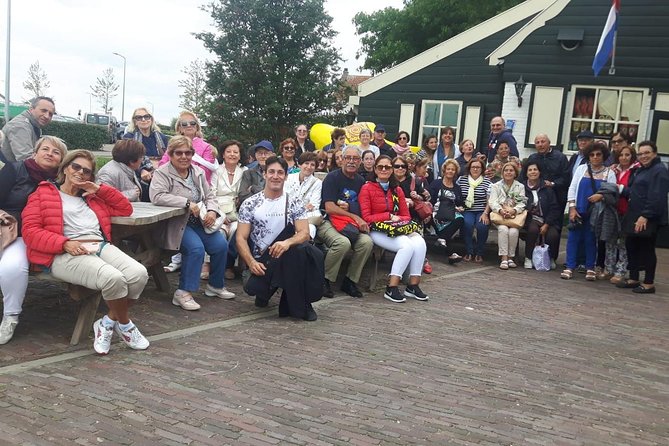
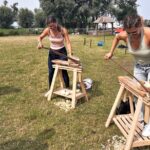
The final major stop is Kooijman Souvenirs & Clogs Wooden Shoe Workshop. This is where the wooden shoes aren’t just something you buy as a souvenir—you get an explanation of how the famous Dutch clogs are produced, with a special show included.
Even if you’ve seen clogs in shops before, this part is different because it’s focused on craft and technique. You’ll learn the logic behind the design and why clogs became part of everyday working life.
And your day doesn’t stop at clogs. The overall tour description also mentions visits connected to a diamond house and a cocoa factory, which fits the same theme: the Netherlands as a trading and processing hub, not just a pretty windmill postcard. The itinerary you’re following keeps these stops tightly grouped around the Zaanse Schans area, so you’re not bouncing around the region for hours.
One practical note: many of these stops are geared to keep the flow moving. You’ll see a lot in a short time, which is great if you’re on a schedule. If you prefer very slow wandering with lots of downtime, you might find yourself wishing for an extra hour.


Tour pace, group size, and what the Italian guide changes
The tour is designed for a smooth half-day plan. It runs about 3 hours 30 minutes and returns to the starting point around 1:30 pm. It also operates with a small-group maximum of 50 travelers, which usually means less waiting than bigger tours.
The Italian guide element is more than a language choice—it changes how you experience a place like Zaanse Schans. The tour promises personalized shows and explanations in Italian, and that shows up in the feedback: guides were described as punctual, organized, friendly, and willing to answer questions. Named guides like Valerio, Luca, Gianni, and Antony show up repeatedly, and the pattern is consistency: explain without rushing, keep things easy to follow, and help you understand what you’re seeing.
Transport-wise, you should expect a small ride to and from the site area. Several participants mention a clean minibus and smooth transfers, plus a meeting point that’s easy to spot near public transportation.
If you’re traveling with kids, this pace can work well because the stops are different back-to-back: mills, spice, cheese, clogs, and craft demonstrations. For adults, the payoff is context. Windmills become an idea you can explain, not just a view you took a photo of.
Price and value: why $43.78 can make sense
At $43.78 per person, this isn’t the cheapest way to do Zaanse Schans, but it’s not overpriced either—especially if you count what’s included in the experience.
What you’re paying for is essentially:
- Transportation from Amsterdam (described as included/transfer-based in feedback)
- A guided route through multiple working-industry stops
- Entry/ticket coverage at key points (the spice mill entrance is listed as included; other stops are listed with free admission tickets, and tastings are included)
If you tried to DIY Zaanse Schans, you’d still spend time figuring out tickets and timing for the spice mill and cheese tasting, and you might miss the trade-history context unless you plan your own research. Here, you get the story packaged with the visits, and it’s done in Italian with a guide who answers questions.
Also, the mobile ticket format helps—no paper scavenger hunt. And with free cancellation available up to 24 hours before start, you’re not locked in if plans shift.
Weather, timing, and how to plan your day in Amsterdam
This experience requires good weather. If conditions aren’t right, you’ll likely be offered another date or a full refund. So when you’re booking, treat this like a weather-dependent activity and keep your Amsterdam plan flexible on that day.
Scheduling-wise, it runs in the late morning block with opening hours listed as 10:00 AM to 1:30 PM, and the tour ends back at the meeting point. That means you can usually fit it between morning city sightseeing and an afternoon dinner reservation.
If you want to maximize your time in Amsterdam, consider planning a lighter morning before the tour. Once you start with the windmill village, the day stays structured—so you’ll enjoy it more if you’re not already exhausted from lots of walking in the city.
Who this tour fits best
I think this is a great fit if you:
- Want a short break from Amsterdam without losing half your day to logistics
- Like learning how crafts and industries actually worked (spices, dairy, clogs, and diamonds)
- Prefer a guided format over solo wandering in a busy, famous village
- Value an Italian-speaking guide for explanations and questions
It’s also a smart pick if you’re traveling with someone who thinks windmills are just scenery. Here, the windmills connect to food, trade, and work life—so the day has a backbone.
Should you book Zaanse Schans with an Italian guide?
If you want windmills plus real context—spice milling history, cheese tasting, and clog-making demonstrations—this is a very solid choice for the price. The combination of multiple hands-on stops and Italian-led explanations is what makes it feel worth doing, especially if you’d otherwise need to research each location separately.
Book it if you like structure and you want a half-day that gives you more than photos. Skip it only if you prefer unhurried wandering and you dislike weather-dependent plans. If you can handle a busy-but-managed schedule, you’ll likely love how quickly Zaanse Schans tells its story.
FAQ
How long is the Zaanse Schans windmill tour?
The tour lasts about 3 hours 30 minutes.
How much does it cost per person?
The price is $43.78 per person.
Where do I meet for the tour?
You meet at Grand Hotel Amrâth Amsterdam, Prins Hendrikkade 108, 1011 AK Amsterdam.
What time does the tour run?
The listed opening hours are Monday through Sunday, 10:00 AM to 1:30 PM (within the overall operating dates shown).
Is the ticket mobile?
Yes, the tour uses a mobile ticket.
What language are the explanations provided in?
The show and explanations are provided in Italian.
What stops are included during the tour?
You’ll visit Zaanse Schans and stops including the Specerijenmagazijn Indie’s Welvaren spice mill, Catharina Hoeve cheese farm, and Kooijman Souvenirs & Clogs wooden shoe workshop.
Is cheese tasting included?
Yes. There is tasting of typical local cheeses, including Gouda.
How large is the group?
The tour has a maximum group size of 50 travelers.
What if the weather is bad?
The experience requires good weather. If it’s canceled due to poor weather, you’ll be offered a different date or a full refund.