REVIEW · AMSTERDAM
Amsterdam: Private Red Light District Tour in Spanish
Book on GetYourGuide →Operated by Trigger Tours · Bookable on GetYourGuide
Two hours, and you get the story. This 2-hour private Red Light District walking tour in Spanish guides you through Zeedijk Street and Amsterdam’s Old Town with context you can actually use, not just street-level sights. I like having a private Spanish guide who can explain what you’re seeing, and I also appreciate the focused route that reaches the narrowest street area near the Old Church. One consideration: this is an adult-themed neighborhood, and the walk includes sex-work related windows and streets, so it helps to come in ready for sensitive material and keep things respectful.
You’ll meet your guide at the entrance of the Barbizon Palace Hotel NH collection (Prins Hendrikkade 59, 1012 AD Amsterdam), then move through the neighborhood on foot at a comfortable pace. Based on the feedback, the biggest win here is guide quality—one Spanish review specifically praised Maurizio for being well prepared and very kind—so you’re not stuck with vague pointers. The tour ends at Dam Square, giving you a clean finish point that’s easy to build into the rest of your Amsterdam day.
In This Review
- Key things you’ll enjoy most
- Getting your bearings: a Red Light District tour that doesn’t feel random
- Starting point at Barbizon Palace Hotel NH collection: why it matters
- Zeedijk Street to Chinatown: Old sailor energy and today’s streets
- Old Church area: the oldest building, the narrowest street, and big-city contrasts
- Why prostitution is legalized—and how the coffeeshop name fits in
- Dam Square finale: Condomerie and the Royal Palace as a reset
- Price and value: what $94 buys in a private 2-hour format
- Who should book this (and who might want a different tour)
- Book it or skip it: my decision guide
- FAQ
- Is this tour offered in Spanish?
- How long is the private Red Light District tour?
- Where do I meet the guide?
- Is this a private tour?
- What can I expect to see during the walk?
- Does the tour cover coffeeshop culture and legalization?
- Is the tour wheelchair accessible?
- What are the cancellation and payment options?
Key things you’ll enjoy most
- Spanish explanations that make the scene easier to understand
- Zeedijk Street + Chinatown route that shows how the area has shifted over time
- Old Church area stops, including the narrowest street and key landmark sights
- Coffeeshop culture and legalization context, including how the name coffeeshop was created
- Dam Square finale with well-known landmarks like the Royal Palace
Getting your bearings: a Red Light District tour that doesn’t feel random
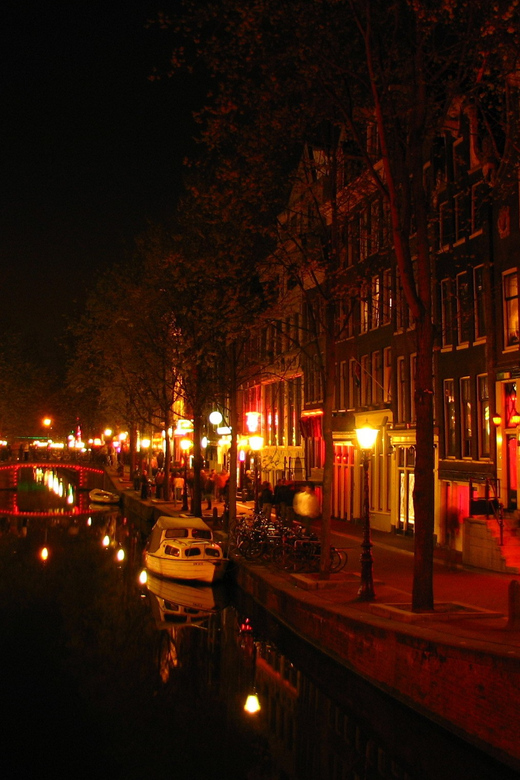
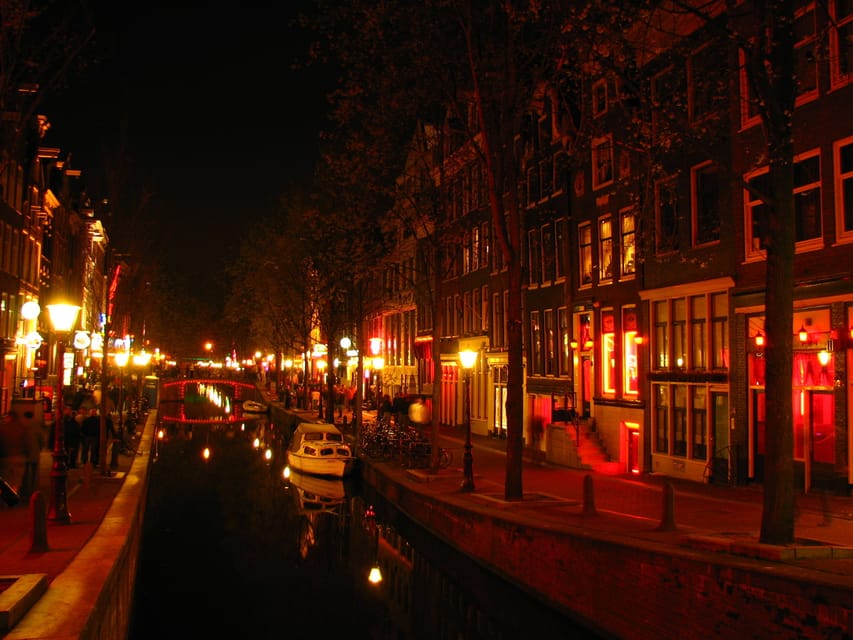
Amsterdam’s Red Light District can be overwhelming fast. You turn a corner and suddenly you’re staring at storefront windows, late-night bars, and souvenir shops—often all at once. What I like about this Spanish private walking tour is that it puts structure on the experience. You’re not just walking through a blur; you’re following a path where each area connects to the next, and you get clear explanations while you’re there.
The tour is designed around the idea that the neighborhood isn’t one single thing. It’s part tourist magnet, part local nightlife district, and part historical urban space that evolved into something more regulated and visible. With a Spanish-speaking guide, you can ask questions and follow the details without translation gaps getting in your way.
This is also the kind of tour that’s better approached with a mindset shift. Instead of treating the Red Light District as pure spectacle, you’re learning about how Amsterdam thinks about prostitution, drugs, and sex work—and how public attitudes have been handled through law and culture.
You can also read our reviews of more private tours in Amsterdam
Starting point at Barbizon Palace Hotel NH collection: why it matters
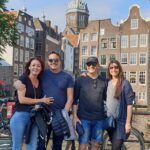
You meet at the entrance of the Barbizon Palace Hotel NH collection, Prins Hendrikkade 59. That meeting point is convenient because it puts you close enough to the action that you start walking quickly, but it’s also specific, so you’re not wandering around Central Station trying to find a tour group.
Once you’re with the guide, the next part matters: the tour doesn’t lead you straight into the most graphic area and leave you there. It starts you in the broader neighborhood context. That pacing choice makes the whole experience feel more “city tour” and less like an awkward sprint.
The tour is private, which is a big deal for a topic like this. A private group means you can move at a pace that works for you, and it’s easier for the guide to tailor the tone—whether you want more historical background or you’d rather keep the focus on what you’re walking past.
Zeedijk Street to Chinatown: Old sailor energy and today’s streets
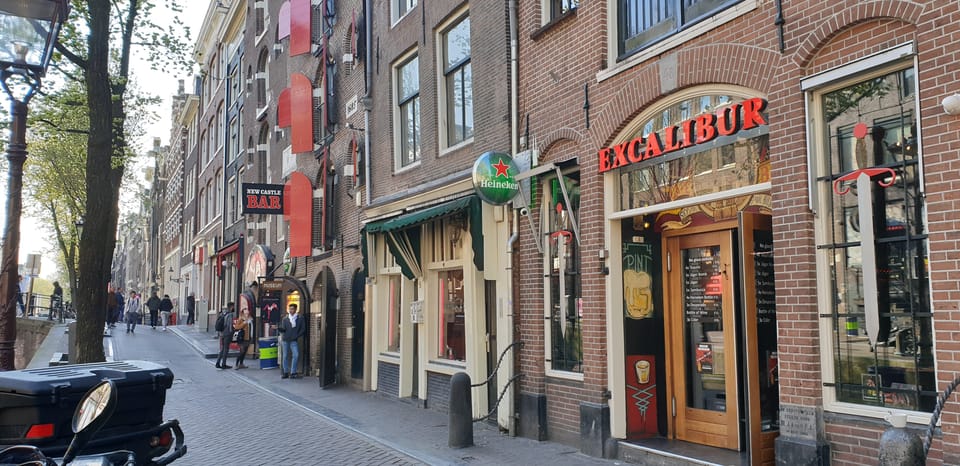
The first stretch takes you through Zeedijk Street, an old sailor’s neighborhood. This matters because it helps you see the district as something built on ordinary urban life, not just a single function. Then you move into Amsterdam’s Chinatown, a shift that can surprise first-timers. It also helps you understand that the Red Light District isn’t isolated; it blends into other parts of the city’s cultural geography.
In this early section, you’ll see a Buddhist Temple, which is a good reminder that you’re in a real neighborhood with real places of worship—not a theme park. You’ll also pass the pub called The Ape, plus the Waag. Stops like these are useful because they prevent the district from shrinking into one narrow narrative.
One of the most helpful things you’ll hear here is that this part of the Red Light District used to be a no-go area, but it has changed into something safer and friendlier over time. That kind of context changes how you interpret the street: you stop judging only by the present look and start noticing the social shift that Amsterdam has gone through.
You’re also likely to notice the mix of old and new. Even if you don’t know Amsterdam’s urban history, the guide’s framing gives you a lens: what used to be ignored or avoided, what became regulated, and what’s now simply part of the city’s public reality.
Old Church area: the oldest building, the narrowest street, and big-city contrasts
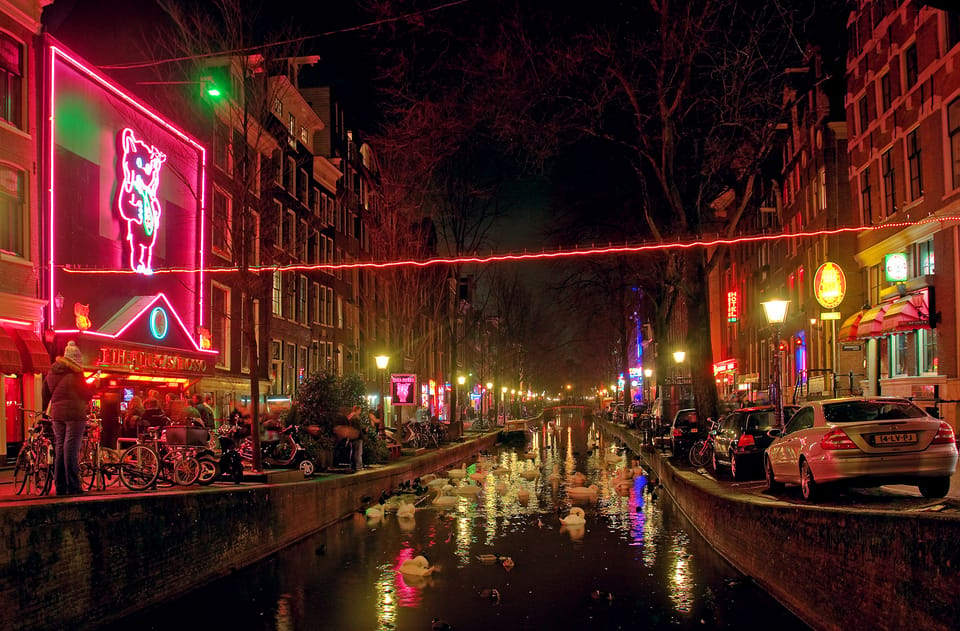
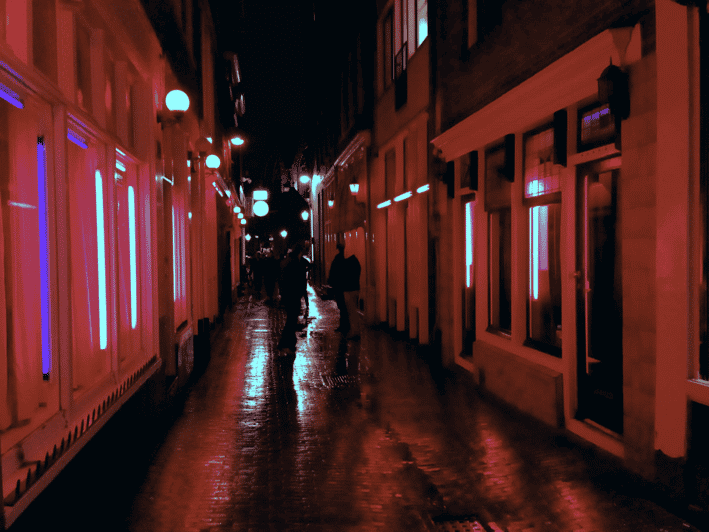
After the Zeedijk and Chinatown section, you head toward the Old Church, described as the oldest building in Amsterdam. That’s a smart pivot. When you mix a centuries-old landmark with modern adult street life, you learn something important: the city has always been layered, and Amsterdam’s identity is built from contrasts.
Here’s what makes this segment especially worth your attention:
- You’ll visit the area with the narrowest street of Amsterdam. Narrow streets aren’t just a postcard detail; they’re part of how neighborhoods shape daily life. In a compact space, everything feels closer—shops, people, and street activity.
- You’ll see the city’s first coffeeshop. That’s not a random stop. It directly connects to the tour’s broader explanation of coffeeshop culture and how the term coffeeshop came to be.
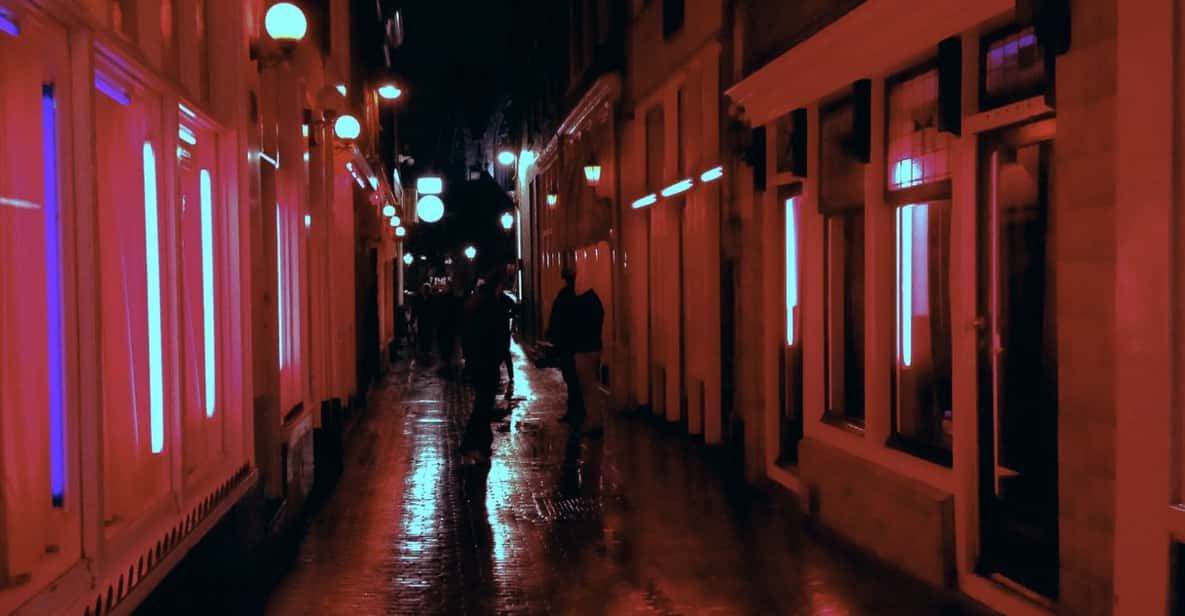
- You’ll walk past an indoor prostitute street. This is one of those “watch how the city structures things” moments. It shows you that Amsterdam didn’t handle sex work by hiding it completely—at least not in the same way—so you understand the approach as urban planning and policy, not just street behavior.
This section also includes lots of smaller sights: smart shops, and the tour’s time spent on current situation and historical background. The idea is to help you connect what you see (the streets, the storefronts, the specific kinds of places) with why the neighborhood looks the way it does now.
And yes, you’ll walk through the famous prostitute streets. The value here is that the guide helps you interpret the place rather than making you feel like you’re only looking at something you’re not supposed to mention or ask about.
Why prostitution is legalized—and how the coffeeshop name fits in
One of the most practical reasons to take a guided tour here is that the district’s visibility can confuse people. You might assume what you’re seeing is either purely hidden or purely chaotic. The tour gives you a clearer picture: you’ll learn why prostitution is legalized and how Amsterdam handles sex work as a public issue.
Just as important, you’ll hear how the name coffeeshop was created. That’s the kind of detail that turns a casual word into something you understand. It ties together the neighborhood’s drug-policy culture and Amsterdam’s distinct approach to regulating certain behaviors instead of treating them as a single criminal “black-and-white” category.
If you’re the kind of person who likes to know how laws affect daily life, this is where the tour earns its keep. It’s not only about the streets—it’s about the logic behind the streets.
And because your guide is speaking Spanish, you’ll get those explanations in a language you can fully follow. That’s huge for anything policy-related, where one translated sentence can change the meaning completely.

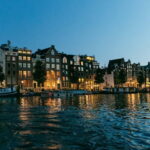
Dam Square finale: Condomerie and the Royal Palace as a reset
The walking tour ends at Dam Square, and that final move is more useful than it sounds. Dam Square is a major public space, and it acts like a reset button after the intensity of the Red Light District streets.
On the way in, you’ll see last sights like the Condomerie and then the Royal Palace. Those landmarks help you connect your experience to the rest of Amsterdam. You’re not stuck in the adult neighborhood loop; you finish in a central, well-known area where you can easily continue sightseeing.
Even if you don’t plan any long stops afterward, the ending location is practical. Dam Square is easy to navigate from, and it’s a natural point to transition to museums, canal walks, or a quick bite nearby.
Price and value: what $94 buys in a private 2-hour format
At $94 per person for a 2-hour private tour, you’re paying for three things: language, privacy, and local interpretation. This isn’t a generic “walk and point” experience. The value is the Spanish live guide and the fact that you’re getting an organized route through the most important areas.
Private tours cost more than group options, but you’re not just buying comfort. You’re buying clarity. With a private guide, you’re more likely to get direct answers on the topics that matter here—what legalization means in practice, how the coffeeshop culture developed, and how Amsterdam’s liberal attitudes show up in the streets.
Is it expensive compared to a standard group walking tour? Yes. But if you want the context without translation friction—and if you’d rather ask questions as you go—this format can feel like a fair trade. You’re also only on foot for two hours, so you’re paying for a tight, focused chunk rather than a full-day commitment.
Who should book this (and who might want a different tour)
This tour fits best if you:
- want context in Spanish and not just a basic overview in another language
- feel curious about how Amsterdam’s policies shape what you see on the street
- prefer a structured walk through key areas like Zeedijk Street, the Old Church zone, and Dam Square
I’d think twice if you:
- get uncomfortable with adult-themed streets and storefront windows
- are looking for a purely historical museum-style tour with zero modern relevance
That said, the tone here is still city-focused. You’re learning about places like Waag, the Buddhist Temple, and the Royal Palace connection through your walking route. The adult theme is real, but it isn’t the only lens.
Book it or skip it: my decision guide
If you want a Spanish-speaking private guide to help you interpret Amsterdam’s Red Light District—including coffeeshop culture and why prostitution is legalized—this tour is a strong choice. The route hits meaningful checkpoints: Zeedijk Street and Chinatown, the Old Church area with the narrowest street and first coffeeshop, then Dam Square with Condomerie and the Royal Palace nearby.
Based on the guide praise (including Maurizio being described as prepared and kind), I’d say the biggest reason to book is not just the itinerary—it’s the chance to get explanations in real time. If you’re coming to Amsterdam to understand the city’s contradictions, this is one of the most direct ways to do it.
FAQ
Is this tour offered in Spanish?
Yes. The live tour guide speaks Spanish.
How long is the private Red Light District tour?
It lasts 2 hours.
Where do I meet the guide?
Meet the guide at the entrance of the Barbizon Palace Hotel NH collection, Prins Hendrikkade 59, 1012 AD Amsterdam.
Is this a private tour?
Yes. It is listed as a private group.
What can I expect to see during the walk?
You’ll explore areas including Zeedijk Street and Amsterdam’s Chinatown, plus sights such as a Buddhist Temple, The Ape pub, the Waag, the Old Church (oldest building in Amsterdam), the narrowest street, the city’s first coffeeshop, an indoor prostitute street, and you’ll finish at Dam Square with sights like the Condomerie and the Royal Palace.
Does the tour cover coffeeshop culture and legalization?
Yes. The tour includes learning about Amsterdam’s liberal attitudes toward prostitution and drugs, why prostitution is legalized, and how the name coffeeshop was created.
Is the tour wheelchair accessible?
Yes, it is listed as wheelchair accessible.
What are the cancellation and payment options?
Free cancellation is offered up to 24 hours in advance for a full refund, and you can reserve now & pay later (you pay nothing today).