REVIEW · AMSTERDAM
Amsterdam: Red Light District guided tour (TOP RATED)
Book on Viator →Operated by Trigger Tours · Bookable on Viator
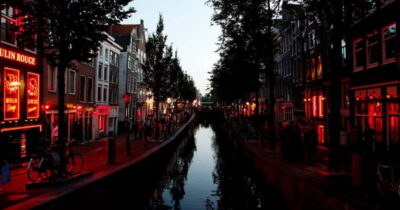
A first look at De Wallen hits different at night. This 2-hour, small-group Amsterdam Red Light District guided walk helps you understand what you’re seeing, from wooden-pole Amsterdam foundations to the rules that shape today’s scene, with a guide like Ben or Robin leading the way.
I like that the pace stays relaxed because the group stays small, and you can actually hear answers (plus question time) instead of racing past street corners. I also like the tone: the guide keeps it tasteful and focused on local context, including how Amsterdam’s coffee-shop culture fits into the same neighborhood. A possible drawback is that it’s not ideal if you have limited mobility, since it’s a walking tour in busy, fast-moving streets.
In This Review
- Key Things to Know Before You Go
- Entering De Wallen With the Right Kind of Curiosity
- Small-Group Walking: Why Max 15 Matters in De Wallen
- Price and Value: What $34.17 Really Buys
- The 2-Hour Route From Damrak Through De Wallen
- Stop-by-Stop: What You’ll See and Why It Matters
- De Wallen (the core lanes)
- The Dam area: Amsterdam built on poles
- Old Town roots: why this area feels layered
- Pub The Ape (Int Aepjen): a rare wooden survivor
- The Waag: from defensive gate to guild space
- The smallest house: VOC storage to long-term living
- The condom shop since 1987: a street-level fact about modern norms
- Coffee Shops, Laws, and How the Neighborhood Works
- Local Tips That Make Your Next Day Easier
- Best Time to Go: Daylight vs Evening Energy
- Who Should Book This Tour (and Who Might Skip It)
- Should You Book It?
- FAQ
- FAQ
- How long is the Amsterdam Red Light District guided tour?
- What does the tour cost?
- Where does the tour start and end?
- Is the tour small group?
- What language is it offered in?
- Is the tour suitable for limited mobility?
- Are cancellation refunds available?
- Is it affected by weather?
Key Things to Know Before You Go
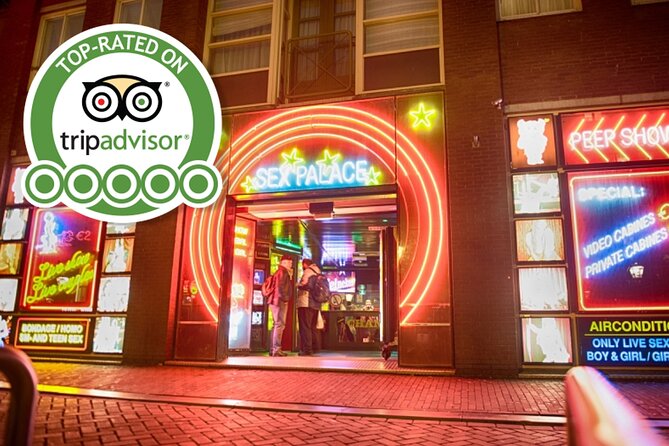
- Small group (max 15): easier to hear and ask questions while you move through tight lanes.
- Local context, not shock value: laws, regulations, and why the neighborhood looks the way it does.
- Landmarks packed into one loop: Dam-area landmarks tied to the district’s story.
- Coffee shops show up too: you’ll get context for the broader street culture, not just the windows.
- Plan for weather: the experience requires good weather, and you may get an alternate date or refund if it’s canceled.
Entering De Wallen With the Right Kind of Curiosity
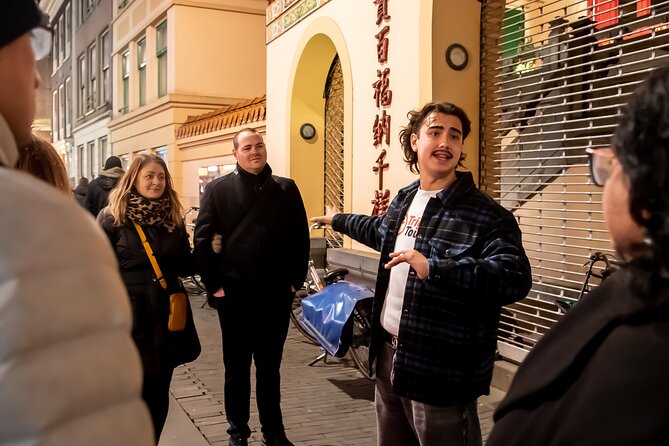
Amsterdam’s Red Light District can feel like a place you either rush through or feel awkward in. This tour gives you a third option: learn your footing first, then watch the neighborhood make sense.
What I’d call the “magic” of this experience is the framing. You’re not just walking narrow streets and spotting the famous windows. You’re getting the why behind it: how the city grew here, what Amsterdam’s approach to tolerance looks like in practice, and how the rules shape what happens on the ground. It’s also a strong choice for first-timers because it helps you get your bearings fast without turning the district into a scavenger hunt.
You can also read our reviews of more guided tours in Amsterdam


Small-Group Walking: Why Max 15 Matters in De Wallen
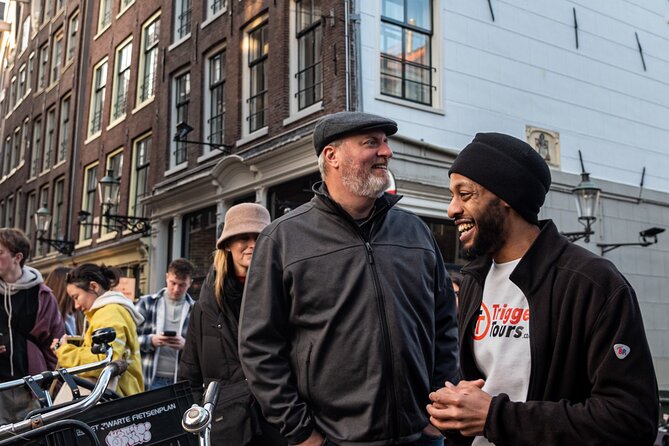
The tour caps at 15 travelers, which you can feel right away. In a place with tight sidewalks and nonstop bicycles, a bigger group turns into shoulder-to-shoulder chaos. Here, the guide can slow down when a question pops up, and you don’t lose the thread while you try to see over other people.
It also helps with something practical: audio. Amsterdam streets are loud, and bike traffic is quick. Several guides are careful about safety reminders like being alert to fast bicycle movement, which matters when you’re stopping to look at details. With fewer people, you’re less likely to get separated, and the group stays together.
Price and Value: What $34.17 Really Buys

At $34.17 per person, you’re paying mainly for a local guide and a structured way to see the area in about 2 hours. Since there’s no hotel pickup and no food included, the value comes from what the guide adds: context, interpretation, and connections between landmarks.
A key value point: the tour is built around seeing sights without turning it into a ticket-and-transfer marathon. You start and finish at Damrak (1012 Amsterdam), and you get a focused route through De Wallen and nearby landmarks. If you want a guided orientation that’s less hit-or-miss than wandering on your own, this is the kind of tour that can pay off quickly.
Also, this is one of those experiences people tend to book early. If you’re traveling in peak season, picking a slot in advance is smart.
The 2-Hour Route From Damrak Through De Wallen
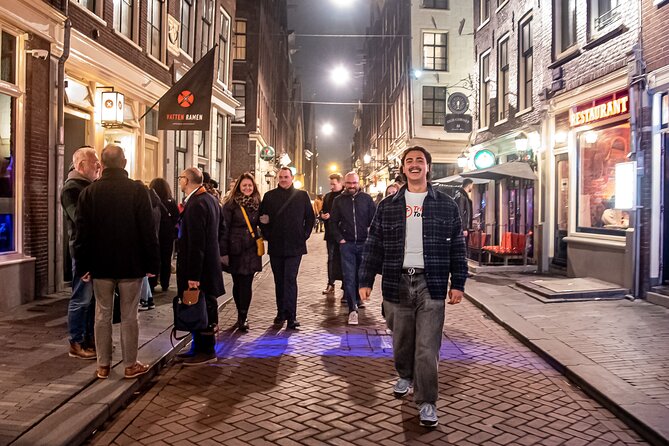
The walk starts at Damrak and ends at the same point. That’s convenient because it reduces the “where do we end up?” stress. The tour is described as approximately 2 hours, which is a good length for a neighborhood like this: long enough to understand the story, short enough to still feel fresh afterward.
You’ll spend the main time in and around De Wallen, the core of the Red Light District. Expect to walk through narrow streets, pause for key landmarks, and listen to the guide’s explanation of the neighborhood’s past and present situation. Along the way, the tour folds in nearby older-city structures that help show how this district is part of Amsterdam’s wider timeline.
Stop-by-Stop: What You’ll See and Why It Matters
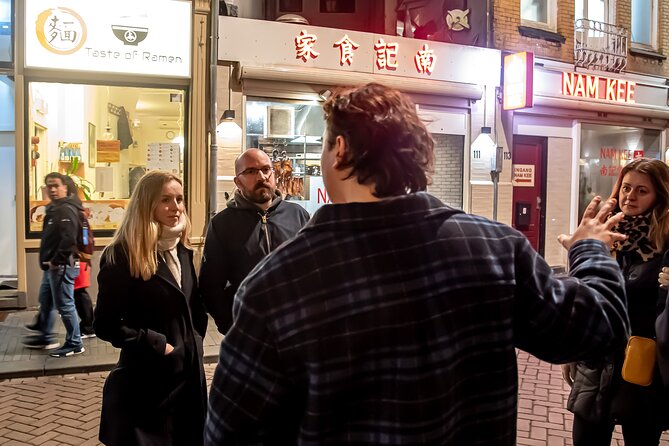





De Wallen (the core lanes)
Your anchor point is De Wallen itself. The guide walks you through the streets and explains the history and current situation of the neighborhood. This is where you’ll learn how Amsterdam’s legal and cultural approach shows up in everyday street rules—so the area doesn’t feel like one big mystery you’re supposed to guess at.
A good sign: the tone is respectful. The goal is to give you insight into the district and the people and systems connected to it, not to treat it like a spectacle.
The Dam area: Amsterdam built on poles
One of the most interesting parts is the reminder that Amsterdam is a city engineered to survive waterlogged ground. The tour covers the idea of Amsterdam being built on wooden poles driven down roughly 11 meters deep through clay, peat, and water until they reach sand.
Why this matters for your understanding: it connects the physical city to the human one. When you realize the foundations here are literally engineered, older buildings and street layouts stop feeling random. They start feeling like deliberate choices in a difficult environment.
Old Town roots: why this area feels layered
The tour also frames the Red Light District portion as part of the Old Town, the oldest area of the city. That means you’re not just seeing a modern nightlife zone. You’re walking through streets shaped by centuries of Amsterdam life.
If you like cities that feel like they evolved rather than “were built,” this part will click. It also helps you make sense of why some landmarks look older or more formal than you might expect in a nightlife neighborhood.
Pub The Ape (Int Aepjen): a rare wooden survivor
You’ll stop at Pub The Ape (Dutch: Int Aepjen), described as built around 1540 and noted as one of two remaining wooden buildings in Amsterdam. The guide ties this to a major shift in building rules after a big fire in 1452, when the government pushed toward brick facades.
This stop is a great example of what a guide does well here: it gives you a reason to look closely. You’re not just admiring a facade; you’re seeing how a disaster reshaped architecture, which reshapes what stands on the street today.
The Waag: from defensive gate to guild space
Next comes the Waag, built around the 1400s. It used to be a city gate linked to the defensive wall. Later, it became a space where guilds and craftsman organizations operated, centered around the Waag and the square.
This is where the tour quietly turns from “what am I seeing?” into “how did Amsterdam organize trade and work?” Amsterdam has always been practical about commerce, and the Waag is a nice piece of that puzzle.
The smallest house: VOC storage to long-term living
You’ll hear about Amsterdam’s smallest house, built around the 1700s. The tour explains it started as storage for the VOC trading company, then later became a lived-in home for a long time.
Even if you only catch a brief glimpse, the story helps connect the city’s global trade past to daily street life. It also reinforces the theme that Amsterdam’s power and wealth didn’t stay in offices. It shaped neighborhoods, buildings, and the way people used space.
The condom shop since 1987: a street-level fact about modern norms
One stop covers the world’s first condom shop specialized for condoms, said to have been in place since 1987, where you can get customized sizes and special condom types.
This is a very Amsterdam detail: the city tends to treat sex and health as practical topics rather than taboo mysteries. The guide brings it up in a way that fits the neighborhood’s overall context—modern street culture, not just the window view.
Coffee Shops, Laws, and How the Neighborhood Works
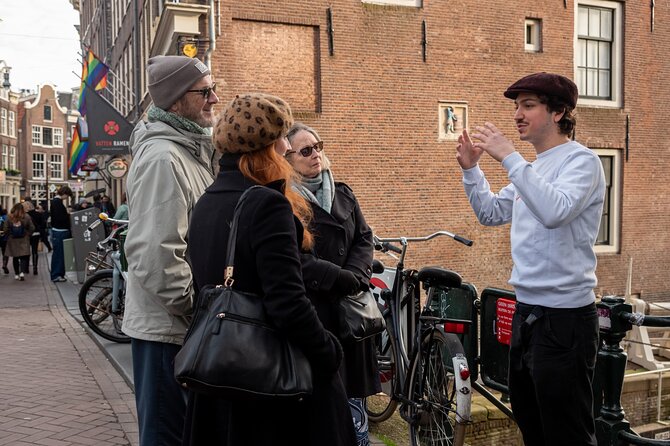
A big reason this tour gets strong ratings is how it links the Red Light District to Amsterdam’s broader street culture, including the coffee-shop scene. You’ll get context that makes it easier to understand why certain businesses cluster here and how the area functions within local expectations.
You also learn about the rules and regulations that surround the neighborhood. Instead of leaving you with vague impressions, the guide explains how the legal and civic framework shapes what you see on the streets. That turns a confusing area into something you can explain back to your travel partner.
And yes, guides keep it respectful. I like that the commentary doesn’t turn workers into props. It’s more about understanding the system and the city’s stance toward tolerance.
Local Tips That Make Your Next Day Easier
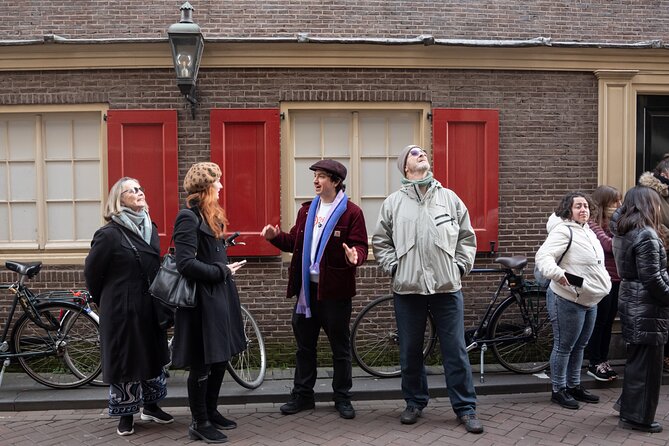
This kind of tour tends to end with practical guidance, and it’s often where the day improves beyond the walking. Guides share tips for what to do next in Amsterdam, and you’ll usually leave with a short list of places that match your interests.
One specific example: you can ask about the banana bar. It came up as a recommendation, and it’s the kind of street-level tip that helps you avoid the tourist-only traps.
Even if you don’t chase every suggestion, having a local compass after De Wallen is a win. You’ll understand what you saw, and you’ll have a better sense of where to head next for dinner or a calmer neighborhood walk.
Best Time to Go: Daylight vs Evening Energy
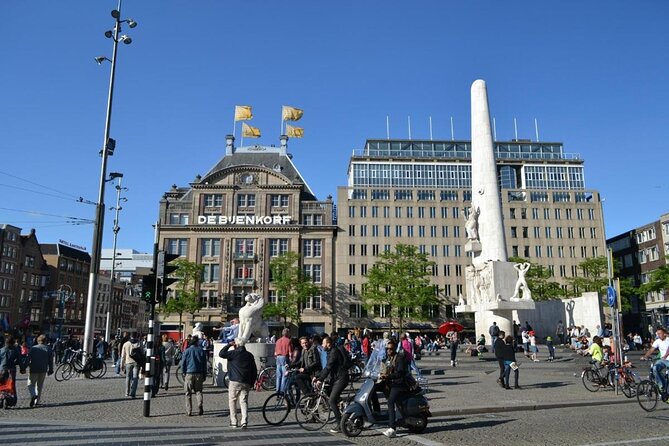
If you have a choice, I’d lean evening for this one. The district has different rhythms at night, and it tends to feel more active and fully alive then. It also helps that the “nightlife” theme fits the tour’s explanation style and the walking experience.
That said, daylight can be easier for navigation if you’re sensitive to crowds. The biggest rule is simply comfort: pick the time you’ll feel relaxed enough to listen and ask questions.
Also, the experience requires good weather. If it’s canceled due to poor weather, you’ll be offered a different date or a full refund.
Who Should Book This Tour (and Who Might Skip It)
This is a strong fit if you’re:
- A first-timer who wants orientation and context fast
- Interested in how Amsterdam’s laws and culture shape real street life
- The kind of traveler who likes walking tours that explain why buildings and neighborhoods look the way they do
- Comfortable with a respectful discussion of nightlife-adjacent topics and the coffee-shop culture nearby
It may not be the best fit if you have limited mobility, since it’s a walking-focused experience in an active area with tight streets.
Should You Book It?
If you want a “see the sights” walk that also gives you the story behind them, I think this tour is worth booking. The small group size, the guide-led respect and context, and the way the route connects De Wallen to older Amsterdam landmarks make it more useful than wandering alone.
One more practical thought: book ahead if your dates are fixed. This is the kind of tour that fills up.
FAQ
FAQ
How long is the Amsterdam Red Light District guided tour?
It’s listed as about 2 hours.
What does the tour cost?
The price is $34.17 per person.
Where does the tour start and end?
Both the start and end point are at Damrak, 1012 Amsterdam, Netherlands.
Is the tour small group?
Yes. The tour has a maximum of 15 travelers.
What language is it offered in?
The tour is offered in English.
Is the tour suitable for limited mobility?
It is not recommended for travelers with limited mobility.
Are cancellation refunds available?
Yes. You can get free cancellation up to 24 hours in advance for a full refund. If you cancel less than 24 hours before the start time, the amount paid is not refunded. The cutoff is based on local time.
Is it affected by weather?
Yes. The experience requires good weather. If it’s canceled due to poor weather, you’ll be offered a different date or a full refund.