REVIEW · AMSTERDAM
Amsterdam’s Red Light District: A Self-Guided Audio Tour
Book on Viator →Operated by VoiceMap Audio Tours · Bookable on Viator
Red lights, but taught with respect. You explore Amsterdam’s Red Light District at your own pace, with clear GPS directions that play automatically as you reach each stop, and offline audio so you don’t burn data. The downside is simple: it is a tight 35-minute route with set points, so your expectations need to match the plan.
I also like that this format stays regulation-compliant while still giving you context instead of just pointing and staring. One note up front: the audio includes sexual themes, so decide in advance if you want that tone while walking.
In This Review
- Key highlights at a glance
- Entering Amsterdam’s Red Light District with the right expectations
- Price and value: $9.99 for 35 minutes that you keep
- VoiceMap app: GPS autoplay, offline audio, and how to use it smoothly
- Offline mode is the main advantage
- You can pause and replay
- Phone-in-pocket friendly
- The walking plan: from Dam Square to the Belle statue
- Dam Square and the tone shift you need first
- Zeedijk: the sea-dike story behind the street
- Nieuwmarkt Square: seasonal chaos, markets, or empty space
- Belle statue: Els Rijerse and Mariska Majoor’s respect-first message
- De Oude Kerk area: from wooden church to brick in 1306
- What it feels like on the street: pacing, discomfort, and focus
- The one drawback to keep in mind
- Who should book this audio tour (and who might skip it)
- Should you book this $9.99 GPS audio walk?
- FAQ
- FAQ
- How long is the Amsterdam Red Light District self-guided audio tour?
- How much does it cost?
- What language is the tour offered in?
- Does the tour work offline?
- Where does the tour start and end?
- What do I need to bring?
- Is it a group tour?
- Is it refundable if I cancel?
- Is there any time restriction for when I can go?
Key highlights at a glance
- GPS autoplay with location-based segments keeps you moving stop to stop
- Offline access includes audio, maps, and geodata to save your mobile data
- Short, focused walk (about 35 minutes) that doesn’t drag
- Belle commemorative statue story with Els Rijerse and Mariska Majoor’s message of respect
- Dutch landmarks between stops like Zeedijk and the Oude Kerk area
- Lifetime access to the Amsterdam Red Light District tour after you buy
Entering Amsterdam’s Red Light District with the right expectations
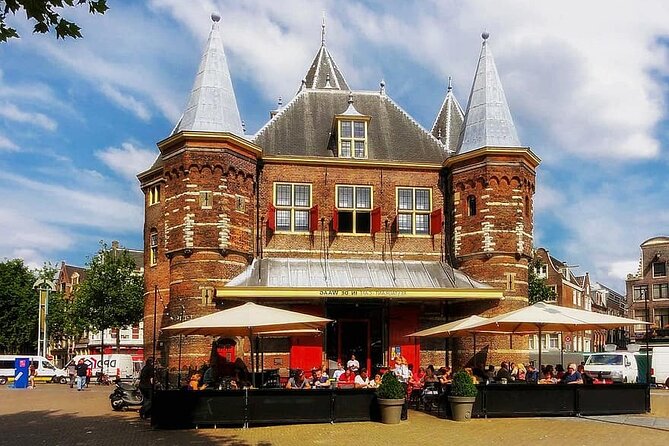
This audio tour is built for one very practical reality: you are walking a working neighborhood, not touring a museum exhibit. The script gently pushes you to look past the loud, messy bits and notice the area as a living part of Amsterdam’s city fabric. It frames the district through Dutch tolerance and pragmatism, which changes how the streets can feel once you have a bit of context.
It also matters that this is self-guided. The tour is described as fully compliant with regulations that bar Red Light District tours. In plain terms, you get interpretation and walking guidance without the usual escorted-tour setup that can get restricted.
You’ll want to keep your comfort level in mind. There’s an explicit warning that this tour contains sexual themes. If you’re uneasy about that, you might still use it, but you’ll be happier going in with a calm mindset rather than expecting a tame “just facts” walk.
You can also read our reviews of more guided tours in Amsterdam


Price and value: $9.99 for 35 minutes that you keep
At $9.99 per person for about 35 minutes, it’s priced like an add-on you can actually fit into a real day. What makes it feel like good value is that you’re not just paying for a one-time narration. You get lifetime access to the Amsterdam Red Light District tour, plus the VoiceMap app.
You also get offline materials included. The package isn’t only audio—it includes offline access to maps and geodata. For a city where you may want to save data for photos, rides, and messages, that’s a real benefit.
What’s not included is also straightforward: you bring your own smartphone, and you handle transportation and food/drink. There are no tickets or museum entrances included on the walk. If you’re hoping to pair this with an indoor stop, plan that separately.
VoiceMap app: GPS autoplay, offline audio, and how to use it smoothly
This tour runs through the VoiceMap application. The experience uses phone GPS and is designed so audio can play automatically as you reach each location. That detail is huge if you want to spend your attention on the neighborhood instead of studying maps every minute.
Offline mode is the main advantage
You can use it offline for audio, maps, and geodata. That’s great for data savings, and it also reduces one common travel frustration: losing reception right when you’re trying to follow a route.
A tip from real-world use: download when you’re on Wi‑Fi if you can. One person noted that it didn’t work well otherwise, which makes sense. Offline downloads work best when you have stable internet long enough to pull the files.
You can pause and replay
The audio is designed as segments tied to where you physically are. You can pause when you need a break or replay if a line didn’t land. For a topic that can feel intense, being able to control the pace helps.
You can also read our reviews of more tours and experiences in Amsterdam






Phone-in-pocket friendly
Because the directions are GPS-based, you don’t necessarily need your phone in your face. People found it worked even when their phone was in a pocket. That’s a nice balance in a neighborhood where you’ll probably want both hands free and your eyes on the street.
One thing to double-check: you do need a smartphone. It’s listed as not included, so budget for that if you’re traveling without your own device.
The walking plan: from Dam Square to the Belle statue
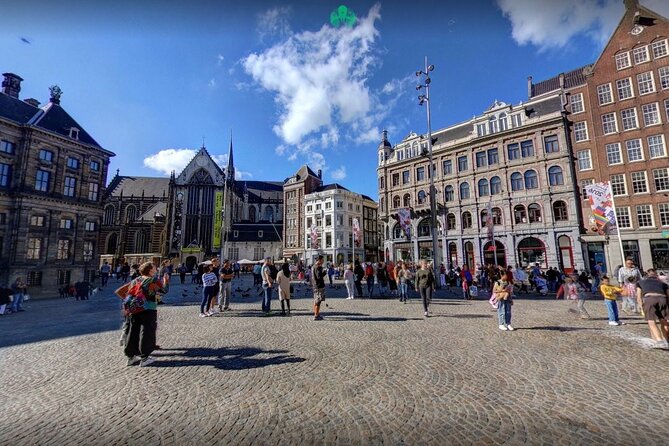
The route starts at Dam SquareDam (1012 Amsterdam, Netherlands) and ends at the Belle (Sex Worker Commemorative Statue) at Oudekerksplein 19, 1012 GX Amsterdam. The tour is available essentially all day (12:00 AM to 11:59 PM across the listed dates), so you can fit it into a morning stroll, afternoon planning, or a late-day walk.
It’s also private in the sense that only your group participates. That can matter if you want fewer distractions and a more controlled atmosphere while the audio covers sensitive material.
Here’s what the tour covers stop by stop, and why each part is worth your attention.
Dam Square and the tone shift you need first
You start at Dam Square. It’s one of those Amsterdam anchors where the city always feels loud and busy, and the audio begins with a reality check. The tour basically says: look past the drunk, tour-bus chaos and see the area as a lived-in neighborhood.
That matters because the Red Light District can trigger a scattershot way of looking—taking photos, staring, laughing, rushing. The audio nudges you to slow down and treat the area like a normal part of Amsterdam, which is where the “tolerance and pragmatism” framing comes in.
Practical advice here: give yourself a minute before you press play. Get your volume right, confirm the app is tracking your location, and then step into the neighborhood rather than trying to start the audio while you’re still moving too fast.
Zeedijk: the sea-dike story behind the street
Next comes Zeedijk, described as a former dike or flood protection wall. The audio connects it to early Amsterdam’s need to protect the population from the tides of the sea, with construction likely dating to around the 1100s.
This is more than a random historical fact. It gives you a physical sense of the city’s survival instincts. When you’re walking through an area that can feel socially charged, remembering Amsterdam was also a place that engineered its way through water adds perspective.
Drawback to consider: this stop is more about the story than about a single “photo moment.” If you’re expecting dramatic ruins or major monuments, you may find this segment feels quieter than you want.
Still, it’s a good palate cleanser between the hype of Dam Square and the heavier subject matter that follows.
Nieuwmarkt Square: seasonal chaos, markets, or empty space
Then you reach Nieuwmarkt Square, and the tour flags that it can look very different depending on the time of year. It might be empty. It might have a market. It could even feel more like carnival energy.
The audio also describes Nieuwmarkt as a hotspot for today’s hipsters, which gives you a snapshot of how areas evolve around the core city. In other words: the Red Light District isn’t frozen in time. The surrounding neighborhood life changes, and the district sits inside that broader rhythm.
How this affects your experience:
- If it’s busy with a market, the audio may feel like commentary over real street life.
- If it’s quiet, you might hear more of the narration and notice more of the street itself.
Either way, the value is context. You’ll walk with a clearer sense that you’re not just seeing the sex district as a spectacle—you’re walking through a mix of old and new urban life.
Belle statue: Els Rijerse and Mariska Majoor’s respect-first message
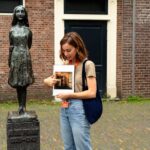
The emotional high point is the Belle (Sex Worker Commemorative Statue), where the tour ends. This statue was made by Dutch artist Else Rijerse by request of Mariska Majoor, the founder of the Prostitutes Information Center.
The audio explains the goal: to engender respect.
This matters because it flips the usual reaction. Instead of the district being reduced to tourist shock, you get a deliberate message about dignity and how communities talk about sex work in public space. Even if you don’t agree with every angle, you can’t miss that the narrative is trying to be human, not sensational.
If you’re the kind of traveler who appreciates respectful framing, this ending is likely to land well. If you’re hoping for a tour that feels like pure street-level sightseeing with minimal interpretation, you might find this portion more thoughtful than you expected.
De Oude Kerk area: from wooden church to brick in 1306
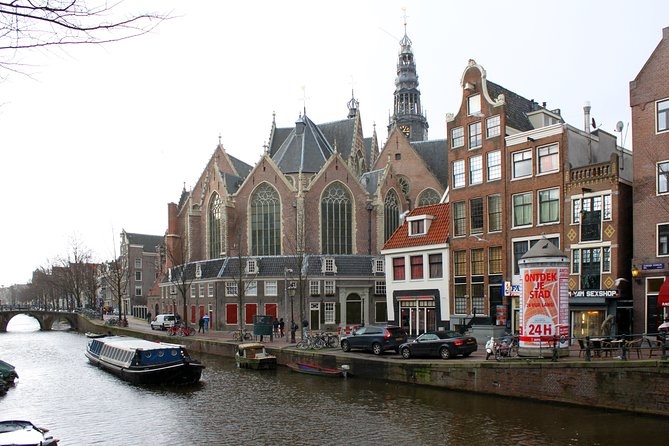
As you near Oudekerksplein, the audio includes a church timeline connected to de Oude Kerk. It describes how the first wooden church built at the site dates to the 1200s, and how it was replaced in 1306 by a brick structure.
Today, the main hall remains, while other parts were added throughout the centuries.
This stop is valuable because it reminds you that Amsterdam’s “adult themes” are not the only story living in these streets. You’re standing in a place where centuries of building, rebuilding, and community life overlap. That long view can soften the sharp edges of the district’s modern reputation.
One note: because the tour is short, this is narration-focused rather than a full church visit. There’s no ticket included. If you want to spend time inside, plan it separately.
What it feels like on the street: pacing, discomfort, and focus
This is not a marathon. At around 35 minutes, you’ll likely finish while the neighborhood is still in the foreground of your senses.
One review described the directions as clear with visual cues. That’s the practical goal of a GPS audio walk: you shouldn’t be fumbling with your phone while trying to stay aware of where you are.
The tour also gives you control. People appreciated the ability to pause and replay and the fact that the segments start automatically when you reach each stop. That reduces stress. It also helps if you get slowed down by the street scene.
The one drawback to keep in mind
A common risk with any self-guided route is expectation mismatch. If you wanted to see certain specific sights that aren’t part of the set stops, you may feel a bit underwhelmed. The tour follows a defined sequence of places, and you’ll get context about those areas rather than an open-ended walk.
If you’re coming with a precise list of what you want to photograph or where you want to stand, you’ll probably do better pairing this audio with your own free time rather than treating it as a complete replacement for a curated walkthrough.
Who should book this audio tour (and who might skip it)
You should book if:
- You want self-paced exploring instead of keeping up with a group.
- You prefer a format that works well when live guided tours are restricted.
- You like GPS-based narration that reduces the work of navigation.
- You want offline audio and maps, especially if you’re careful with data.
You might skip if:
- You need a longer “see everything” Red Light District experience.
- You’re not comfortable with sexual themes, even with warning.
- You’re expecting a lot of stops or major paid attractions along the way, because none are included.
It also suits budget-minded travelers. At under $10, it’s an easy try without committing to a big guided-tour expense.
Should you book this $9.99 GPS audio walk?
If you want a respectful, context-filled way to understand Amsterdam’s Red Light District while keeping control of your pace, I’d say yes. The best part is that it combines clear directions with offline reliability, so you’re not stuck troubleshooting your phone mid-walk.
If you’re looking for a long checklist of sights or a slow sightseeing tour, think of it more like a focused guided story walk rather than a full day of exploring. Pair it with extra wandering after (or before) so you can follow your curiosity beyond the scheduled stops.
FAQ
FAQ
How long is the Amsterdam Red Light District self-guided audio tour?
It takes about 35 minutes (approx.).
How much does it cost?
The price is $9.99 per person.
What language is the tour offered in?
It is offered in English.
Does the tour work offline?
Yes. You get offline access to the audio, maps, and geodata.
Where does the tour start and end?
It starts at Dam SquareDam and ends at the Belle (Sex Worker Commemorative Statue) at Oudekerksplein 19, 1012 GX Amsterdam.
What do I need to bring?
You need a smartphone. The tour itself includes the VoiceMap application and offline access, but a phone is not included.
Is it a group tour?
It is a private tour/activity, meaning only your group participates.
Is it refundable if I cancel?
No. The experience is non-refundable and cannot be changed for any reason.
Is there any time restriction for when I can go?
The listed opening hours are Monday through Sunday from 12:00 AM to 11:59 PM.