REVIEW · AMSTERDAM
CULTURE Cultural city tour
Book on Viator →Operated by Herzblut - Amsterdam Stadtführungen mit Herz & Seele! · Bookable on Viator
Canals and stories, neatly timed. This Amsterdam cultural city tour threads through the historic core with practical context—religion, monarchy, and how daily life shaped what you see now. It is guided, light on fuss, and focused on making the city make sense fast.
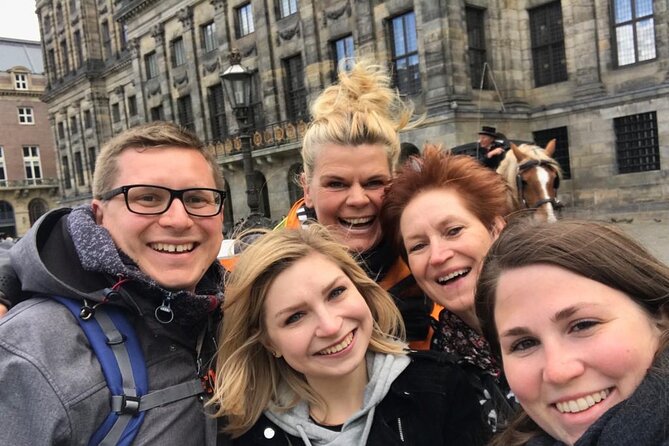
I really liked two things right away. The first is the small-group feel—maximum 8 travelers—so you get real interaction instead of just following a crowd. The second is the way the guide, like Anne (a standout guide name I saw), connects landmarks to everyday details, so places like Dam Square and the Jordaan land with meaning, not just dates.
One possible drawback: it is only about 2.5 hours, and it moves with set stop times. If you want lots of unstructured wandering or extra long photo breaks, you might wish for a bit more time in each stop.
In This Review
- Key highlights worth your attention
- Getting oriented in Amsterdam’s historic center
- Dam Square: the political center you see every day
- Magna Plaza stop: architecture with a short attention span
- Torensluis: where canal life becomes real
- Jordaan: the neighborhood atmosphere you can feel
- Westerkerk and the carillon moment
- Canals, religion, and monarchy: the themes you walk away with
- Price and value for a 2.5-hour guided loop
- Who this Amsterdam cultural tour suits best
- Before you go: small logistics that help
- Should you book Herzblut’s Amsterdam culture tour?
- FAQ
- How long is the Amsterdam cultural city tour?
- Where does the tour start and end?
- How much does it cost per person?
- Is there a mobile ticket?
- How many people are in the group?
- Are admission tickets included?
- Is tipping included in the price?
- What is the cancellation policy?
- Is the tour suitable if I have a walking disability?
Key highlights worth your attention
- Small group of up to 8 for a more personal pace in central Amsterdam
- Dam Square explained in context, including monarchy and the city’s origins
- Canal life focus at Torensluis, linking architecture to how people lived and traveled
- Jordaan neighborhood feel, with time to take in the atmosphere rather than just facts
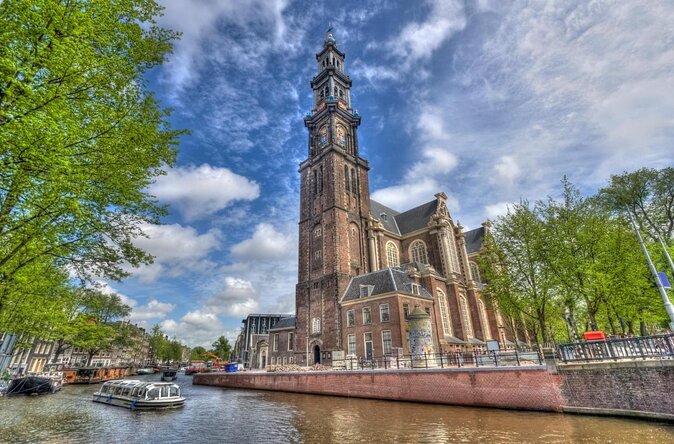
- Westerkerk stop includes carillon info, plus stories tied to the building
- Mobile ticket and a clear start/end back at Beursplein
Getting oriented in Amsterdam’s historic center
If Amsterdam feels like a thousand small streets at once, this tour helps you lock in a mental map. You start at Beursplein, 1012 Amsterdam, and you circle key areas of the city center, returning to the meeting point when you are done. It runs about 2 hours 30 minutes, which is enough time to understand the big themes without turning into a marathon.
The tour is built around culture in the real sense: how power, faith, trade, and city planning show up in what you can still see today. You also get a guided narrative that includes cheerful anecdotes, not just lecture vibes. And because the group is capped at 8 people, it is easier to ask quick questions and stay engaged.
You should still plan for some walking and standing, since this is a city walk with multiple stops. If you have any walking disability, you can let the provider know in advance so they can adapt—do it early so you get the best match.
You can also read our reviews of more city tours in Amsterdam


Dam Square: the political center you see every day
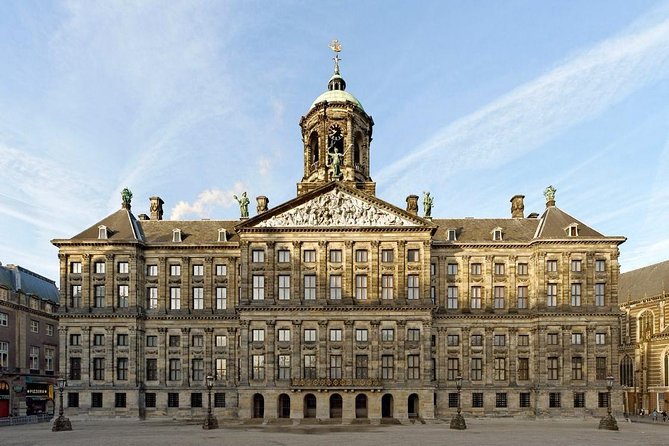
Dam Square is the kind of place you might think you already know—photos, statues, constant foot traffic. The difference here is that the stop is designed to give you a framework, not just a look.
You spend about 45 minutes around Dam Square, and the focus is on the historically relevant buildings around the square. The guide shares what you need to understand the city’s origins, the monarchy, and how life in Amsterdam worked then and now. That context is what makes Dam Square feel less like a postcard and more like a living stage for centuries of decisions.
One practical note: the listing says admission ticket is not included for the Dam Square stop. That does not automatically mean you will pay extra to view things outside, but it does mean you should not expect all entrances or paid viewpoints to be covered there.
If you are the type who likes to read a place with your eyes—architecture, layout, symbolism—this first stop is the best time to get your bearings fast.
Magna Plaza stop: architecture with a short attention span
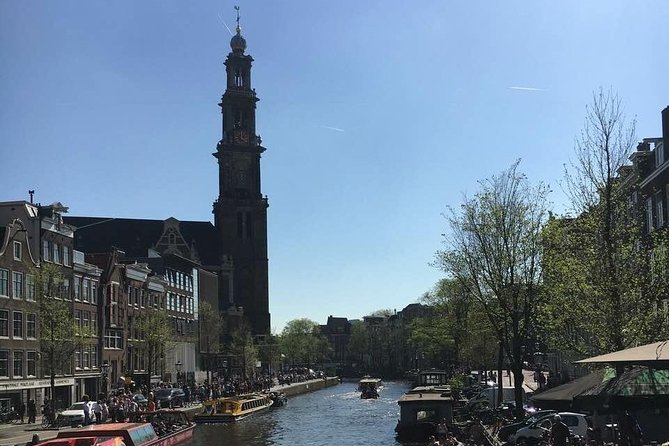
After Dam Square, you get a quick break at Magna Plaza for about 15 minutes. This is not a long stay, so treat it like a palate cleanser and a visual proof that Amsterdam mixes old city character with later design and everyday shopping life.
The tour frames Magna Plaza as an example of Amsterdam’s beautiful architecture, with related stories woven in. In other words, it is there to show you how design and commerce sit side by side in the city, not just to point at a building and move on.
Because the time is short, you may want to stay mentally present. If you drift into smartphone mode, the stories will fly by with the group. If you keep your eyes up—facades, details, how the space works—you will get more out of a 15-minute stop than you might expect.
This stop includes admission (per the tour data), so it is one of the parts where you are not hunting for additional costs once you arrive.
Torensluis: where canal life becomes real
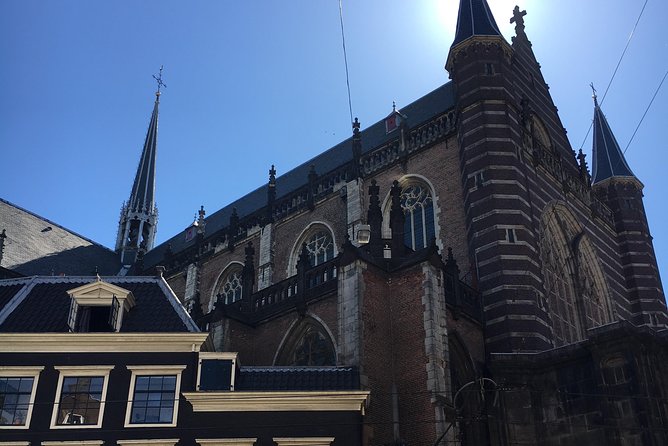
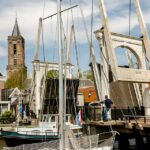
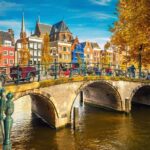
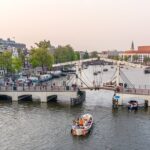
Next is Torensluis, a stop of about 30 minutes that leans hard into what makes Amsterdam Amsterdam: water. This is where the tour shifts from squares and buildings to the logic of the canals—how people lived with and on the water, not just beside it.
The guide covers life on the canal, Holland’s historical colonial rule, Amsterdam’s architecture and urban development, and historical figures tied to the city’s growth. The value for you is that these topics are not floating in midair. They connect to why the city looks the way it does—canals are not just scenery; they are infrastructure and history in motion.
Torensluis is also a good place to slow down a bit. You can usually get better views of canal details than you can deeper in narrow streets, and the guide’s explanations help you notice things you would otherwise miss—how buildings face the water, how the canal acts like a corridor, and how the urban plan reflects power and trade.
This stop includes admission, which keeps it straightforward. Plan to take photos, but also plan to listen; this is one of the stops where the story changes how you see the same canal bends and facades.
Jordaan: the neighborhood atmosphere you can feel
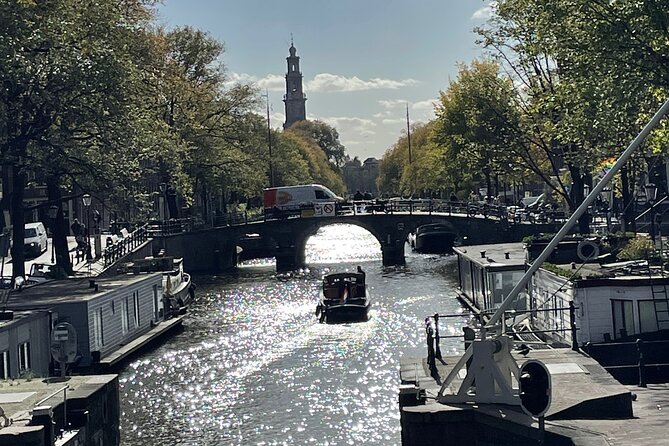
The tour then moves into the Jordaan, where you have about 20 minutes. This is less about monuments and more about impressions, and that is a good thing. The Jordaan stop is built so you can soak up the atmosphere with your eyes and your heart, rather than just collecting facts.
Jordaan is often described by feel—streets that invite casual strolling, a lived-in vibe, and a neighborhood identity that comes through even if you only spend a short time there. Here, the tour uses that time to help you experience the neighborhood rather than turn it into a checklist.
This stop includes admission as well. That matters because you are not expected to pay for extra entry on the spot, and you can focus on the streets, the scale, and the way the area flows.
If you have limited time in Amsterdam and you want one local-feeling zone without spending half a day getting there, this is a smart use of the itinerary.



Westerkerk and the carillon moment
The final major stop is Westerkerk, about 10 minutes. It is brief, but it is intentionally so. Some stops are for perspective, and Westerkerk is for finishing with a strong sense of place.
You get information and stories tied to the church and also the carillon. The carillon piece is practical for listening: it gives you a mental cue for what you are seeing and hearing in and around such a landmark, instead of passing it as just another big church in a busy city.
Because the stop is only 10 minutes, you should treat it like a quick briefing plus a visual moment. If you want slow photography or time to wander inside at length, this stop might not be the best place to ask for more. The tour does not look designed for long linger time here.
Still, it is a useful capstone. After canals and neighborhoods, Westerkerk gives you a cultural anchor point tied to the city’s traditions.
Canals, religion, and monarchy: the themes you walk away with
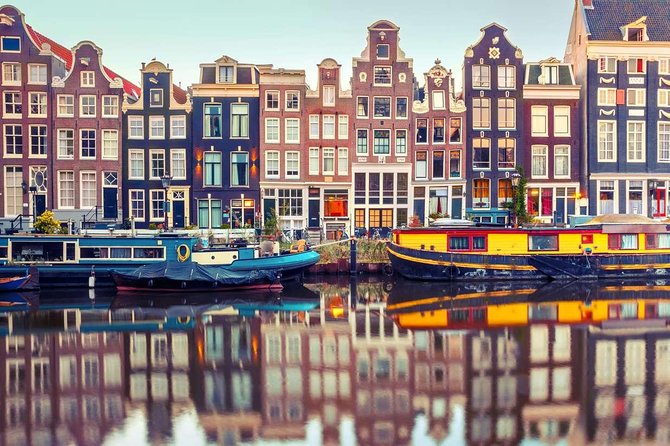
One of the reasons this tour works is that it does not just rattle off famous spots. It builds around two big themes that you actually see during the walk:
Canals: origin, architecture, and special features
Religion, monarchy, and culture
That pairing makes sense for Amsterdam. The canal system explains movement, trade, and how people built an economy around water. Religion and monarchy explain why certain spaces and buildings gained prominence—and how the city’s identity got shaped by institutions over time.
As you move through the day, you start to notice patterns. You see how power shows up in the layout around Dam Square. You see how city planning and architecture adapt to water at Torensluis. You see how a neighborhood like the Jordaan feels different because of its role in day-to-day life.
This is the kind of tour where, after 2.5 hours, you can go back out on your own and keep interpreting what you see. That is usually the real value of a culture walk: it changes how you travel after the tour ends.
Price and value for a 2.5-hour guided loop
The price is $30.86 per person for about 2 hours 30 minutes, and the tour includes a professional guide. You also get a small group size capped at 8 travelers, which tends to improve the quality of the experience, especially when the guide is telling stories and answering questions.
It is also built around inclusion. The tour includes admission for several stops (Magna Plaza, Torensluis, Jordaan, Westerkerk), and only the Dam Square stop indicates admission not included. That matters because it reduces the number of surprise costs you might face during a short city walk.
One other small value point: it uses a mobile ticket, and the tour start and finish are both at the same place. That makes it easier to plan your day without extra transfers or complicated meet points.
If you are comparing this to self-guided walking, you are paying for interpretation and timing. For many visitors, that is worth it because Amsterdam can be visually overwhelming. A good guide saves you time, and time is what you run out of most in a city.
Who this Amsterdam cultural tour suits best
This tour is a strong match if you:
- Want a guided introduction to Amsterdam’s historic center without spending a full day
- Like stories that connect landmarks to how the city functioned
- Enjoy walking but prefer a set plan and clear stop times
- Want to understand canals, monarchy, and religion in a practical way
- Appreciate small groups and a guide who stays engaged with the pace
It may be less ideal if you:
- Want lots of free time to wander at your own speed
- Prefer very deep entry into museums or long interior visits
- Are hoping for a photo-heavy itinerary with minimal explanations
The one review note I saw points to a similar tension: a great guide like Anne can still leave you wanting more impressions if you are expecting extra time in each place. So set your expectations for a guided overview, not a long, do-everything Amsterdam day.
Before you go: small logistics that help
You will receive confirmation at booking time, and you can plan around the fact that the service allows service animals. The tour is near public transportation, which makes it easier to pair with other parts of your Amsterdam trip.
You’ll also be using a mobile ticket, so have your phone charged and ready. Start at Beursplein and plan to finish there too, so you can continue exploring from a known point.
And yes, tipping is not included, so keep a small amount in mind if that is your style. Snacks and drinks also are not included, which is normal for a walking tour.
Finally, the provider says the tour will have a minimum number of travelers. If it cancels for that reason, you will be offered another date or a full refund.
Should you book Herzblut’s Amsterdam culture tour?
I think it is a smart booking if you want to understand Amsterdam quickly and walk away with a set of themes you can use all day. For $30.86, you get a guided loop through major areas—Dam Square, Magna Plaza, Torensluis, the Jordaan, and Westerkerk—plus admission included for most stops.
Book it if you value interpretation over random sightseeing. It is also ideal when your schedule is tight and you want a guided starter kit for canals, monarchy, religion, and how Amsterdam grew.
Skip it or consider a different style if you need long independent time, heavy museum depth, or minimal walking. This is an organized culture walk with set stop lengths, and that is both the strength and the limit.
FAQ
How long is the Amsterdam cultural city tour?
It runs for about 2 hours 30 minutes.
Where does the tour start and end?
It starts at Beursplein, 1012 Amsterdam, Netherlands and ends back at the meeting point.
How much does it cost per person?
The price is $30.86 per person.
Is there a mobile ticket?
Yes, the tour uses a mobile ticket.
How many people are in the group?
The tour has a maximum of 8 travelers.
Are admission tickets included?
Admission is not included for the Dam Square stop, while admission is listed as included for Magna Plaza, Torensluis, the Jordaan, and Westerkerk.
Is tipping included in the price?
No. Tipping and expenses for snacks or drinks are not included.
What is the cancellation policy?
You can cancel for a full refund up to 24 hours in advance. If you cancel less than 24 hours before the start time, the amount paid is not refunded.
Is the tour suitable if I have a walking disability?
You can let the provider know in advance if you are impaired by a walking disability, and they can adapt to it.