
REVIEW · AMSTERDAM
Operation 45: An Adventure in Diamonds
Book on Viator →Operated by Mystery City Games · Bookable on Viator
Diamonds, danger, and puzzles in Amsterdam. Operation 45 turns the city into an interactive mystery where you follow a real WWII thread and decode clues as you go. It’s set up so you can play it as a private experience for your group, instead of being stuck in a big fixed tour.
I especially like the way the story makes the streets feel purposeful, not just scenic. You’ll walk past buildings and monuments while solving puzzles tied to the mission, so your brain stays engaged the whole time.
One consideration: it depends on good weather. Since you’re walking and hunting for answers outdoors, plan for a day that won’t rain you off the route.
In This Review
- Key highlights at a glance
- A diamond mission that turns Amsterdam into a game
- What the 2-hour format feels like in practice
- Your route: guided by clues, not a fixed lecture
- Competing teams or staying together with your group
- The story beats: how the WWII plot shows up in the game
- Starting point and what “walk-and-solve” means for navigation
- Who this is best for (and who should skip it)
- Value check: price, length, and what you get
- Weather matters more than you think
- The mobile ticket and small practical advantages
- What the near-constant engagement does to your sightseeing
- Should you book Operation 45: An Adventure in Diamonds?
- FAQ
- Where does Operation 45 start and end?
- How long does Operation 45 last?
- Is it a private experience for my group?
- Can my group split into teams?
- What is the main story behind the game?
- Do I need to print tickets?
- What happens if the weather is poor?
Key highlights at a glance
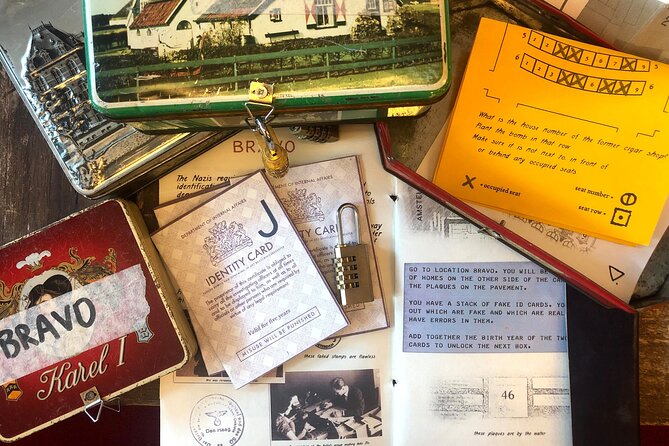
A WWII mission you can actually play through
Walk-and-solve format using puzzles, not long lectures
Private, group-friendly setup with optional team competition (6+)
Flexible timing so you can choose when to start
Mobile ticket and a clear start/end at Mystery City Games
Real help if you get stuck, including phone support
A diamond mission that turns Amsterdam into a game
Amsterdam has a way of looking different when you’re moving with a purpose. In this experience, the purpose is a WWII-style mystery involving industrial diamonds and a resistance trail you follow clue by clue.
On May 10, 1940, the Netherlands is invaded by Nazi forces. Within hours, a secret mission is undertaken to prevent Amsterdam’s priceless cache of industrial diamonds from falling into Nazi hands. Then, five years later—May 5, 1945—Amsterdam celebrates liberation, but you get one last mission: figure out what happened to those diamonds after the resistance got involved.
The tone is part history, part scavenger hunt. You’re not just reading plaques; you’re solving a sequence. That makes the city feel like a living puzzle box.
You can also read our reviews of more tours and experiences in Amsterdam.



What the 2-hour format feels like in practice
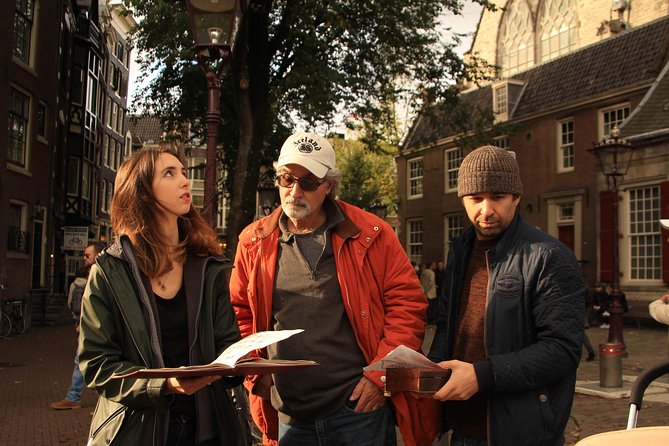
The adventure runs about 2 hours. That’s short enough that it doesn’t eat your whole day, yet long enough for a real flow: start, first clue, a walking arc through the streets, and a wrap-up back at the starting point.
You’ll spend your time exploring with your friends while puzzles guide you from one scene of the story to the next. The pacing is also designed for groups: you’ll have moments to stop, talk, and figure out what the mission is asking you to do.
A big value here is that the format is built around discovery. You’re meant to notice interesting details—historical clues in the city’s buildings and monuments—because those details are the “answer keys” to the next step.
Your route: guided by clues, not a fixed lecture
You’ll walk around Amsterdam discovering interesting buildings, monuments, and historical details. The experience uses the city as your game board, so your route is really about following what the clues point toward rather than “here’s Stop 1, Stop 2, Stop 3” with a time clock.
That’s a plus if you like flexibility. The experience also says you can create your own schedule and play when best suits you. Practically, that means you’re not forced into one rigid departure time that might be awkward with your other plans.
Drawback? You’ll want a little patience for puzzle-solving. If you prefer passive sightseeing—just walking and looking—this will feel like work. But if you enjoy figuring things out, it’s a fun way to see the city without losing the plot.
Competing teams or staying together with your group
Groups of 6 or more can be split into competing teams. That’s great if you’ve got a mixed crowd—some people who like solving fast, and others who enjoy scanning the streets for details.
If you’d rather keep everyone together, that’s allowed too. The experience is designed to let your group set the vibe, so it can work for:
- families who want to stay in one group
- friend groups who want friendly competition
- mixed-age groups where splitting might help everyone contribute
The competition element isn’t about “winning at trivia.” It’s about collaboration under mild pressure: decode the next clue, move as a team, and keep momentum.
The story beats: how the WWII plot shows up in the game
The premise isn’t vague. It’s anchored to specific dates: the Nazi invasion on May 10, 1940, and Amsterdam’s liberation on May 5, 1945.
The “diamond” angle matters because it turns history into stakes. Industrial diamonds aren’t just a curiosity; they’re described here as a cache that needed protection quickly to prevent Nazi seizure. Then the liberation celebration creates a new mystery: if the city is free, where did the diamonds go?
During the game, you follow the trail left by the resistance to uncover what happened to those diamonds. That’s the backbone for your puzzles, so as you move through the area you’re constantly reminded what you’re trying to solve.
For me, that’s what makes this more than an ordinary city scavenger hunt. You’re not just hunting for answers—you’re learning a true story threaded through Amsterdam’s streets.



Starting point and what “walk-and-solve” means for navigation
You start at Mystery City Games, Zwanenburgwal 178, 1011 JH Amsterdam, and the activity ends back at the meeting point.
Because the activity relies on exploration, navigation skills matter more than in a traditional tour. One review highlighted a common issue: not everyone is great at reading maps. The helpful part is that the team is ready to support you by phone if you’re not sure where you are or how to proceed.
So if you’re the kind of person who usually travels with offline maps, bring that habit. But don’t panic if you get turned around. There’s support, and that makes the experience feel more forgiving than a self-guided app game.
You’ll also be walking around enough to appreciate practical footwear. This is Amsterdam—some streets are narrow, some sidewalks are busy, and you’ll be doing plenty of short stretches.
Who this is best for (and who should skip it)
This works best for people who enjoy a mix of history and problem-solving. If you like figuring things out with friends, you’ll probably have a strong time here.
It’s also a good family choice in the sense that it stays active. One review explicitly said it was recommended for families, with the caveat that the pace and puzzle nature may suit kids who like hands-on challenges.
If you’re traveling solo, you might still enjoy it, but the experience is clearly designed around group energy—talking through puzzles, splitting roles, and keeping each other moving.
Skip it if you want long indoor museum time or if you hate anything that feels like an escape-room puzzle dressed as history. This is a walking game first, sightseeing second.
Value check: price, length, and what you get
At $29.96 per person for about 2 hours, this isn’t a bargain in the “cheap entertainment” sense. But it’s also not priced like an in-depth private guide experience.
The value comes from a few practical things:
- You get an interactive story-driven format instead of a standard walking tour.
- The experience is private for your group, so you’re not squeezed into a large herd.
- You have the option to split into teams when groups are big enough, which can make it feel like two games in one.
- You get a mobile ticket and a clear start/end point.
I think the best way to judge the price is this: you’re paying for time-structured fun. If your day needs a “do something” moment that also teaches, this fits the bill.
If your schedule is packed and you only have room for one quick activity, this 2-hour window is a sweet spot.
Weather matters more than you think
The experience requires good weather. That’s not just a polite note; it affects your comfort and pace.
Since you’re walking outdoors and solving puzzles, heavy rain can turn it from a fun hunt into a soggy slog. The good news: if it’s canceled due to poor weather, you’re offered a different date or a full refund. That makes planning easier than with experiences that stubbornly run no matter what.
My advice: if the forecast looks shaky, still consider booking—but pick a day where you can stay flexible.
The mobile ticket and small practical advantages
A mobile ticket keeps things simple. You don’t need to track paper, and it helps reduce the usual “where’s the voucher” stress.
Also, it’s near public transportation. That matters in Amsterdam, where walking a little too much can turn into a leg-burning afternoon fast. Having transit nearby makes it easier to slot into your itinerary without committing to a long detour.
The experience provider also confirms at booking. That reduces uncertainty, especially if you’re planning a tight route through the city.
What the near-constant engagement does to your sightseeing
This is one of those rare activities where the format changes how you look at the city. When you’re solving puzzles, you naturally slow down at details you might otherwise ignore.
That matters because Amsterdam’s charm is in the small stuff: building shapes, historical markers, and street-level context. A “look-but-don’t-try” approach often turns those details into background.
Here, the details are the mechanism. You’re actively searching for meaning, so the city feels less like a postcard and more like a place with clues embedded in plain sight.
And after you finish, you typically walk away with a stronger sense of the story. Not just the dates, but the feeling of following a resistance trail through real neighborhoods.
Should you book Operation 45: An Adventure in Diamonds?
Book it if you want Amsterdam that feels interactive, story-driven, and group-friendly. It’s a smart choice for first-time visitors who already know they’ll want to see “the sights,” but who would rather do it in a way that keeps everyone engaged.
I’d also book it if you’re traveling with friends or family and you want something that doesn’t require museum tickets, timed entry, or a strict schedule once you’re there. The idea of creating your own schedule is a real plus.
Skip it if puzzles and walking aren’t your thing, or if you’re planning around weather that’s likely to be rough. You need decent conditions to enjoy it fully.
If you match the vibe—curious, game-for-a-mission, comfortable walking—this one is easy to recommend.
FAQ
Where does Operation 45 start and end?
The experience starts at Mystery City Games, Zwanenburgwal 178, 1011 JH Amsterdam, Netherlands. It ends back at the same meeting point.
How long does Operation 45 last?
It lasts about 2 hours (approx.).
Is it a private experience for my group?
Yes. The experience is described as private, for your own group.
Can my group split into teams?
Groups of 6 or more can be split into competing teams. If you prefer to stay together, that’s also an option.
What is the main story behind the game?
It centers on the Netherlands during World War II, when the city’s industrial diamonds were targeted in 1940, and a final mission in 1945 follows the resistance trail to discover what happened to the diamonds.
Do I need to print tickets?
No. The experience uses a mobile ticket.
What happens if the weather is poor?
The experience requires good weather. If it’s canceled due to poor weather, you’ll be offered a different date or a full refund.