REVIEW · AMSTERDAM
Small Group Walking Tour in Amsterdam with Friendly and Fun Guide
Book on Viator →Operated by Walks In Amsterdam · Bookable on Viator
Amsterdam clicks into place on a short walk. This 3-hour experience is a practical way to understand how Amsterdam grew, without the heavy, high-speed tour style. I really like the small group size (12 max) and the energy from guides like David who keep the stories moving and easy to follow.
I also like the built-in refreshment break idea. You pass big landmarks and then get time to reset your legs, which matters in a city you’ll want to explore after the tour too.
One drawback to plan for: coffee or tea is not included. It’s your purchase, and you’ll still be on foot for about three hours, so bring an umbrella if rain is likely.
In This Review
- Key Things to Know Before You Go
- From Dam Square to a Canal City: The Big Idea Behind This Walk
- Dam Square & Damstraat: The 750-Year Origin Moment
- Nieuwe Kerk: Medieval Amsterdam Without the Museum Detour
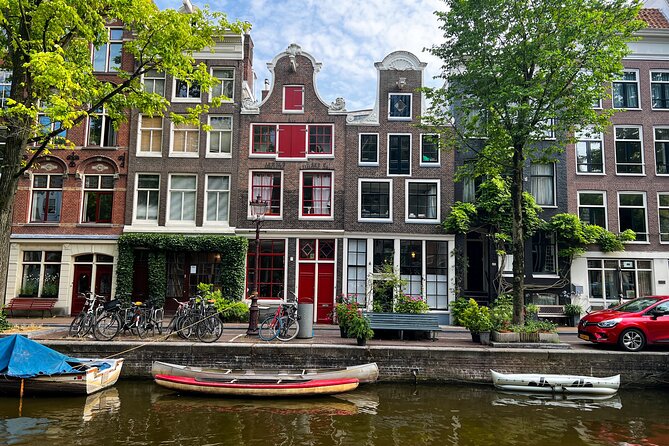
- The Canals of Amsterdam: How They Were Built and Why the 17th Century Mattered
- Jordaan: Quiet Streets, Canal-Builder Roots, and Where to Relax
- Old Center: From Waag Back to Dam Square
- Begijnhof: Hofjes, Chapels, and a Peaceful Pocket
- What You’re Really Paying for: Value of a $41.13 Small-Group Intro
- Tips to Get the Most Out of the Walk
- Should You Book This Amsterdam Walking Tour?
- FAQ
- How long is the Small Group Walking Tour in Amsterdam?
- What language is the tour offered in?
- How many people are in the group?
- Where does the tour start?
- Where does the tour end?
- Do I get a mobile ticket?
- Are entrance fees included?
- Is coffee or tea included?
- Is the tour suitable for most people?
- Can I get a refund if I cancel?
Key Things to Know Before You Go
- 12 people max keeps it personal and chatty instead of crowded and rushed.
- Free-entry stops are built into the route, so you spend time looking instead of hunting tickets.
- Canal building and 17th-century change get explained in plain language, not just name-dropping.
- Jordaan adds a calmer feel with quieter streets and great spots to grab a drink.
- Begijnhof is a rare pause: hofjes, chapels, and a peaceful pocket in central Amsterdam.
From Dam Square to a Canal City: The Big Idea Behind This Walk
This is the kind of tour that helps you understand Amsterdam as a system, not a list of famous spots. You start at Dam Square and work outward in a logical loop through the inner city, so the neighborhoods start to make sense instead of feeling random.
Two things make that work. First, the pacing is human: the stops are short, and you get a breather when your legs want one. Second, the guide doesn’t treat history like trivia. The stories connect the city’s layout to how Amsterdam became important through trade, waterways, and city planning.
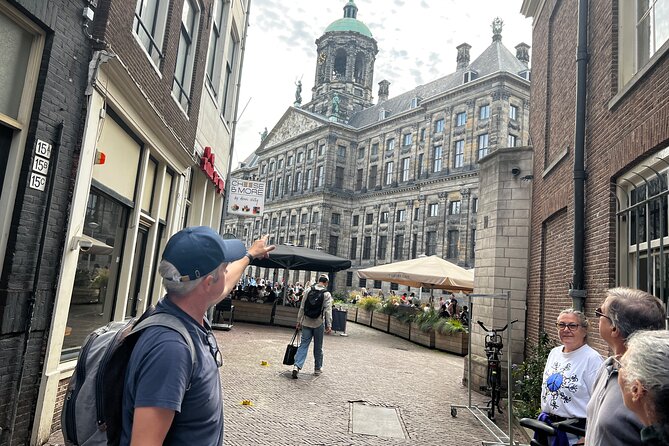
And you’ll feel that “local” touch. In reviews, the guide is described as funny, engaging, and ready to answer questions. One guide name that shows up often is David, and the vibe from comments is that the tour adjusts to the group’s interests rather than reading a script.
You can also read our reviews of more walking tours in Amsterdam



Dam Square & Damstraat: The 750-Year Origin Moment
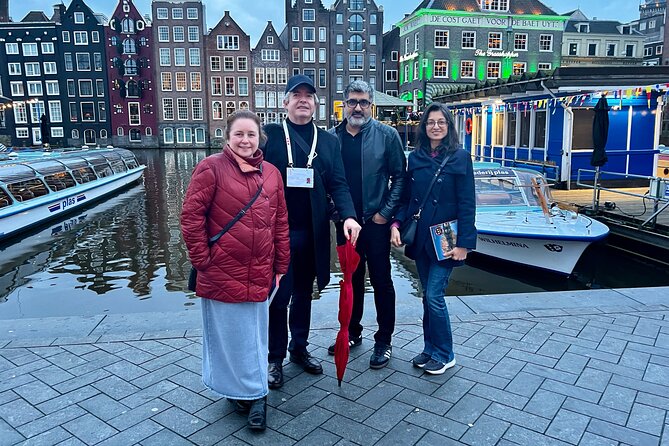
Dam Square is one of those places where you can see layers at once. You get an introduction to how today’s Amsterdam grew from a fishing village roughly 750 years ago, and the guide helps you connect that early story to what you see around you now.
Damstraat also matters because it’s the kind of street that shows how Amsterdam channels movement. It’s not just scenic; it’s a practical city spine. Getting oriented here early helps later stops feel clearer, especially when you’re trying to picture how people moved between neighborhoods in earlier centuries.
This stop is short, so you won’t feel stuck in one spot. The tradeoff is that it’s a “set the frame” moment more than a slow museum-style visit.
Nieuwe Kerk: Medieval Amsterdam Without the Museum Detour
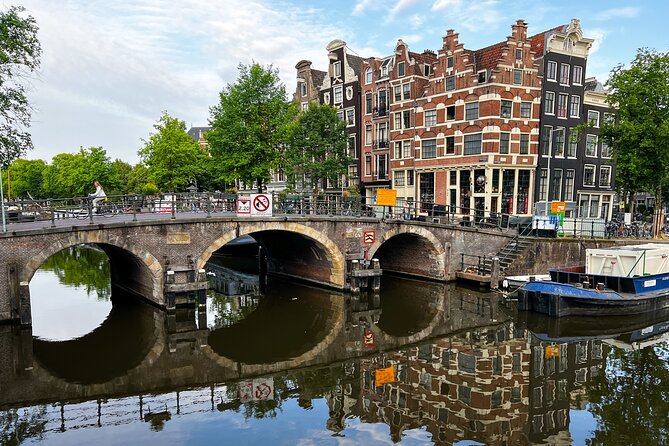
Next comes Nieuwe Kerk, and the focus stays on how the city changed over time. You’ll walk through a medieval Amsterdam feel while covering the bigger shifts across the centuries.
This stop is about perspective. Even if you don’t go inside for a deep, quiet visit, the guide’s context helps you read the buildings like clues. It’s an efficient way to connect architecture to time periods without making you sit through long lectures.
The benefit for most people: it keeps momentum while still adding substance. If you’re the type who likes landmarks but also wants meaning, this is a nice balance.
The Canals of Amsterdam: How They Were Built and Why the 17th Century Mattered

The longest stretch is where the tour really earns its keep. You spend about an hour on the iconic canal scenery and learn how the canals were built, plus what drove the city’s major changes in the 17th century.
Canals are what Amsterdam runs on. Once you understand the canal logic—how waterways supported trade and shaped where people and money clustered—you’ll start noticing details on your own later. The guide’s explanation turns “pretty water” into a story about engineering, commerce, and power.
This is also where questions tend to come alive. In comments, people liked that the guide explains Dutch culture and lifestyle alongside the skyline. One recurring theme: the guide connects Amsterdam to the wider world, including how trade shaped the Netherlands and even modern connections people relate to in their own countries of origin.
If you’re hoping for a mostly photostop tour, this section might feel a bit more “talking and thinking” than you expected. If you want a real intro, it’s the highlight.
Jordaan: Quiet Streets, Canal-Builder Roots, and Where to Relax
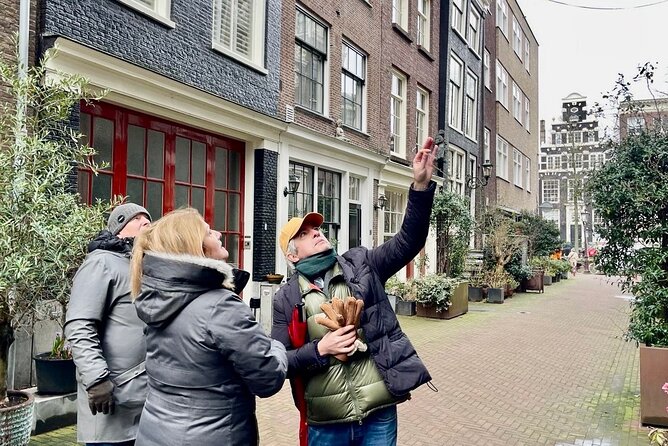
Then you shift into the Jordaan, which changes the mood of the walk. This neighborhood is described as a “village” feeling inside the city, with quieter streets and lots of places to eat or grab a drink.
What I like about this part is that it interrupts the big-name sightseeing. The Jordaan used to house people who built the 1600s canal expansion, so the tour gives you a working-class origin that adds depth to what can otherwise be a trendy neighborhood.
You also get breathing space. The stop here is about 30 minutes, which is long enough to slow down, take in street life, and absorb the feel of the area. For many people, this is where the tour stops feeling like “tour mode” and starts feeling like “walking Amsterdam like you live here.”
You can also read our reviews of more guided tours in Amsterdam





Old Center: From Waag Back to Dam Square
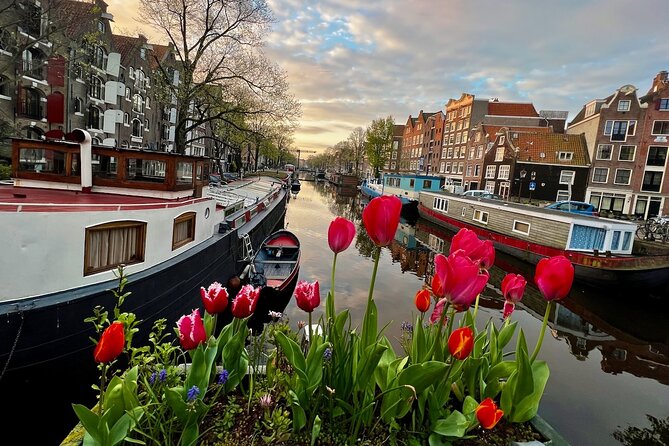
The route loops through the old center, moving from Waag to Dam Square. This section leans into old Amsterdam as a story-world—history and street-level context tied to the route you’re walking.
Waag is a good anchor point because it signals trade and city life. As you walk back toward Dam Square, the guide helps you connect earlier periods to the present-day street plan. That’s the real value of this kind of walking tour: you don’t just learn where things are—you learn how Amsterdam’s center functioned.
One practical drawback to note: since this is central Amsterdam, you’ll be sharing space with pedestrian traffic. The upside is the group is small, so you can usually move as a unit without feeling swallowed by crowds.
Begijnhof: Hofjes, Chapels, and a Peaceful Pocket
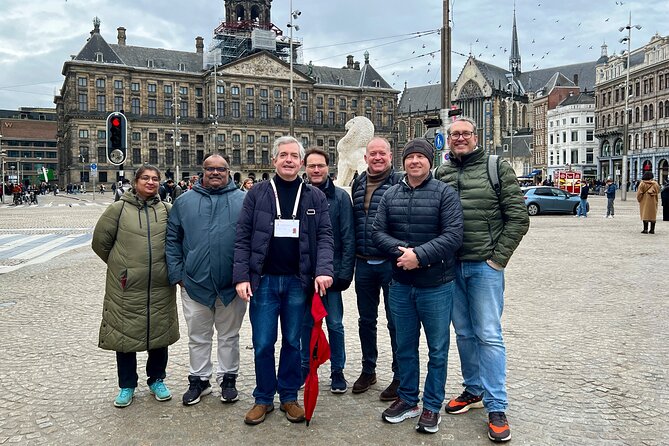
The final stop is Begijnhof, one of the oldest hofjes in Amsterdam. This is the quiet contrast that makes the whole tour feel complete.
You’ll learn that Begijnhof originally housed lay women who hadn’t taken vows to become nuns. That human detail matters. It turns a pretty courtyard into a glimpse of how community life worked long ago.
Begijnhof also includes a mix of religious architecture you can’t really fake with photos:
- an English Reformed church from 1607
- a Catholic chapel
- surrounding historic houses that frame the courtyard
This stop is short—about 15 minutes—but it’s a strong “exhale” moment. If you like places that slow your pulse, you’ll probably enjoy it more than you expect.
What You’re Really Paying for: Value of a $41.13 Small-Group Intro
At $41.13 per person for about three hours, this tour is priced like an affordable guided orientation. The big value isn’t just that it’s guided—it’s that it’s small-group and focused on understanding what you’re seeing.
A few elements add up:
- 12 max group size means you can ask questions and hear explanations clearly.
- Many stops are marked as free entry, so your money goes toward the guide and the walking rather than ticket fees.
- The route covers multiple “layers” of Amsterdam: origin, medieval context, canal logic, neighborhood character, and a quiet courtyard piece.
Coffee or tea isn’t included, so factor in a small extra budget for your break. But that’s also why the break feels practical: it’s a moment to step out of the crowd and reset, rather than a forced stop at a specific café.
If you’re traveling on a mid-range budget and want a strong first pass at Amsterdam’s inner city, this feels like a good deal.
Tips to Get the Most Out of the Walk
Here’s how to make this tour work for you:
- Wear grippy shoes. Central Amsterdam streets can be slick, especially after rain.
- Bring an umbrella if rain is likely. The tour notes this, and the route is outdoors.
- Expect a relaxed pace with meaning. The guide is described as fun and animated, and the pace is meant to keep you engaged without dumping facts nonstop.
- Use the break wisely. Even without included coffee/tea, that refreshment stop is your chance to regroup and decide what you want to revisit later.
- Ask questions. Reviews repeatedly mention the guide’s willingness to answer and adapt, which is where the tour becomes more than a scripted walk.
The other small advantage: the tour starts and ends back at the meeting point near public transport. That makes it easy to plug into the rest of your day.
Should You Book This Amsterdam Walking Tour?
Book this if you want:
- a small-group Amsterdam intro that doesn’t feel like a conveyor belt
- a guide-led explanation of canals and 17th-century change
- a route that mixes famous sights with neighborhood texture, ending on a peaceful stop at Begijnhof
Skip it if:
- you mostly want long, inside visits and quiet time in churches or museums
- you dislike walking for about three hours, even with short stops and breaks
If you’re here for the first time, this is a strong starting point. It helps you understand what you’ll see afterward when you explore on your own through the canal streets and tighter lanes.
FAQ
How long is the Small Group Walking Tour in Amsterdam?
The tour lasts about 3 hours.
What language is the tour offered in?
The tour is offered in English.
How many people are in the group?
The tour has a maximum of 12 travelers.
Where does the tour start?
The meeting point is National Monument Dam, 1012 JS Amsterdam, Netherlands.
Where does the tour end?
The activity ends back at the meeting point.
Do I get a mobile ticket?
Yes, you receive a mobile ticket.
Are entrance fees included?
The stops on the route are listed as free admission.
Is coffee or tea included?
Coffee and/or tea are not included, though there is a stop for refreshments like coffee or tea.
Is the tour suitable for most people?
Most people can participate.
Can I get a refund if I cancel?
Yes. You can cancel for free up to 24 hours in advance for a full refund.