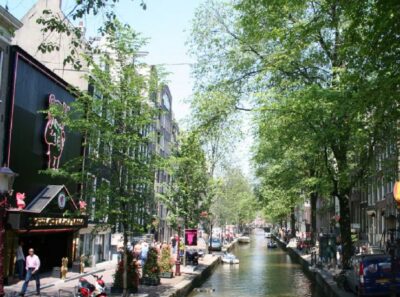
REVIEW · AMSTERDAM
Private Amsterdam Red Light District tour including sex museum
Book on Viator →Operated by Trigger Tours · Bookable on Viator
Amsterdam can be blunt, and this tour is too. You get a private guide through the Red Light District’s street-level reality, plus a visit to the included Sexmuseum Amsterdam Venustempel. It’s a chance to understand how this neighborhood became what it is today, without letting the topic turn into awkward guesswork.
Two things I really like: you get personal attention on a small, private walk, and the guide keeps the focus on history, buildings, and how the area works now. You also get the museum ticket included, so you don’t have to plan one more stop.
One possible drawback: you’re walking in a sensitive, eye-catching area, and if you’re uncomfortable with explicit themes (or you prefer only normal sightseeing), this may feel like too much for your trip.
In This Review
- Key highlights worth marking on your mental map
- A private walk through Amsterdam’s taboo neighborhood
- The Red Light District walk: history, rules, and what you’re actually looking at
- Dam Square and the old foundation story (why Amsterdam looks the way it does)
- The wooden-building reminder: Pub The Ape and Amsterdam’s early architecture
- Waag: a medieval city gate turned to crafts and guild life
- The smallest house: VOC storage roots and long-term living
- Sexmuseum Amsterdam Venustempel: what the included ticket actually gives you
- Respect and safety: how guides keep it from turning into awkward chaos
- Who this tour suits best (and who should think twice)
- Value check: is $102.09 per person worth it?
- Before you go: planning tips that actually help
- Should you book this private Red Light District + Sexmuseum tour?
- FAQ
- How long is the tour?
- What’s included in the price?
- Is the tour private?
- What language is the tour offered in?
- Where does the tour start?
- Do I need to bring a ticket?
- What’s the cancellation policy?
Key highlights worth marking on your mental map
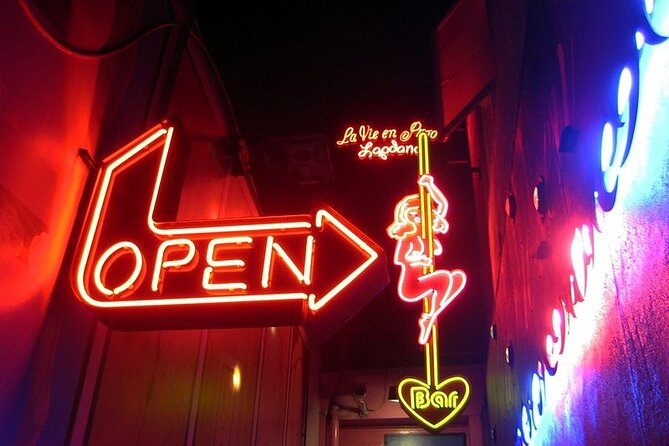
- Private guide time in the busiest streets, so you’re not stuck following a crowd
- History with context, not just the usual door-and-sign spotting
- Sexmuseum Amsterdam Venustempel included, so the visit is part of the story
- Old Town stops on the same route, including the Waag and the smallest house
- Respectful approach that keeps the experience from turning seedy
A private walk through Amsterdam’s taboo neighborhood
If you’ve ever wondered how Amsterdam can be both arty and very no-nonsense at the same time, this Red Light District walk explains the contrast. You’re not just seeing the neighborhood—you’re learning how it grew, how it changed, and why it sits in the middle of the city’s older fabric.
The private format matters here. The streets are narrow, the angles are weird, and the vibe can swing fast. With a dedicated guide, I think you get something most people miss on their own: pacing. You can ask questions, get real context, and keep moving at a comfortable speed.
And yes, the subject is adult. But the best guides treat it like a human-history topic: city policy, economics, architecture, and the lived reality of people who work there. If you want “adult tourism” without the chaos, this tour is built for that.
You can also read our reviews of more private tours in Amsterdam


The Red Light District walk: history, rules, and what you’re actually looking at
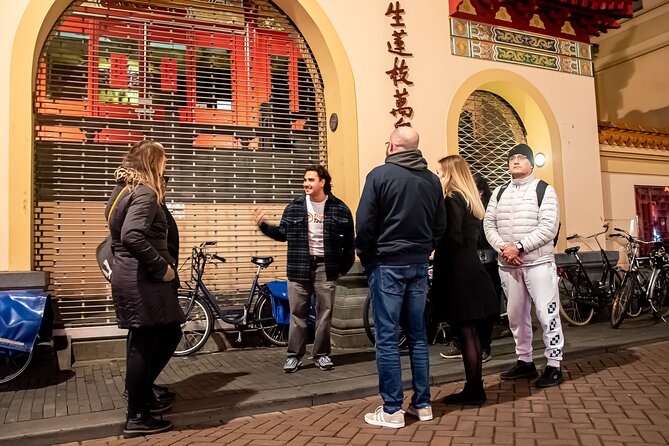
This part is your main street-level experience: a guided walk through the narrow lanes and key viewpoints of the Red Light District. What makes it valuable is that you’re learning what the neighborhood is doing today, not only how it was framed in old stories.
I like how the tour approach usually avoids the cheap version of this area—no gawking-by-default. Instead, you get rules of behavior and context for what you’re seeing. That means you can look around without feeling out of place or like you’re breaking some invisible etiquette code.
You’ll also get the bigger picture of why this district exists where it does. Amsterdam’s canal-era city planning didn’t happen on a blank slate; it grew on challenging ground and inventive building methods. That becomes important when you start noticing the architecture you might otherwise ignore.
Dam Square and the old foundation story (why Amsterdam looks the way it does)
Even when the focus is the Red Light District, the route can connect you to the city’s older identity—especially the story of how Amsterdam got built in the first place.
Amsterdam’s soil is a mix that doesn’t behave nicely: thick layers of fen and clay, plus waterlogged conditions. The city solution was wooden poles driven down until they reach more stable sand layers deep below. You’ll hear this “city built on trees” idea because it’s not a trivia flex—it explains why so many buildings have the look, age, and structural character they do.
Then there’s the point that the area you’re walking sits in Amsterdam’s Old Town zone. That matters because it ties today’s adult district to the city’s oldest streetscape. Instead of treating the Red Light District as something separate, you see it as part of the same long urban story.
In plain terms: the walk doesn’t only show you the present-day storefronts—it gives you the city timeline so the neighborhood makes more sense.
The wooden-building reminder: Pub The Ape and Amsterdam’s early architecture
One of the more memorable stops along the way can be Pub The Ape, locally known as Int Aepjen. The detail that makes this stop interesting is its age and construction: built around 1540, and noted as one of the last remaining wooden buildings in Amsterdam.
Why do you care? Because Amsterdam’s older buildings didn’t all survive the same way. A major fire in 1452 changed building expectations and contributed to the shift toward brick facades. So when you see a surviving wooden structure like this, it’s like bumping into a historical fossil—proof that the city once looked (and built) differently.
This kind of stop also helps the pacing. It breaks up the heavier subject matter with something visual and architectural, so the walk feels like city exploration rather than a single-topic lecture.
Waag: a medieval city gate turned to crafts and guild life
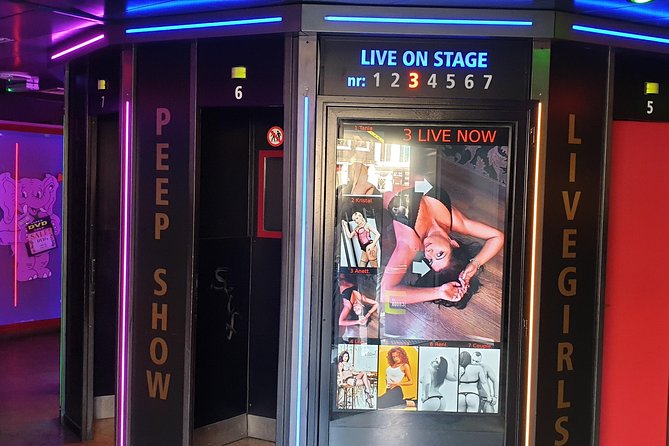
Another standout stop is the Waag. You’ll hear it was built around the 1400s as one of Amsterdam’s city gates, tied to the defensive wall system.
Later, it didn’t stay stuck in the past role. It became a place where guilds—craftsman organizations—set up operations around the Waag square. That transition is a big clue to how Amsterdam works: protection and trade blur together over time. Even historic structures end up serving newer civic purposes.
For you, the benefit is mental context. When your guide connects the Waag and gate history to the Red Light District’s location in the city core, it stops feeling random. You start understanding how “business” and “adult industry” both occupy the logic of the old city—just with different forms and different eras.
You can also read our reviews of more museum experiences in Amsterdam






The smallest house: VOC storage roots and long-term living
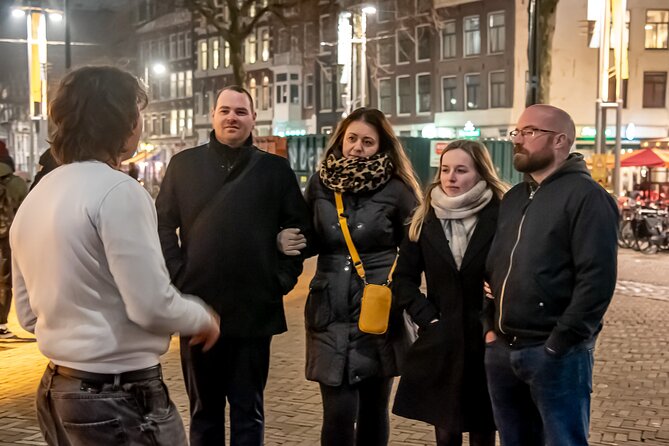
The tour can also include a stop at the smallest house of Amsterdam, built around the 1700s. The story goes that it first served as storage related to the VOC trading company, and later became a place where people lived for a very long time.
This is one of those stops that helps your brain relax. The Red Light District discussion can be emotionally heavy for some people; small houses and odd architecture are a reminder that Amsterdam is full of weird solutions. Even when the topics go adult, the city itself stays quirky and creative.
If you like turning a walking tour into a city puzzle—spot the buildings, match them to history, notice how the city layers over itself—this kind of stop will land well.
Sexmuseum Amsterdam Venustempel: what the included ticket actually gives you
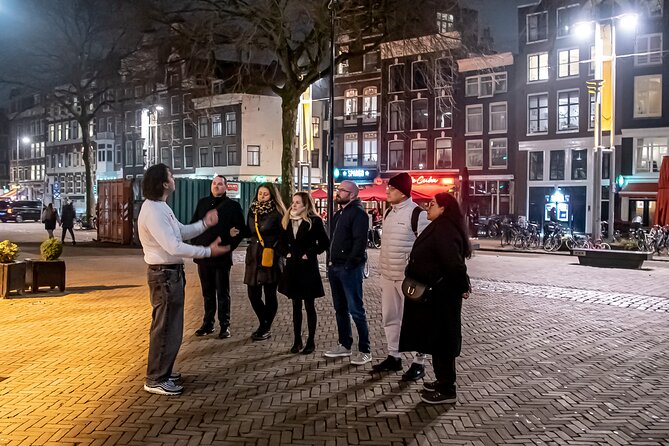
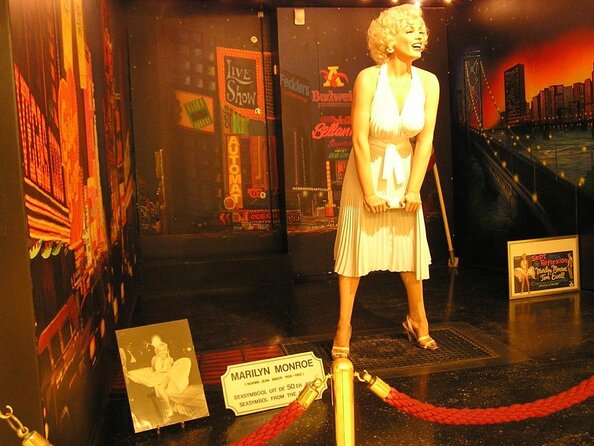
The museum visit is built into the experience, and the ticket is included. Expect an exhibit path that covers erotic materials through the ages—so it’s not only about the present-day district. It’s about how society has talked about sex, desire, and taboo across different time periods.
What I like here is the “why” connection. The Red Light District walk is street-level reality; the museum is the curated, historical viewpoint. Together, you get a more balanced understanding than if you only saw one side.
A practical note: the museum time is short—around 30 minutes. That’s enough to get the idea and pick up the main context, but not enough for museum-speed browsing for every single object. If you’re the type who likes to read every label twice, you may wish you had more time afterward.
Also, the museum can involve some walking inside, and at least one guide style has been described as a multi-story experience. So if you’re sensitive to steps, plan accordingly and ask your guide what to expect when you arrive.
Respect and safety: how guides keep it from turning into awkward chaos
The best version of this tour is about emotional control. You should feel guided—like someone is managing information and boundaries so you can learn without being put on the spot.
A repeated theme with strong guides is a tone that’s frank but not judgmental. You get humor at the right moments, rules of behavior in plain language, and explanations that don’t treat people as props. That’s not only nicer—it helps you understand the neighborhood as a human place instead of a spectacle.
Another big value of the private format is your comfort level. This is one of those areas where group tours can feel crowded and distracting. Having your guide with your specific group means questions can be answered in context, and your pace stays yours.
Who this tour suits best (and who should think twice)
This is best for you if:
- You want adult-context city history rather than just photos and quick jokes
- You’re comfortable with candid discussion, but you also want it handled respectfully
- You like private tours in tight, confusing areas, where navigation and etiquette matter
- You want the museum included so your evening isn’t split into too many plans
It may be a poor fit if:
- You prefer only mainstream sightseeing and don’t want explicit themes at all
- You get uncomfortable with adult-focused cultural topics, even in a historical framework
- You’re expecting a “light and easy” walk only—this area requires emotional readiness
If you’re traveling with mixed comfort levels—say one person is curious and another is uneasy—this private format is still helpful. You can tailor how you approach the subject, and the guide can steer the discussion to the parts you can handle.
Value check: is $102.09 per person worth it?
At $102.09 per person for roughly a two-hour guided walk plus an included Sexmuseum ticket, the value hinges on what you get beyond the basics.
Here’s the trade-off: you’re paying for a private guide in one of Amsterdam’s trickiest, most sensitive areas. That’s not just convenience. A good guide turns “what is this place?” into “how did this place become part of Amsterdam?” You also avoid wasting time figuring out what’s appropriate to look at, when to move on, and which buildings matter.
The included museum ticket is also a plus. If you’d pay for the museum separately anyway, bundling it makes sense. The museum time is not long, but it’s purposeful—short enough for a quick hit of context, not so long that you lose the walk’s focus.
If you’re the kind of traveler who would never stop for a museum ticket alone, then you may feel the price less. But if you like guides who connect street details to city evolution, this feels like a solid use of money.
Before you go: planning tips that actually help
- Dress for walking. The streets are narrow and you’ll be moving most of the time.
- Keep your expectations flexible. This area is very real and very visible; even a respectful tour keeps it grounded.
- Bring a question list. When you’re paying for private guide time, ask what you genuinely want to know—history, city policy, or how the neighborhood operates.
- If the museum is important to you, arrive ready to spend the short window well. Take your time with the main exhibits, not every single item.
Finally, this is English-guided, which is helpful if you want clear answers without guessing at nuance. And because it’s a private experience, you’re not stuck with a pace that doesn’t match your group.
Should you book this private Red Light District + Sexmuseum tour?
I’d book it if you want Amsterdam in full color. You’ll leave with more than a mental map of streets—you’ll understand how the neighborhood fits into Amsterdam’s older city core, why the buildings and gate structures matter, and how the museum frames erotic culture through time.
I’d skip it if your trip is set up for only light sightseeing, or if you know adult topics will make you tense instead of curious. In that case, you’ll probably feel like you paid for discomfort.
If you do book, choose it because you want context and respectful guidance—not because you want shock value. When the guide is on their game, it can be a smart, human, and surprisingly educational Amsterdam evening.
FAQ
How long is the tour?
The Red Light District portion is listed at about 2 hours, and the Sexmuseum visit is about 30 minutes, for an overall experience of approximately 2 hours.
What’s included in the price?
The tour price includes admission to Sexmuseum Amsterdam Venustempel.
Is the tour private?
Yes. It’s a private tour/activity, with only your group participating.
What language is the tour offered in?
It’s offered in English.
Where does the tour start?
The tour starts at ParkBee Parking NH Collection Amsterdam Barbizon Palace, Prins Hendrikkade 59, 1012 AD Amsterdam, Netherlands, and it ends back at the meeting point.
Do I need to bring a ticket?
A mobile ticket is provided.
What’s the cancellation policy?
You can cancel for a full refund if you cancel at least 24 hours before the experience start time. If you cancel within 24 hours, the amount paid is not refunded.