REVIEW · AMSTERDAM
Amsterdam Private Historical Walking Tour
Book on Viator →Operated by 360 Amsterdam Tours · Bookable on Viator
Dam Square to canals in two hours—smart and focused. This private historical walking tour connects big-name landmarks like Dam Square and the Royal Palace area with quieter corners such as Begijnhof, so the center of Amsterdam starts to make sense fast. I love the personalized guide attention, and I especially like the way the stories jump from politics to everyday places. One drawback to plan for: it’s a brisk walking format, so you won’t have the kind of time you’d want for slow museum wandering.
If you’re traveling with adults who like context—not just photos—this works well. It’s offered in English, includes a mobile ticket, and is priced as a private experience (so it’s more “tour guide thinking” than “group bus shuffle”). It’s also the kind of tour that gets booked ahead, with a typical booking window of about 86 days.
The route ends in the Jordaan area, near the Anne Frank House, with practical food recommendations from your guide. If your priority is resting instead of walking, you may want to pair this with a later, slower canal-pace plan.
In This Review
- Key highlights that make this walk worth your time
- Starting at Dam Square: the fastest way to get your bearings
- Royal Palace and the New Church: big landmarks, tight explanations
- Begijnhof: the quiet courtyard moment that resets your brain
- Multatuli statue and the fair trade story with cheese tasting
- Munttoren and Nieuwmarkt: where stories get specific
- Bloemenmarkt and Spui: floating flowers and book-market energy
- Ending near the Anne Frank House in the Jordaan
- What the best guides do differently (and why it matters)
- Price and value for a private 2-hour walking tour
- Practical fit: who this tour suits best
- Should you book the Amsterdam Private Historical Walking Tour?
- FAQ
- How long is the Amsterdam Private Historical Walking Tour?
- Where does the tour start?
- Where does the tour end?
- Is this a private tour?
- What language is the tour offered in?
- What’s included in the price?
- Are there admission tickets you need to buy?
- Is food included?
- Is it easy to reach the meeting point with public transportation?
- Is there free cancellation?
Key highlights that make this walk worth your time
- Dam Square start: the launch point for Amsterdam’s central story and layout
- Royal Palace and New Church stops: key landmarks without the hassle
- Begijnhof courtyard contrast: a calm, intimate pocket right in the middle of town
- Multatuli statue with cheese tasting: a surprisingly fun stop tied to fair trade origins
- Nieuwmarkt and de Waag: a square with a Rembrandt link that adds real texture
- Bloemenmarkt and Spui: flowers by canal plus book-market energy near the end
Starting at Dam Square: the fastest way to get your bearings
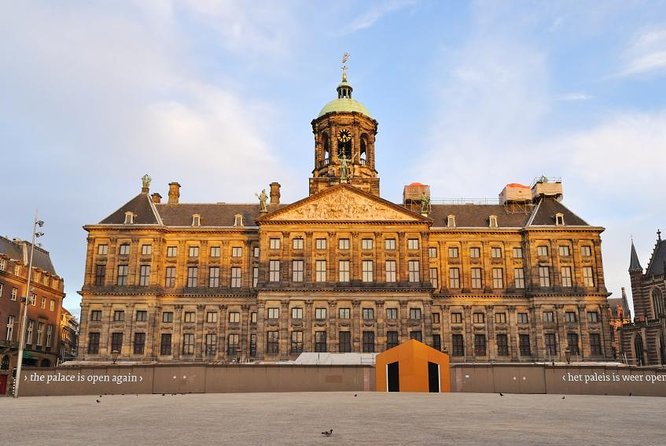
Dam Square is where Amsterdam’s attention tends to land first, and this tour uses it well. You begin at Dam Square Dam (near 1012 Amsterdam), with the Dam area, the Royal Palace, and the New Church all grouped close enough that your guide can explain the “why here” in real time.
This stop works because it’s not just sightseeing. Your guide frames Dam Square as the place where Amsterdam’s story concentrates—politics, religion, power, and the city’s changing role over time. Even if you’re not a “history person,” you’ll feel the city’s logic. Think of it as getting the map in your head before you start wandering.
Time is about 15 minutes here, so it’s enough to learn the basics and snap the landmarks into place. If you arrive jet-lagged or easily distracted, this opening still helps, since it gives you a simple mental thread to follow.
You can also read our reviews of more walking tours in Amsterdam


Royal Palace and the New Church: big landmarks, tight explanations
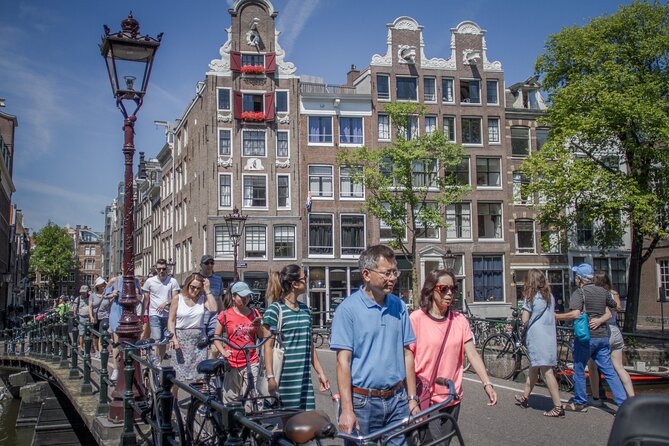
After Dam Square, you’ll spend around 10 minutes at the Royal Palace Amsterdam stop. The key value is how your guide connects the palace to the surrounding public spaces. From this kind of vantage, you understand how power and ceremony shaped the square you just started at.
Next is the New Church, about 5 minutes. This is a quick, focused stop, not a long interior visit. The goal is to anchor your understanding of what the church represents in the city’s timeline and how it connects to the surrounding central area. If you want to spend time inside, plan to do that separately—this tour keeps moving.
This section is where the pace is most noticeable. If you hate running from spot to spot, keep in mind: the trade-off is you’ll cover more territory in two hours, and your guide will keep you oriented so it doesn’t feel random.
Begijnhof: the quiet courtyard moment that resets your brain
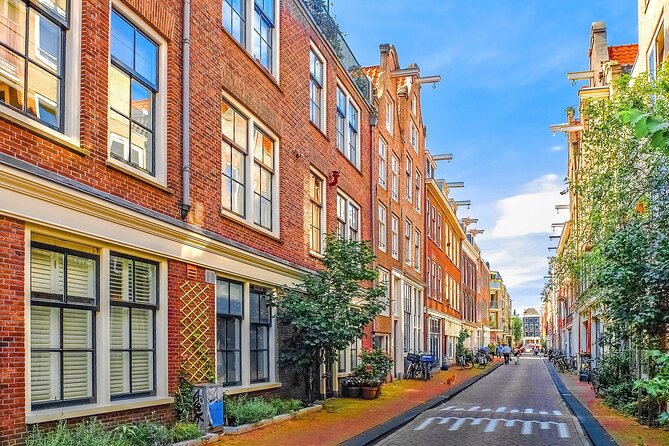
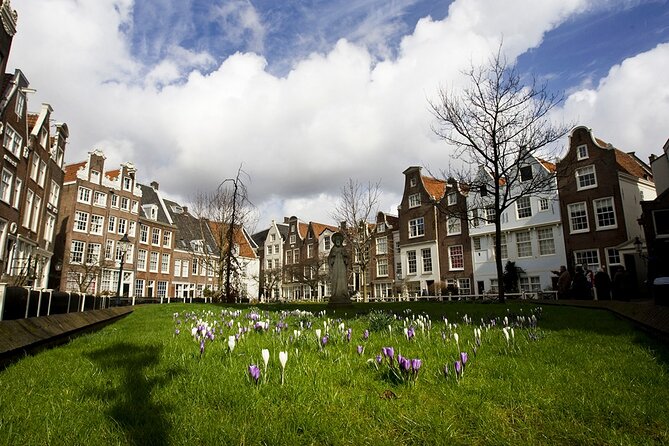
Then you get the contrast: Begijnhof. You’ll only have about 5 minutes here, but it’s the kind of place that makes a short stop feel meaningful. Begijnhof is well known for its tucked-away, courtyard feel, and that matters because it changes the sensory tone of the walk.
Your guide uses the setting to talk through the “human scale” of Amsterdam—how everyday lives tucked into smaller spaces while the city’s public face stayed monumental. It’s an effective pause from the bigger squares and landmark-front scenery.
The drawback is simple: 5 minutes goes fast. If you want photos, take them quickly, and focus on what your guide is pointing out. This stop is less about lingering and more about understanding why Amsterdam has pockets like this at all.
Multatuli statue and the fair trade story with cheese tasting
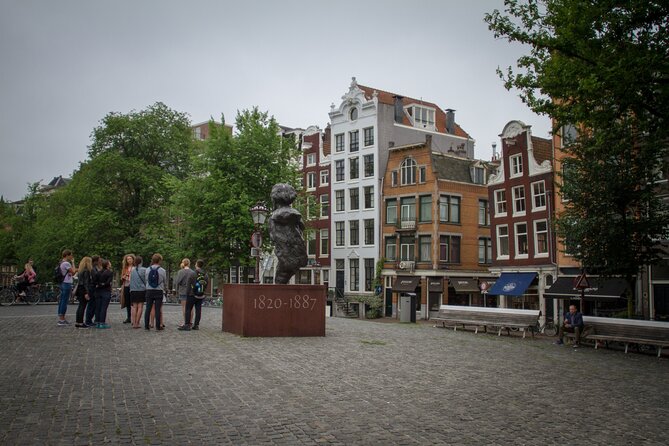
One of the more memorable stops is the Statue of Multatuli, around 5 minutes. This stop is tied to two things: an information moment about the start of the fairtrade movement and a cheese tasting component.
That combination is smart. It turns a topic that can sound abstract into something you can experience. You’re standing in the city, hearing the story, and then getting a small tasting that makes the idea stick.
This is also a good reminder that Amsterdam’s history isn’t only about canals and kings. It touches trade, ethics, and how ideas travel. Even if you’re only mildly interested in activism, the guide can keep it grounded in real places you can see.
One consideration: if you don’t eat dairy, let your guide know. The details here are a tasting, but food-related moments still matter for comfort.
Munttoren and Nieuwmarkt: where stories get specific
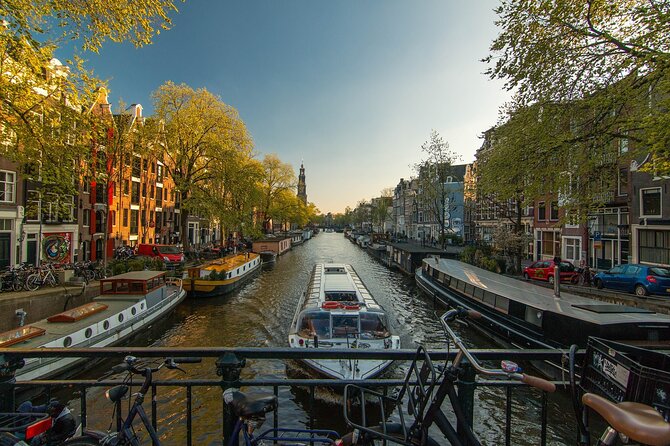
Next up is Munt Tower (Munttoren) for about 5 minutes. The tour promise is that your guide will “tell you all about it,” and that’s the point. You’re not just passing a tower—you’re learning why this kind of structure matters in the city’s layout and what it points to historically.
Then the walk shifts to Nieuwmarkt, about 10 minutes. Nieuwmarkt is a standout square in the route because your guide ties it to a very concrete reference: de Waag, and the note that Rembrandt came to paint back in the days. Whether you’re an art person or not, that connection helps you see the square as a living stage, not just a background.
This portion is also a nice rhythm change. It’s longer than the quick stops, and it gives your guide enough time to connect the dots between commerce, public space, and art. If you only remember one “aha” moment from the walk, it’s often one like this—where you can picture the past because the place still looks like itself.
You can also read our reviews of more private tours in Amsterdam




Bloemenmarkt and Spui: floating flowers and book-market energy
After Nieuwmarkt, you’ll hit the famous Bloemenmarkt for about 5 minutes. This is presented as the largest floating flower market in the world, and even with a short stop, the atmosphere lands. You’re walking by canal-side stalls that feel part of Amsterdam’s everyday charm.
This stop also helps you understand how Amsterdam mixes commerce with art and routine. It’s not just a flower photo moment. Your guide uses the location to talk about the city’s relationship with trade and canal space—turning what you’d see as scenery into something with context.
Then you finish at Spui, around 5 minutes. Here you get two things: a note about the “miracle of Amsterdam” happening nearby, and the fact that a book market is held at this square. Again, it’s short, but it gives you a sense for Amsterdam’s culture beyond the obvious museum route.
If you want a calm ending, consider carrying a small snack with you. This section can feel like a quick sprint toward the finale.
Ending near the Anne Frank House in the Jordaan
The tour ends next at Koningsplein and includes a final segment with guidance in the Jordaan area, specifically noted as close to the Anne Frank House. This is where your guide adds local food recommendations.
That’s valuable because Jordaan is one of those neighborhoods where a few right choices matter. Your guide can point you toward places to eat that fit your time and tastes, instead of sending you toward the tourist-trap version of “authentic.” If your day includes a visit later (or you’re planning one), ending here helps you set up the rest of your itinerary.
This is also where private-format tours shine. In a group tour, you’d often get generic advice. Here, your guide can tailor suggestions around what you’ve just been walking through.
What the best guides do differently (and why it matters)
The private guide is the heart of the experience, and the impact shows up in the types of recommendations this tour earns. In the guide styles associated with this tour, names like Henk and Sylvia come up for a reason: they turn landmarks into a story you can follow, and they keep the walk lively instead of lecture-like.
I like how these guides often do two useful things:
- They explain what you’re seeing in front of you, then connect it to the bigger picture.
- They help you understand the city’s layout, so you don’t just leave with memories—you leave with better navigation.
If you’ve ever spent hours in Amsterdam and still felt lost, you’ll appreciate that effect. A two-hour walking tour shouldn’t replace exploring on your own, but it can give you momentum.
Price and value for a private 2-hour walking tour
At $156.88 per person for a private, ~2-hour walk, this isn’t a budget stroll. But it also isn’t trying to be one. You’re paying for a guide who can move at the pace of your group and focus the story on the parts you care about most.
Here’s how I’d judge value:
- If you’d otherwise book separate tickets for a “history intro” type experience, this is a single guided format that helps you understand the city center fast.
- If you’re short on time and want your walking day to feel purposeful, this price can look more reasonable.
- If you’re solo, the cost may feel steep for only 2 hours. If you can share the experience with companions, the per-person value usually improves.
Also, the tour notes that all fees and taxes are included, which removes one layer of uncertainty. Many city walks advertise low prices then hit you with add-ons; here, that clutter is reduced.
Practical fit: who this tour suits best
This tour fits best if you:
- Want a historical overview without spending half a day commuting between sites
- Like learning in the real environment—at squares, towers, and canal-adjacent spots
- Prefer a smaller, more personal pace rather than absorbing information through a crowd
It may be less ideal if you:
- Want long interior time at major attractions
- Get cranky with walking schedules and short stops
- Are looking for a food tour first and history second (food is not the main package, aside from the tasting moment described)
Should you book the Amsterdam Private Historical Walking Tour?
Yes, if you want to get Amsterdam’s core layout into your head quickly and you enjoy stories that connect landmark to meaning. The biggest win is the private guide structure and the smart sequencing from Dam Square down through the kinds of places that make the city feel like a real place, not a postcard.
Before you book, do one quick reality check: this is a 2-hour walking format with short stops. If that sounds right for your day, you’ll probably love how much you can absorb without burning daylight.
If your itinerary includes Jordaan and the Anne Frank House area later, ending here with local food tips is a neat way to turn the tour into a plan, not just a memory.
FAQ
How long is the Amsterdam Private Historical Walking Tour?
It’s listed as approximately 2 hours.
Where does the tour start?
The start point is Dam Square Dam, 1012 Amsterdam, Netherlands.
Where does the tour end?
The tour ends at Koningsplein, Amsterdam.
Is this a private tour?
Yes. It’s a private tour/activity, meaning only your group participates.
What language is the tour offered in?
The tour is offered in English.
What’s included in the price?
A private guide and all fees and taxes are included.
Are there admission tickets you need to buy?
The tour notes admission tickets as free for the stops listed.
Is food included?
No. Food or beverages are not included. A cheese tasting is listed as part of one stop.
Is it easy to reach the meeting point with public transportation?
The tour notes that it’s near public transportation.
Is there free cancellation?
Yes. You can cancel up to 24 hours in advance for a full refund.