REVIEW · AMSTERDAM
Private Off-the-beaten-path Countryside Windmill Tour
Book on Viator →Operated by Windmillgirl Tours · Bookable on Viator
A windmill day that feels personal from start to stop. I like this tour because it trades Amsterdam crowds for regained-land scenery and small villages, and it’s built around a guide who knows windmills from the inside. The private setup means you can keep moving at a pace that actually works for your group.
I also love the mix of stops: you get the hands-on windmill experience at Museummolen Schermer, then you shift to cheese, fishing-village history, and a water village that feels like it belongs in a Dutch postcard. One thing to consider: it’s a packed day with short photo stops, so if you prefer long wandering time in just one place, you may want to pick fewer towns.
In This Review
- Key reasons this tour works
- Why this windmill-country day beats a standard Amsterdam half-day
- Pickup, timing, and how to make a tight 6 hours feel relaxed
- Museummolen Schermer: where windmills stop being a postcard
- The Schermer dikes and a family windmill sightline
- De Rijp: when herring fleets and whalers meet drained seas
- UNESCO Beemster: the polder plan you can actually see
- Katwoude cheese stop at Jacobs Hoeve (Henri Willig)
- Volendam lunch: choose your style, not just your spot
- Edam: quick town charm and the cheese-branded connection
- Broek in Waterland: the water village moment
- Making sense of the whole day: why the order is smart
- Price and value: $473.17 per person is it worth it?
- Who this tour is best for
- Should you book it?
- FAQ
- What time does the tour start?
- How long is the tour?
- Is hotel pickup included?
- Is this a private tour?
- What’s included in the price?
- Is lunch included?
- What language is the tour offered in?
- Is mobile ticketing provided?
- What should I expect at the cheese farm?
- What is the cancellation policy?
Key reasons this tour works
- Private, door-to-door transport so you spend less time figuring out the route and more time out in the countryside
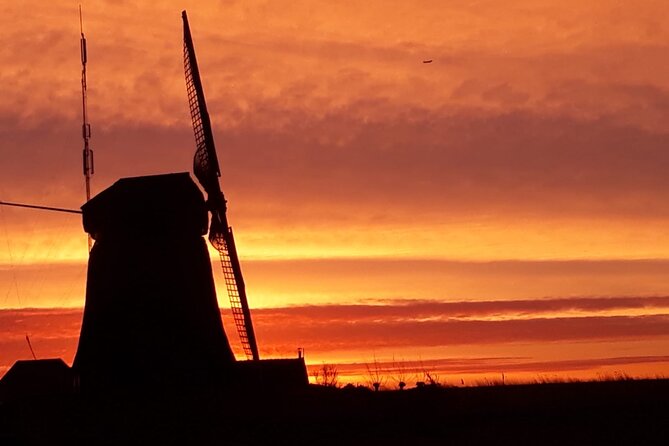
- Museummolen Schermer lets you see a museum windmill working and how people lived with it
- De Rijp and Leeghwater connect everyday village life to the big story of the sea being drained
- UNESCO Beemster polder drive shows the planned farm-and-canal pattern created after draining the lake
- Henri Willig cheese tasting with Gouda and Edam, plus a chance to learn about wooden shoes
- Broek in Waterland delivers a quieter, water-surrounded village stroll with old door details and a 16th-century church
Why this windmill-country day beats a standard Amsterdam half-day
Amsterdam is great, but it’s also easy to spend a whole day doing the same thing everyone else is doing. This tour does the opposite. You start in the city, then you get pushed out into the polder country where windmills and canals explain the Netherlands better than any museum poster.
The private format matters here. When you’re not sharing the day with a busload of people, you can pause for one extra photo when the dike view clicks, or ask a quick follow-up question about how water management actually worked. That’s the kind of small flexibility that makes the whole experience feel less scripted.
And the guide makes a big difference. The local Windmillgirl Tours guide is Esther, and she’s from windmill country. In places like the Schermerpolder, that background shows up fast—she can connect the practical details (how the mill worked) to the lived-in reality (what people did with their days).
You can also read our reviews of more private tours in Amsterdam

Pickup, timing, and how to make a tight 6 hours feel relaxed
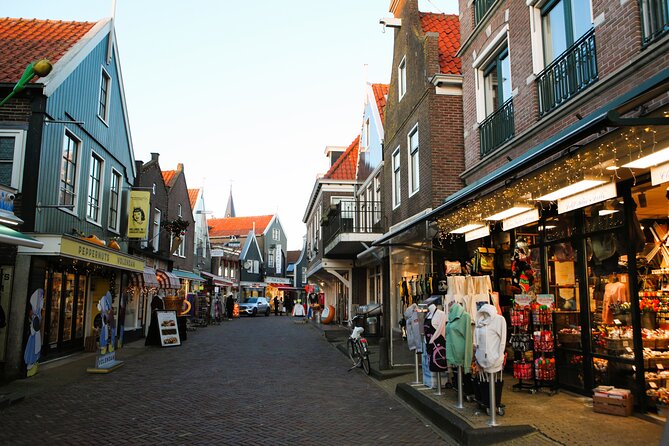
The day starts around 9:30 am with pickup in central Amsterdam. It runs for about six hours, including driving time back to your hotel. Because it’s private transportation, you’re not stuck waiting for other groups to board or for a schedule to recover from traffic.
Here’s how I’d plan your morning: eat a solid breakfast before you go. You’ll have a full lunch window in Volendam, but lunch isn’t included in the price. This tour is more “moving day” than “sit-and-stare day,” so being fueled helps.
What I find most practical is the door-to-door setup. You don’t need to arrange separate transit, and you avoid the mental math of transfers. That’s real value in a city as busy as Amsterdam—your energy stays for the countryside.
Museummolen Schermer: where windmills stop being a postcard
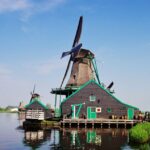
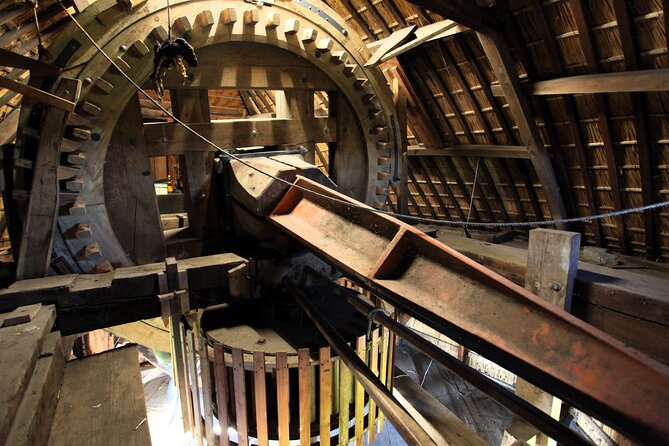
Your first big countryside education moment is at Museummolen Schermer in the Schermer area. This isn’t just a pretty structure you stand next to. The museum mill is set up so you can understand it from the inside, and you’ll get time to see how the mill works and how people used to live with that system.
One of the coolest parts is that you can see the mill from top to bottom. That vertical view matters. It helps you connect the idea of a windmill as a single icon to the reality of it as a whole machine—gears, movement, and the daily work that kept reclaimed land productive.
The time is about 30 minutes, and that length is just right. Long enough to grasp the basics, short enough to avoid turning the museum visit into a blur. The included admission fee means you’re not juggling tickets mid-day, which keeps the flow smooth.
Possible drawback: if your group hates guided interpretation and wants total freedom, a museum mill is still a museum mill. You can still look around, but the main value is the explanation and the structure of the visit.
The Schermer dikes and a family windmill sightline
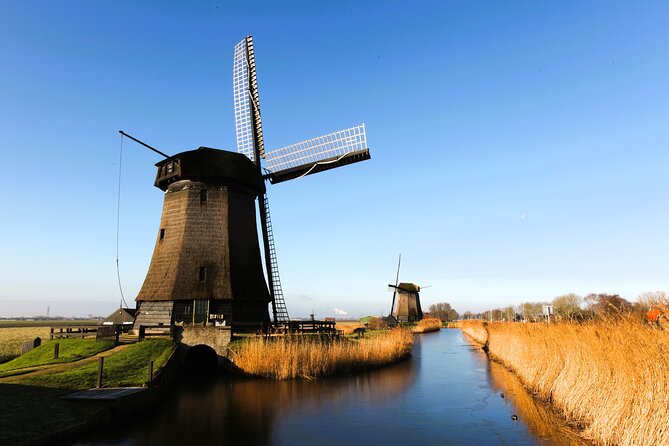
After the museum stop, you shift to the Schermer Mills phase—more driving, more views. You’ll take a drive on the dikes through reclaimed land, and you’ll pass village scenery that many people never see on quick Amsterdam trips.
There’s a memorable personal touch here. The guide points out Esther’s family windmill, which gives the whole polder story a human angle. It’s one thing to learn about land reclamation; it hits harder when you connect it to an actual family and an actual windmill that still matters in local life.
This segment is shorter, around 15 minutes, and it’s designed for sightlines and quick context. Think of it like a moving classroom: you get the “why” while you’re watching the land pattern roll by.
De Rijp: when herring fleets and whalers meet drained seas
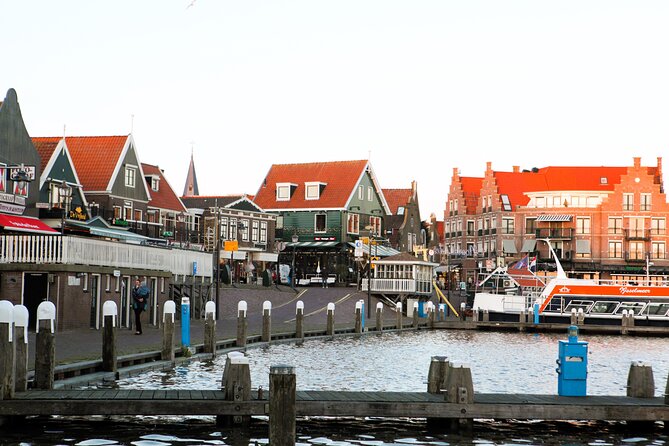
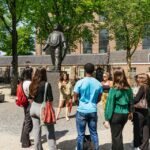
Next comes De Rijp, a town that used to thrive as a busy fishing village. It was known for its herring fleet and whalers, and that’s a big contrast with the quiet tone you’ll experience when you arrive today.
The key story is the sea draining that reshaped life. Once the surrounding sea got drained, the town found itself encircled by land. In other words: the “coastal economy” became an “inland life” situation, and the town’s identity adjusted around that change.
What I like is the way the tour connects a village to a person. Jan Adriaanzoon Leeghwater, a famous hydraulic engineer, was born in De Rijp. It’s the kind of detail that makes water management feel less abstract. You’re not just watching canals—you’re seeing a place tied to the engineering mindset that turned water control into survival.
The visit time is about 15 minutes. That’s not long for shopping or deep wandering. It’s perfect, though, if you want a quick taste of the town’s story and then keep moving.


UNESCO Beemster: the polder plan you can actually see
Between stops, you’ll drive through the UNESCO World Heritage site of Beemster, specifically the regained land known as polders. This is where the Netherlands shows its planning brain.
After the Beemster Lake was drained, the area was laid out with a system of roads, plots, farms, and canals. The tour’s approach here is simple: you see the result while you’re moving through it, and you notice how the farm-and-canal pattern creates a readable grid across the countryside.
What makes this valuable is that it gives you a framework for the whole day. Once you understand polder planning, the windmills and dikes start to feel like parts of one system. You begin spotting the logic behind what you see instead of just taking photos.
No admission is mentioned for this portion, so it’s primarily about the drive and viewpoint awareness. If you like photography, this is a good segment to have your camera ready—though you’ll still be balancing the car window factor.
Katwoude cheese stop at Jacobs Hoeve (Henri Willig)
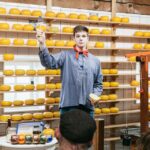
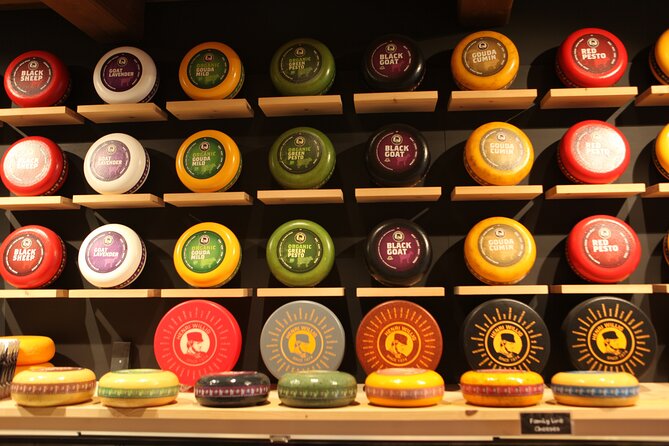
Then comes the part most people look forward to: cheese tasting at the Jacobs Hoeve Cheese Farm by Henri Willig in Katwoude. You’ll get a Gouda and Edam tasting, and the stop includes about 40 minutes for tasting and activities.
This is also where the tour becomes more playful and less “classroom.” They’re described as among the top cheesemakers globally, and the tasting is aimed at letting you understand flavor range rather than just checking off a food item. The farm is known for offering 30 flavors, and the cheeses are developed with travel in mind, which is a nice behind-the-scenes idea: they’re not just making cheese, they’re thinking about how it travels and tastes later.
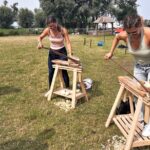
There’s also a wooden shoe craft demonstration. You’ll see how the craft works, and you can even try or buy wooden shoes. For me, that’s the sweet spot between souvenir and culture. You leave with a story you can explain later, not just a fridge magnet.
One consideration: if your group has very strict dietary rules, the tour data doesn’t mention alternatives. So it’s worth flagging allergies in advance when you book.
Volendam lunch: choose your style, not just your spot
Lunch happens in Volendam, and you get about an hour. This is one of the smartest parts of the itinerary because lunch isn’t forced into one fixed restaurant.
Instead, the guide will help arrange it based on what you’re craving. If you want a local fish restaurant, that’s an option. If you’d rather go traditional with a Dutch pancake restaurant, you can steer it that way.
This flexibility matters because Volendam can feel “touristy” if you’re not careful about where you sit. Having local guidance helps you avoid the obvious trap: paying for a location instead of a meal.
No lunch is included in the tour price, so budget for it separately. But that’s also why the value can still be good: you’re buying time and expertise, not a meal you might not love.
Edam: quick town charm and the cheese-branded connection
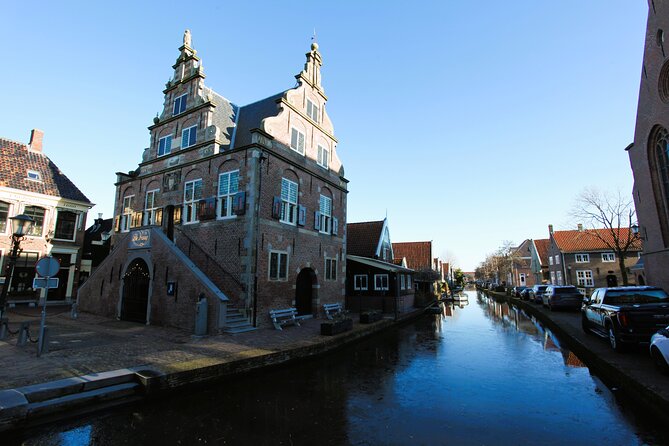
After lunch, you move to Edam for about 30 minutes. Edam is famous for its world-renowned Edam cheese, and the town is known for being beautifully preserved, with a mix of history, culture, and Dutch authenticity.
This stop is short, so think of it as a walk-and-look segment. You’ll get enough time to take in the look of the town and understand why Edam became part of the Netherlands cheese brand story. It’s not designed as a long museum day.
If you’re a cheese person, you’ll likely connect this stop back to the earlier tasting. It makes the food feel like more than a snack. It becomes a thread running through the day.
Broek in Waterland: the water village moment
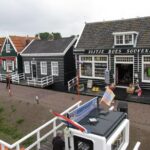
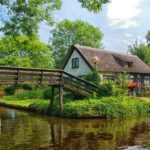
Your final village highlight is Broek in Waterland, about 20 minutes. This place is surrounded by water and is described as similar to the famous Dutch water village Giethoorn. That alone grabs attention—but the details are what make it stick.
You’ll stroll past old wooden houses with preserved features like ceremonial doors and carved lintels. Then there’s a restored sixteenth-century church, which gives the village a sense of age and continuity.
One very specific detail you’ll likely notice: the floor is paved with tombstones of former rich inhabitants. That’s not something you see every day, and it turns a pretty village stroll into a real “pause and look” moment.
Like Edam, this is a short stop. It’s ideal for soaking in atmosphere without needing hours. If your group is slower walkers, you’ll still get the core experience, but you may have less time for lingering.
Making sense of the whole day: why the order is smart
A big reason this itinerary feels logical is that it builds your understanding step by step.
- You start with a museum mill to learn the machine.
- Then you ride through reclaimed-land dikes and dike towns to see the system in real space.
- You add De Rijp to connect the land story to an economic past.
- You drive through Beemster to see the planning grid that followed drainage.
- Then you shift into food culture with Henri Willig.
- Finally you end with towns like Volendam, Edam, and Broek in Waterland, where you get atmosphere and a sense of what life looks like now.
That flow is good for first-timers to the Netherlands countryside. It also prevents the day from becoming random stops that all blur together.
Price and value: $473.17 per person is it worth it?
At $473.17 per person, this isn’t a budget excursion. But with a private format, it’s easier to see where the money goes.
You’re paying for:
- Private transportation and parking
- Door-to-door pickup and hotel return
- Bottled water
- Entrance to the historic windmill (Museummolen Schermer)
- Cheese tasting at the Henri Willig stop
Lunch isn’t included, which you should plan for. But the rest of the “extras” you’d otherwise pay for separately are folded into the tour.
Whether it’s a good deal comes down to your group and your priorities. If you want to leave Amsterdam fast, avoid crowd chaos, and get a guided connection between windmills and how people live with reclaimed land, this price can feel fair. If you’re traveling as a solo adventurer who hates group tours and prefers free time, you may feel every minute is scheduled.
The private nature also supports better pacing. You’re not just buying transport—you’re buying the chance to ask questions and get context while you’re actually in the places.
Who this tour is best for
This tour fits you if you:
- Want a private day away from Amsterdam crowds
- Like windmill and polder stories that connect engineering to daily life
- Appreciate short, well-chosen stops instead of long museum marathons
- Are a cheese fan and don’t mind a tasting stop that’s part lesson, part fun
It might not be perfect if you:
- Want lots of free time in just one town
- Need a fully leisurely schedule with minimal driving
- Have dietary needs and want assurance beyond what’s stated
Should you book it?
I’d book this if you’re excited about windmills, water management, and Dutch countryside towns that feel calmer than the core Amsterdam circuit. The best part isn’t just the scenery—it’s the guide side, with Esther bringing a windmill background and a personal way of pointing out what you’re seeing.
If you’re on a tight schedule, this is the kind of day that helps you understand the Netherlands instead of just stacking photos. And because it’s private, you’ll feel the difference right away.
If you can tell me how many people are in your group, I can help you sanity-check the value based on your situation and what you’re likely to spend on lunch and individual admissions.
FAQ
What time does the tour start?
The tour starts at 9:30 am.
How long is the tour?
It runs for about 6 hours (approximately).
Is hotel pickup included?
Yes. Pickup is offered from your hotel in Amsterdam.
Is this a private tour?
Yes. It’s a private tour/activity, with only your group participating.
What’s included in the price?
The price includes private transportation, parking fees, bottled water, entrance fee to a historic windmill, and cheese tasting.
Is lunch included?
No. Lunch is not included, but you’ll have 1 hour in Volendam to choose where to eat.
What language is the tour offered in?
The tour is offered in English.
Is mobile ticketing provided?
Yes. A mobile ticket is offered.
What should I expect at the cheese farm?
You’ll have a Gouda and Edam cheese tasting at Jacobs Hoeve Cheese Farm by Henri Willig, and there’s also a wooden shoe craft demonstration, with the chance to try or buy wooden shoes.
What is the cancellation policy?
You can cancel for a full refund if you cancel at least 24 hours before the experience’s start time. If you cancel less than 24 hours before, the amount paid is not refunded.