REVIEW · AMSTERDAM
Red Light District private tour with a local
Book on Viator →Operated by Guidance Travel · Bookable on Viator
The Red Light District is complicated, but this walk makes it clearer. I like that the tour stays respectful and factual, and I like how your local guide includes personal anecdotes instead of canned lectures. One heads-up: the topic is adult-oriented, and even staying on the outskirts means the area’s purpose may still feel intense.
The tour I looked forward to isn’t about gawking. It’s about understanding why Amsterdam built tolerance into its laws, why De Wallen became the center of the sex trade, and how that plays out in the streets you can actually see today. In my view, that makes this a smart choice if you want context without chasing controversy.
Because tours inside the Red Light District aren’t allowed (since 2020), you’ll walk the perimeter instead of stepping into the most sensitive parts. You still get a map to finish on your own, plus a small gift, so you’re not left with only memories and a few blurry photos.
In This Review
- Key highlights at a glance
- Why a private, local-led walk changes everything near De Wallen
- Price and value: what $231.72 per group buys you
- The real reason this tour avoids going inside: you get the context anyway
- Beursplein to De Wallen’s edge: starting with bearings and expectations
- What to bring
- Stop 1 at De Wallen: why sex work clustered here
- Dam Square: coffee-shop origins and the idea of tolerance
- Warmoesstraat and a glimpse of the Old Church
- Zeedijk: Chinatown’s past and the street’s big shift
- Nieuwmarkt: legalization, and the challenges today
- Kloveniersburgwal and coffeeshops: legal status and cultural meaning
- Paulusbroederssluis: your map to finish the story on your own
- How Manouk’s style (and the tour’s pace) works in real life
- Who should book this tour, and who might want to skip it
- Quick practical tips before you go
- Should you book this Red Light District private tour around the outskirts?
- FAQ
- FAQ
- How long is the Red Light District private tour around the outskirts?
- Is this tour private?
- Where does the tour start and end?
- Does the tour go inside the Red Light District?
- What stops are included on the route?
- What do I receive besides the guided walk?
- Is entry or admission included for the stops?
- What’s the cancellation window?
Key highlights at a glance
- Private, local guide experience that feels personal rather than scripted
- Outskirts-only route since tours inside De Wallen are prohibited
- Stops that connect tolerance to geography, from Dam Square to Kloveniersburgwal
- Clear talk about legal status around prostitution and coffeeshops
- Small take-home map and gift so you can keep exploring after the walk
- About 1.5 hours on foot with regular story pauses at major corners
Why a private, local-led walk changes everything near De Wallen
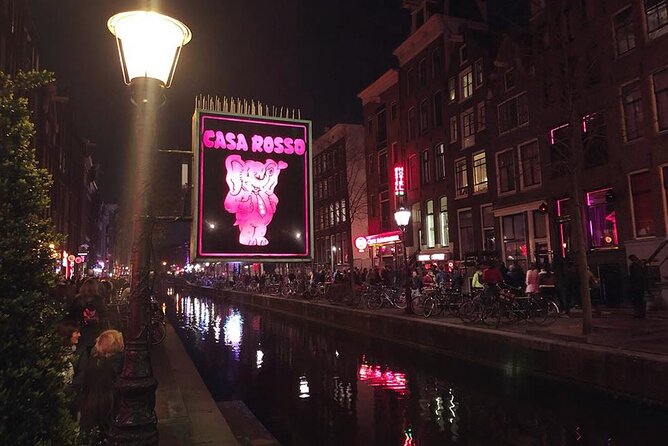
Amsterdam’s Red Light District is the kind of place people argue about from far away. Up close, it’s not a single story. It’s housing, streets, politics, tourism, and—most importantly—people living and working in the same tight space.
That’s where a private tour helps. When your guide is a local resident, you get answers that match the neighborhood’s reality, not just the headlines. In the reviews I read, the guide—often mentioned as Manouk—was praised for having stories from everyday life, plus practical explanations of how things work on the ground. People also liked that the tour covered both history and day-to-day “how it actually feels” details, including practical aspects of the neighborhood.
This matters because the Red Light District often gets turned into a symbol. Here, it becomes a place with context. You learn why the sex trade clustered there, how Amsterdam’s approach developed over time, and what modern debates look like when laws meet street life.
You can also read our reviews of more private tours in Amsterdam


Price and value: what $231.72 per group buys you
This tour costs $231.72 per group (up to 15 people) for about 1 hour 30 minutes. On paper, that’s a lot—especially if you’re used to paying per person. But the “per group” setup changes the math fast if you’re traveling with friends or family.
Think of it like this: you’re paying for a local guide’s time and a guided walk with a focused route plus a follow-up map. Since the tour is private, you also avoid the common problem with group tours where you’re stuck listening while trying to ask questions you actually care about. With a smaller group, you can ask the practical questions—what’s legal, what’s not, and what you’re seeing in the neighborhood right now.
Also note the format: it’s a walking tour, and the stops include places where you can learn without paying any entry fees. That keeps the experience from turning into “you pay, then you wait, then you pay again.”
The real reason this tour avoids going inside: you get the context anyway
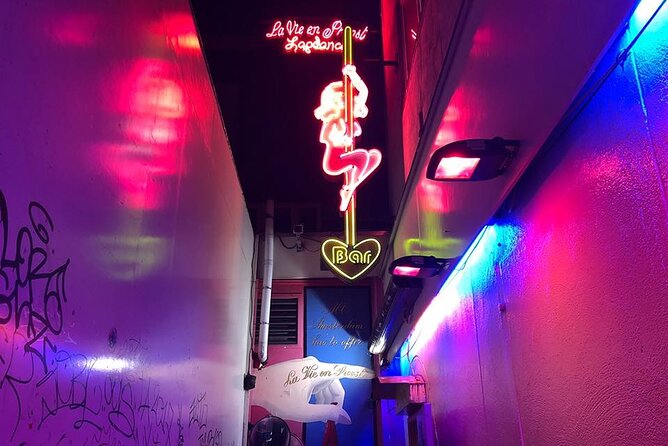
There’s a specific rule driving how this tour is designed: tours inside the Red Light District are prohibited since 2020. Instead of trying to break that rule, this walk takes you around the outskirts so you still understand the story without crossing into areas where guided access is not allowed.
For you, that’s a big deal. It means you get a guided explanation of what the district represents and how it functions, while staying in a space where the tour can be done responsibly. It also sets expectations: you’re not going to see everything, and you won’t be on a route built for photo ops. You’ll be on a learning route.
Beursplein to De Wallen’s edge: starting with bearings and expectations
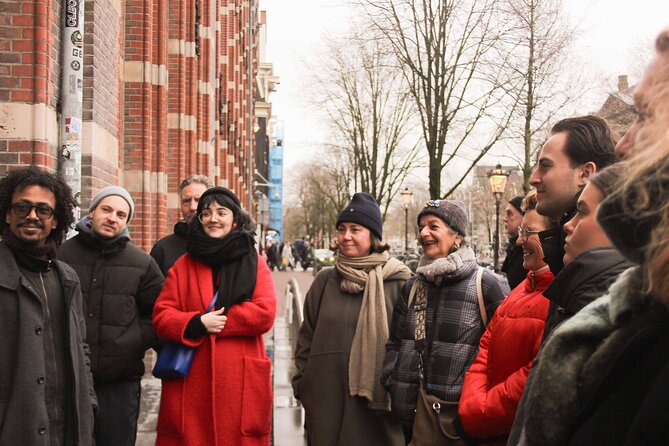
The tour starts at Beursplein (1012 Amsterdam, Netherlands) and ends back there. That loop is useful. You get oriented right away and return to a familiar point where it’s easy to continue your day.
Early on, your guide sets the tone: this isn’t a thrill ride, and it isn’t a lecture where you’re treated like you don’t already know anything. It’s more like walking with a local who’s seen the neighborhood evolve and can explain what you’re seeing with actual reasoning behind it.
In the reviews, this start-to-finish storytelling style is repeatedly praised, even when weather wasn’t great. Rain happens in Amsterdam; the guide still kept the flow moving with clear explanations and room for questions.
What to bring
Good walking shoes. The tour is short, but you’ll cover enough ground that sore feet can turn “educational” into “just get it done.” Also, expect the subject matter to be sensitive. Going in with a respectful mindset is the easiest way to get the most out of the tour.




Stop 1 at De Wallen: why sex work clustered here
Your first stop is the Red Light District area of De Wallen. Even from the outskirts, you get the big idea fast: this neighborhood didn’t become what it is by accident.
You’ll learn why sex workers chose to settle in this specific place and how Amsterdam developed its reputation for a liberal attitude toward sex. That’s the key word here: reputation. A reputation is a story people repeat. Your guide helps connect the story to the geography and the laws that shaped it.
This is also where the tour’s tone matters. The goal is understanding, not gawking. You’re being taught how to read the neighborhood: what you’re seeing, why it became accepted in the way it did, and how the modern debate is different from the old one.
Dam Square: coffee-shop origins and the idea of tolerance
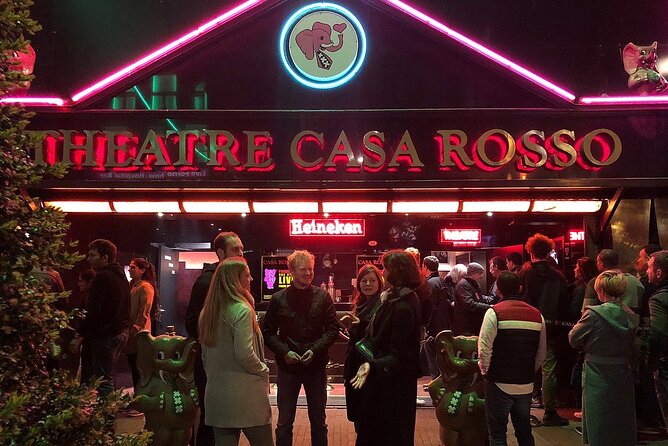
Next up is Dam Square, a central Amsterdam landmark that plays surprising roles in the city’s tolerance story. Your guide explains where the concept of the coffee shop originated and what Dam Square used to represent as a center of freedom.
This stop works because it pulls you out of the neighborhood-only bubble. Instead of treating De Wallen like an isolated oddity, you see it as part of a broader Amsterdam approach: laws, public space, and culture moving together.
If you’re the kind of person who likes “how did this become normal?” questions, Dam Square is a strong anchor point. It also helps you measure what you’re being told by giving you a clear location in the city center.
Warmoesstraat and a glimpse of the Old Church
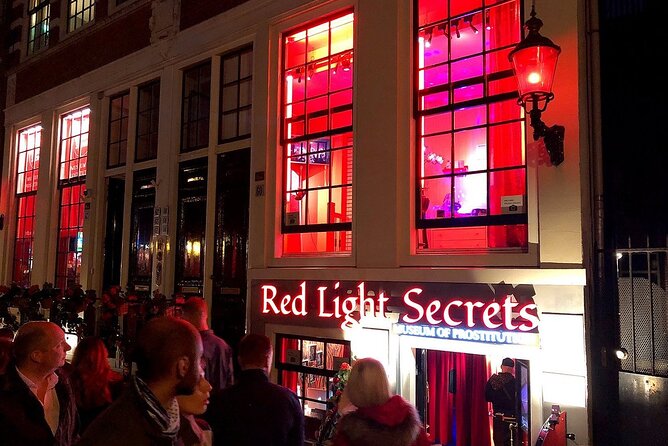
You’ll then head to Warmoesstraat, one of Amsterdam’s older streets that now functions as an entertainment center. Along the way, you might catch a glimpse of the Old Church, which adds an unexpected layer to the walk.
This is a good stop if you want contrasts. Old street + modern entertainment. Religious architecture + adult-adjacent commerce. The whole point is that cities don’t rewrite themselves overnight. They layer new uses on top of old ones.
This is also a moment where questions make sense. You’ll likely hear more about how Amsterdam’s past can still shape present-day street life, including details that go beyond the obvious signage and shopfronts.
Zeedijk: Chinatown’s past and the street’s big shift
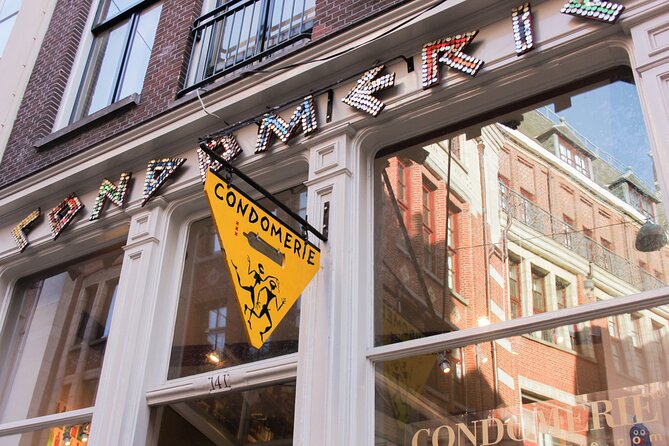
At Zeedijk, your guide turns to one of the neighborhood’s most dramatic changes: Chinatown’s rise and fall. You’ll learn about how this street was once considered dangerous during the 1970s, then how it later transformed into a favorite spot for many Amsterdammers.
You also get the chance to see how the neighborhood’s identity can change without disappearing. People assume the Red Light District story is only about sex work. Here you learn it’s also about immigration patterns, economic shifts, and local choices about how streets get used.
This stop is valuable because it prevents the neighborhood from becoming a single-note experience. It shows you the district as a living part of Amsterdam, not just a tourist attraction.
Nieuwmarkt: legalization, and the challenges today
At Nieuwmarkt, the tour connects law to human reality. Your guide explains the legalization of prostitution and the challenges sex workers face today.
This is where the tour feels most serious. You’re not just learning how things used to be; you’re learning what legalization means in practice. That includes the gap between what laws intend and how daily life plays out for real people in real streets.
If you prefer balanced information, this stop tends to deliver. It keeps the discussion grounded in consequences instead of staying stuck in abstract political arguments.
Kloveniersburgwal and coffeeshops: legal status and cultural meaning
The tour then heads to Kloveniersburgwal, where coffeeshops show up as a major part of Amsterdam’s city identity. Your guide explains the cultural significance of coffeeshops and what their legal status is.
This stop matters because coffeeshops and the Red Light District often get discussed as if they’re the same kind of debate. They’re not. But they share something: Amsterdam’s approach to tolerance is built into how public spaces and rules are shaped.
By explaining coffeeshops here, your guide helps you read Amsterdam as a whole. You stop thinking in stereotypes and start understanding how a city can draw boundaries around certain behaviors while still allowing a lot in public life.
Paulusbroederssluis: your map to finish the story on your own
At Paulusbroederssluis, you receive the tour’s practical payoff: a map with information about the Red Light District so you can explore the last stretch yourself.
This is one of the best parts for me because it turns the tour from a closed experience into a flexible one. You can decide what to spend time on next and what to skip. If you want more context, you can look around with better orientation. If the subject matter feels like too much, you can take the map as a way to understand without overstaying.
Your guide also gives you a small gift that’s described as guaranteed to bring a smile. It’s not a big-ticket souvenir, but it adds a nice personal touch to the whole walking experience.
How Manouk’s style (and the tour’s pace) works in real life
A strong tour isn’t just about what it covers; it’s about how it holds your attention. In the feedback I reviewed, Manouk specifically got praise for being able to answer questions and mix history with practical neighborhood context. One review highlighted that even with rain, the group had a great time listening and that the guide shared both history and practical aspects of the area.
Another review credited the guide with extra city context, including details about Amsterdam’s ramparts that went beyond the obvious Red Light District story. That kind of side lesson is the mark of a guide who can connect the dots across the city, not just recite a walking script.
The walking pace is built for this. You’ll move between highlights while the guide explains what you’re seeing and why it matters. That’s the difference between a tour that feels like a checklist and one that actually helps you understand what you encounter afterward.
Who should book this tour, and who might want to skip it
This is a good fit if you:
- Want a local-led explanation instead of guided gawking
- Prefer an approach that stays on the outskirts while still covering history and legal context
- Like walking tours that give you a map so you can continue at your own pace
- Are curious about how Amsterdam’s tolerance shows up in real neighborhoods, not just in theory
It may not be the best match if you’re:
- Sensitive to adult topics and prefer “cleaner” sightseeing themes
- Looking for a purely visual experience with major attractions as the main draw
- Planning to keep it extremely short on foot, since it’s still a 1.5-hour walk
Quick practical tips before you go
- Expect the subject matter to be adult and political. Bring respect and curiosity, and the tour tends to land better.
- Wear comfortable shoes. It’s a walking route with stops, not a sit-down museum experience.
- Use the map after. That handoff is part of the value. It’s how you turn the tour into a longer understanding.
- Ask questions. This format is private, and the guide’s strength is explaining the practical side of how laws and street life interact.
- Check your timing. The tour ends where it starts, so plan an easy next step nearby.
Should you book this Red Light District private tour around the outskirts?
I’d book it if you want context and you like learning from a local who can connect stories to the street. The biggest strength is that it stays outskirts-only (so it doesn’t pretend it can do what’s prohibited), while still covering the reasons behind the neighborhood’s reputation. The private setup, the map for the final stretch, and the strong emphasis on history plus practical reality make it feel like time well spent.
If adult themes would stress you out or you’re looking for a “just the sights” tour, you might prefer something less sensitive. But if your goal is understanding—why Amsterdam looks the way it does—this walk is one of the most direct ways to get there without sensationalism.
FAQ
FAQ
How long is the Red Light District private tour around the outskirts?
It lasts about 1 hour 30 minutes, and you’ll be walking between several highlights while your guide explains the area.
Is this tour private?
Yes. Only your group participates.
Where does the tour start and end?
It starts at Beursplein, 1012 Amsterdam and ends back at the same meeting point.
Does the tour go inside the Red Light District?
No. Tours in the Red Light District are prohibited since 2020, so this tour takes you around the outskirts.
What stops are included on the route?
The tour includes stops at De Wallen, Dam Square, Warmoesstraat, Zeedijk, Nieuwmarkt, Kloveniersburgwal, and Paulusbroederssluis.
What do I receive besides the guided walk?
You receive a map with information for the last stretch of exploring and a small gift.
Is entry or admission included for the stops?
Admission is listed as free for the stops included in the tour.
What’s the cancellation window?
You can cancel for a full refund up to 24 hours before the experience starts. If you cancel within 24 hours, the amount paid is not refunded.