REVIEW · AMSTERDAM
Rijksmuseum & Amsterdam City Center – Exclusive Guided Tour
Book on Viator →Operated by Babylon Tours Amsterdam · Bookable on Viator
Most tours just scratch the surface. This one packs Rijksmuseum highlights and a city-center history walk into a single half-day rhythm. You’ll start with Dutch masters, then switch gears to canal-side Amsterdam on foot, with plenty of stops for photos and orientation.
What I like most is the way the museum visit is set up: you see major works like The Milkmaid and Rembrandt’s masterpieces without spending your whole day trying to figure out what to look at. I also like that the second half of the experience turns facts into street-level context, as you walk past landmarks tied to trade, religion, and everyday life.
One possible drawback: it’s fast. Many exterior sights are quick looks, so if you want long, unstructured wandering time in the city or deep museum time, you may feel slightly rushed.
In This Review
- Key highlights worth knowing
- Why This Half-Day Combo Tour Makes Sense in Amsterdam
- Entering Rijksmuseum Like You Know Where You’re Going
- A City-Walk That Starts With Religion, Then Moves Into Trade
- St. Nicholas Basilica (quick but meaningful)
- Schreierstoren, also called the Tower of Tears
- Zeedijk, Nieuwmarkt, and De Waag: Markets, Temples, and Old Gate Energy
- Zeedijk: Amsterdam’s Chinatown district feel
- Nieuwmarkt: a square for commerce since the 1600s
- De Waag: a 15th-century gate turned civic building
- Trippenhuis and the Dutch East India Company: Seeing Wealth in Narrow Streets
- Trippenhuis and Klein Trippenhuis
- East India Company courtyard (and why it matters)
- Tiny-house reminder: land taxes
- Church Towers and Hofjes: Amsterdam’s Care for Community
- Zuiderkerk
- Begijnhof and hofjes you can actually picture
- Noorderkerk: Reformation worship made into design
- Rembrandt, Opera, and Canal Houses With Gable Stories
- Museum Het Rembrandthuis (you’ll pass by)
- Stopera: city hall meets national opera and ballet
- Huis Aan De Drie Grachten
- De Drie Hendricken aan de Bloemgracht 87-91
- Dam Square, Herengracht, and the Anne Frank House Area
- Dam Square: the civic heart
- Herengracht: the Golden Bend
- Outside Anne Frank House and nearby Westerkerk
- The Final Canal Corner: Papeneiland and a Sweet Sign-Off
- Pace, Photos, and Lunch: How to Plan Your Half-Day
- Price and Value: What $287.18 Buys You
- Guide Quality: Passion, Storytelling, and Recovery When Things Go Wrong
- Who Should Book This Rijksmuseum + City Center Tour
- Should You Book It?
- FAQ
- How long is the Rijksmuseum and Amsterdam City Center exclusive guided tour?
- Where does the tour start and when?
- Where does the tour end?
- Is it a private tour?
- What language is the tour offered in?
- What’s included in the price?
- Is lunch included?
- Do I need tickets for the Rijksmuseum?
- What if it rains?
- Are there any bag or dress rules?
- Is cancellation free?
Key highlights worth knowing
- Rijksmuseum-first plan keeps you from missing the big art while your day is still fresh
- A true private experience means your guide can pace the walk for your group
- Short photo pauses make it easier to enjoy canals, bridges, and facades without hauling a bus schedule around
- Trade-and-faith storyline links museum themes to buildings across the historic center
- Entrance fees are included, so your budget stays cleaner
- Rain or shine, plus private transport if needed between locations
Why This Half-Day Combo Tour Makes Sense in Amsterdam
Amsterdam can feel like a checklist—until you have a framework for what you’re seeing. This tour gives you one: art and Dutch culture in the morning, then street-by-street history in the afternoon hours.
You’re paying for two guides’ worth of value in one go. First, the Rijksmuseum portion helps you understand the collection as more than random famous paintings. Then the guided walking section turns the city’s geography—canals, bridges, and medieval street patterns—into a story you can actually remember.
It’s also built for practicality. It runs for about 5 hours 30 minutes, includes a lunch break (your cost), and the tour is set up to continue rain or shine. If weather or distance gets annoying, there’s private transportation between locations if necessary.
You can also read our reviews of more guided tours in Amsterdam


Entering Rijksmuseum Like You Know Where You’re Going
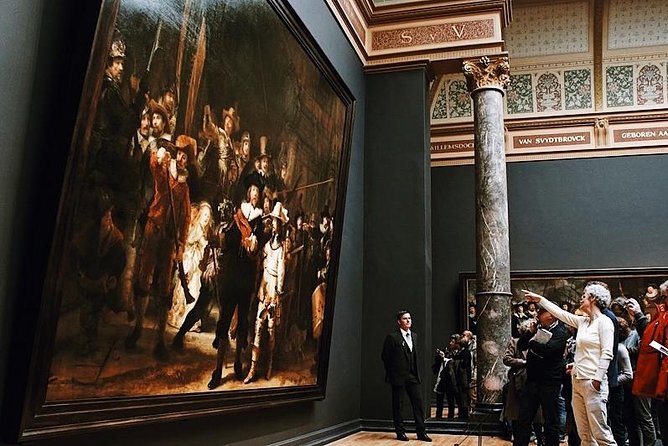
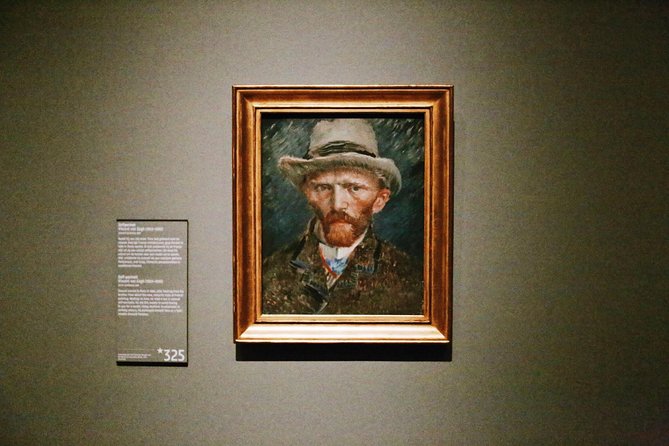
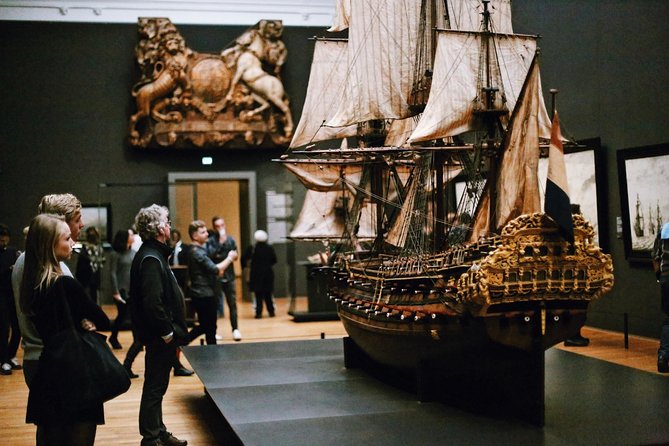
You start at the Rijksmuseum and spend about 2 hours 30 minutes there, with admission included. The museum is vast—built around roughly 8,000 objects across Dutch history—so going in on your own can turn into decision fatigue.
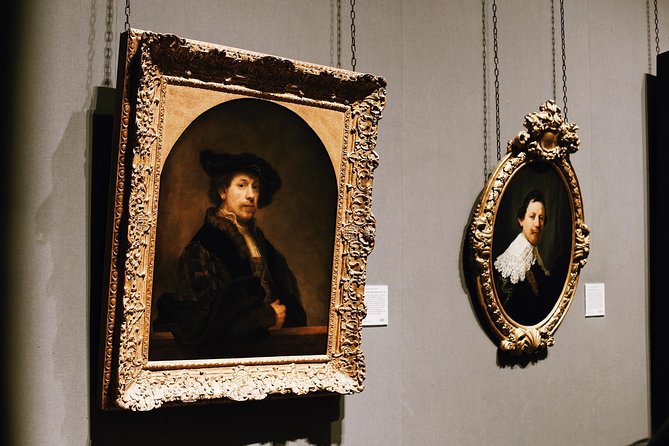
On this tour, your guide focuses the collection into a path you can follow. You’ll see standout Dutch masters, including Rembrandt and Vermeer, and you’ll get context that makes the paintings feel less like museum labels and more like lived culture. Expect examples like Rembrandt’s major works and Vermeer’s domestic scene The Milkmaid.
A couple of parts of the museum experience matter a lot for visitors:
- You learn how the collection covers centuries of Dutch life, not just art.
- You get attention drawn to the “in-between” pieces that most people skip, like 17th-century dollhouses and other objects that explain what people ate, made, collected, and valued.
- There’s even a library from the 19th century mentioned as a standout because it holds far more stories than you can possibly absorb in one visit.
Also, keep in mind the practical museum rules. No large bags or suitcases go inside; you’ll want to travel light with only a handbag or small thin bag. Some rooms are quiet or have restricted speaking, and your guide will warn you before you enter those spaces.
One more thing: closures can happen. If the Rijksmuseum opening time is delayed by more than 1 hour from the tour start, the operator says they’ll provide an appropriate alternative, but they also note no refunds or discounts in those cases. It’s not something you can control, so I’d treat it as a “check the day-of reality” situation.
A City-Walk That Starts With Religion, Then Moves Into Trade
After lunch (on your own), the tour shifts from indoor art to outdoor Amsterdam—cobblestones, canal edges, and street corners where the past is still visible if you know what to look for.
This segment has a strong theme: Amsterdam grew rich from commerce, but it also lived through religious change and civic identity. You’ll feel that pattern as the tour moves from major church history to medieval fortifications, then into areas tied to immigration and global trade.
St. Nicholas Basilica (quick but meaningful)
You’ll stop at St. Nicholas Basilica, the city’s primary Roman Catholic church. The building dates to the late 19th century, when Catholics could again profess faith publicly after a long period of prohibition. The architecture mixes styles and artistic movements, so even a short visit can show you that it’s not one simple “church look.”
Schreierstoren, also called the Tower of Tears
Next you’ll see the Schreierstoren, often nicknamed the Tower of Tears or Weeper’s Tower. It’s linked to the old medieval city wall and a specific story: the belief that women wept there for husbands leaving to war or to fish. It’s the kind of legend that sounds small—until you realize how much Amsterdam’s canals and ports shaped daily life.
You can also read our reviews of more city tours in Amsterdam



Zeedijk, Nieuwmarkt, and De Waag: Markets, Temples, and Old Gate Energy
As you walk deeper into the old center, the vibe changes from “monument spotting” to “street-life context.” Here the stops are short, but they’re chosen for what they represent.
Zeedijk: Amsterdam’s Chinatown district feel
You’ll pass through Zeedijk, an area described as Amsterdam’s Chinatown. You’ll see Asian markets, restaurants, and shops, plus the Zeedijk Buddhist temple, noted as the largest Chinese-style Buddhist temple in Europe. Even if you don’t go inside, it helps you understand how Amsterdam’s historic center became a hub for different communities.
Nieuwmarkt: a square for commerce since the 1600s
At Nieuwmarkt, you’re in a market and social square with roots going back to the 17th century. The reason it mattered: it sat just inside the old city gate, making it convenient for traders bringing in fresh produce and goods.
De Waag: a 15th-century gate turned civic building
You’ll also see De Waag, a 15th-century building that started as part of the city walls and gate system and later served various civic roles (guildhall, museum, firestation). It’s one of those landmarks that makes Amsterdam feel practical rather than just picturesque.
A small consideration: these exterior moments are quick. If you want to go deep on architecture details, you may want to spend extra time outside the tour later. The trade-off is that you get many different districts in one day.
Trippenhuis and the Dutch East India Company: Seeing Wealth in Narrow Streets
Amsterdam’s wealth doesn’t always look like wealth. Sometimes it’s in how houses were built and where power was housed.
Trippenhuis and Klein Trippenhuis
You’ll see both Trippenhuis and Klein Trippenhuis. Trippenhuis is described as Amsterdam’s widest house, while Klein Trippenhuis is among its narrowest, sitting right across. It’s a great lesson in how city regulations and economics shaped real buildings.
East India Company courtyard (and why it matters)
Next you’ll step into the courtyard of the Dutch East India Company’s headquarters, called out as the birthplace of the world’s first multinational corporation. This is where the walking tour starts to feel like more than scenic strolling. You’re connecting the museum’s themes to the city’s global reach.
Tiny-house reminder: land taxes
You’ll also see another extremely narrow house, Kleine Trippenhuis, framed as a reminder that high land taxes encouraged tall, narrow architecture. That’s the kind of practical detail that sticks. It turns the “weird-looking building” moment into an understandable cause.
Church Towers and Hofjes: Amsterdam’s Care for Community
Amsterdam has a special soft spot for communal life—places where people lived close together under specific rules, often with a sense of care. This tour includes several stops that explain that side of the city.
Zuiderkerk
At Zuiderkerk, you’ll see Amsterdam’s first purpose-built Protestant church, designed by Hendrick de Keyser. The tower is a defining landmark. Even a brief stop gives you a sense of how seriously the city took civic identity through religion.
Begijnhof and hofjes you can actually picture
You’ll then see Begijnhof, described as one of the oldest hofjes, which are almshouses grouped around a secluded courtyard. It housed the Beguines, unmarried women who lived together under vows of chastity. Today the site includes two churches.
Then you’ll also hear about the largest hofje stop on your route: Coöperatieve Vereniging Karthuizerhof BA, another courtyard-based almshouse. The tour uses these stops to show that Amsterdam wasn’t only merchants and painters. It also had systems for housing and social support.
Noorderkerk: Reformation worship made into design
Finally in this church cluster, you’ll see Noorderkerk, a 17th-century Protestant church built for the Jordaan district. Its floor plan is cross-shaped, tied to Reformation worship ideals. It’s a quick visual lesson in how belief shaped the built environment.
Rembrandt, Opera, and Canal Houses With Gable Stories
The route doesn’t ignore art history outside the museum. Instead, it places you near the places where art and civic culture overlapped.
Museum Het Rembrandthuis (you’ll pass by)
You’ll pass Museum Het Rembrandthuis, where Rembrandt lived and worked between 1639 and 1656. The museum holds Rembrandt’s etchings and paintings of contemporaries. On a short stop, it’s not a full visit, but it still helps you connect the person to the neighborhood.
Stopera: city hall meets national opera and ballet
You’ll see the Stopera complex, which houses both the city hall and the Dutch National Opera and Ballet. Construction was described as taking at least 60 years. This is one of those Amsterdam contrasts that feels very “of its time”: politics and performance under one roof.
Huis Aan De Drie Grachten
You’ll also see Huis Aan De Drie Grachten, a rare 17th-century canal house at the junction of three canals, with façades facing in three directions. It’s a photo-ready stop because it’s visually unusual, but it also reflects how canal geography pushed architecture into odd solutions.
De Drie Hendricken aan de Bloemgracht 87-91
Another exterior highlight is De Drie Hendricken on Bloemgracht 87–91. Look up for gable stones with allegories and trade emblems. This is where your guide’s storytelling matters: those carvings become clues to what the city valued.
Dam Square, Herengracht, and the Anne Frank House Area

By the time you reach the big squares and headline canals, you’ll feel more confident about where you are. That’s the point of combining museum context with city walking.
Dam Square: the civic heart
At Dam Square, you’ll see the Royal Place, New Church, and National Monument. It’s a “main character” location in Amsterdam, and the tour’s short stop works because you get a framework for why the square keeps showing up in national stories.
Herengracht: the Golden Bend
Next you’ll admire the Golden Bend on Herengracht, lined with some of the richest and most ornate canal mansions from the Dutch Golden Age. This is a classic Amsterdam photo moment, but I like how the tour positions it after the trade-and-wealth parts of the day, so it doesn’t feel random.
Outside Anne Frank House and nearby Westerkerk
You’ll pause outside the Anne Frank House. Next door you’ll see the Westerkerk, noted for having the tallest church tower in Amsterdam. The stop is brief and respectful by design, but it’s still useful for orientation. You’ll finish this section understanding that Amsterdam’s 20th-century story sits right beside its older commercial past.
The Final Canal Corner: Papeneiland and a Sweet Sign-Off
The tour ends at Papeneiland on Prinsengracht. You’ll stop at one of Amsterdam’s prettiest canal corners and visit Het Papeneiland, a brown café from 1642 that’s said to serve the best apple pie in town.
It’s a nice landing spot because it feels like a reward without demanding more commitment. You can grab a snack, take extra photos, or simply decompress after the museum focus and the constant walking.
Pace, Photos, and Lunch: How to Plan Your Half-Day
This tour is not designed for long breaks. It’s structured. The museum gets the deeper time block, and the city walk is split into many smaller stops.
That can be great for first-timers because you leave with a mental map. But it also means you should manage your energy:
- Wear comfortable shoes for cobblestones and canal-side paths.
- Bring your patience for security lines at big attractions. The notes say lines may form, even on access-style tours, due to security measures.
- Keep your bag situation simple. The Rijksmuseum rules are strict about large bags and suitcases.
Lunch is yours to handle. That’s a good choice here because it lets you pick something that fits your tastes and budget. Just know that your tour schedule includes a lunch break inside the total 5.5 hours.
If you want better photo results, aim to be ready when your guide calls for a stop. Amsterdam’s best angles come and go fast.
Price and Value: What $287.18 Buys You
The price is $287.18 per person for about 5 hours 30 minutes. That sounds high until you see what’s included.
You get:
- A guided visit through the Rijksmuseum with entrance included
- A guided walking tour of the city center sights
- The guide and walking logic that saves you time deciding what matters
- Entrance fees covered for the sites where tickets apply
- All entrance fees noted as included overall
- A private setup where only your group participates
The walking segment includes many sights with admission listed as free, but the tour structure still matters. Someone is routing you through the right order, linking themes, and keeping the pace realistic.
There’s also a private tour option mentioned in the highlights: you can opt for a private tour for just your party. And you may see group discounts listed as part of the offering. If you’re traveling with more than one person, that can improve the value math.
What you should remember: this is a “see a lot, understand a lot” tour. If you want museum time to sprawl for hours on your own schedule, you might prefer a more flexible museum-only day.
Guide Quality: Passion, Storytelling, and Recovery When Things Go Wrong
The guide is the product. The good news is that recent feedback highlights strong storytelling and professionalism.
I’m especially encouraged by examples like Jacopo being described as passionate and effective at navigating crowds, with the tour including everything people planned to see and more. There’s also mention of Josje doing an excellent job helping visitors understand the Rijksmuseum treasures. Giuseppina is noted for focusing on master works and adding background details that people would likely miss alone. Paola is described as delivering a perfect cultural moment.
And yes, real life happens. One experience included a power outage that interrupted the tour; the review credits the guide’s professionalism and a manager named Dario for working to correct the situation. That’s a sign you’re not just buying facts, you’re buying how the team responds when the plan gets messy.
Who Should Book This Rijksmuseum + City Center Tour
You’ll probably love this if:
- You want art plus street history in one half-day
- You like having someone sort out what matters in a huge museum
- You’re in Amsterdam for the first time and want quick orientation
- You’re traveling with a small group and prefer a private format
You might pass if:
- You want long free time in the Rijksmuseum to wander room by room
- You don’t do well with a paced schedule and many quick stops
- You’re carrying large bags or suitcases (Rijksmuseum security rules are firm)
Also, the tour notes say you should have moderate physical fitness. The walking isn’t described as extreme, but it is continuous enough that it’s not a sit-and-sightsee loop.
Should You Book It?
Book it if you want a smart way to see the best of Amsterdam’s art and historic center without wasting hours figuring things out. The mix of Rijksmuseum highlights plus a guided circuit through churches, markets, canal houses, and hofjes is exactly the kind of structure that helps you feel like you truly understand the city.
Skip it if you’re the kind of traveler who needs unbroken museum time or you’d rather build your own route from scratch with no guidance.
If you’re deciding between “random wandering” and “a plan that explains what you’re looking at,” this tour leans hard toward the plan. And when the city is crowded and the museum is huge, that’s often the difference between a day that’s just busy and a day that actually makes sense.
FAQ
How long is the Rijksmuseum and Amsterdam City Center exclusive guided tour?
It runs for about 5.5 hours, including a lunch break.
Where does the tour start and when?
The meeting point is Cobra Café, Hobbemastraat 18, 1071 ZB Amsterdam, and the start time is 10:00 am.
Where does the tour end?
The tour ends at Het Papeneiland, Prinsengracht 2, 1015 DV Amsterdam.
Is it a private tour?
Yes. It’s listed as a private activity where only your group participates. The guide exclusivity does not apply if you choose the SAVE! BOOK SEMI-PRIVATE option.
What language is the tour offered in?
The tour is offered in English.
What’s included in the price?
The tour includes a guided museum tour plus the walking tour, admission fees, guided time, and private transportation between locations if necessary.
Is lunch included?
No. Lunch is a break for you to purchase on your own.
Do I need tickets for the Rijksmuseum?
Admission tickets are included as part of the experience.
What if it rains?
The tour runs rain or shine.
Are there any bag or dress rules?
Some sites require appropriate dress. At the Rijksmuseum, you should not bring large bags or suitcases; only handbags or small thin bag packs are allowed through security.
Is cancellation free?
Free cancellation is offered up to 24 hours in advance for a full refund.