REVIEW · AMSTERDAM
Rijksmuseum & Amsterdam City Center Semi-Private Tour 12ppl Max
Book on Viator →Operated by Babylon Tours Amsterdam · Bookable on Viator
Big city tours usually feel like a sprint. This one slows down. You get a semi-private feel (max 8) while still covering the Rijksmuseum and a big chunk of the Amsterdam city center in one day. I like that you’re not stuck in the long-group rhythm, yet you still get practical structure: museum first, then a guided walk to help you place the city.
Two things I especially like about this experience are the skip-the-line entry into the Rijksmuseum with a prebooked ticket, and the way the day blends art with streets. You’ll spend about 2 hours 30 minutes inside seeing major Dutch artists like Rembrandt and Vermeer, plus extra texture such as a 19th-century library and surprising objects like 17th-century dollhouses. One thing to consider: lunch is on your own, and the walking portion is spread across many stops, so comfy shoes matter.
If you’re hoping for step-by-step access to every tiny interior stop, note that the itinerary includes a mix of brief exterior views, short courthouse-style stops, and only certain times where museum access is part of the plan. That’s normal for a walking highlight tour, but it can feel like a lot if you prefer fewer locations and more time sitting down.
In This Review
- Key Highlights to Know Before You Go
- Semi-Private Group Size That Actually Changes Your Day
- Meet at the Right Spot and Start Confidently
- Rijksmuseum Entry: Skip the Line, Keep the Pace
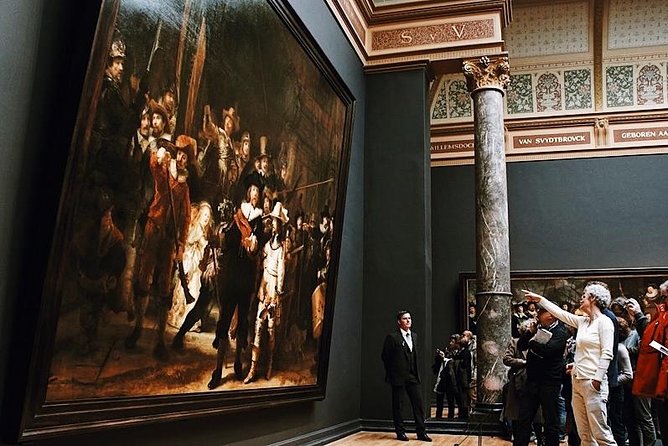
- What You’ll See in 2.5 Hours: Rembrandt, Vermeer, and More Than Paintings
- After the Tour: Your Ticket Lets You Return
- The Walking Tour: From Medieval Gate to Canal Corners
- Stop-by-Stop: Landmarks That Give the City Character
- St. Nicholas Basilica (short history, strong architectural context)
- Schreierstoren / Weeping Tower (a legend people remember)
- Zeedijk and Nieuwmarkt (market streets with cultural layers)
- De Waag (a building that’s changed jobs over time)
- Trippenhuis and Klein Trippenhuis (wealth made into architecture)
- Zuiderkerk and the Stopera area (Protestant landmark + civic art space)
- Begijnhof (a quiet courtyard break from the noise)
- Dam Square and Herengracht (classic stops, good orientation)
- Outside Anne Frank House (respectful pause)
- Courtyard and gable stone details (the stuff you only catch if someone points)
- Lunch Timing: Plan a Real Break (On Your Own Expense)
- Price and Value: What $286.56 Buys You Here
- How to Get the Most From the Day (Practical Stuff That Matters)
- The Guide Factor: Why Diana’s Style Sticks
- Who Should Book This Tour (And Who Might Not)
- Should You Book This Rijksmuseum & Amsterdam City Center Semi-Private Tour?
- FAQ
- What time does the tour start?
- Where is the meeting point?
- How large is the group?
- Is the tour language English?
- Is lunch included?
- Does the price include Rijksmuseum entry?
- Can I return to the Rijksmuseum after the tour?
- Does the tour run rain or shine?
- What should I do about bags at the Rijksmuseum?
- Can I cancel for a full refund?
Key Highlights to Know Before You Go
- Skip-the-line Rijksmuseum entry with a prebooked ticket, so you can spend your time inside instead of waiting outside
- Max 8 guests for a calmer pace and more guide attention than big group tours
- Museum + walking combo: you’ll leave with both Dutch art context and a better map of the city center
- A guided historical walk that connects landmarks to how Amsterdam developed over time
- Ticket valid all day so you can return to the Rijksmuseum after lunch if there’s more you want to see
- Plenty of “look up” façades and canal details, including ornate canal mansions and gable stones
Semi-Private Group Size That Actually Changes Your Day
A semi-private tour is only worth caring about if it affects how you move through the city. Here, it does. The group is capped at 8 travelers, so the guide isn’t fighting the usual problem: everyone drifting apart, everyone hearing half of the story, and everyone feeling rushed just to keep the schedule.
That smaller size also matters at the Rijksmuseum. Security can slow you down, and museum rooms can get quiet or restricted for speaking. With a smaller group, your guide can manage those moments more smoothly and keep you oriented—like pointing out where to focus next instead of hoping you’ll notice it on your own.
One more plus: this tour is rain or shine, so having a guide who can keep a small group on track helps when the weather turns Amsterdam-style. I’d still plan for quick changes in conditions—bring a light layer and keep an eye on your day pack.
You can also read our reviews of more city tours in Amsterdam


Meet at the Right Spot and Start Confidently
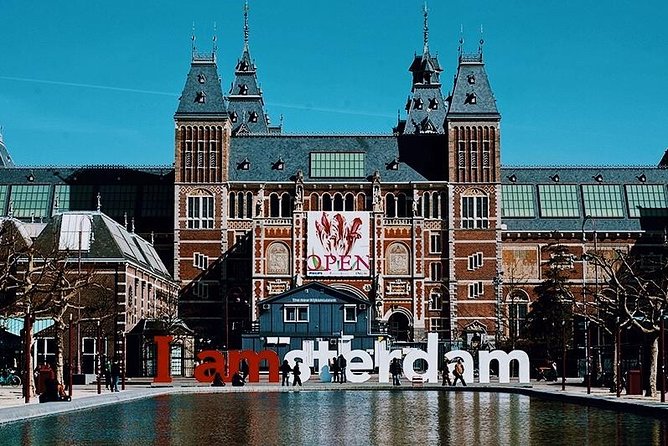
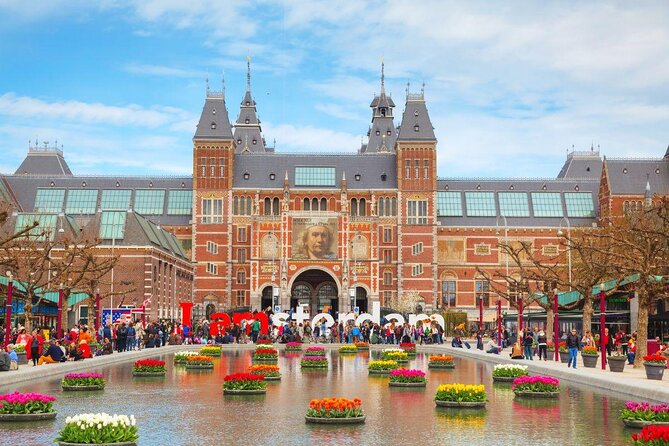
The day begins at 10:00 am. The meeting point is described in two ways in your materials: it’s near the Rijksmuseum’s I am Amsterdam sign (specifically the letter I), and the listed starting address is Cobra Café on Hobbemastraat. Because those can sound different, I’d treat this as a “confirm exact meeting location” situation once you book.
A small practical tip: arrive a few minutes early and scan for your group. Semi-private tours have fewer people, so it’s easier to spot the guide once you know what you’re looking for.
Also, you’ll be asked for a mobile phone number (with country code). That’s not just bureaucracy—on tour days with changing entrances or quick schedule adjustments, it helps the operator coordinate smoothly.
Rijksmuseum Entry: Skip the Line, Keep the Pace
Inside the Rijksmuseum, your time is the product. That’s why prebooking and skip-the-line access matters. Instead of burning your morning waiting in queues, you start directly inside and go straight to the art and objects that define Dutch culture across centuries.
Your museum portion runs about 2 hours 30 minutes, and it’s designed to give you real context, not just a checklist of famous names. If you’re a first-timer to the Rijksmuseum, this kind of start helps because the museum is huge. Even knowing where to begin can make the difference between feeling inspired and feeling lost.
If you’re a repeat art museum visitor, you might still enjoy the structure. The guide’s job here is to pick what matters and connect it to Dutch life—how people lived, worked, traded, worshiped, and showed off their wealth (or their humor) through art and objects.
What You’ll See in 2.5 Hours: Rembrandt, Vermeer, and More Than Paintings
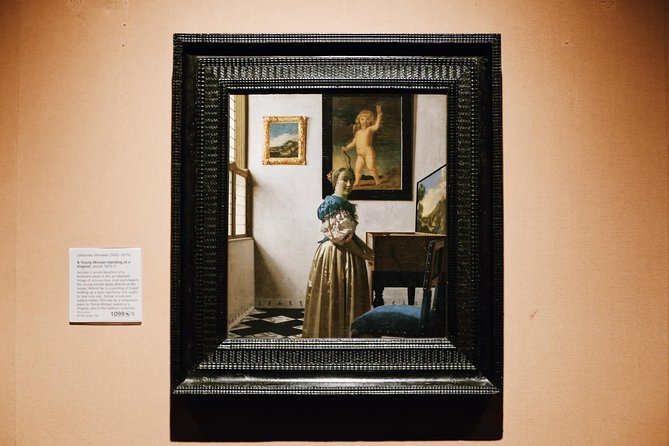
The Rijksmuseum visit isn’t only big-ticket masterpieces. It’s also about variety. You’ll look at works tied to the Dutch Golden Age and learn how those paintings reflect the everyday details of life.
Here are the types of things you should expect to notice as the guide walks you through:
- Rembrandt and Vermeer: you’ll hear stories that help these artists make sense beyond just name recognition
- Vermeer’s “The Milkmaid”: useful if you want a grounded feel for domestic life in the period
- Dutch dollhouses (17th century): tiny rooms, big ideas—often the kind of object people miss without guidance
- A 19th-century library: not every art-and-history tour includes a library stop, but this one does, and that adds a “people and ideas” layer
I also like that the guide doesn’t treat art like it exists in a vacuum. Even within a short museum window, you’re given the cultural thread that connects the objects—so you leave with a better sense of what Dutch history looks like through art.
One note that can affect your experience: during parts of your visit, the museum may require quiet or restrict speaking in specific rooms. Your guide should explain where those rules apply before you enter. Just accept it like you would in any serious museum space—quiet is part of the atmosphere.
After the Tour: Your Ticket Lets You Return
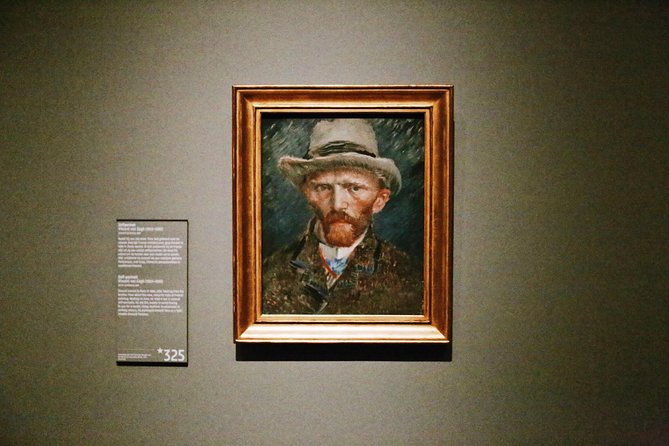
Here’s a smart detail that changes the value. Your museum ticket is valid all day, so once the guided portion ends, you’re free to go back to the Rijksmuseum on your own schedule.
This is especially helpful if:
- you want to slow down and linger longer in one room
- you spotted something on the tour and want to see it again without time pressure
- you came in thinking you’d only do the highlights, then realized you want more
If you’re the type who likes to “taste first and return later,” this design fits you well. You still get the guided orientation, but you’re not trapped into leaving at the exact end of the 5.5 hours.
You can also read our reviews of more private tours in Amsterdam




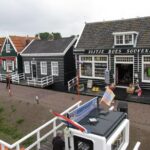
The Walking Tour: From Medieval Gate to Canal Corners
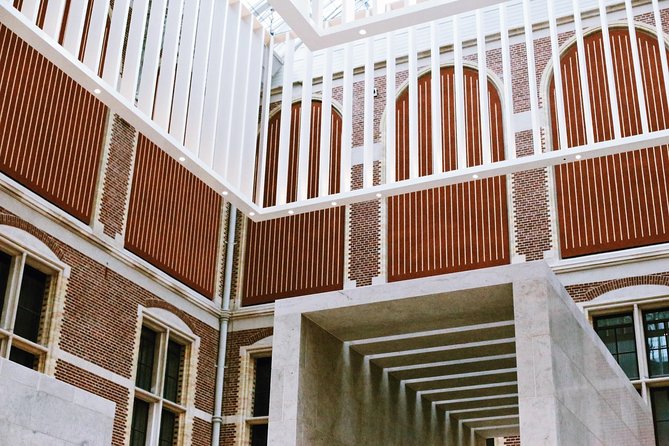
After lunch (your expense), the day turns into a historical walk across the city center. The idea is to help you read Amsterdam as you walk it: bridges, cobblestones, canal bends, and architectural leftovers that hint at why this city grew the way it did.
A big theme is Amsterdam’s shift from medieval roots into a trading powerhouse. Your guide points out the medieval context through places connected to the Amstel River and a medieval gate. From there, you’re walking through older streets and past landmarks that help you connect the city’s layout to its history.
This is also where the semi-private size helps again. On a small group walk, you can actually hear the story behind why a street corner matters instead of just following the person in front.
Timing matters too. Your walking segment is roughly a 5-hour city tour (with the museum being separate in the schedule). The stops are frequent, and many are brief. That’s fine if you like seeing a lot, but if you prefer slower pacing, plan to use the guided walk as your first sweep and then come back later for deeper exploration.
Stop-by-Stop: Landmarks That Give the City Character
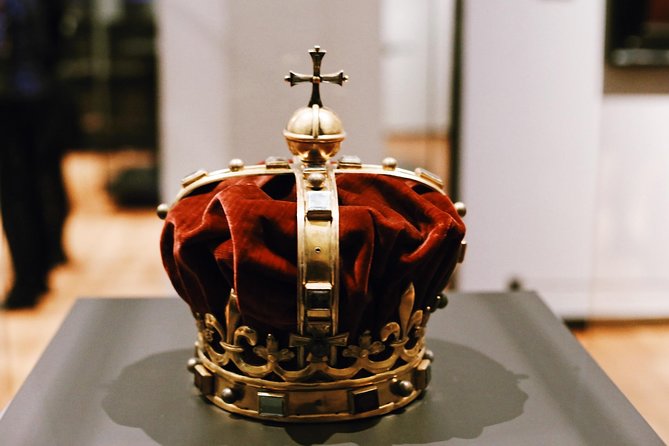
The route is packed. Some stops are quick photo pauses; others are more narrative-driven. Here’s how the main moments tend to land:
St. Nicholas Basilica (short history, strong architectural context)
You’ll start with a discussion about the basilica as the city’s primary Roman Catholic church, built at the end of the 19th century when Catholics could profess faith publicly again after a long prohibition period. Even with limited time, this helps you place the building in social history, not just architecture.
Schreierstoren / Weeping Tower (a legend people remember)
This tower—often called the Tower of Tears—was part of the medieval city wall. The story attached to it is emotional: women weeping for husbands who left for war or fishing from the port. Whether you treat it like history or legend, it adds an unmistakable human tone to the medieval city story.
Zeedijk and Nieuwmarkt (market streets with cultural layers)
The walk shifts into lively old-center areas:
- Zeedijk: known as Amsterdam’s Chinatown area, with markets, restaurants, shops, and a Buddhist temple described as a major Chinese-style temple in Europe.
- Nieuwmarkt: a square tied to commerce and social life since the 17th century, near the old city gate.
These stops are short, but they help you understand how Amsterdam’s trade and communities shaped neighborhoods.
De Waag (a building that’s changed jobs over time)
You’ll see De Waag, a 15th-century non-religious building originally linked to city walls and used as a city gate. The key is that it served multiple roles—guildhall, museum, firestation. That’s the kind of “one building, many eras” story that makes old cities feel alive.
Trippenhuis and Klein Trippenhuis (wealth made into architecture)
You’ll catch sight of both Trippenhuis (noted as Amsterdam’s widest home, spanning about 22 meters) and Klein Trippenhuis, one of the narrowest houses across the street. They’re reminders that land taxes once encouraged tall, narrow architecture—so yes, you’ll be looking at economics disguised as design.
Zuiderkerk and the Stopera area (Protestant landmark + civic art space)
Zuiderkerk is described as Amsterdam’s first purpose-built Protestant church designed by Hendrick de Keyser, with a tower that’s a defining landmark. Later you’ll pass the Stopera—Dutch National Opera and Ballet plus the city hall complex—which took decades to build. That’s useful context if you’re trying to understand Amsterdam as both a cultural capital and a practical one.
Begijnhof (a quiet courtyard break from the noise)
The Begijnhof is one of the oldest hofjes (almshouses) around a secluded courtyard and garden. It once housed the Beguines, described as unmarried women who lived together under vows of chastity, and today it includes two churches. Even if you only get a brief look, it’s a reminder that Amsterdam isn’t only canals and commerce—it also has protected pockets of faith and care.
Dam Square and Herengracht (classic stops, good orientation)
Dam Square shows the major civic landmarks: Royal Palace, New Church, National Monument. Then you’ll see Herengracht’s Golden Bend, lined with ornate canal mansions from the Dutch Golden Age. These are “big name” places, but on a first visit, they do their job: orientation.
Outside Anne Frank House (respectful pause)
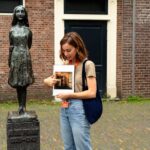
You’ll pause outside the Anne Frank House and then see the Westerkerk, noted as having the tallest church tower in Amsterdam. If you’re visiting with a heavier topic in mind, I’d keep expectations grounded: this tour gives a pause and context, not a ticketed museum visit.
Courtyard and gable stone details (the stuff you only catch if someone points)
There are stops focused on façades and canal-house quirks, like:
- ornate gable stones and trade emblems along Bloemgracht
- canal houses facing three directions (at Huis Aan De Drie Grachten)
- hofjes like Karthuizerhof, described as the largest hofje in Amsterdam around a tranquil courtyard
These are the “look up” moments that turn a walking tour from generic to memorable.
Lunch Timing: Plan a Real Break (On Your Own Expense)
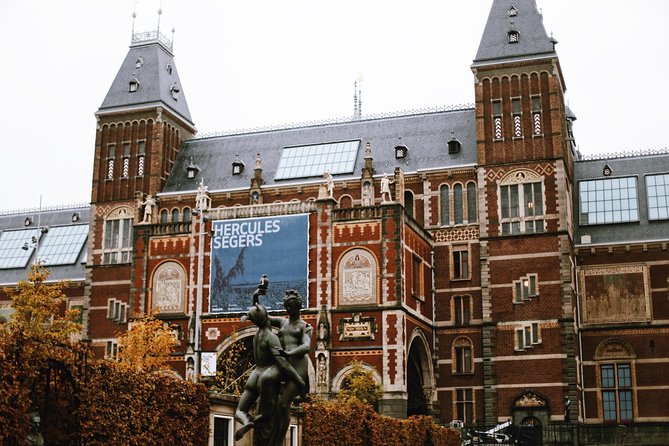
Lunch is scheduled as a break where you pay for your own meal. That’s not a dealbreaker, but it changes how you should plan your energy. Choose somewhere nearby so you’re not losing the afternoon to tram transfers or a long trek back.
The good news is your museum ticket is valid all day. So if lunch runs long or you want to revisit later, you have that option without needing extra tickets.
Price and Value: What $286.56 Buys You Here
At about $286.56 per person for roughly 5 hours 30 minutes, this isn’t a bargain-budget tour. It’s priced like a serious, time-saving day with real access.
The value comes from three places:
- Prebooked, skip-the-line Rijksmuseum entry (time saved)
- Small group size (better pacing and more guide attention)
- Entrance fees included (you’re not paying extra at multiple stops)
If you’re the type who hates queue time and wants a guided framework for the Rijksmuseum, that combination can feel worth it quickly. If you prefer to wander solo and don’t mind waiting in lines, then the value equation changes. In that case, you may do better with museum tickets plus a self-guided canal walk.
How to Get the Most From the Day (Practical Stuff That Matters)
A few on-the-ground details can make or break your comfort:
- You’ll need moderate physical fitness. The tour is not for wheelchair users, and it isn’t recommended for those with walking disabilities.
- Expect security checks at many attractions. Even with skip-the-line access, some rooms can still have short lines or quiet rules.
- At the Rijksmuseum, no large bags or suitcases are allowed—only handbags or small thin bag packs through security. If you’re used to traveling with a day bag, you’re probably fine, but pack light for this one.
- Dress for entry into some sites. That’s the usual “cover up a bit” reality for certain religious spaces, so bring something that works if the weather is cool or windy.
The Guide Factor: Why Diana’s Style Sticks
One detail from the praise that matters: the guide experience. The standout comments mention Diana as an excellent, accommodating guide with an in-depth Rijksmuseum experience followed by a long, landmark-filled city walk.
That’s exactly the skill you want in this format: someone who can make art understandable in a short museum window, then switch to streets-and-stories mode outside. If you end up with a guide who works that way, the day feels smooth instead of like random stops stitched together.
Who Should Book This Tour (And Who Might Not)
This fits best if you:
- are visiting for the first time and want a structured orientation
- care about art history basics like Rembrandt and Vermeer, plus objects beyond the obvious
- want a calmer day with max 8 instead of a large group march
- like the idea of doing museum highlights now and returning later on your own
You might think twice if you:
- need wheelchair access or a very low-walking itinerary
- hate frequent short stops and would rather do one area slowly
- plan to rely on carrying large bags (the Rijksmuseum restrictions mean you’ll need to pack smart)
Should You Book This Rijksmuseum & Amsterdam City Center Semi-Private Tour?
Yes, you should book it if you want the smartest version of a first day in Amsterdam: skip the worst wait at the Rijksmuseum, get a human-scale guide experience with a small group, then walk off the museum context through the city center.
I’d pass or look for an alternative if your goal is maximum free time in one place, or if your mobility needs don’t match a multi-stop walking route. But for most first-timers who want both art and bearings, this is a strong use of a single afternoon.
FAQ
What time does the tour start?
The tour starts at 10:00 am.
Where is the meeting point?
The materials list meeting at the letter I of the giant I am Amsterdam sign outside the Rijksmuseum. The listed start address is Cobra Café, Hobbemastraat 18, 1071 ZB Amsterdam.
How large is the group?
It’s a semi-private format with a maximum of 8 travelers.
Is the tour language English?
Yes. The tour is offered in English.
Is lunch included?
No. Lunch is a break where you’ll pay on your own.
Does the price include Rijksmuseum entry?
Yes. Admission fees are included, and prebooking is part of how you get entry to the Rijksmuseum.
Can I return to the Rijksmuseum after the tour?
Yes. Your Rijksmuseum ticket is valid all day, so you can return after the walking portion ends.
Does the tour run rain or shine?
Yes. The tour will run rain or shine.
What should I do about bags at the Rijksmuseum?
The tour info says no large bags or suitcases are allowed inside the museum. Only handbags or small thin bag packs can go through security.
Can I cancel for a full refund?
Yes, you can cancel for a full refund if you cancel at least 24 hours before the start time.